Bio Shop
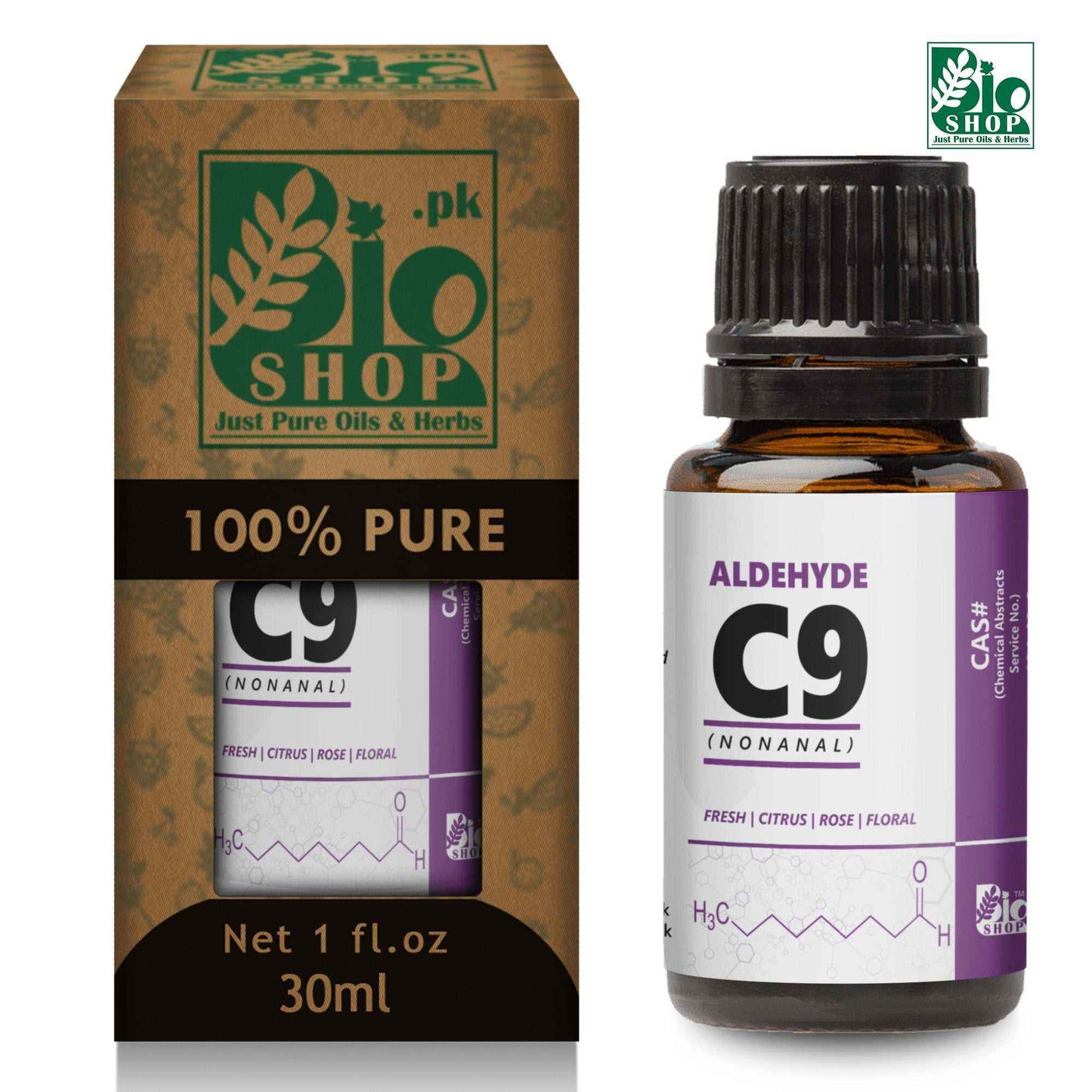
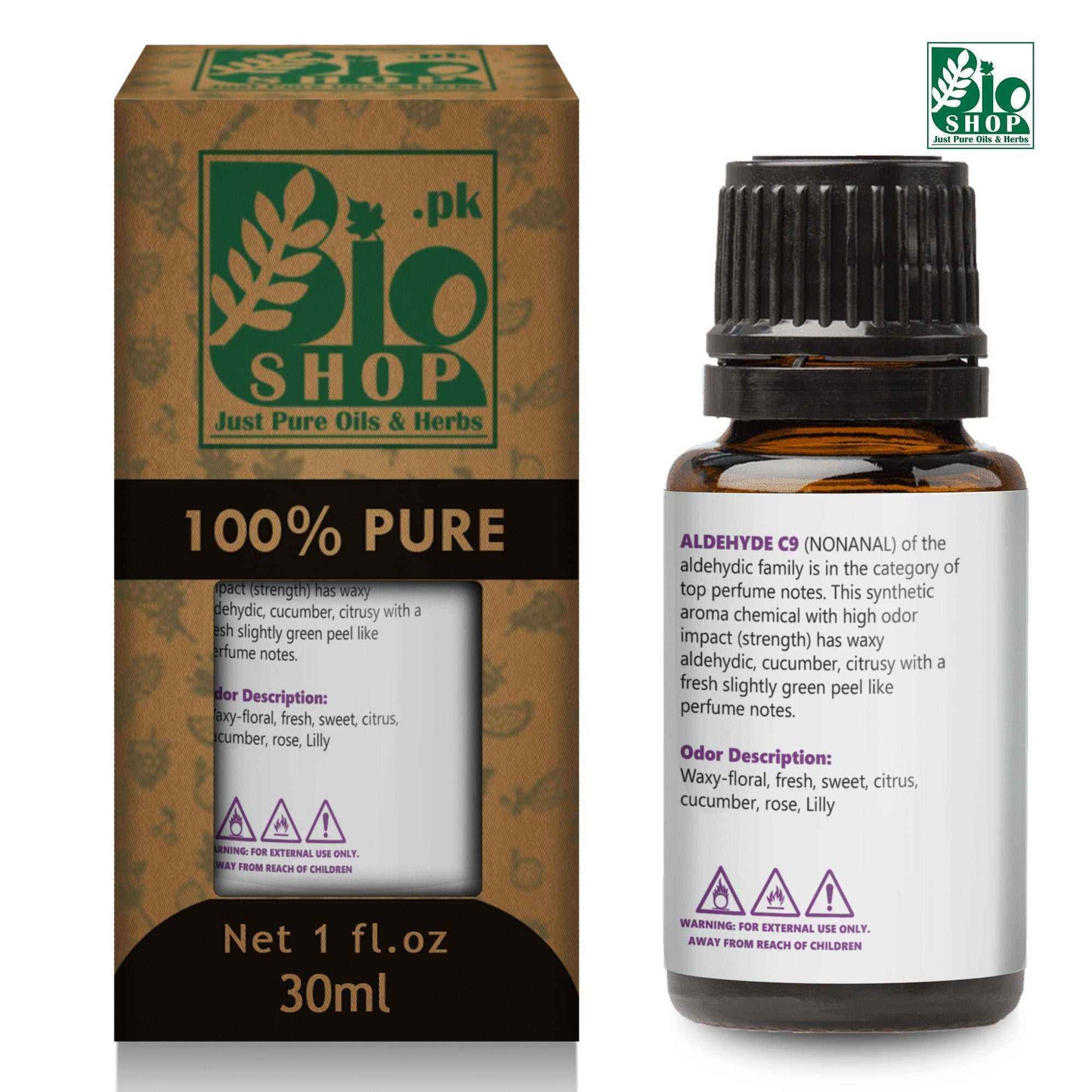
Aldehyde C9 (Nonanal)
Aldehyde C9 (Nonanal)
Olfactory Notes & Usage: Fatty, floral, with rose and cucumber nuances.
Couldn't load pickup availability
Explore
Information About Aldehyde C9 (Nonanal)
Key Features
✦ Linear C9 aliphatic aldehyde with a clean, fatty, orange-peel and waxy character widely used in fine fragrance
✦ Extremely potent — used at trace levels (0.1% to 1%) to add diffusion, brightness, and lift to compositions
✦ Core building block of classic aldehydic and floral fragrance families including chypre and soliflore accords
✦ Blends beautifully with rose, jasmine, bergamot, vetiver, musk, and woody base notes
✦ Suitable for fine fragrance, functional perfumes, cosmetics, soaps, and home fragrance at appropriate levels
✦ Vegan and cruelty-free synthetic ingredient — no animal-derived raw materials used in production
✦ Supplied at high purity (95%+) cosmetic grade — suitable for professional formulation work
About Aldehyde C9 (Nonanal)
Aldehyde C9, commonly known as Nonanal or Pelargonaldehyde, is a nine-carbon straight-chain aliphatic aldehyde. It occurs naturally in trace quantities in orange peel, rose, and various floral extracts, but the commercially available form used in perfumery is synthetically produced to ensure purity and consistency. Aliphatic aldehydes as a class became central to 20th-century perfumery, and C9 remains one of the most studied and utilized members of this group. Its discovery and application in fine fragrance is intertwined with the golden age of French perfumery.
What sets Aldehyde C9 apart from other C-series aldehydes is its specific sensory profile. While C10 leans metallic and C11 offers a soapy rose quality, C9 delivers an unmistakably fresh, citrus-waxy character with an orange-blossom and ripe orange peel impression. It has excellent diffusion properties, meaning even small quantities significantly affect the radiance and sillage of a finished composition. This makes it both a powerful creative tool and one that demands precision and restraint in dosage.
Bio Shop Pakistan supplies cosmetic-grade Aldehyde C9 (Nonanal) suitable for independent perfumers, DIY beauty formulators, fragrance students, and professional blenders who require reliable, high-purity raw materials for serious formulation work.
Olfactory Profile
SCENT DESCRIPTION : Aldehyde C9 opens with an immediate burst of fatty, waxy brightness closely resembling freshly zested orange peel and the dewy skin of rose petals. There is a clean, almost soapy quality underneath — the kind of freshness associated with classic aldehydic fragrances. At moderate diffusion it reveals a softly floral, slightly green nuance reminiscent of orange blossom absolute. At high concentrations it becomes intensely fatty and almost rancid, which is why precision dosage is essential in formulation.
NOTE POSITION : Top to Top-Mid
FRAGRANCE FAMILY : Aldehydic · Floral · Citrus
FACETS : Waxy · Fatty · Orange Peel · Soapy · Floral
TENACITY : Low to Medium — 2 to 4 hours on skin, longer on fabric and blotter
SILLAGE : Medium — strong diffusion at low concentrations, contributes noticeable radiance and lift to the opening of a composition without projecting heavily on its own
Technical Specifications
Chemical Name : Nonanal
CAS Number : 124-19-6
Synonyms : Pelargonaldehyde, Aldehyde C-9, Nonal, n-Nonanal, Nonanaldehyde
Purity : 95% minimum (cosmetic grade)
Appearance : Colorless to pale yellow clear liquid
Odor Threshold : Approximately 1 ppb — extremely low, highly detectable at trace levels
Solubility : Insoluble in water — freely soluble in ethanol, carrier oils, and IPM
Specific Gravity : 0.822 to 0.827 at 20°C
Flash Point : Approximately 63°C (145°F)
Type : Synthetic (also occurs naturally in trace amounts in orange peel and rose)
Applications & Usage Guidelines
Fine Fragrance ★★★★★
Aldehyde C9 is a cornerstone of fine fragrance work, particularly in aldehydic floral, chypre, and soliflore compositions. It provides the characteristic bright, waxy lift that opens a fragrance with presence and elegance. Use between 0.1% and 1% in the finished formula depending on desired intensity.
Attar & Oriental Blending ★★★★
In traditional attar and oriental compositions, C9 adds a modern brightness and citrus-waxy dimension that contrasts beautifully with heavy musks, oud, and amber bases. It helps lift heavy compositions and improves radiance. Use at 0.05% to 0.5% to avoid overwhelming the oriental character.
Functional Fragrance ★★★
Suitable for soaps, detergents, and household products where a clean, fresh, citrus-soapy impression is desired. Stability in alkaline soap bases is moderate — use with fixatives and test thoroughly. Effective at 0.05% to 0.3% in the fragrance concentrate.
Cosmetics ★★★
Can be incorporated into creams, lotions, and body products to add a fresh, clean scent character. Use at low levels (0.05% to 0.2%) and ensure compatibility testing with the base formula. Not recommended for lip products at levels above 0.05%.
Home Fragrance ★★★★
Works well in reed diffusers and room sprays where its diffusive, waxy-citrus character helps create a clean and welcoming atmosphere. In candles, performance is moderate — test flash point clearance carefully. Recommended at 0.5% to 2% in diffuser bases.
IFRA & Usage Rate
RECOMMENDED USAGE RATES
EDP (Eau de Parfum) : 0.5% to 1.0%
EDT (Eau de Toilette) : 0.3% to 0.8%
Body Lotion / Cream : 0.05% to 0.2%
Shampoo / Body Wash : 0.05% to 0.15%
Candle : 0.1% to 0.5% in fragrance load
Reed Diffuser : 0.5% to 2.0% in diffuser base
Bar Soap : 0.1% to 0.3% in fragrance blend
IFRA 51ST AMENDMENT STATUS
Nonanal (CAS 124-19-6) does not currently appear on the IFRA restricted or prohibited materials list under the 51st Amendment. It is considered safe for use in cosmetic and fragrance applications when used within responsible formulation levels.
⚠️ Despite no specific IFRA restriction, Nonanal is extremely potent. Overdosing causes an unpleasant rancid-fatty effect and may cause skin sensitivity in some individuals at high concentrations.
⚠️ Always perform skin patch testing on finished formulas before commercial use.
⚠️ Avoid use near eyes and mucous membranes. Not for internal use.
Blending Guide
USAGE METHOD 1 — Pre-dilution in Ethanol
Dilute Aldehyde C9 to a 10% solution in perfumer's alcohol before incorporating into your blend. This gives you far more control over dosage and eliminates the risk of accidental overdosing. Most perfumers work with a 1% or 10% dilution depending on their formula scale.
USAGE METHOD 2 — Aldehyde Bouquet Technique
Rather than using a single aldehyde, combine C9 with C10 and C11 at equal or varied ratios to create a complex aldehydic bouquet. C9 contributes the citrus-waxy facet, C10 adds metallic-floral depth, and C11 brings the classic soapy rose character. This technique is the foundation of true aldehydic floral construction.
USAGE METHOD 3 — Top Note Brightener
Add C9 at 0.05% to 0.1% to any floral or citrus composition as a top note brightener. It extends the diffusion of citrus notes, adds transparency to heavy floral hearts, and creates an impression of freshness in the opening without being identifiable as an aldehyde character.
BEST PAIRINGS
Rose Absolute → Amplifies the waxy-floral rose facet and adds classical elegance
Bergamot Essential Oil → Creates a bright citrus-aldehydic opening with excellent radiance
Jasmine Absolute → Lifts the indolic heaviness and adds clean, soapy floral brightness
Iso E Super → Adds woody transparency and extends the diffusion character
Ambrette Seed → Soft musky pairing that rounds the fatty edge of C9 beautifully
Sandalwood → Grounds the volatility of C9 and extends longevity on skin
Vetiver → Creates an elegant contrast — earthy depth with bright waxy top
AVOID
Do not combine at high concentrations with other fatty or rancid-smelling materials such as Aldehyde C8 (Octanal) or high levels of Aldehyde C14 unless creating a deliberately animalic effect. Avoid heavy use alongside very sweet gourmand accords as the fatty note becomes unpleasant in that context.
Perfumer's Note
I consider Aldehyde C9 one of the most deceptive ingredients in the palette — it smells almost unpleasant in isolation at full strength, intensely fatty and harsh, and yet in a finished composition at the right dosage it becomes the difference between a flat blend and one that truly radiates. That waxy orange-peel brightness is what gives a fragrance its lift at a distance. When someone says a perfume smells expensive or luminous, often it is an aldehyde doing that work quietly in the background.
ADVANCED TIP : Try building a 10% dilution of C9 in DPG and adding it drop by drop to a rose-musk base while smelling on a blotter after each addition. Stop the moment the rose starts to feel brighter and more transparent — that threshold point, usually around 0.2% to 0.4% in the finished blend, is the exact sweet spot where C9 enhances without dominating. Going beyond that threshold moves into classic aldehydic fragrance territory. Understanding this line gives you full creative control over the character of your composition.
Safety & Storage
Physical State : Liquid at room temperature — colorless to pale yellow
Skin Safety : May cause mild irritation at high concentrations — use within recommended rates and perform patch test
Eye Contact : Irritant — avoid direct contact — rinse thoroughly with clean water if contact occurs
Ingestion : Not for internal use — keep away from food, beverages, and children
Ventilation : Work in a well-ventilated area — vapors can cause headache or nausea with prolonged exposure at high concentrations
Storage : Store in a tightly sealed container away from heat, light, and air — oxidation degrades quality
Shelf Life : 12 to 24 months when stored correctly — aldehydes are prone to oxidation over time
Container : Store in glass or HDPE containers — avoid prolonged contact with PET or reactive metals
Flammability : Combustible — flash point approximately 63°C — keep away from open flames and heat sources
FAQ
Q: What does Aldehyde C9 smell like on its own?
A: On its own, it has an intense fatty, waxy, orange-peel smell that can seem unpleasant at full strength. It becomes elegant and useful only at very low dilutions within a blend.
Q: How do I avoid overdosing Aldehyde C9 in my formula?
A: Always work with a pre-diluted solution — either 1% or 10% in perfumer's alcohol. Add drop by drop and evaluate on a blotter after each addition. The sweet spot is typically between 0.1% and 0.5% in the finished formula.
Q: Is Aldehyde C9 safe for use in skin care products?
A: Yes, at appropriate usage levels (0.05% to 0.2% in leave-on products), it is considered safe. Always perform a patch test on the finished formulation before wider use and avoid use near eyes and lips at higher concentrations.
Q: Can I use Aldehyde C9 in candles?
A: Yes, but with care. Test flash point clearance against your wax system and limit usage to 0.1% to 0.5% in the fragrance load. Aldehydes can behave unpredictably in some wax types — always do a full burn test before finalizing a candle formula.
Q: How does Aldehyde C9 compare to natural orange peel aldehydes found in cold-pressed oils?
A: Natural cold-pressed orange essential oil contains only trace amounts of Nonanal alongside many other volatiles. Synthetic Aldehyde C9 is far more concentrated, consistent, and controllable. It delivers a focused fatty-waxy aldehyde effect that orange oil alone cannot replicate — making it a precision tool rather than a background aromatic ingredient.
Where Can You Safely Use Aldehyde C9 (Nonanal)?
Discover how Aldehyde C9 (Nonanal) performs across different applications—rated for safety, stability, and effectiveness.