Bio Shop
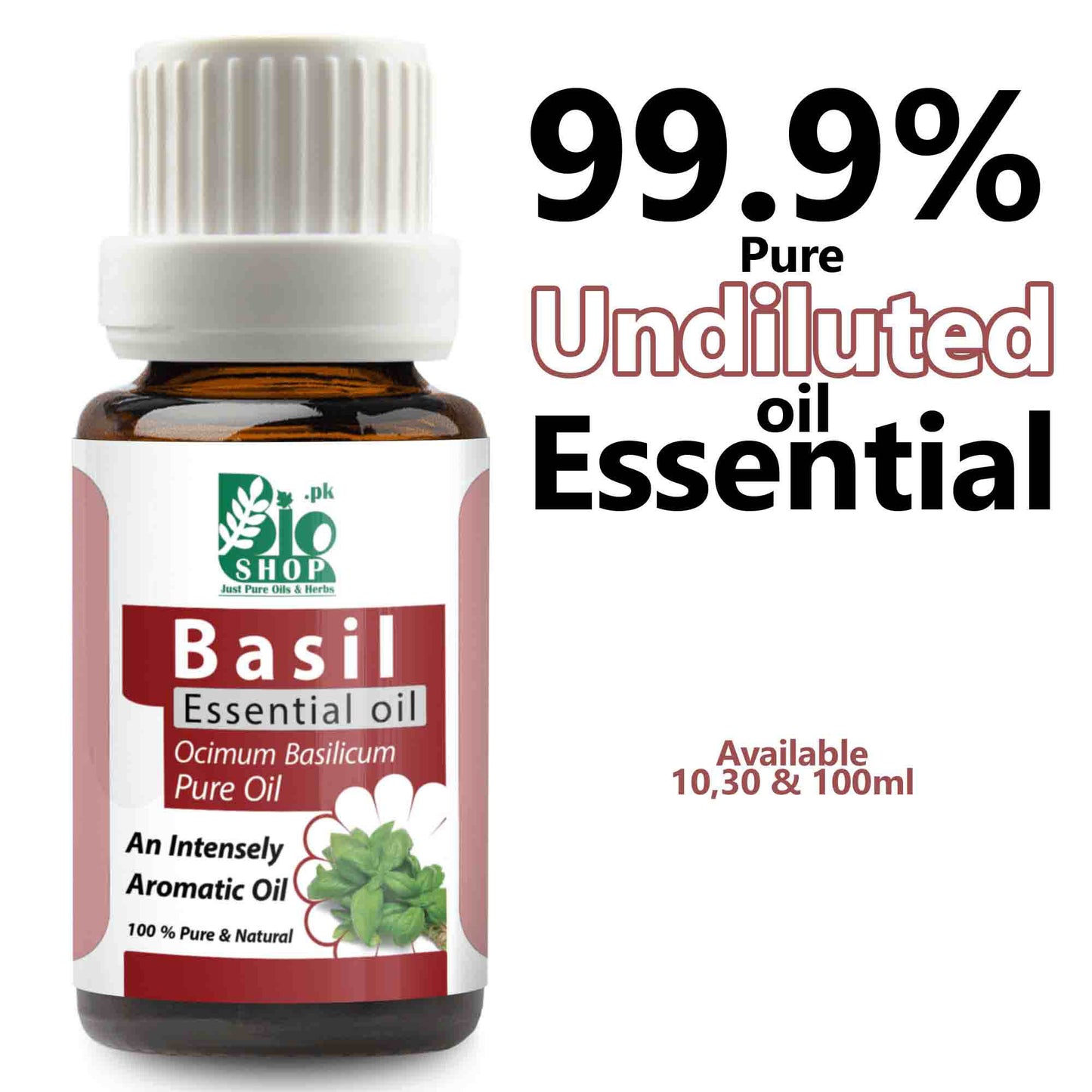
Basil Essential Oil
Basil Essential Oil
Olfactory Notes: Peppery, sweet, and herbal; provides a "clove-like" green freshness.
Couldn't load pickup availability


Explore
Information About Basil Essential Oil
Key Features
✦ 100% pure steam-distilled essential oil from Ocimum basilicum leaves — no dilution, no synthetic additives
✦ Delivers a fresh, herbal-green, slightly spicy-sweet scent profile that brightens any fragrance accord
✦ Highly effective in perfumery as a top-to-mid note — adds naturalness and lift to fine fragrance and functional blends
✦ Widely used in aromatherapy for mental clarity, focus, and stress relief — one of the most recognized therapeutic oils
✦ Performs well in rinse-off personal care — shampoo, body wash, and soap formulations
✦ Excellent in home fragrance including candles, reed diffusers, and incense sticks
✦ Vegan, cruelty-free, and free from animal-derived ingredients
About Basil Essential Oil
Basil Essential Oil has a history stretching back thousands of years across South Asian, Mediterranean, and African cultures where the plant was revered for culinary, spiritual, and medicinal significance. Steam distillation of the fresh or slightly dried leaves of Ocimum basilicum yields a pale to light yellow oil rich in volatile aromatic compounds. Multiple chemotypes exist globally — the European or sweet basil type is dominated by linalool, while the exotic or Reunion type is high in methyl chavicol (estragole). The linalool-dominant chemotype is the most widely used in cosmetics and perfumery due to its balanced safety profile and rounded herbal-sweet aroma.
What makes basil essential oil unique among herbal naturals is its dual character — it reads simultaneously green and clean, warm and slightly spicy, with just enough anisic sweetness to prevent harshness. This makes it one of the more compositionally complex single-origin naturals, capable of acting as a top note lift, a herbal heart modifier, and a green connector in the same formula. It harmonises with a remarkably wide range of fragrance families, from fresh fougères to woody Orientals, without dominating the composition.
Bio Shop Pakistan supplies cosmetic-grade basil essential oil suitable for DIY perfumers, home fragrance makers, aromatherapy enthusiasts, soap crafters, and independent formulators seeking authentic natural materials for their creations.
Olfactory Profile
SCENT DESCRIPTION : Sweet basil oil opens with a burst of crisp, green-herbal freshness that is bright without being sharp. The heart reveals a lightly anisic, slightly spicy warmth with subtle camphoraceous undertones that give the oil its characteristic depth. The overall impression is clean, natural, and vibrant — evoking freshly cut herbs in warm sunlight. It dries down to a soft, slightly sweet, woody-herbal trail that blends seamlessly into base compositions.
NOTE POSITION : Top to Mid
FRAGRANCE FAMILY : Herbal · Aromatic · Green
FACETS : Fresh · Herbal · Green · Spicy · Anisic
TENACITY : Medium — 4 to 6 hours on strip, shorter on skin without fixation
SILLAGE : Medium — projects well in the opening, softens to a close herbal presence in the drydown
Technical Specifications
Chemical Name : Essential oil of Ocimum basilicum L. (complex natural mixture — primary components: Linalool, Methyl Chavicol/Estragole, 1,8-Cineole, Eugenol)
CAS Number : 8015-73-4
Synonyms : Sweet Basil Oil · Basil Oil European Type · Ocimum basilicum Leaf Oil
Purity : 100% pure essential oil — no added carrier or diluent
Appearance : Colorless to pale yellow mobile liquid
Odor Threshold : Very low — detectable at trace concentrations
Solubility : Freely soluble in ethanol and fixed oils — insoluble in water
Specific Gravity : 0.900 – 0.940 at 20°C (verify with supplier CoA)
Flash Point : Approx. 65°C / 149°F (verify with supplier CoA)
Type : Natural — steam-distilled essential oil
Applications & Usage Guidelines
Fine Fragrance : ★★★★★
Basil essential oil is a classic tool in the perfumer's kit for adding natural herbal lift to fine fragrance. It works especially well in fougère, chypre, aromatic, and fresh-green accords. Use at low percentages to preserve the delicacy of the top note transition.
Attar & Oriental Blending : ★★★
Basil oil is less traditional in classic attars but adds a clean, herbal freshness that contrasts beautifully with heavy oud, amber, and resinous bases. It is particularly effective in green-oriental and herbal-oriental subcategories.
Aromatherapy & Wellness : ★★★★★
One of the most established essential oils in aromatherapy practice. Widely diffused for mental clarity, focus, and relief from mental fatigue. Compatible with inhalation blends, massage oils, and wellness roll-ons at appropriate dilution.
Personal Care & Cosmetics : ★★★★
Performs well in shampoo, body wash, and soap formulations where its herbal freshness reads as clean and invigorating. Exercise caution in leave-on products and avoid high concentrations in lip or facial products due to estragole content.
Home Fragrance : ★★★★
Adds a fresh, herbal-green lift to candles, reed diffusers, and room sprays. Blends naturally with citrus, lavender, and eucalyptus for clean household fragrance. Best used as an accent note rather than the dominant material in home fragrance.
IFRA & Usage Rate
RECOMMENDED USAGE RATES
EDP (Eau de Parfum) : 0.5 – 1.5%
EDT (Eau de Toilette) : 0.5 – 1.0%
Body Lotion (Leave-On) : 0.1 – 0.3%
Shampoo / Body Wash : 0.2 – 0.5%
Cold Process Soap : 0.5 – 1.0%
Candle (Wax Weight) : 3.0 – 6.0%
Reed Diffuser : 5.0 – 10.0%
IFRA 51ST AMENDMENT LIMITS
⚠️ Basil Essential Oil is subject to IFRA restrictions driven by its methyl chavicol (estragole) content. Limits vary significantly by chemotype. The linalool-dominant sweet basil type carries lower estragole content and more permissive limits than the exotic/Reunion high-methyl chavicol type. Always confirm chemotype and estragole percentage from your supplier CoA before applying IFRA limits.
Approximate limits for sweet basil oil (linalool chemotype — verify with actual CoA data):
IFRA Category 1 (Lip Products) : 0.01% — very low; avoid in lip applications
IFRA Category 4 (Body Lotion, Cream) : ~0.13% — leave-on applications
IFRA Category 5A (Face Cream) : ~0.08%
IFRA Category 9 (Rinse-Off, Soap) : ~1.2%
IFRA Category 11A (Candle — non-skin) : Not restricted
⚠️ EU Cosmetics Regulation: Estragole is classified as a substance of concern. High-estragole basil oil types should be avoided in leave-on cosmetics.
⚠️ Verify all IFRA limits at ifrafragrance.org using your specific batch and chemotype data.
Blending Guide
METHOD 1 — TOP NOTE LIFT IN ALCOHOL-BASED FRAGRANCE
Add basil oil at 0.3 to 0.8% in the top note cluster alongside citrus materials. It acts as a natural green connector that bridges sharp citrus with softer floral or aromatic hearts. Introduce it last before final evaluation to assess impact on the opening accord.
METHOD 2 — HERBAL HEART IN PERSONAL CARE FRAGRANCE
In shampoo, body wash, and shower gel, basil reads as a fresh, clean, functional herb that signals efficacy and naturalness. Pair with rosemary, mint, and eucalyptus for an invigorating range or with lavender and geranium for a calm, herbal daily-use profile. Keep usage within IFRA rinse-off guidelines.
METHOD 3 — GREEN ACCENT IN HOME FRAGRANCE AND CANDLES
Blend basil oil at 1 to 2% of the total fragrance load alongside citrus, tomato leaf, violet leaf, or cucumber to create fresh green indoor fragrance. It is particularly effective in kitchen, bathroom, and workspace diffuser blends designed to smell clean and natural.
BEST PAIRINGS
Bergamot → Brightens the herbal freshness, adds citrus-green transparency
Lemon EO → Crisp, clean pairing — classic for fresh functional fragrance
Lavender → Classic fougère combination — balances sweet and herbal
Rosemary → Deep herbal amplification — spa and wellness direction
Geranium → Floral-herbal bridge — works in feminine and unisex profiles
Linalool → Smooths and extends the herbal character
Cedarwood Atlas → Grounds basil in a woody, dry base — effective in cologne structures
Vetiver → Earthy contrast that adds complexity to green-herbal compositions
Lime EO → Zingy, fresh pairing for home fragrance and functional products
Clary Sage → Herbal depth with slight musky warmth — natural and grounding
AVOID
Avoid combining at high doses with other estragole-rich materials (e.g. tarragon, tropical basil) as cumulative estragole levels in leave-on products can breach IFRA and EU limits. Avoid heavy overuse with rose absolutes — the anisic character can clash at high concentrations.
Perfumer's Note
Working with basil essential oil teaches you something important about naturals — complexity is not always about depth, it is sometimes about movement. Basil shifts as you smell it. The first impression is green and slightly cool. Thirty seconds later it softens into something slightly sweet and anisic. A minute after that it settles into a warm, softly spicy herbal note that carries quietly. That arc of movement is what makes it useful — it bridges the opening of a fragrance to its heart without announcing itself loudly. I use it most often in masculine colognes and fresh fougères where I need nature on the skin without the sharpness of mint or the heaviness of sage.
ADVANCED TIP : To extend basil's longevity in a fine fragrance without increasing its percentage, try pairing it with a small amount of Methyl Linalool or Linalyl Acetate — both act as molecular mirrors of basil's own linalool content, creating a resonance effect that prolongs the herbal-floral transition. Keep total linalool-type materials below 15% of the formula to avoid a soapy shift. Alternatively, anchor basil's top note character by building a vetiver-cedarwood micro-base beneath it — the earthy dryness prevents volatilisation and lets the herb linger two to three times longer than it normally would on its own.
Safety & Storage
Physical State : Clear to pale yellow mobile liquid
Skin Safety : Dilute properly before skin application — do not apply undiluted. Patch test recommended. Use within IFRA leave-on limits for estragole-containing chemotypes. Not suitable for use on broken or sensitive skin undiluted.
Eye Contact : Avoid direct eye contact. If contact occurs, rinse immediately with clean water for 15 minutes and seek medical advice if irritation persists.
Ingestion : Not for internal consumption. Essential oils are not food-grade ingredients. Keep away from children.
Ventilation : Use in well-ventilated spaces when working with large quantities. Avoid prolonged inhalation of undiluted vapour.
Storage : Store in a cool, dark location away from direct sunlight and heat. Ideal storage temperature: 10–20°C.
Shelf Life : 1 to 2 years from opening when stored correctly — linalool-rich oils are relatively stable but oxidation of terpene fractions can occur over time
Container : Amber glass or HDPE — avoid PET or cheap plastic containers for long-term storage
Flammability : Combustible liquid — keep away from open flame and high heat sources. Flash point approx. 65°C.
FAQ
Q: Can I use basil essential oil directly on skin?
A: No — always dilute in a carrier oil, lotion, or alcohol before skin contact. Undiluted essential oils can cause sensitisation, irritation, or phototoxic reactions depending on concentration.
Q: Is basil essential oil safe to use in lip balms or lip products?
A: It is not recommended. IFRA limits for basil oil in lip-contact products are very low due to estragole content. Avoid use in lip balms, lip glosses, or any product with significant lip exposure.
Q: What is the difference between sweet basil oil and exotic basil oil?
A: Sweet basil (European type) is linalool-dominant with a balanced, rounded herbal-sweet scent. Exotic or Reunion basil is methyl chavicol-dominant with a sharper, more anisic character and significantly higher estragole levels, making it more restricted in cosmetic use. Always confirm which chemotype you are purchasing.
Q: Will basil essential oil discolour my soap or candles?
A: Basil oil is generally low-discolouration in soap and candles at recommended usage rates. Some pale yellowish tint is possible at higher doses in transparent soap bases. Conduct small-scale batch testing before production.
Q: How does basil essential oil compare to a synthetic basil fragrance?
A: Natural basil essential oil offers genuine botanical complexity with its shifting linalool-estragole-cineole character — this natural arc cannot be fully replicated synthetically. Synthetic basil fragrances or single aroma chemicals like Methyl Chavicol or Ocimene-based reconstructions are more uniform and cost-effective but lack the nuance and movement of the true oil. For fine fragrance and aromatherapy positioning, the natural oil is preferred. For high-volume functional fragrance, a synthetic reconstruction may offer better consistency and safety margins.
Where Can You Safely Use Basil Essential Oil?
Discover how Basil Essential Oil performs across different applications—rated for safety, stability, and effectiveness.