


Bio Shop
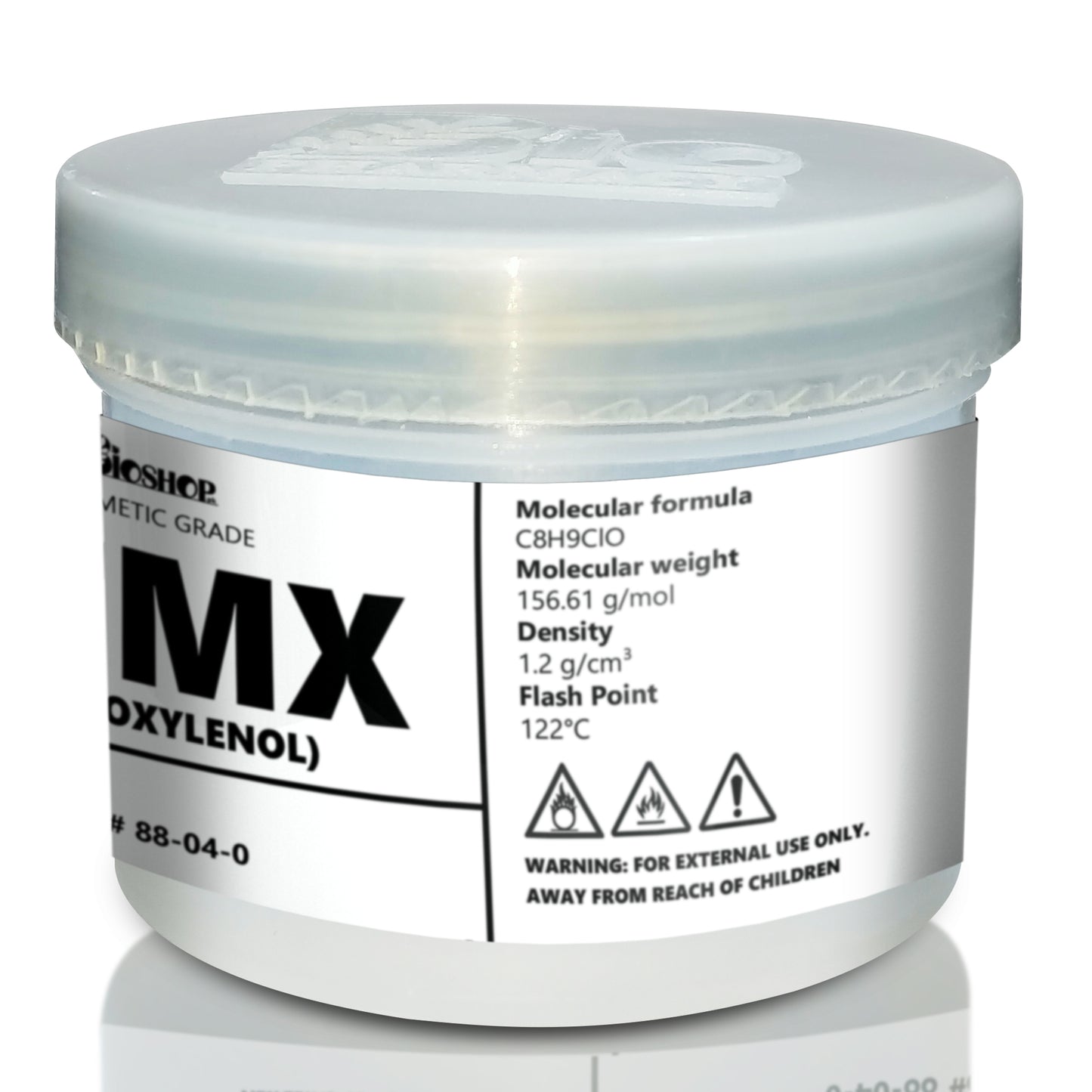
Chloroxylenol (PCMX)
Chloroxylenol (PCMX)
Key Functions: Broad-spectrum antimicrobial, preserves formulations, controls bacteria and fungi, deodorizes effectively.
Couldn't load pickup availability


Explore
Information About Chloroxylenol (PCMX)
✅ Key Features
✦ Broad-spectrum antimicrobial preservative effective against bacteria, yeasts, and molds at 0.1–0.5%
✦ EU Annex V approved preservative (Entry 43) for use in rinse-off and leave-on cosmetic products
✦ Disrupts microbial cell membranes and denatures cytoplasmic proteins for reliable formulation protection
✦ Excellent fit for antiseptic soaps, deodorants, foot care products, and medicated skincare
✦ Readily soluble in propylene glycol and ethanol for clean, homogeneous incorporation
✦ Low oxidation risk with no antioxidant required under standard storage and formulation conditions
✦ Long-established cosmetic and pharmaceutical safety profile with decades of global use history
🔬 Description
Chloroxylenol (PCMX), chemically known as 4-chloro-3,5-dimethylphenol, is a halogenated phenolic antimicrobial compound first developed in the early twentieth century as a medical antiseptic. It gained widespread commercial recognition through its use in antiseptic personal care products and was subsequently adopted into the cosmetic industry as a dependable broad-spectrum preservative active. Its dual role as both a preservation aid and an antimicrobial functional ingredient has made it a staple of hygiene-focused cosmetic formulation.
The mechanism of action of Chloroxylenol centres on its ability to penetrate microbial cell membranes, disrupt membrane integrity, and denature essential cytoplasmic proteins — rendering target microorganisms unable to sustain vital cellular functions. This phenolic action is effective against a wide range of gram-positive and gram-negative bacteria as well as yeasts and molds, making PCMX one of the most functionally versatile antimicrobial preservatives available. Unlike some halogenated preservatives with complex compatibility requirements, PCMX integrates cleanly into most cosmetic systems when pre-dissolved in propylene glycol before introduction to the water phase.
Bio Shop Pakistan supplies cosmetic-grade Chloroxylenol suitable for DIY beauty formulators, independent skincare and hygiene brands, soap makers, and professional cosmetic chemists developing preservation systems for rinse-off and leave-on personal care products.
📊 Technical Data
INCI Name : Chloroxylenol
Chemical Name : 4-Chloro-3,5-dimethylphenol
CAS Number : 88-04-0
Molecular Formula : C8H9ClO
Appearance : White to off-white crystalline powder or granules
Odor : Faint to moderate phenolic, medicinal
pH (1% solution) : 5.5 – 7.0
Solubility : Sparingly soluble in water (~3 g/L at 20°C); freely soluble in ethanol, propylene glycol, and fixed oils
Specific Gravity : ~1.24 g/cm³
Flash Point : 99°C (closed cup, pure compound)
HLB Value : Not Applicable
Recommended Use Level : 0.1% – 0.5%
Type : Antimicrobial Preservative (Phenolic)
Shelf Life : 3 years in a sealed container stored away from heat, moisture, and direct light
🧪 Recommended Usage
Skincare (Creams, Serums, Lotions) ★★★★☆
PCMX is a strong preservation choice for medicated and functional skincare formulations requiring active antimicrobial defence. Keep concentrations at 0.1–0.3% in leave-on facial products to ensure comfort across skin types.
Haircare (Shampoo, Conditioner, Masks) ★★★★☆
Effective at up to 0.5% in rinse-off haircare, particularly in anti-dandruff shampoos and scalp treatments. Avoid combining with high concentrations of cationic conditioning agents as these may reduce antimicrobial efficacy.
Soap Making (Cold Process, Melt and Pour) ★★★☆☆
PCMX is stable in melt and pour soap systems with near-neutral pH and performs reliably there. Cold process soap operates above pH 9.0, which falls outside the working range of PCMX and compromises both stability and efficacy.
Body Care (Scrubs, Butters, Balms) ★★★★☆
A dependable preservative for water-containing body lotions, foot creams, and body scrubs where microbial challenge is elevated. Always pre-dissolve in propylene glycol before addition to the aqueous phase.
Functional Cosmetics (Deodorants, Foot Care, Antiseptic Products) ★★★★★
PCMX is exceptionally suited to deodorant sticks and creams, antiseptic sprays, and therapeutic foot care balms where active antimicrobial performance is a primary product claim. Use at 0.3–0.5% for maximum functional impact.
💡 Pro Tip
When formulating with Chloroxylenol, the most consistent mistake I see is attempting to disperse it directly into the water phase of an emulsion without prior dissolution. PCMX has poor aqueous solubility and will not hydrate cleanly this way, often producing cloudiness or uneven preservation that cannot be corrected after processing. My standard approach is to pre-dissolve PCMX in propylene glycol at a ratio of approximately 1:9 (by weight) with gentle warming to 40–50°C, stirring until fully clear before adding to the heated water phase. This step ensures complete dissolution, homogeneous distribution throughout the emulsion, and consistent antimicrobial performance in the finished product.
ADVANCED TIP: For a robust broad-spectrum preservation system in a complex leave-on emulsion, combine Chloroxylenol at 0.2% with phenoxyethanol at 0.8% and ethylhexylglycerin at 0.3%. Pre-dissolve each component separately in propylene glycol, combine the solutions, then introduce the blend into the heated water phase at 60–65°C. This synergistic system covers gram-positive and gram-negative bacteria, yeasts, and molds more comprehensively than PCMX alone, while all three actives remain within EU-compliant limits individually and collectively.
👩🔬 Skin Type Suitability
Normal Skin : ★★★★★ — Fully compatible at recommended concentrations with no significant irritation concern in healthy, balanced skin.
Dry Skin : ★★★☆☆ — Phenolic compounds can contribute to transepidermal water loss at higher concentrations; pair with glycerin, hyaluronic acid, or emollient esters to compensate.
Oily Skin : ★★★★★ — Surface antimicrobial action helps control odor-causing bacteria and microbes linked to congestion without pore-clogging risk.
Combination : ★★★★☆ — Well-tolerated when kept at 0.1–0.2% to avoid any drying effect on the drier zones of the face.
Sensitive Skin : ★★☆☆☆ — Phenolic compounds carry a sensitization risk for reactive or hypersensitive individuals; use only at the minimum effective concentration and always conduct a patch test.
Mature Skin : ★★★☆☆ — Safe at low concentrations but should be paired with barrier-supporting actives such as ceramides or squalane, as phenolics can challenge skin with reduced barrier integrity.
Acne-Prone : ★★★★☆ — Surface antimicrobial activity offers meaningful benefit for acne-prone skin; rinse-off formats deliver efficacy while minimizing prolonged exposure risk.
🧴 Formulation Ideas
CONCEPT 1: Antibacterial Foaming Hand Wash
Usage Level : 0.3%
Key Ingredients: Sodium Laureth Sulfate, Cocamidopropyl Betaine, Propylene Glycol, Aloe Vera Extract
Result : A clean-rinsing foaming hand wash that delivers proven broad-spectrum hygiene protection with a skin-conditioning finish suited to daily use.
CONCEPT 2: Antimicrobial Deodorant Cream
Usage Level : 0.5%
Key Ingredients: Cetyl Alcohol, Shea Butter, Propylene Glycol, Zinc Ricinoleate
Result : A smooth, non-sticky deodorant cream that neutralises odour-causing surface bacteria while providing an emollient skin feel throughout the day.
CONCEPT 3: Therapeutic Antifungal Foot Lotion
Usage Level : 0.4%
Key Ingredients: Urea (10%), Tea Tree Essential Oil, Glycerin, Allantoin
Result : A targeted foot care lotion that controls surface bacteria and fungi associated with athlete's foot, persistent odour, and heel dryness.
💧 Safety and Regulatory:
INCI Declared : Yes — required on the full ingredients list of all finished cosmetic products
EU Cosmetics Reg : Permitted — listed in Annex V (preservatives), Entry 43; maximum concentration 0.5%
Rinse-Off Limit : 0.5%
Leave-On Limit : 0.5% (verify current SCCS guidance for any product-type-specific restrictions at time of formulation)
Allergen Alert : Yes — phenolic compound; potential skin and mucous membrane sensitizer at elevated concentrations
Skin Safety : Safe at recommended levels; patch test advised for formulations targeting sensitive skin
Eye Area Use : Avoid — do not use in eye contour creams, eye masks, or any product intended for the periorbital area
Ingestion : Not for internal use
Pregnancy Use : Consult physician
Child Safety : Avoid in products intended for children under 3 years of age
Ventilation : Recommended when handling bulk powder; avoid inhalation of fine particles during weighing
Storage : Cool, dry place away from direct light and moisture in a tightly sealed container
Container : HDPE or glass preferred; avoid reactive metals
⚠️ Chloroxylenol is a phenolic sensitizer. Do not exceed 0.5% in any cosmetic application. Do not formulate into oral hygiene products or eye-area preparations. Handle bulk powder with nitrile gloves and a dust mask. Conduct a 48-hour consumer patch test protocol for formulations targeting sensitive skin populations. Confirm child safety restrictions against current EU Cosmetics Regulation Annex V updates at time of commercialisation.
Stability and Compatibility
Working pH Range : 4.0 – 8.0 (optimal antimicrobial activity between pH 5.5 and 7.0)
Heat Stability : Stable up to 100°C; pre-dissolve in propylene glycol and add to heated water phase at 60–70°C
Freeze-Thaw Stable : Yes
Emulsion Type : O/W and W/O — compatible with both emulsion systems when properly dispersed
Emulsification Phase: Hot phase (aqueous), after prior dissolution in propylene glycol
Compatible With : Nonionic surfactants, anionic surfactants, glycols, humectants, most ester emollients, and acrylate-based thickeners
Incompatible With : High concentrations of cationic surfactants (binding reduces antimicrobial efficacy); strong oxidising agents; formulations above pH 9.0
Oxidation Risk : Low — no antioxidant system required under normal storage and formulation conditions
Discoloration Risk : Possible — prolonged UV exposure or alkaline conditions above pH 8.0 may cause slight yellowing; use opaque or UV-protective packaging
Formulation Notes : Always pre-dissolve PCMX in propylene glycol at 40–50°C before adding to the water phase. Avoid combining with high-protein actives at elevated concentrations as protein binding may reduce available antimicrobial activity.
❓ FAQs
Q: What is Chloroxylenol (PCMX) used for in cosmetics?
A: Chloroxylenol is used primarily as a broad-spectrum antimicrobial preservative that protects rinse-off and leave-on formulations from bacterial, fungal, and yeast contamination. It also functions as an antimicrobial active ingredient in products such as antiseptic soaps, deodorants, and medicated foot care.
Q: How do I dissolve PCMX for use in an emulsion?
A: Pre-dissolve PCMX in propylene glycol at a ratio of approximately 1:9 by weight with gentle heating to 40–50°C, stirring until fully clear. Add this solution to the heated water phase during emulsion preparation; direct addition to cold or room-temperature water will produce poor solubility and uneven preservation.
Q: Is Chloroxylenol safe for leave-on skincare products?
A: Yes, PCMX is permitted in leave-on cosmetics at a maximum of 0.5% under EU Cosmetics Regulation Annex V. For leave-on facial and sensitive area products, working at 0.1–0.2% is recommended to minimize irritation potential while maintaining effective preservation.
Q: Can Chloroxylenol be used in cold process soap?
A: Cold process soap operates above pH 9.0, which falls outside the effective working range of PCMX and compromises both its antimicrobial stability and efficacy. Melt and pour soap systems with a near-neutral pH are far more suitable, and PCMX performs reliably in that application.
Q: How does Chloroxylenol compare to Triclosan as an antimicrobial preservative?
A: Both are phenolic antimicrobials with similar mechanisms of action, but Triclosan has been banned from rinse-off cosmetics in the EU and severely restricted in multiple global markets due to concerns over antibiotic resistance development and environmental persistence. Chloroxylenol retains full EU approval, carries a cleaner regulatory profile, and is now the standard replacement choice for formulators requiring compliant broad-spectrum antimicrobial preservation.
Where Can You Safely Use Chloroxylenol (PCMX)
Discover how Chloroxylenol (PCMX) performs across different products — rated for safety, stability, and effectiveness.


