


Bio Shop
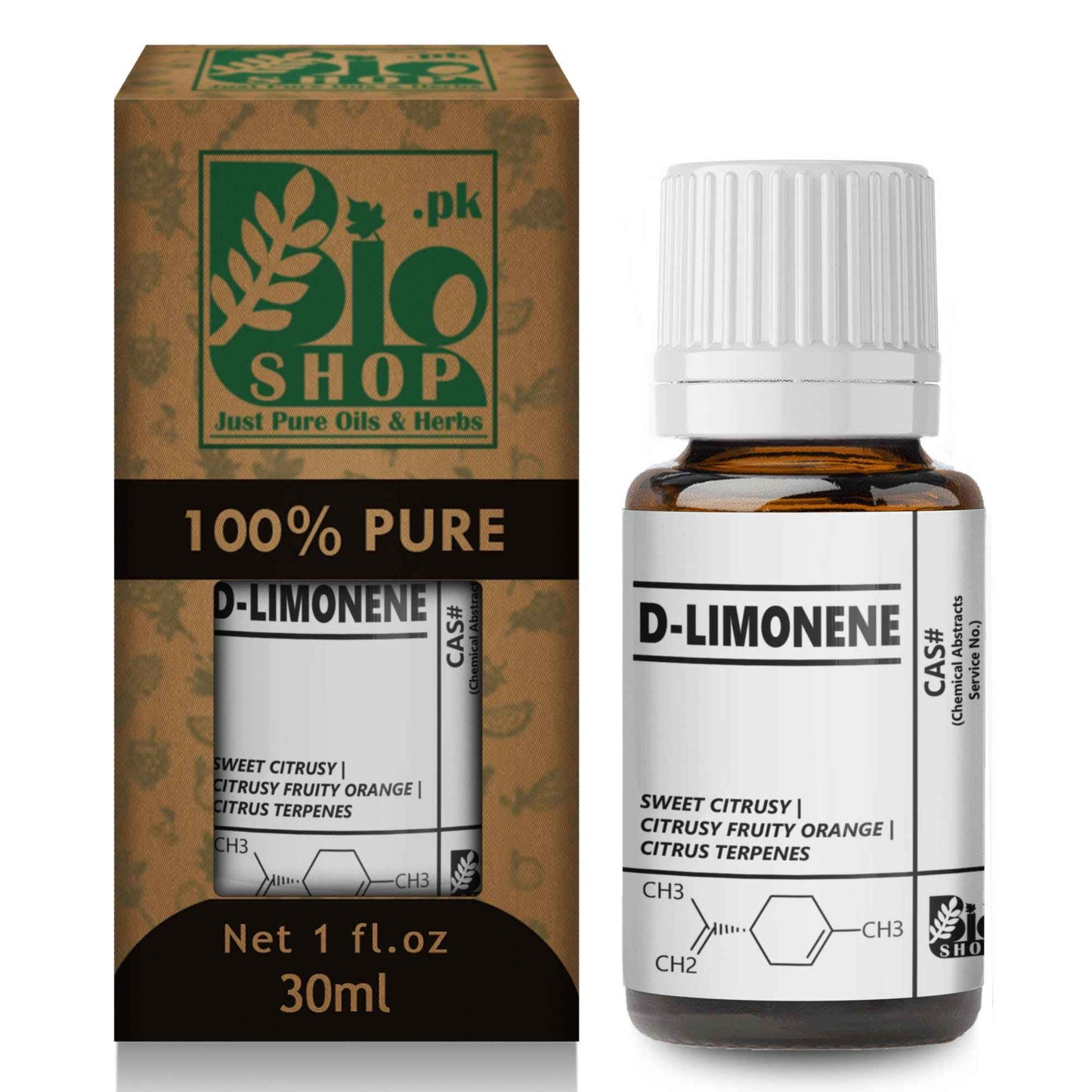
D-Limonene
D-Limonene
Olfactory Notes: Pure, sparkling orange/citrus peel top note.
Couldn't load pickup availability
Explore
Information About D-Limonene
Key Features
✦ Natural cyclic monoterpene sourced from cold-pressed citrus peel, predominantly sweet orange
✦ Delivers a vivid, fresh, orange-peel citrus scent widely used in fine fragrance and colognes
✦ Functions as both a fragrance ingredient and a natural solvent or dispersing agent in formulas
✦ Key component in citrus accords, eau fraiche compositions, and functional cleaning fragrances
✦ Used in major commercial fragrance launches as a bright, effervescent top note character
✦ Vegan, naturally derived, and biodegradable — suitable for green and clean beauty formulations
✦ Requires antioxidant protection in storage to prevent oxidation and sensitization risk
About D-Limonene
D-Limonene is a monocyclic monoterpene that occurs naturally in the peel of citrus fruits including oranges, lemons, limes, and grapefruits. It has been used in flavour, fragrance, and industrial applications for well over a century. The D-form, also called the R-(+)-enantiomer, is the dominant form found in sweet orange peel and carries the characteristic bright, clean, orange-citrus scent. It is one of the most commercially produced terpenes globally, with millions of kilograms extracted annually as a byproduct of the citrus juice industry.
What sets D-Limonene apart from synthetic citrus materials is its naturalness and olfactory authenticity. It captures the immediate burst of freshly peeled orange with a brightness that synthetic alternatives rarely replicate fully. Beyond fragrance, it also serves as a non-toxic solvent with degreasing properties, making it valuable in eco-friendly cleaning concentrates, fragrance solubilisation, and as a natural carrier in cosmetic formulations. Its versatility across both functional and aesthetic applications gives it a unique dual-role status in formulation chemistry.
Bio Shop Pakistan supplies cosmetic-grade D-Limonene suitable for DIY perfumers, fragrance blenders, cosmetic formulators, and home crafters seeking an authentic, naturally derived citrus ingredient for fine fragrance, personal care, and functional product development.
Olfactory Profile
SCENT DESCRIPTION : D-Limonene opens with an intensely bright, clean burst of freshly peeled sweet orange, full of juicy citrus character and natural effervescence. The scent is simultaneously fresh and slightly sweet, reminiscent of a sun-warmed orange grove in full harvest. At closer inspection, subtle terpenic and faintly piney green undertones emerge beneath the dominant citrus brightness. It is clean, uplifting, and universally approachable — a quintessential citrus top note.
NOTE POSITION : Top Note
FRAGRANCE FAMILY : Citrus · Fresh · Aromatic
FACETS : Citrusy · Bright · Fresh · Sweet · Terpenic
TENACITY : Low — dissipates within 1 to 2 hours on skin, slightly longer on blotter
SILLAGE : Medium — strong initial projection on application that softens quickly into the surrounding air
Technical Specifications
Chemical Name : (R)-4-Isopropenyl-1-methylcyclohex-1-ene
CAS Number : 5989-27-5
Synonyms : d-Limonene, (+)-Limonene, Orange Terpenes, Citrus Terpene, R-(+)-Limonene
Purity % : 95% minimum (cosmetic/fragrance grade)
Appearance : Colorless to very pale yellow mobile liquid
Odor Threshold : 0.01 – 0.2 ppm (exceptionally detectable at very low concentrations)
Solubility : Insoluble in water; fully soluble in ethanol, IPM, and fixed oils
Specific Gravity : 0.838 – 0.843 at 20°C
Flash Point : 49°C (120°F)
Type : Natural (extracted from citrus peel by cold press or steam distillation)
Applications & Usage Guidelines
Fine Fragrance ★★★★★
D-Limonene is foundational in citrus, fougere, and fresh aromatic compositions. It contributes the immediate burst of brightness in top note development and is commonly used in eau de cologne and eau fraiche structures. It pairs naturally with other citrus terpenes, aldehydes, and green materials to build authentic citrus opening accords.
Attar & Oriental Blending ★★★☆☆
In attar and oriental compositions, D-Limonene plays a supporting role as a brightening agent used to lift heavy base notes and add an initial freshness before the richer heart and base materials emerge. It can be used sparingly in citrus-oriental hybrids and hesperidic chypres. At high concentrations it may feel out of character in deep, resinous attar profiles.
Functional Fragrance ★★★★★
D-Limonene is exceptionally well-suited for functional product fragrancing including household cleaners, laundry formulas, and surface sprays. Its natural solvent character reinforces the perception of cleanliness and freshness. It is widely used in eco-certified cleaning product fragrance compounds where natural-origin ingredients are preferred.
Cosmetics ★★★☆☆
D-Limonene can be used in rinse-off cosmetic products such as shampoos, shower gels, and liquid soaps at low concentrations. Its use in leave-on products requires careful formulation with IFRA compliance in mind due to oxidation-related sensitization risks. Always use with an antioxidant system and within regulated limits for skin-contact products.
Home Fragrance ★★★★★
D-Limonene performs outstandingly in reed diffusers, room sprays, and candles. Its volatility makes it ideal for creating instant fresh citrus ambiance, and its biodegradability is a positive attribute for eco-conscious home fragrance products. It blends well with essential oils and synthetic fragrance compounds in diffuser bases.
IFRA & Usage Rate
RECOMMENDED USAGE RATES
EDP (Eau de Parfum) : 2 – 5%
EDT (Eau de Toilette) : 3 – 8%
Body Lotion (leave-on) : 0.3 – 0.8%
Shampoo / Body Wash : 0.5 – 1.0%
Candle : 3 – 8%
Reed Diffuser : 5 – 15%
Soap (rinse-off) : 0.5 – 1.5%
IFRA 51st AMENDMENT LIMITS
D-Limonene is a restricted ingredient under IFRA standards due to sensitization potential from oxidized forms.
IFRA Category 1 (Lip products) : 0.55% maximum
IFRA Category 2 (Deodorant, underarm) : 0.57% maximum
IFRA Category 3 (Eye area products) : 0.11% maximum
IFRA Category 4 (Fine fragrance, EDC, EDT, EDP) : Verify with current IFRA amendment
IFRA Category 9 (Rinse-off — shampoo, soap) : 2.5% maximum
IFRA Category 11 (Candle, non-skin contact) : Not restricted
⚠️ Oxidized D-Limonene is a confirmed skin sensitizer. Always store with antioxidant (BHT or tocopherol) and use fresh stock.
⚠️ Always verify current IFRA limits at ifrafragrance.org before commercial production.
⚠️ Perform a patch test recommendation when used in leave-on skin products.
Blending Guide
Method 1 — Citrus Accord Building
Use D-Limonene as the backbone of a citrus top note accord alongside Linalool, Citral, and Bergapten-free Bergamot EO. Start at 30–50% of the citrus accord structure. This method creates a full, natural orange-peel burst that opens a fragrance with authentic brightness before other materials emerge.
Method 2 — Brightening Heavy Bases
Add D-Limonene at 2–5% to heavy oriental, oud, or musky bases to introduce a fresh top note contrast. This technique creates an interesting lift in the opening before the composition settles into its richer character. It is particularly effective in modern oud-citrus hybrid formulations popular in Pakistani and Gulf markets.
Method 3 — Functional Cleaning Fragrance
Blend D-Limonene at 10–30% in a simple functional fragrance compound alongside Pine Needle, Eucalyptus, and Lemon Terpenes for household cleaners and surface sprays. Its natural solvent properties enhance both the perceived and actual cleaning character of the product.
BEST PAIRINGS
Bergamot Essential Oil → Deepens and rounds the citrus character with floral-green sophistication
Lemon Terpenes → Amplifies brightness and sharpness for a zesty, effervescent accord
Lavandin Grosso → Creates a classic fougere freshness with herbal-citrus balance
Eucalyptus Globulus → Adds a clean, medicinal freshness ideal for functional fragrances
Cedarwood Atlas → Grounds the volatile citrus top and extends longevity significantly
Neroli Essential Oil → Builds an elegant, sophisticated citrus-floral hesperidic character
Petitgrain Bigarade → Adds green, woody-citrus depth to the overall citrus composition
Iso E Super → Creates a modern, transparent woody-citrus effect with excellent sillage
AVOID
Avoid using D-Limonene in products containing strong oxidizing agents as this accelerates peroxide formation. Avoid leaving stock bottles partially full for extended periods without antioxidant protection. Avoid in lip products above IFRA limits.
Perfumer's Note
D-Limonene is one of those raw materials that gets taken for granted because it is so abundant and familiar — yet it is nearly impossible to replicate its effect convincingly without it. When I work with citrus compositions, I always reach for D-Limonene first to establish the baseline brightness. It is the smell of peeling an orange in a quiet room, completely natural and completely disarming in its simplicity. What fascinates me most is how differently it behaves depending on what surrounds it — next to vetiver it reads as zesty and clean, next to rose it becomes almost sparkling and effervescent, and next to oud it transforms the entire character of a composition from dark to approachable.
ADVANCED TIP : To extend the tenacity of D-Limonene in an alcoholic fragrance, pre-blend it with a small quantity (5–10% of the limonene amount) of Iso E Super or Ambroxide before incorporating it into the formula. These woody-amber molecules act as a bridge between the volatile terpene and the heavier base notes, creating a diffusive effect that anchors the citrus character longer than it would persist on its own. This technique is particularly effective in modern citrus-woody masculine structures where the citrus opening needs to maintain presence into the dry-down.
Safety & Storage
Physical State : Colorless mobile liquid at room temperature
Skin Safety : May cause sensitization in oxidized form; use within IFRA limits; patch test recommended for leave-on products
Eye Contact : Irritant; avoid direct contact; flush with water for 15 minutes if contact occurs
Ingestion : Not for consumption; keep away from children; seek medical attention if ingested
Ventilation : Use in a well-ventilated area; avoid prolonged inhalation of concentrated vapors
Storage : Store in a cool, dark location between 5–20°C; always add antioxidant (BHT or tocopherol) to open containers
Shelf Life : 12 months from opening when stored correctly with antioxidant protection; 24 months sealed
Container : Store in original airtight container; use glass or HDPE; avoid PVC or polystyrene
Flammability : Flammable liquid; flash point 49°C; keep away from open flame and heat sources
FAQ
Q: What is D-Limonene used for in perfumery?
A: D-Limonene is used as a bright, fresh citrus top note in fine fragrance, cologne, and functional fragrance blends. It delivers the authentic smell of freshly peeled orange peel and is a building block for citrus accords.
Q: Is D-Limonene safe to use in skin products?
A: It is safe within IFRA-regulated limits when fresh and stabilized with an antioxidant. Oxidized D-Limonene becomes a known skin sensitizer, so always use fresh stock, add BHT or tocopherol, and stay within IFRA guidelines for leave-on products.
Q: Why does my D-Limonene smell different after a few months?
A: Oxidation is the cause. Without antioxidant protection, D-Limonene reacts with oxygen and forms peroxides that smell stale and off. Always add a small amount of BHT or Vitamin E and store in a sealed, dark container.
Q: Can I use D-Limonene in candles and reed diffusers?
A: Yes — D-Limonene performs excellently in both applications. In candles, use at 3–8% of the fragrance load. In reed diffusers it can go higher, up to 15%, to create a strong initial fresh citrus throw.
Q: How does D-Limonene compare to synthetic citrus materials like Citral or Lemon Terpenes?
A: D-Limonene gives a rounder, sweeter orange-peel character while Citral is sharper and more lemony. Lemon Terpenes overlap in freshness but lean zestier. D-Limonene is naturally derived, which gives it an authenticity advantage, but it evaporates faster than many synthetic citrus materials and must be used alongside fixatives for lasting effect.
Where Can You Safely Use D-Limonene?
Discover how D-Limonene performs across different applications—rated for safety, stability, and effectiveness.


