


Bio Shop
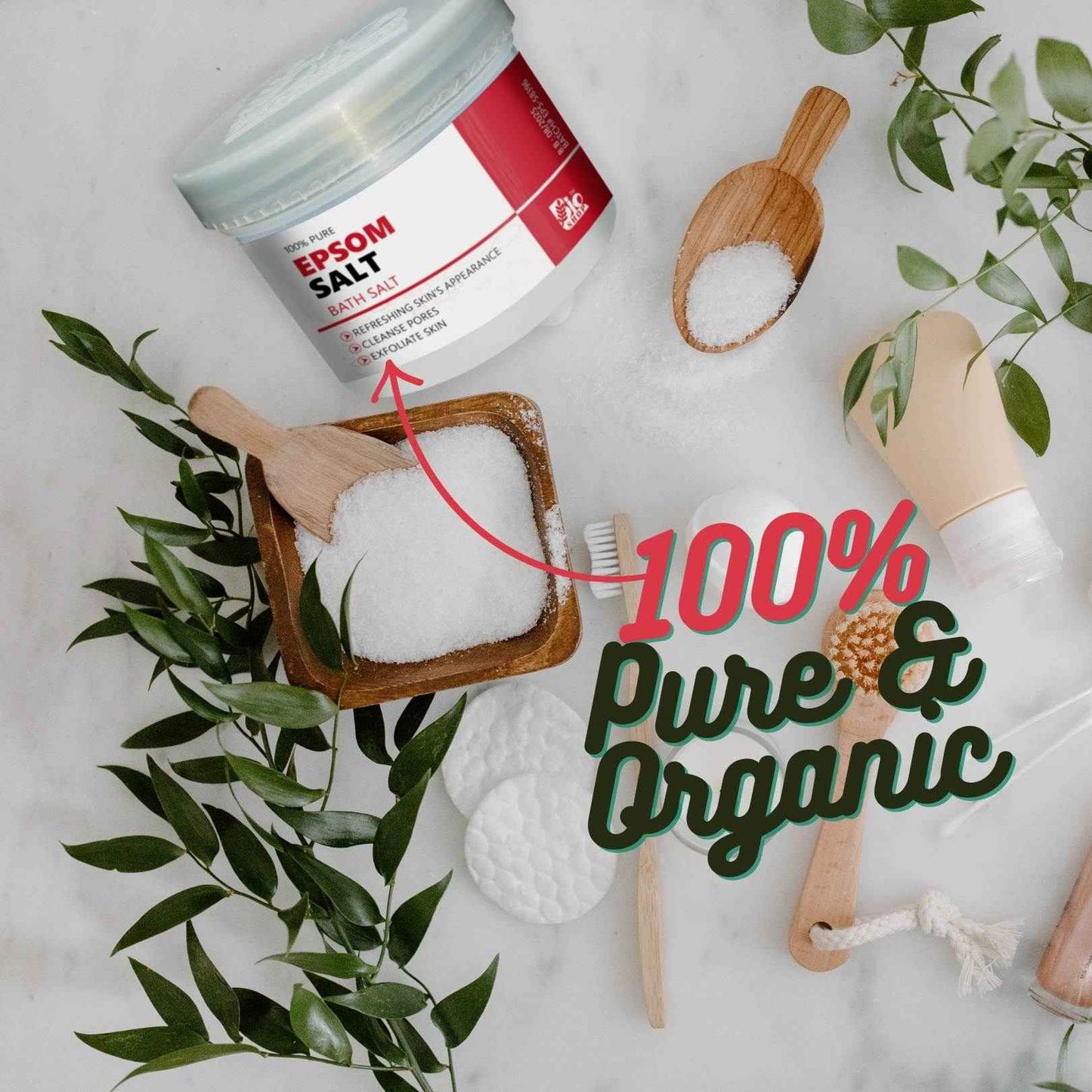
Epsom Salt (Magnesium Sulfate) – Bath Salt
Epsom Salt (Magnesium Sulfate) – Bath Salt
Key Functions: Soothes muscles, exfoliates skin, promotes relaxation, and conditions.
Couldn't load pickup availability


Explore
Information About Epsom Salt (Magnesium Sulfate) – Bath Salt
✅ Key Features
✦ Primary therapeutic bath mineral delivering muscle relaxation, skin softening, and full-body detox in a single ingredient.
✦ Provides gentle mechanical exfoliation through its crystalline structure to buff away dead skin cells and improve skin texture.
✦ Rich in magnesium ions that absorb transdermally during bathing to support temporary relief from muscle tension and fatigue.
✦ Highly versatile across bath salts, foot soaks, body scrubs, scrub bars, exfoliating cleansers, and spa soak blends.
✦ Naturally derived, vegan-friendly, and free from synthetic processing agents or chemical modifications.
✦ Functions as a viscosity modifier and water-phase stabilizer in cosmetic emulsions when used at low concentrations.
✦ Fully water-soluble and compatible with essential oils, carrier oils, botanical colorants, and sea salt for complete product development.
🔬 Description
Epsom Salt is the common name for Magnesium Sulfate Heptahydrate, a naturally occurring inorganic mineral first documented in the spring waters of Epsom, Surrey, England, in the early seventeenth century. It has served as a cornerstone of traditional spa therapy and folk wellness practice for over four hundred years, valued for its therapeutic bathing benefits, skin-smoothing properties, and ease of use. In modern cosmetics, it is classified as a skin-conditioning agent, viscosity controlling agent, and mechanical exfoliant, and remains one of the most commercially significant mineral ingredients in the bath and body category.
What makes Epsom Salt distinctive in formulation is its dual functional profile. The crystalline structure delivers controlled physical exfoliation that can be calibrated by particle size selection, while the dissolved magnesium ions released during bathing are believed to support muscle relaxation and maintain temporary skin hydration. Its complete and rapid solubility in warm water makes it exceptionally easy to incorporate into bath soak blends, salt scrubs, and emulsified body products without specialist equipment or complex processing.
Bio Shop Pakistan supplies cosmetic-grade Epsom Salt suitable for DIY beauty enthusiasts, bath and body product makers, spa product brands, professional cosmetic formulators, and wellness product developers across Pakistan.
📊 Technical Data
INCI Name : Magnesium Sulfate
Chemical Name : Magnesium Sulfate Heptahydrate
CAS Number : 10034-99-8
Molecular Formula : MgSO4·7H2O
Appearance : White crystalline granules or powder
Odor : Odorless
pH (1% solution) : 6.0 – 7.0
Solubility : Freely soluble in water (approximately 71 g/100 ml at 20°C)
Specific Gravity : 1.68 (heptahydrate form)
Flash Point : Not applicable (non-flammable inorganic salt)
HLB Value : Not applicable
Recommended Use Level : Bath soaks: 50–100% of salt blend; Body scrubs: 20–50%; Cosmetic emulsions: 0.5–3%
Type : Inorganic mineral salt
Shelf Life : 2–3 years when stored sealed in cool, dry conditions
🧪 Recommended Usage
Bath Soaks and Salts (Bath Bombs, Foot Soaks, Detox Baths) ★★★★★
Epsom Salt is the cornerstone ingredient of bath soak blends, providing relaxation, exfoliation, and skin conditioning within a single component. Use at 50–100% of total salt weight alongside essential oils, botanical colorants, and dried herbs for complete spa-ready products.
Skincare (Scrubs, Exfoliating Masks, Cleansing Grains) ★★★★☆
Fine-milled Epsom Salt functions as an effective mechanical exfoliant in facial and body scrubs when blended into carrier oil or cream bases. Use at 10–30% in body scrub formulas and select fine-grade crystals only for facial applications to avoid skin micro-tearing.
Haircare (Scalp Treatments, Texture Sprays, Scalp Scrubs) ★★★☆☆
Dissolved Magnesium Sulfate can be incorporated into scalp scrub treatments and beach-wave texture sprays at 1–3% in spray formulas. Avoid use in conditioning products as it can temporarily reduce moisture retention and leave hair feeling dry.
Body Care (Foot Care, Spa Treatments, Wellness Soaks) ★★★★★
Epsom Salt is a primary active in foot care soaks, callus-softening treatments, and professional spa body treatments. Combine with peppermint essential oil, tea tree oil, and sea salt for a complete antibacterial and cooling therapeutic foot soak.
Functional Cosmetics (Deodorants, Mineral Wellness Products) ★★★☆☆
Magnesium Sulfate has limited function in conventional deodorant formulations but can be incorporated into mineral wellness sticks and natural body powders at low inclusion levels. Its primary contribution in this category is mineral conditioning rather than active odor control.
💡 Pro Tip
As a formulator, I treat Epsom Salt as far more than a simple bath filler. Its real value in professional work lies in crystal size selection, oil dispersibility, and its role as a functional carrier for essential oil blends. I always specify medium-coarse crystals for body scrubs, fine-milled grade for facial exfoliants, and large spa crystals for display-quality bath soaks where visual presentation matters as much as performance.
ADVANCED TIP: To create a premium salt scrub that resists clumping in humid climates without any preservative system, blend Epsom Salt with an equal portion of Dead Sea Salt and pre-mix 2–3% polysorbate 80 into your essential oil or fragrance component before combining with the salt base. This disperses oils evenly throughout the crystals, prevents oil pooling on the skin during use, and eliminates the need for emulsifying agents in the rinse-off formula. Keep total water activity below 0.6 by excluding all aqueous ingredients from the base to ensure a 12-month shelf life in sealed packaging.
👩🔬 Skin Type Suitability
Normal Skin : ★★★★★ — Delivers gentle exfoliation and a relaxing soak experience without disrupting the healthy, balanced skin barrier.
Dry Skin : ★★★★☆ — Effective in bath soaks when paired with nourishing oils, though prolonged soaking without added emollients can temporarily draw moisture from the skin.
Oily Skin : ★★★★☆ — The mild astringent character of dissolved magnesium sulfate can help minimize pore appearance and reduce surface oiliness in scrub applications.
Combination : ★★★★☆ — Works well in bath and body scrub applications for combination skin when balanced with lightweight carrier oils such as jojoba or grapeseed.
Sensitive Skin : ★★★☆☆ — Generally tolerated at standard bath soak concentrations but coarse-crystal physical scrubbing should be avoided on reactive, redness-prone, or sensitized skin.
Mature Skin : ★★★★☆ — Supports circulation and temporary skin firmness during bathing and responds well when paired with anti-aging oils such as rosehip or argan in soak formulas.
Acne-Prone : ★★★☆☆ — May assist in reducing surface congestion during a diluted soak but direct physical scrubbing over active breakouts must be avoided to prevent spreading bacteria.
🧴 Formulation Ideas
CONCEPT 1: Lavender Relaxation Bath Soak
Usage Level : 80%
Key Ingredients: Dead Sea Salt, Lavender Essential Oil, Sweet Almond Oil, Dried Lavender Buds
Result : A complete therapeutic bath soak that dissolves rapidly to deliver full-body muscle relaxation, skin softening, and a calming aromatherapy experience.
CONCEPT 2: Peppermint Cooling Foot Scrub
Usage Level : 40%
Key Ingredients: Fine Sea Salt, Peppermint Essential Oil, Coconut Oil, Tea Tree Essential Oil
Result : A cooling, antibacterial foot scrub that exfoliates rough heels and calluses while leaving feet refreshed, smooth, and lightly conditioned.
CONCEPT 3: Activated Charcoal Detox Body Scrub
Usage Level : 35%
Key Ingredients: Activated Charcoal, Grapeseed Oil, Polysorbate 80, Lemon Essential Oil
Result : A deep-cleansing detox body scrub that physically removes dead skin while charcoal draws out impurities, leaving skin visibly refined and thoroughly clean.
💧 Safety and Regulatory:
INCI Declared : Yes — must be listed on all finished cosmetic product labels
EU Cosmetics Reg : Permitted — Magnesium Sulfate is an approved cosmetic ingredient not listed in Annex II or Annex III; no restriction on topical cosmetic use
Rinse-Off Limit : No established EU limit; standard bath use is 250–500 g per full bath
Leave-On Limit : No official limit established; 0.5–3% is standard in leave-on cosmetic applications
Allergen Alert : No — not a recognized cosmetic contact allergen
Skin Safety : Safe at recommended levels for external topical use
Eye Area Use : Avoid — dissolved solution causes irritation on direct ocular contact
Ingestion : Not for internal use
Pregnancy Use : Consult physician — topical bath use is generally considered safe but high-dose pharmaceutical Magnesium Sulfate is a prescription medicine and must not be confused with cosmetic grade
Child Safety : Safe for children above 3 years in diluted bath soaks; avoid concentrated scrub application on children's skin
Ventilation : Not required under normal handling conditions
Storage : Cool, dry place in a tightly sealed container away from moisture and humidity
Container : HDPE, glass, or food-grade PET; avoid open storage in humid environments as the material is hygroscopic
⚠️ Epsom Salt is hygroscopic and will absorb atmospheric moisture rapidly, causing crystal clumping and product degradation. Always seal packaging immediately after use. Do not introduce water into salt scrub formulas during manufacture. Do not confuse cosmetic-grade Magnesium Sulfate with pharmaceutical-grade intravenous preparations — they are entirely different regulated products.
Stability and Compatibility
Working pH Range : 5.5 – 8.0
Heat Stability : Stable up to 70°C in solution; above 150°C the heptahydrate loses water of crystallization and converts to the anhydrous form
Freeze-Thaw Stable : Yes in dry crystalline form; aqueous solutions may crystallize on freezing but redissolve on warming
Emulsion Type : O/W — incorporated into the water phase of oil-in-water emulsions at low concentrations
Emulsification Phase: Cold or hot — dissolve fully in the water phase before combining with the oil phase
Compatible With : Essential oils via solubilizer, sea salts and mineral salts, carrier oils in scrub bases, anionic and nonionic surfactants, botanical extracts, natural colorants
Incompatible With : Strong acids at high concentration, calcium-containing compounds which may cause precipitation, direct use in anhydrous oil-only bases where it will not dissolve
Oxidation Risk : Low — inorganic salt with no oxidizable bonds; no antioxidant required
Discoloration Risk : None — remains white in standard applications; added botanicals or essential oils may impart color to the surrounding crystal
Formulation Notes : Always dissolve Epsom Salt completely in the water phase before combining with oil components in emulsion work. In salt scrub bases, exclude all aqueous additions entirely to prevent premature dissolution, clumping, and shortened shelf life.
❓ FAQs
Q: How much Epsom Salt should I use in a bath soak?
A: A standard therapeutic bath uses 1 to 2 cups (approximately 250–500 grams) dissolved in a full bathtub of warm water and soaked in for 15–20 minutes. For foot soaks, use 3 to 4 tablespoons in a basin of warm water.
Q: Can Epsom Salt be used in cold process soap making?
A: Epsom Salt is not recommended as a primary ingredient in cold process soap because it does not saponify and can cause the batter to seize or produce a crumbly bar. It can be incorporated into melt-and-pour soap as an additive or used as a decorative surface finish on finished cold process bars.
Q: How do I stop my Epsom Salt scrub from clumping during storage?
A: Exclude all water from the formula during manufacturing and seal the finished product in moisture-resistant, airtight packaging immediately after filling. Pre-mixing 2–3% polysorbate 80 into your oil component before combining with the salt base helps disperse oils without introducing free water activity.
Q: Is fine-grade Epsom Salt safe to use on the face?
A: Fine-milled Epsom Salt can be used as a gentle facial exfoliant when blended carefully into a cream or cleansing oil base, but standard coarse crystals are too abrasive for facial skin and risk micro-tearing. Limit facial scrub use to once or twice weekly and avoid entirely on broken, active acne, or sensitized skin.
Q: How does Epsom Salt compare to Dead Sea Salt in cosmetic formulations?
A: Dead Sea Salt delivers a broader mineral complex including potassium, calcium, bromide, and sodium chloride alongside magnesium, giving it stronger mineral-replenishment and therapeutic skin conditioning properties. Epsom Salt is a single pure compound, more affordable, and the preferred choice for muscle-relaxation bath blends, while Dead Sea Salt is recommended when the formulation goal is mineral-rich skin therapy or relief for conditions such as eczema or psoriasis.
Where Can You Safely Use Epsom Salt (Magnesium Sulfate) – Bath Salt
Discover how Epsom Salt (Magnesium Sulfate) – Bath Salt performs across different products — rated for safety, stability, and effectiveness.
Very effective & useful salt


