Skip to product information
1 of 6

Bio Shop

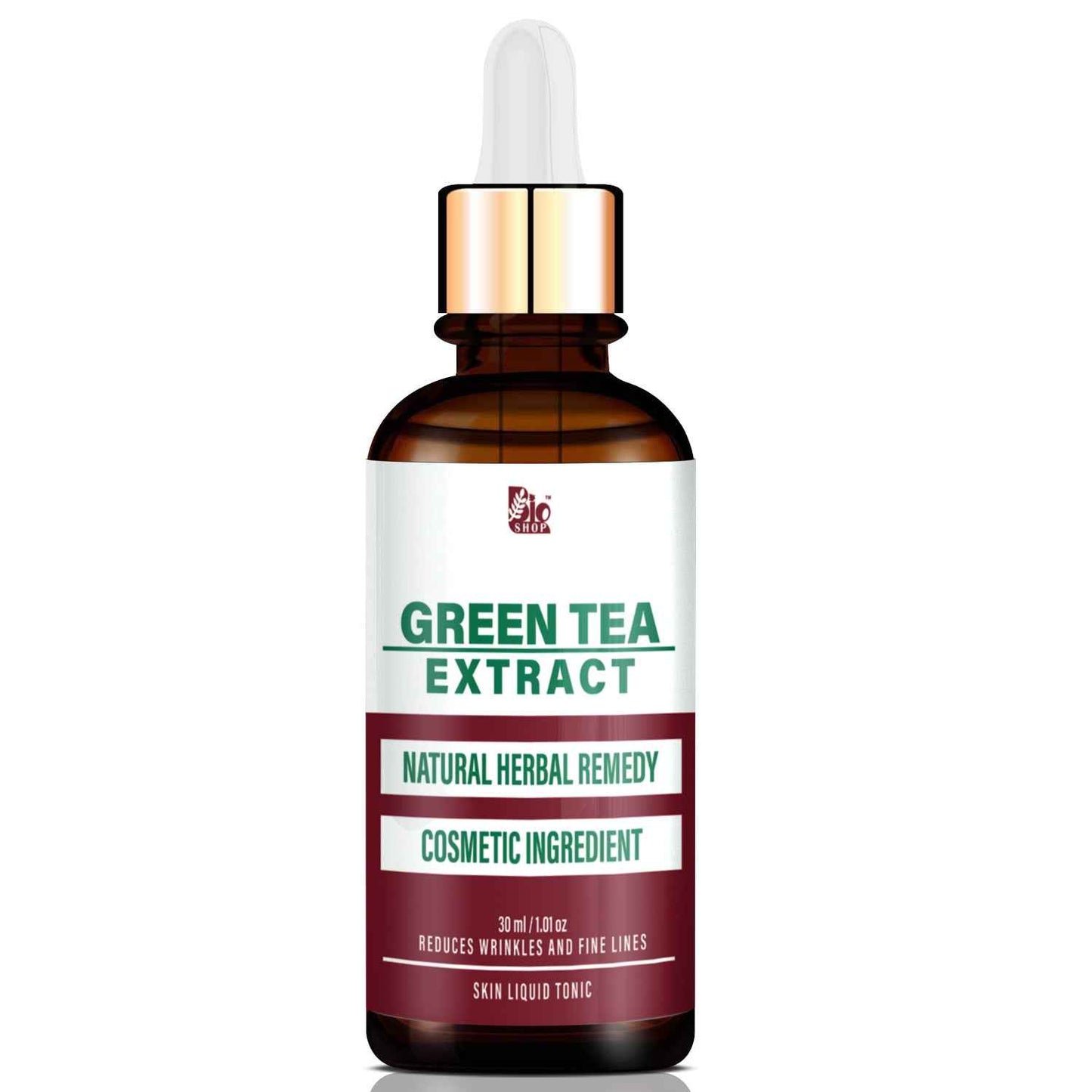
Green Tea Extract Liquid

Green Tea Extract Liquid

Regular price Rs.1,500.00
Regular price Sale price Rs.1,500.00
Sale Sold out
Shipping calculated at checkout.

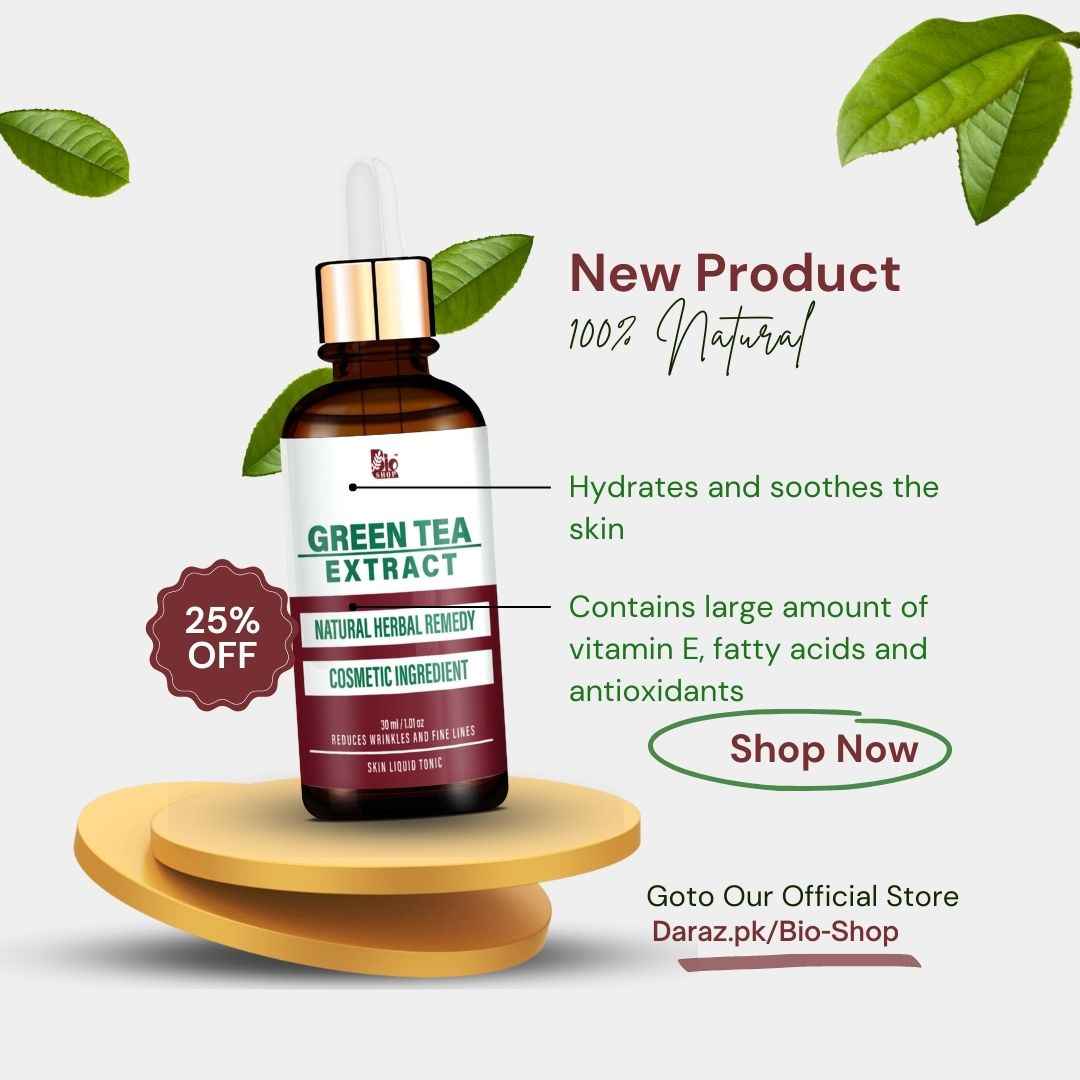
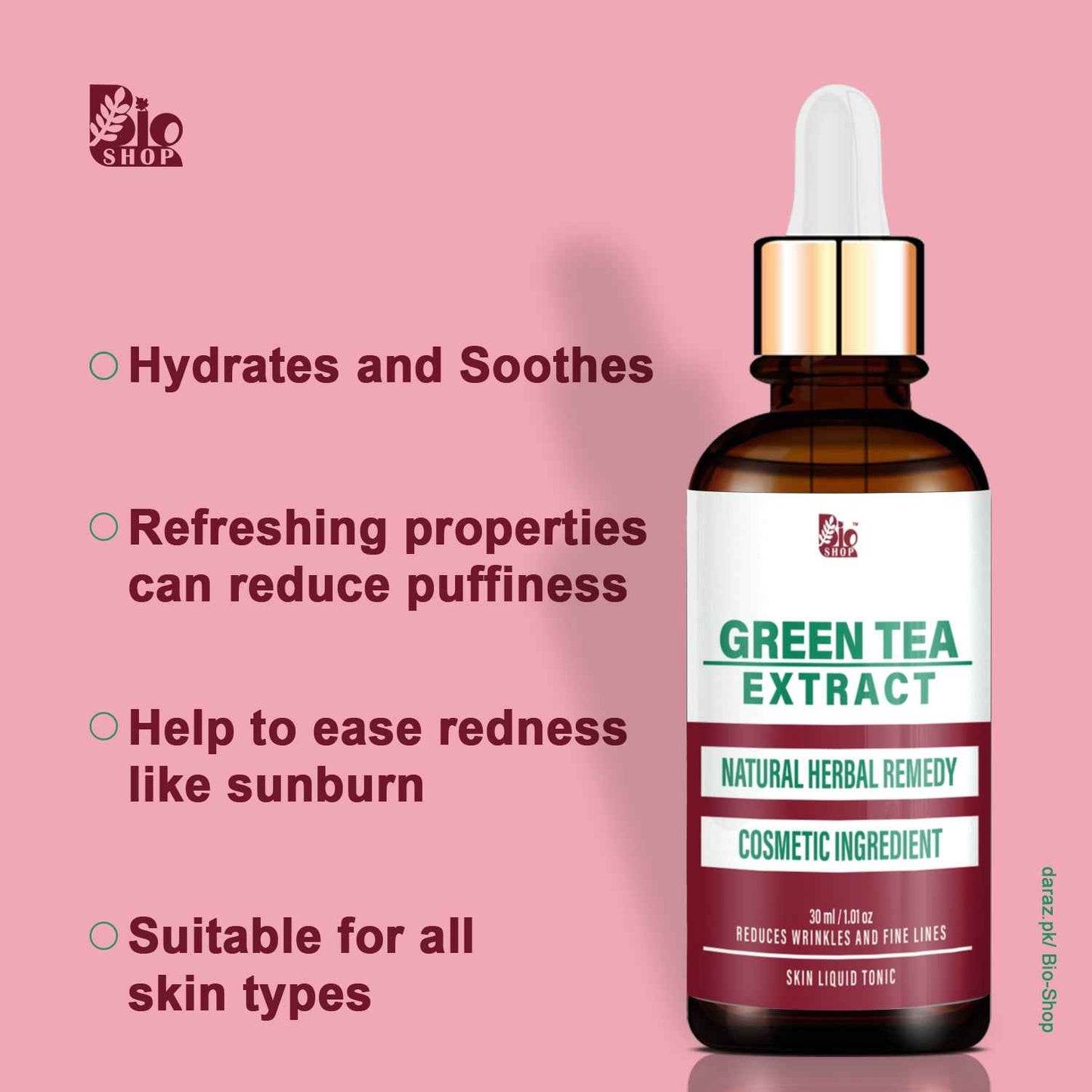
Key Functions: Fights free radicals, calms inflammation, controls excess sebum, and brightens skin tone.

Volume
Quantity
🚚 Estimated delivery time:
Learn More About This Ingredient View full details

Explore

Information About Green Tea Extract Liquid

✅ Key Features

✦ Delivers potent antioxidant protection through naturally occurring EGCG and catechin polyphenols
✦ Visibly reduces fine lines, dullness, and early signs of photoaging with consistent use in formulations
✦ Soothes redness and irritation making it ideal for sensitive and reactive skin formulations
✦ Helps regulate sebum production and minimize pore appearance in oily skin products
✦ Water-soluble liquid format integrates directly into the water phase without additional processing
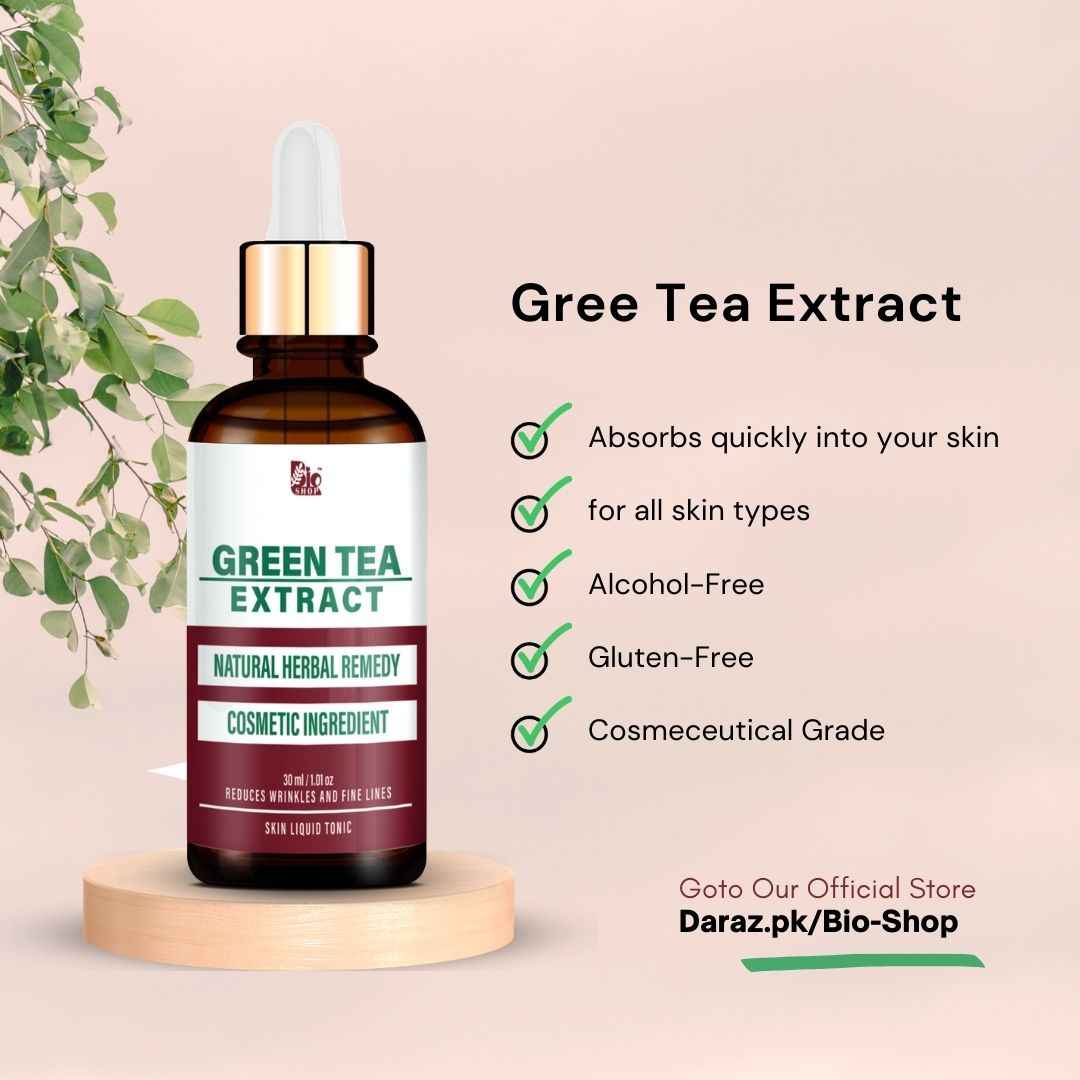
✦ Plant-derived, vegan-friendly, and suitable for clean beauty and natural cosmetic formulations
✦ Versatile across serums, toners, creams, masks, shampoos, and mist sprays

🔬 Description

Green Tea Extract Liquid is a concentrated botanical active obtained from the leaves of Camellia sinensis, the same plant used for drinking tea. Originating in East Asia, green tea has been valued for centuries for its medicinal and skin-protective qualities. In modern cosmetics, it became a staple active ingredient due to extensive research confirming its antioxidant, anti-inflammatory, and photoprotective effects on human skin.

What sets green tea extract apart is its exceptionally high concentration of epigallocatechin gallate (EGCG), the most bioactive catechin among tea polyphenols. EGCG neutralizes reactive oxygen species generated by UV exposure and environmental pollution, slowing collagen degradation and preventing hyperpigmentation. This dual mechanism of defense and repair makes it one of the most research-backed botanical actives available to cosmetic formulators today.

Bio Shop Pakistan supplies cosmetic-grade green tea extract liquid suitable for DIY skincare enthusiasts, professional beauty formulators, soap makers, and cosmetic manufacturers.

📊 Technical Data

INCI Name : Camellia Sinensis Leaf Extract (and) Water (and) Glycerin
Chemical Name : Camellia Sinensis Leaf Extract
CAS Number : 84650-60-2
Molecular Formula : Not applicable (complex botanical mixture)
Appearance : Clear to slightly hazy brown-green liquid
Odor : Mild herbal, characteristic green tea
pH (1% solution) : 4.5 to 6.0
Solubility : Water-soluble
Specific Gravity : 1.00 to 1.10
Flash Point : Not applicable (aqueous extract)
HLB Value : Not applicable
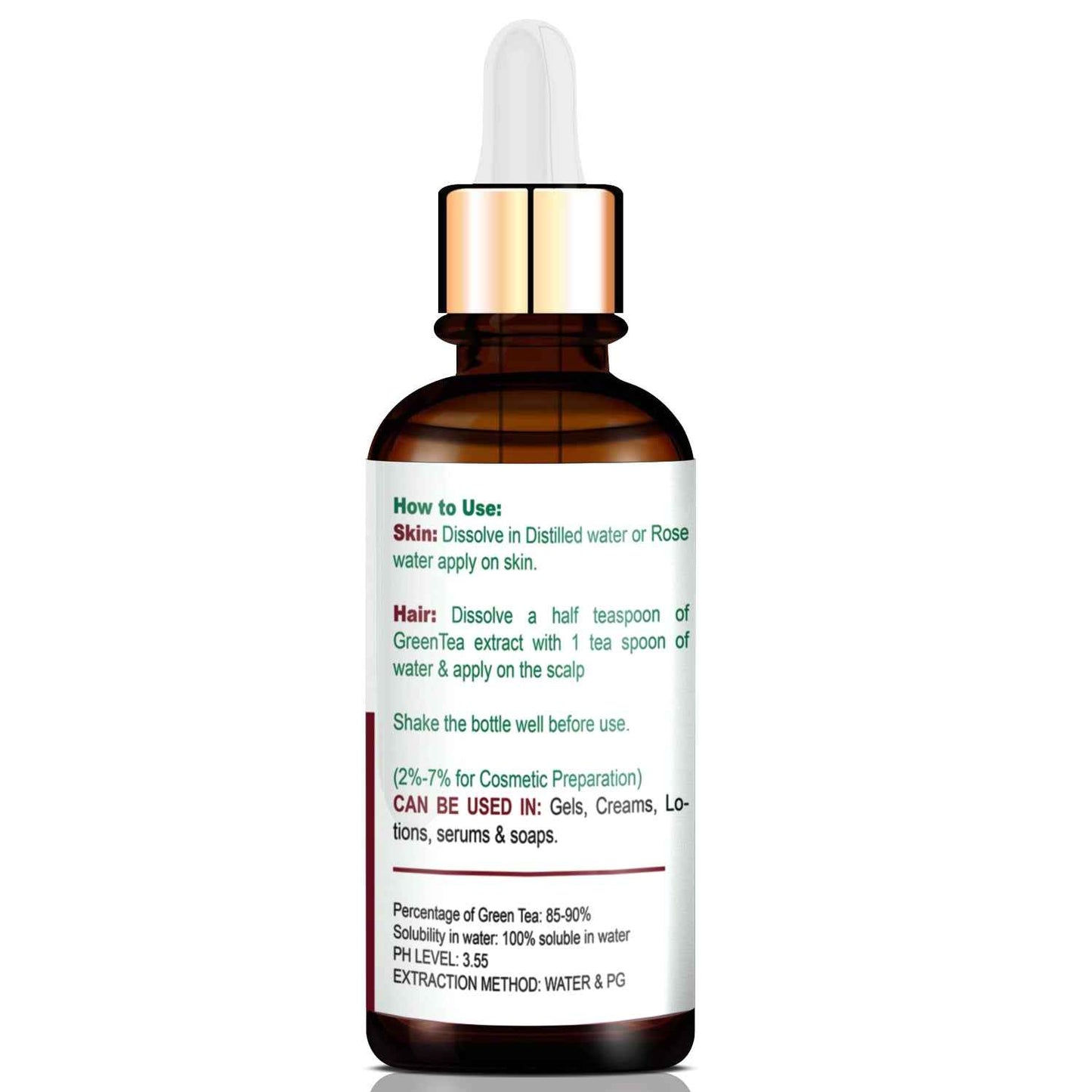
Recommended Use Level : 1% to 5% in finished formulations
Type : Natural botanical extract (aqueous glycerin-based)
Shelf Life : 12 to 18 months when stored properly

🧪 Recommended Usage

Skincare (Creams, Serums, Lotions) ★★★★★
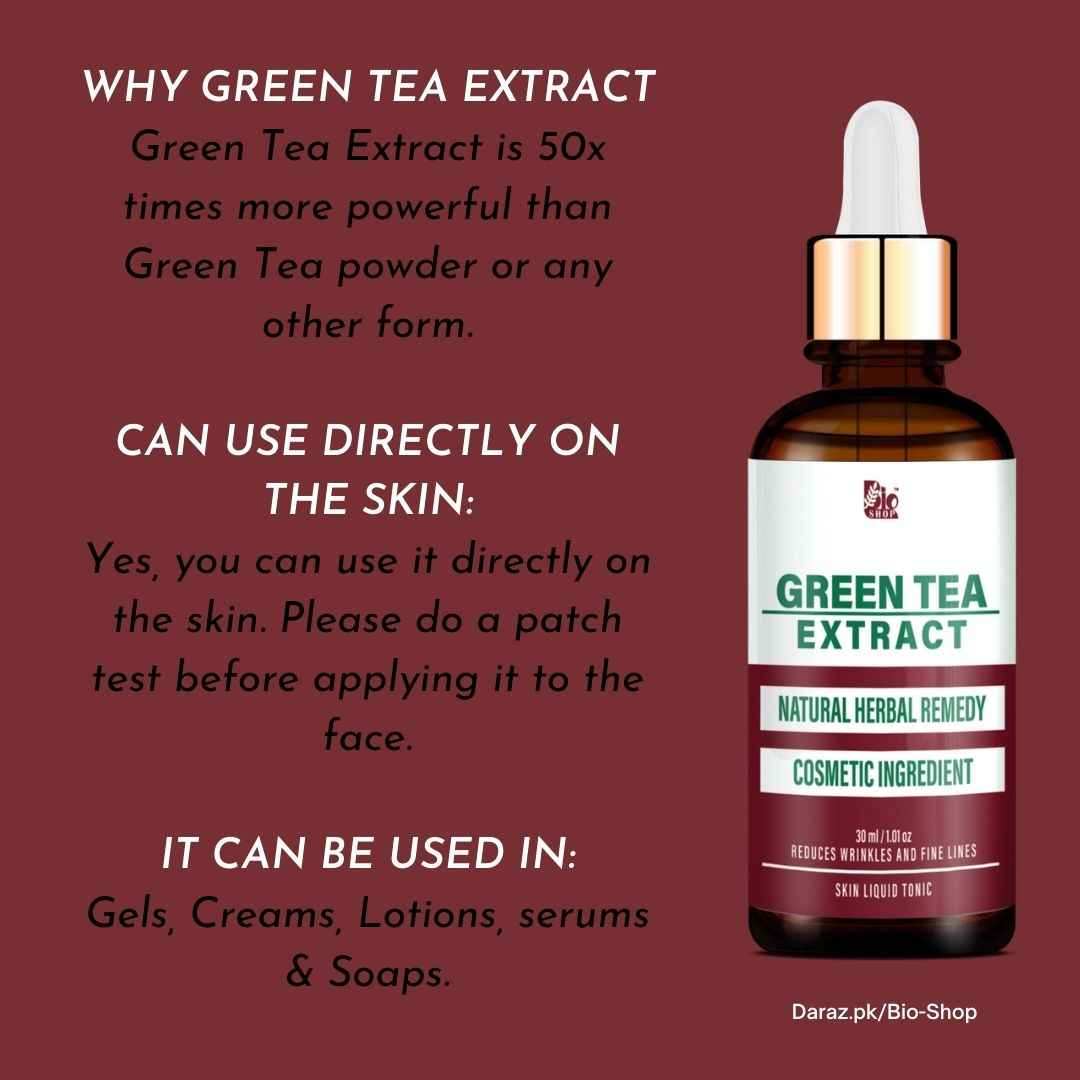
Green tea extract liquid is outstanding in all skincare leave-on products due to its proven antioxidant and anti-aging activity. Add at 2 to 5 percent in the cool-down phase of creams or directly into serum bases for maximum polyphenol delivery.

Haircare (Shampoo, Conditioner, Masks) ★★★★☆
Its anti-inflammatory and antioxidant properties help soothe irritated scalps and protect hair from environmental damage. Incorporate at 1 to 3 percent in shampoo or conditioner formulations during the cool-down phase.

Soap Making (Cold Process, Melt and Pour) ★★☆☆☆
High pH in cold process soap degrades the delicate catechins, significantly reducing antioxidant efficacy. Best reserved for melt-and-pour soap at 1 to 2 percent added at trace temperatures below 50 degrees Celsius.

Body Care (Scrubs, Butters, Balms) ★★★★☆
Works well in body lotions, after-sun gels, and lightweight body milks where its soothing and protective properties shine. Use at 2 to 4 percent in the water phase of emulsions or directly in gel-based body products.

Toners and Facial Mists ★★★★★
This is one of the most effective delivery formats for green tea extract as the water-soluble actives absorb rapidly into freshly cleansed skin. Use at 3 to 5 percent in distilled water or hydrosol-based toner formulations with an appropriate preservative.

💡 Pro Tip

In my formulation work, I treat green tea extract liquid as a cool-down-phase-only ingredient without exception. The polyphenols, especially EGCG, are heat-sensitive and begin degrading above 40 to 45 degrees Celsius, so adding it to a hot emulsion phase essentially destroys the very compounds you are paying for. I also always pair it with a chelating agent because metal ions in water accelerate catechin oxidation, turning your product brown within weeks.

ADVANCED TIP: Combine green tea extract liquid at 3 percent with sodium ascorbyl phosphate at 1 percent and disodium EDTA at 0.1 percent in the cool-down phase below 40 degrees Celsius. The vitamin C derivative synergistically boosts the antioxidant network while the chelator prevents polyphenol-metal complexation, extending both color stability and active potency throughout shelf life.

👩‍🔬 Skin Type Suitability

Normal Skin : ★★★★★ — Provides daily antioxidant defense and maintains healthy skin tone without heaviness.
Dry Skin : ★★★★☆ — Glycerin carrier adds light hydration but pair with richer emollients for full moisture needs.
Oily Skin : ★★★★★ — Regulates excess sebum production and helps minimize pore appearance without adding oil.
Combination : ★★★★★ — Balances both oily and dry zones effectively when used in lightweight water-based formulations.
Sensitive Skin : ★★★★☆ — Anti-inflammatory catechins calm redness and irritation though patch testing is advised at higher concentrations.
Mature Skin : ★★★★★ — EGCG protects collagen from degradation and reduces visible photoaging signs with regular use.
Acne-Prone : ★★★★★ — Antibacterial and anti-inflammatory properties help reduce breakouts and post-acne redness.

🧴 Formulation Ideas

CONCEPT 1: Antioxidant Brightening Serum
Usage Level : 4%
Key Ingredients: Niacinamide, Hyaluronic Acid, Panthenol
Result : A lightweight water-based serum that delivers intensive antioxidant protection while visibly evening out skin tone and boosting hydration.

CONCEPT 2: Soothing After-Sun Gel
Usage Level : 3%
Key Ingredients: Aloe Vera Gel, Allantoin, Glycerin
Result : A cooling transparent gel that calms UV-stressed skin, reduces redness, and accelerates the recovery of the skin barrier after sun exposure.

CONCEPT 3: Scalp Refresh Toner Spray
Usage Level : 5%
Key Ingredients: Peppermint Hydrosol, Salicylic Acid, Polysorbate 20
Result : A refreshing scalp mist that controls oiliness, soothes irritation, and helps maintain a clean and balanced scalp environment between washes.

💧 Safety and Regulatory:

INCI Declared : Yes — required on all cosmetic product labels
EU Cosmetics Reg : Permitted — no specific restriction under current Annex entries
Rinse-Off Limit : No established regulatory limit
Leave-On Limit : No established regulatory limit (industry standard up to 5%)
Allergen Alert : No — not a listed allergen though rare sensitivity is possible in caffeine-sensitive individuals
Skin Safety : Safe at recommended levels
Eye Area Use : Use with caution — may cause mild stinging in sensitive eye areas at higher concentrations
Ingestion : Not for internal use
Pregnancy Use : Safe at cosmetic use levels
Child Safety : Safe above 3 years at reduced concentrations of 1 to 2 percent
Ventilation : Not required
Storage : Cool dry place away from direct light and heat; refrigeration extends potency
Container : Dark amber glass or opaque HDPE; avoid clear containers as light degrades catechins

⚠️ Green tea extract contains naturally occurring caffeine. Individuals with known caffeine sensitivity should patch test before use. Store away from light and heat to prevent oxidation and discoloration of the extract and finished products.

Stability and Compatibility

Working pH Range : 4.0 to 6.5 (optimal antioxidant stability at pH 4.5 to 5.5)
Heat Stability : Add below 40°C — EGCG degrades significantly above 45°C
Freeze-Thaw Stable : Yes — though slight haziness may occur after thawing
Emulsion Type : O/W preferred due to water solubility; not suitable for anhydrous systems
Emulsification Phase: Cool-down phase only
Compatible With : Hyaluronic acid, niacinamide, glycerin, allantoin, most water-soluble actives
Incompatible With : High concentrations of iron or copper ions, strong oxidizing agents, strongly alkaline systems above pH 8
Oxidation Risk : High — add chelating agent (disodium EDTA or phytic acid) and consider vitamin E or sodium ascorbyl phosphate as co-antioxidants
Discoloration Risk : Possible — extract and finished product may turn brown when exposed to light, heat, or metal ion contamination
Formulation Notes : Always add during the cool-down phase. Include a chelating agent at 0.05 to 0.15 percent to prevent polyphenol oxidation. Use opaque packaging to protect against photodegradation of catechins.

❓ FAQs

Q: What does green tea extract liquid do in skincare products?
A: It delivers powerful antioxidant protection by neutralizing free radicals caused by UV exposure and pollution. It also helps reduce inflammation, control excess oil, and brighten dull skin over time.

Q: At what percentage should I use green tea extract liquid in my formulations?
A: The standard recommended use level is 1 to 5 percent of the total formulation weight. Start at 2 percent for general skincare and increase to 4 to 5 percent for targeted antioxidant serums or toners.

Q: Can I add green tea extract liquid to hot emulsions?
A: No. The active polyphenols, especially EGCG, begin degrading above 40 to 45 degrees Celsius. Always add it during the cool-down phase after your emulsion has cooled to preserve its antioxidant potency.

Q: Why does my product turn brown after adding green tea extract?
A: Browning occurs due to polyphenol oxidation, usually triggered by exposure to light, heat, or dissolved metal ions in your water. Adding a chelating agent like disodium EDTA at 0.1 percent and using opaque packaging will significantly reduce this issue.

Q: How does green tea extract compare to vitamin C as an antioxidant in cosmetics?
A: Both are potent antioxidants but work through different mechanisms. Vitamin C directly scavenges free radicals and boosts collagen synthesis while green tea extract provides broader anti-inflammatory and sebum-regulating benefits alongside its antioxidant action. Many professional formulators use both together for a synergistic antioxidant network.

Where Can You Safely Use Green Tea Extract Liquid

Discover how Green Tea Extract Liquid performs across different products — rated for safety, stability, and effectiveness.

Skincare
Serums
9
Very Good
Creams & Lotions
8
Good
Eye Creams
7
Reasonable
Face Masks
8
Good
Cleansers
7
Reasonable
Toners
9
Very Good
Lip Balms
4
Slight Issues
Ointments
5
Mediocre
Body & Hair Care
Body Butters
6
Fair
Shampoos
7
Reasonable
Conditioners
7
Reasonable
Hair Masks
7
Reasonable
Soap & Specialty
Soaps
3
Discoloration
Deodorants
5
Mediocre