Bio Shop
Isoamyl Acetate
Isoamyl Acetate
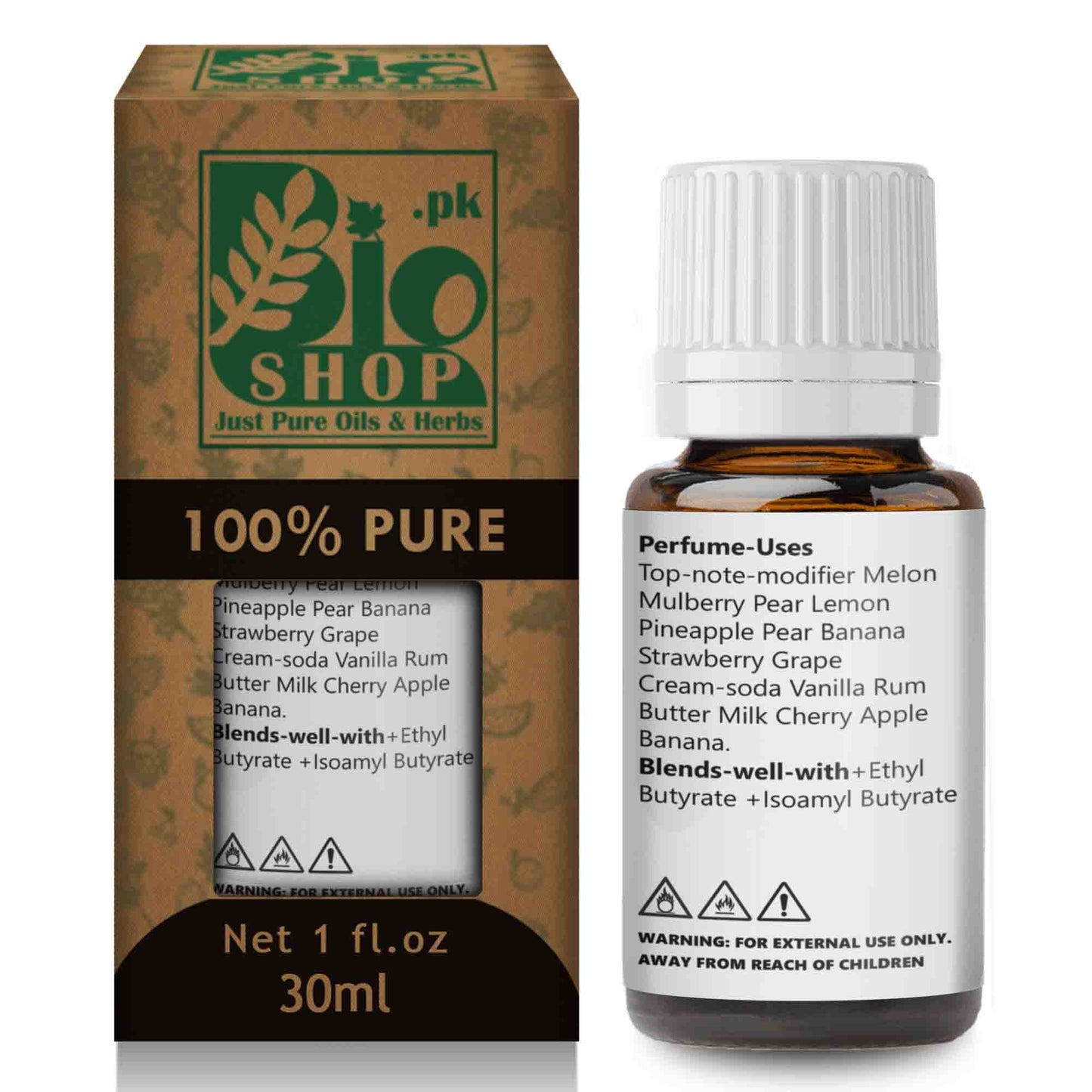
Olfactory Notes: Strong, sweet "Banana" or fruity-pear top note.
Couldn't load pickup availability

Explore
Information About Isoamyl Acetate
Key Features
✦ Classic banana-pear aroma chemical delivering a vivid, sweet, and instantly recognisable fruity character in any composition
✦ Functions as a top to top-mid note with strong initial diffusion and excellent short-range sillage
✦ Versatile across fine fragrance, home fragrance, personal care, and functional fragrance applications
✦ Synthetic ester with high purity (99%+) ensuring batch-to-batch consistency for professional formulation
✦ Featured in fruity floral, gourmand, fresh, and tropical fragrance families worldwide
✦ Vegan and cruelty-free — no animal-derived raw materials involved in production
✦ Cost-effective alternative to natural banana extract with superior stability and controlled odour intensity
About Isoamyl Acetate
Isoamyl Acetate is a short-chain ester formed by the esterification of isoamyl alcohol and acetic acid. It has been a cornerstone ingredient in flavour and fragrance chemistry since the late 19th century. Historically, it was one of the first synthetic aroma chemicals produced at commercial scale, and it remains a standard reference material in sensory evaluation and perfumery training worldwide. Its presence in nature, specifically in ripe bananas, pears, and certain apple varieties, gave rise to its widespread use as a banana flavouring in the food industry before it became equally important in cosmetic and fragrance applications.
What makes isoamyl acetate particularly valuable to formulators is its combination of intensity and volatility. A small concentration produces a powerful, diffusive fruity impact that lifts a blend immediately. It integrates smoothly with other fruity esters, citrus materials, musks, and florals, allowing perfumers to build complex tropical and gourmand accords without heavy or waxy undertones. Its low odour threshold means even trace amounts register strongly, giving formulators precise control over fruity character at minimal cost.
Bio Shop Pakistan supplies cosmetic-grade isoamyl acetate suitable for DIY perfumers, attar blenders, personal care product formulators, and home fragrance makers looking for a reliable, high-purity fruity base material.
Olfactory Profile
SCENT DESCRIPTION : Isoamyl Acetate opens with an immediate burst of ripe banana — sweet, juicy, and slightly candied — quickly softening into a pear-like freshness with a faint green edge. The initial impression is bold and diffusive, reminiscent of freshly peeled tropical fruit on a warm day. As it dries down, the sweetness mellows without disappearing entirely, leaving a clean, softly fruity trail that blends seamlessly with musks and florals. There is a barely perceptible solvent note at high concentrations that vanishes entirely when diluted to working levels.
NOTE POSITION : Top / Top-Mid
FRAGRANCE FAMILY : Fruity · Fresh · Gourmand
FACETS : Banana · Pear · Sweet · Candy · Green
TENACITY : Low · 2 to 3 hours on blotter strip
SILLAGE : Medium · Projects clearly in the opening phase, diffuses broadly at close range, and fades gracefully rather than lingering
Technical Specifications
Chemical Name : 3-Methylbutyl acetate (Isopentyl acetate)
CAS Number : 123-92-2
Synonyms : Isopentyl acetate · Banana oil · Pear essence · Amyl acetate (isoform)
Purity % : 99% minimum
Appearance : Clear, colourless mobile liquid
Odor Threshold : Approximately 0.002 ppm (very low — use carefully)
Solubility : Slightly soluble in water · Fully miscible with ethanol, DPG, IPM, and most carrier oils
Specific Gravity : 0.870 – 0.876 at 20°C
Flash Point : 77°C (171°F) — flammable liquid, handle with care
Type : Synthetic ester (also occurs naturally in banana and pear fruit)
Applications & Usage Guidelines
Fine Fragrance ★★★★★
Isoamyl Acetate is an essential building block in fruity floral, tropical, and gourmand fine fragrance compositions. It provides immediate olfactory impact, lifting the opening of any accord with vivid banana-pear character. It performs equally well in EDPs and EDTs when used within recommended limits.
Attar and Oriental Blending ★★★☆☆
In attar and oriental work, isoamyl acetate adds a contrasting fruity freshness that balances heavy resins, ouds, and musks. It must be used at lower concentrations to avoid dominating the blend, but when restrained, it creates compelling sweet-fruity oriental accords.
Functional Fragrance ★★★★☆
Highly suited to body mists, deodorants, hair mists, and room sprays where bright, clean top-note diffusion is the primary goal. Its volatility is an advantage in functional applications where immediate perception matters more than longevity.
Cosmetics ★★★☆☆
Suitable for shampoos, shower gels, body lotions, and bath products at moderate usage levels. Stability in high-pH formulations such as bar soap should be monitored, as ester hydrolysis can reduce scent performance over time.
Home Fragrance ★★★★☆
Performs well in reed diffusers and room sprays, delivering a clean fruity note with good initial diffusion. In candles, it is functional but should be tested carefully for flash point compliance and scent throw at temperature.
IFRA & Usage Rate
RECOMMENDED USAGE RATES
EDP (Eau de Parfum) : 10 – 20%
EDT (Eau de Toilette) : 5 – 15%
Body Lotion / Cream : 1 – 3%
Shampoo / Body Wash : 0.5 – 2%
Candle : 5 – 10%
Reed Diffuser : 10 – 25%
Bar Soap : 0.5 – 1.5%
IFRA 51ST AMENDMENT GUIDELINES
Isoamyl Acetate is not classified as a restricted sensitiser under the IFRA 51st Amendment. No quantitative restriction amendment (QRA) limits apply to isoamyl acetate based on current IFRA standards. Standard industry usage rates and good manufacturing practice apply.
⚠️ Always perform a skin patch test in your finished product before launch.
⚠️ Flash point is 77°C — ensure candle and hot-process soap temperatures are managed carefully.
⚠️ In alkaline soap bases, ester hydrolysis may reduce scent performance — test stability over 4 to 6 weeks.
⚠️ Odour threshold is extremely low — begin trials at the lower end of usage ranges to avoid overpowering the blend.
Blending Guide
USAGE METHOD 1 — Direct in Alcohol Base
Dissolve isoamyl acetate directly in perfumer's alcohol (ethanol 95% or IPM blend) at the desired concentration. Shake well and allow a 48-hour maceration before evaluating the blend. The top note impact will be most apparent in the first 30 minutes of wear.
USAGE METHOD 2 — Pre-dilution for Precision
Due to its very low odour threshold, dilute isoamyl acetate to a 10% solution in DPG or IPM before use in blending sessions. This gives you greater control over drop-by-drop additions and reduces the risk of overloading a composition.
USAGE METHOD 3 — In Accord Construction
Build a fruity accord by combining isoamyl acetate with other fruity esters and lactones first, then evaluate the accord as a unit before introducing it into the full fragrance. This prevents individual materials from dominating unintentionally.
BEST PAIRINGS
Ethyl Butyrate → Deepens the fruity profile, adding tropical peach and pineapple nuance
Linalool → Softens the candy edge, creating a natural floral-fruity balance
Benzyl Acetate → Adds jasmine-fruity contrast for a more complex floral direction
Hedione → Lifts and diffuses the accord with a transparent, dewy quality
Ambrette Seed → Grounds the fruity top with a soft musky base for longer wear
Citral → Adds a bright lemony-citrus contrast for fresh summer accords
Vanillin → Pushes the composition into a sweet gourmand territory
AVOID
Avoid combining with heavy smoky or phenolic materials such as guaiacol or cresols — the contrast is jarring and unbalanced. Also avoid very high concentrations in alkaline soap bases without stability testing.
Perfumer's Note
Working with isoamyl acetate reminds me why simple molecules are often the most powerful tools in a perfumer's kit. One drop too many and your entire blend becomes a candy shop — one drop too few and you miss that vivid fruity spark entirely. I always say that isoamyl acetate teaches restraint better than any lecture can. When I use it at around 2 to 5% in a floral or fresh composition, it creates this effortless sense of fruit-on-skin that feels completely natural, not synthetic, not artificial — just alive and immediate. It is the difference between a fragrance that smells composed and one that smells like you just walked through a fruit market in the rain.
ADVANCED TIP : Try running isoamyl acetate at 1% alongside ethyl maltol at 0.5% and hedione at 8% in an EDT base. The combination produces a transparent fruity-floral halo effect that reads as extremely modern and wearable. The ethyl maltol amplifies the sweet character without adding heaviness, while hedione provides the diffusion. This micro-accord works particularly well in skin-scent and skin-care crossover fragrances aimed at younger consumers.
Safety & Storage
Physical State : Clear colourless liquid at room temperature
Skin Safety : Generally recognised as safe at recommended usage levels · Patch test finished products before use
Eye Contact : Avoid direct contact · Rinse thoroughly with clean water for 15 minutes if contact occurs · Seek medical advice if irritation persists
Ingestion : Not for internal use · Keep out of reach of children · Seek immediate medical assistance if swallowed
Ventilation : Use in a well-ventilated workspace · Vapours can accumulate at high concentrations indoors
Storage : Store in a tightly sealed container away from heat, open flames, and direct sunlight · Ideal storage temperature 10°C to 25°C
Shelf Life : 24 to 36 months when stored correctly in sealed original container
Container : Glass or HDPE containers recommended · Avoid PVC or polystyrene containers
Flammability : Flammable liquid · Flash point 77°C · Keep away from naked flames and heat sources · Do not store near ignition sources
FAQ
Q: What does Isoamyl Acetate smell like?
A: It smells like ripe banana with a pear-like sweetness and a faint candied edge. At high concentrations there is a slight solvent note that disappears completely when diluted to working levels.
Q: How much Isoamyl Acetate should I use in a perfume?
A: Start between 2 and 5% in an EDP or EDT. Its odour threshold is extremely low, so small amounts create a strong impression. Always dilute to a 10% solution first for easier blending control.
Q: Can I use Isoamyl Acetate in soap making?
A: Yes, but with caution. As an ester, it is susceptible to hydrolysis in high-pH environments like cold-process soap. Use at 0.5 to 1.5% and test scent retention over four to six weeks before finalising your formula.
Q: Is Isoamyl Acetate safe for skin products like lotions and body wash?
A: Yes, it is widely used in personal care at 0.5 to 3% depending on the product type. Always patch test finished formulations. It is not a known sensitiser under current IFRA guidelines.
Q: How does synthetic Isoamyl Acetate compare to natural banana extract?
A: Synthetic isoamyl acetate is far more consistent, stable, and cost-effective than natural banana extract. Natural extracts vary significantly in potency and composition by batch, while synthetic isoamyl acetate delivers identical performance every time at a fraction of the cost — making it the industry standard for professional formulation.
Where Can You Safely Use Isoamyl Acetate?
Discover how Isoamyl Acetate performs across different applications—rated for safety, stability, and effectiveness.