

Bio Shop
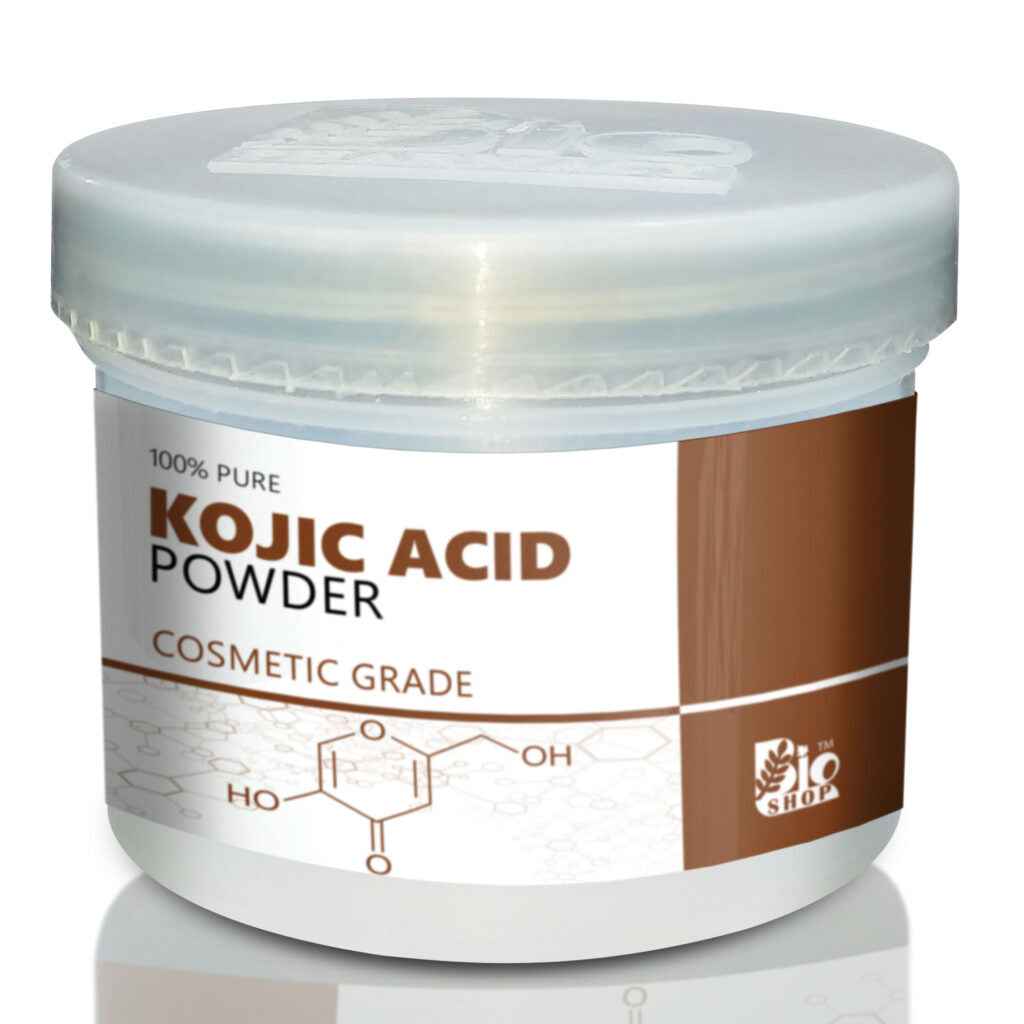
Kojic Acid Dipalmitate
Kojic Acid Dipalmitate
Key Functions: Inhibits tyrosinase, brightens skin tone, fades hyperpigmentation, and stabilizes in oil phase.
Couldn't load pickup availability
Explore
Information About Kojic Acid Dipalmitate
✅ Key Features
✦ Oil-soluble tyrosinase inhibitor that visibly reduces melanin overproduction and brightens uneven skin tone.
✦ Highly stable ester form of kojic acid — resistant to oxidation, yellowing, and pH-related degradation.
✦ Fades dark spots, melasma, post-acne hyperpigmentation, and age-related discoloration with continued use.
✦ Integrates cleanly into the oil phase of emulsions, anhydrous balms, and serums without formulation disruption.
✦ Compatible with niacinamide, vitamin C derivatives, AHA blends, and retinoids for multi-pathway brightening.
✦ Suitable for leave-on skincare including brightening serums, creams, spot correctors, and body oils.
✦ Plant-derived origin; suitable for vegan cosmetic formulations.
🔬 Description
Kojic Acid Dipalmitate is a lipophilic ester formed by the double esterification of kojic acid with palmitic acid, a naturally occurring fatty acid found in palm and rice bran oil. Kojic acid itself was first isolated from Aspergillus oryzae during sake fermentation in Japan and has been used in cosmetics as a skin brightening agent since the 1980s. The dipalmitate form was developed specifically to address the significant stability and water-solubility limitations of the parent molecule, making it far more practical for modern cosmetic formulation.
What sets Kojic Acid Dipalmitate apart is its superior chemical stability combined with oil compatibility. Once incorporated into skin, it undergoes enzymatic hydrolysis and releases active kojic acid directly at the site of action. This targeted delivery mechanism allows it to inhibit tyrosinase — the enzyme responsible for melanin synthesis — with controlled efficiency while avoiding the rapid degradation and discoloration associated with free kojic acid. It also contributes mild antioxidant activity, reinforcing its value as a multifunctional brightening active in professional formulations.
Bio Shop Pakistan supplies cosmetic-grade Kojic Acid Dipalmitate suitable for DIY skincare formulators, professional cosmetic chemists, soap makers, and beauty entrepreneurs developing brightening and anti-hyperpigmentation product lines.
📊 Technical Data
INCI Name : Kojic Acid Dipalmitate
Chemical Name : Kojic Acid Dipalmitate (Bis-Palmitoyl Kojate)
CAS Number : 149591-38-8
Molecular Formula : C38H66O6
Appearance : White to off-white fine powder or waxy flakes
Odor : Odorless to faint characteristic
pH (1% solution) : Not Applicable (oil-soluble solid)
Solubility : Oil soluble; insoluble in water
Specific Gravity : Verify with supplier
Flash Point : Above 100°C
HLB Value : Not Applicable
Recommended Use Level : 0.5–3.0%
Type : Oil-soluble skin brightening active
Shelf Life : 24 months when stored properly
🧪 Recommended Usage
Skincare (Creams, Serums, Lotions) ★★★★★
This is the primary application for Kojic Acid Dipalmitate, where it functions as a core brightening active in both oil-in-water and water-in-oil emulsions. Incorporate at 1–3% into the oil phase at 60–70°C, or pre-dissolve in a carrier oil before blending into serums.
Haircare (Shampoo, Conditioner, Masks) ★★☆☆☆
Kojic Acid Dipalmitate is not a standard ingredient in haircare and provides minimal benefit in this category. Not recommended unless formulating a scalp-specific hyperpigmentation treatment where oil solubility is an advantage.
Soap Making (Cold Process, Melt and Pour) ★★★☆☆
The high alkaline pH of cold process saponification will hydrolyze the ester and reduce brightening efficacy significantly. For melt-and-pour bases, dissolve at 0.5–1% in a small amount of carrier oil before blending for improved distribution and better results.
Body Care (Scrubs, Butters, Balms) ★★★★☆
Performs very well in anhydrous body butters, oil-based scrubs, and balms due to its natural oil solubility. Use at 1–2% in body brightening formulas targeting elbows, knees, underarms, and areas prone to friction-related hyperpigmentation.
Functional Cosmetics (Deodorants, Sunscreen, Baby Care) ★★★☆☆
Can be incorporated into sunscreen formulations to provide combined UV protection and anti-pigmentation activity in one product. Not recommended for baby care; use with standard precautions in deodorant bases and keep concentration at or below 1%.
💡 Pro Tip
When I formulate with Kojic Acid Dipalmitate, I treat it as a true multifunctional active rather than a simple whitening add-in. Because it releases kojic acid enzymatically within the skin, I can pair it with niacinamide to address two distinct melanogenesis pathways simultaneously without redundancy. I always include a chelating agent — either disodium EDTA or phytic acid — to protect the active from trace metal-induced oxidation, which is one of the primary causes of premature yellowing in brightening formulas that most formulators overlook.
ADVANCED TIP: Dissolve Kojic Acid Dipalmitate at 2% into the oil phase at 65°C alongside a light silicone such as cyclomethicone at 3–5%. After emulsification and cooling below 40°C, add niacinamide at 4% and ascorbyl glucoside at 2% into the water phase, with disodium EDTA at 0.1% and tocopherol at 0.5% included as antioxidant support. This layered multi-pathway approach targets tyrosinase inhibition, melanosome transfer blockade, and oxidative pigmentation in a single stable emulsion with a working pH of 5.5.
👩🔬 Skin Type Suitability
Normal Skin : ★★★★★ — Delivers visible brightening and tone-evening without disrupting a healthy balanced skin barrier.
Dry Skin : ★★★★☆ — Works effectively in emollient-rich carriers; the palmitate chains provide mild supplementary moisturization.
Oily Skin : ★★★☆☆ — Effective for fading dark spots but requires non-comedogenic lightweight oil carriers to prevent congestion.
Combination : ★★★★☆ — Well-suited when delivered via lightweight emulsions that balance oil control and hydration across skin zones.
Sensitive Skin : ★★★☆☆ — Milder than kojic acid but patch testing is still advised; begin at 0.5% and increase only if well tolerated.
Mature Skin : ★★★★★ — Excellent for addressing age spots, solar lentigines, and the uneven pigmentation associated with photo-aged skin.
Acne-Prone : ★★★☆☆ — Valuable for fading post-inflammatory hyperpigmentation but must be paired with non-comedogenic ingredients to avoid aggravating breakouts.
🧴 Formulation Ideas
CONCEPT 1: Advanced Brightening Face Serum
Usage Level : 2%
Key Ingredients: Niacinamide 5%, Ascorbyl Glucoside 2%, Hyaluronic Acid 1%, Ferulic Acid 0.5%
Result : A lightweight multi-pathway brightening serum targeting tyrosinase inhibition, melanosome transfer reduction, and oxidative pigmentation for visibly even and radiant skin tone.
CONCEPT 2: Kojic Brightening Night Cream
Usage Level : 2.5%
Key Ingredients: Shea Butter, Cetyl Alcohol, Allantoin 0.5%, Retinyl Palmitate 0.3%
Result : A rich overnight renewal cream combining brightening actives with skin barrier support to progressively fade dark spots and improve overall radiance during sleep.
CONCEPT 3: Brightening Dry Body Oil
Usage Level : 1.5%
Key Ingredients: Rosehip Seed Oil, Sea Buckthorn CO2 Extract 0.5%, Tocopherol 1%, Argan Oil
Result : A luxurious fast-absorbing body oil that delivers targeted brightening to elbows, knees, and uneven body tone while deeply nourishing skin with antioxidant-rich carrier oils.
💧 Safety and Regulatory:
INCI Declared : Yes — required on all finished cosmetic product labels
EU Cosmetics Reg : Permitted — Kojic Acid Dipalmitate is not listed in Annex II or III; it is a chemically distinct compound from restricted Kojic Acid (Annex III Entry 243, max 1% in face and hand creams)
Rinse-Off Limit : No regulatory limit established for Kojic Acid Dipalmitate specifically
Leave-On Limit : No regulatory limit established; industry standard practice is 0.5–3%
Allergen Alert : No — no known fragrance allergens present; patch test advised for sensitive users
Skin Safety : Safe at recommended use levels of 0.5–3%
Eye Area Use : Use with caution — avoid direct contact with eyes
Ingestion : Not for internal use
Pregnancy Use : Consult physician before use during pregnancy
Child Safety : Avoid use on children under 12 years; use diluted and with caution on adolescents
Ventilation : Not required under normal cosmetic handling conditions
Storage : Cool dry place below 25°C, away from direct light and moisture
Container : HDPE or glass container; avoid reactive metal packaging and prolonged UV exposure
⚠️ Although Kojic Acid Dipalmitate is substantially more stable than free Kojic Acid, it releases active kojic acid upon enzymatic contact with skin. Formulators supplying EU markets should note that the regulatory distinction between Kojic Acid and its ester derivatives is subject to ongoing SCCS scientific review. Perform patch testing at concentrations above 2% for sensitive skin end users and monitor for any emerging regulatory updates under the EU Cosmetics Regulation.
Stability and Compatibility
Working pH Range : 4.0–7.0 (optimal performance between 5.0 and 6.5)
Heat Stability : Stable up to 80°C; incorporate into oil phase during emulsification at 60–70°C
Freeze-Thaw Stable : Yes
Emulsion Type : O/W / W/O / Both
Emulsification Phase: Hot (oil phase)
Compatible With : Niacinamide, tocopherol, ferulic acid, hyaluronic acid, retinyl palmitate, ascorbyl glucoside
Incompatible With : Strongly alkaline pH above 7.5; free ferrous or copper metal ions; redundant stacking with high-concentration free kojic acid
Oxidation Risk : Medium — include tocopherol at 0.5–1% or BHT at 0.02–0.05% to extend shelf stability
Discoloration Risk : Possible — high heat, UV exposure, alkaline pH, or trace metal contamination can cause yellowing
Formulation Notes : Always dissolve in the oil phase at 60–70°C prior to emulsification. Include a chelating agent such as disodium EDTA at 0.1–0.2% to prevent trace-metal-catalyzed degradation and preserve the finished product's color stability over shelf life.
❓ FAQs
Q: What is the difference between Kojic Acid and Kojic Acid Dipalmitate?
A: Kojic Acid is water-soluble and highly unstable, prone to rapid oxidation and yellowing when exposed to air, light, or heat. Kojic Acid Dipalmitate is its oil-soluble ester form, offering far superior stability while delivering active kojic acid to the skin enzymatically upon application.
Q: At what percentage should I use Kojic Acid Dipalmitate in a face serum?
A: A standard effective range is 1–2% for daily-use brightening serums. For intensive spot treatments or formulations targeting stubborn melasma, you can use up to 3%. Exceeding 3% does not proportionally increase efficacy and may increase the risk of skin sensitization.
Q: Can I combine Kojic Acid Dipalmitate with Vitamin C in the same formula?
A: Yes, and this is a well-established brightening combination. Use stable vitamin C derivatives such as ascorbyl glucoside or sodium ascorbyl phosphate rather than pure ascorbic acid, and keep formulation pH between 5.0 and 6.5 to ensure compatibility and stability of both actives.
Q: Does Kojic Acid Dipalmitate work in cold process soap?
A: Efficacy is significantly reduced in cold process soap because the high alkaline pH of saponification hydrolyzes the ester linkage before it can act on skin. It performs considerably better in melt-and-pour and syndet bar formulations where processing conditions and pH are controlled.
Q: How does Kojic Acid Dipalmitate compare to Alpha Arbutin as a brightening agent?
A: Both inhibit tyrosinase but through distinct mechanisms and phases. Alpha Arbutin is water-soluble and acts directly, making it ideal for the water phase of emulsions, while Kojic Acid Dipalmitate is oil-soluble and delivers kojic acid via enzymatic hydrolysis from the oil phase. Many professional formulators combine both in a single formula to achieve broader melanogenesis inhibition across two separate pathways.
Where Can You Safely Use Kojic Acid Dipalmitate
Discover how Kojic Acid Dipalmitate performs across different products — rated for safety, stability, and effectiveness.
Assalam o alaikum everyone.!
You can trust this web ... Cash on delivery as well as online transactions.
Good experience
January se December tak consistent use kiya. Skin tone 2 shades even aur brighter. Melasma patches almost gone. Bio Shop kojic acid dipalmitate quality hamesha consistent rahi. Saal ka best skincare investment. Highly recommend to everyone.
Kojic acid brightening ke liye SPF zaroor lagao warna sunlight se pigmentation wapas aati hai. Yeh tip bohut zaroori hai. Bio Shop quality excellent - ingredient properly kaam karta hai jab SPF ke saath combine karo. Results maintained.
Absolutely essential advice! Any brightening routine must include SPF - without sun protection melanin production continues and cancels out your brightening efforts. Always use SPF 30+ when using Kojic Acid Dipalmitate!
Your Kojic acid powder results was good


