


Bio Shop
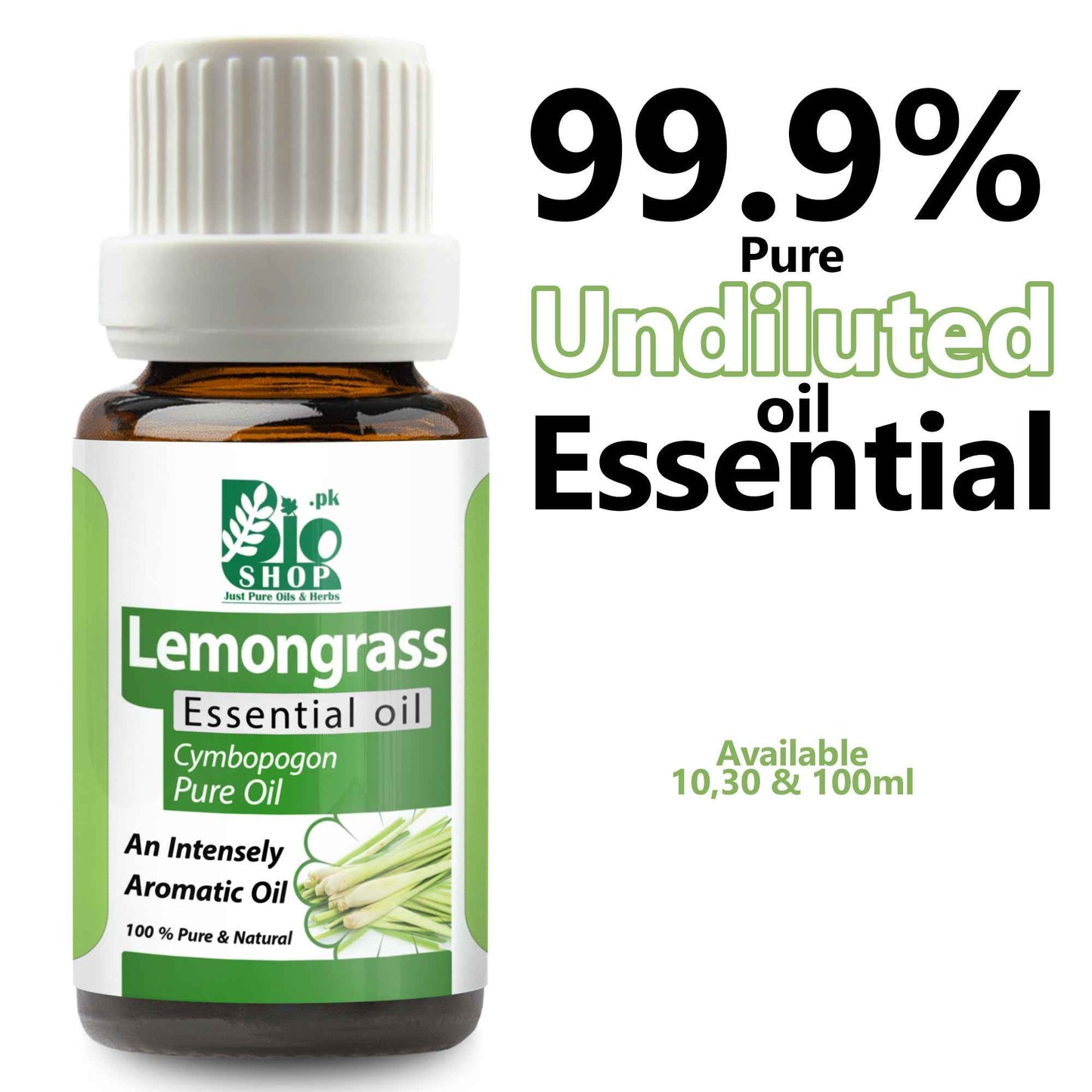
Lemongrass Essential Oil
Lemongrass Essential Oil
Olfactory Notes: Sharp, lemony, fresh herbal citrus.
Couldn't load pickup availability


Explore
Information About Lemongrass Essential Oil
Key Features
✦ 100% pure steam-distilled essential oil from Cymbopogon flexuosus leaves and stems
✦ High citral content (65–85%) delivering a sharp, clean, and intensely lemony scent character
✦ Cornerstone ingredient in functional fragrance — detergents, floor cleaners, surface sprays
✦ Widely used in soaps, shampoos, body washes, and reed diffusers at regulated rates
✦ Strong natural insect-repellent reputation; used in candles and outdoor fragrance blends
✦ IFRA-regulated due to citral sensitization potential — skin-safe at correct usage rates
✦ Vegan, natural, and cruelty-free; no animal-derived ingredients or by-products
About Lemongrass Essential Oil
Lemongrass essential oil has been in commercial use for well over a century, with cultivation concentrated in India, Sri Lanka, Vietnam, and parts of Africa. The East Indian variety, Cymbopogon flexuosus, is the primary commercial source and produces an oil with the highest citral content and the brightest, cleanest lemon profile. Historically, the plant was used in Ayurvedic medicine and traditional cooking across South Asia before the fragrance and essential oil industry recognized its enormous commercial potential in the early twentieth century.
What sets lemongrass apart from synthetic lemon materials is its complexity. Beyond citral, the oil contains geraniol, limonene, myrcene, and a range of minor terpene and ester compounds that give it a naturalistic depth no single aromatic chemical can replicate. This complexity makes it particularly effective in functional fragrance applications where a clean, lifted, and natural-smelling lemon note is required. It diffuses powerfully, retains its character in alkaline soap environments better than many citrus oils, and performs consistently across a wide range of finished product formats.
Bio Shop Pakistan supplies cosmetic-grade lemongrass essential oil suitable for DIY perfumers, soap and candle makers, home care formulators, attar blenders seeking natural green-citrus accords, and professional fragrance developers looking for a reliable natural citral-rich base material.
Olfactory Profile
SCENT DESCRIPTION : Lemongrass opens with a sharp, almost bracing burst of fresh lemon that is cleaner and more linear than lemon peel oil. It carries a distinct grassy, herbaceous undertone that keeps the citrus character from reading as purely fruity. As it dries down, a faint earthy warmth emerges from the geraniol and terpenic background, softening the sharp top without losing the characteristic brightness. The overall impression is bold, clean, invigorating, and unmistakably natural.
NOTE POSITION : Top to Top-Mid
FRAGRANCE FAMILY : Citrus · Green · Herbaceous
FACETS : Sharp · Grassy · Lemony · Herbaceous · Clean
TENACITY : Medium — 4 to 6 hours; stronger in functional and rinse-off formats
SILLAGE : High — projects strongly at low concentrations; very detectable in room diffusion and soap applications
Technical Specifications
CHEMICAL NAME : Cymbopogon flexuosus herb oil (East Indian Lemongrass)
CAS NUMBER : 8007-02-1
SYNONYMS : East Indian Lemongrass Oil · Cochin Lemongrass Oil · Cymbopogon flexuosus oil · Citral essential oil
PURITY : 100% pure essential oil (verify citral content with supplier CoA)
APPEARANCE : Yellow to amber mobile liquid
ODOR THRESHOLD : Very low — detectable at trace concentrations in finished blends
SOLUBILITY : Insoluble in water · Soluble in ethanol, fixed oils, and mineral oil · Dispersible in PEG-40 hydrogenated castor oil
SPECIFIC GRAVITY : 0.869 – 0.894 at 20°C (verify with supplier)
FLASH POINT : Approximately 70–75°C (verify with supplier CoA)
TYPE : Natural · Steam-distilled essential oil
Applications & Usage Guidelines
Fine Fragrance ★★★★☆
Lemongrass is widely used as a natural citrus-green top note in EDPs and EDTs at 1 to 3 percent. Its citral richness pairs effectively with floral musks, woods, and vetiver bases. IFRA skin-contact limits must be observed carefully in leave-on fine fragrance formats.
Attar & Oriental Blending ★★★★☆
In attar formulation, lemongrass bridges fresh and earthy accords and adds a lifted green-citrus opening over sandalwood, oud, and earthy bases. Pakistani and Gulf-style fresh attars often use it at 2 to 5 percent to achieve a clean, uplifting opening character.
Functional Fragrance ★★★★★
This is lemongrass's strongest commercial application. In detergents, floor cleaners, dish soap, and surface sprays, it delivers a powerful clean-lemon impression at 0.5 to 2 percent. Its high citral content provides natural antibacterial perception and excellent olfactory value at low cost-in-use.
Soap & Personal Care ★★★★☆
Lemongrass performs well in cold process and hot process soap at 1 to 2 percent of oil weight. In shampoos and body washes it provides a fresh, invigorating lemon-herbal note. IFRA rinse-off limits allow reasonable usage, though formulation should account for citral oxidation in high-pH soap.
Home Fragrance ★★★★★
In reed diffusers, room sprays, and candles, lemongrass performs excellently with no skin-contact restrictions limiting usage. It provides strong throw, excellent diffusion, and a universally recognized clean-fresh scent that is commercially popular in all segments of the home fragrance market.
IFRA & Usage Rate
RECOMMENDED USAGE RATES
EDP (Eau de Parfum) : 1.0 – 3.0%
EDT (Eau de Toilette) : 1.5 – 4.0%
Body Lotion / Cream : Up to 0.5% (IFRA limit applies)
Shampoo / Body Wash : Up to 1.0% (rinse-off)
Cold Process Soap : 1.0 – 2.0% of oil weight
Candle : 3.0 – 8.0%
Reed Diffuser : 5.0 – 15.0%
Detergent / Floor Cleaner : 0.5 – 2.0%
Fabric Softener : Up to 5.0%
IFRA 51ST AMENDMENT LIMITS (Cymbopogon flexuosus oil)
Category 1 — Lip products : 0.1%
Category 2 — Deodorant / Antiperspirant : 0.7%
Category 4 — Body lotion / Face cream : 0.5%
Category 5A — Hand cream (rinse-off) : 1.0%
Category 6 — Mouthwash / Oral care : Not permitted
Category 9 — Shampoo / Body wash (rinse-off) : 1.0%
Category 10 — Fabric softener : 5.0%
Category 11 — Candle / Non-skin-contact : No restriction
Category 12 — Air freshener / Reed diffuser : No restriction
⚠️ Lemongrass oil contains high levels of citral, a known skin sensitizer. Exceeding IFRA limits in leave-on skin-contact products may cause allergic sensitization, particularly in sensitive individuals and children.
⚠️ Always perform a stability and compatibility check when using in high-pH soap bases. Citral can degrade in strongly alkaline environments, affecting scent longevity.
⚠️ EU Cosmetics Regulation requires citral to be listed as a declared allergen on product labels when it exceeds 0.001% in rinse-off products and 0.0001% in leave-on products. Verify finished product citral concentration before labeling.
⚠️ All IFRA limits must be verified independently at ifrafragrance.org before commercial formulation.
Blending Guide
METHOD 1 — DIRECT ADDITION TO FORMULA
Add lemongrass essential oil directly to your fragrance base or finished formulation after weighing on a precision scale. It mixes readily in ethanol and fixed oils without heating. When adding to soap batter, ensure temperatures are below 50°C to minimize citral evaporation and discoloration.
METHOD 2 — PRE-DILUTION IN CARRIER OIL
For skin-contact applications such as massage oils, roll-ons, or body serums, pre-dilute lemongrass in a carrier oil such as fractionated coconut or sweet almond oil at 1 to 3 percent before final formulation. This reduces the risk of skin irritation from undiluted citral exposure and makes dosing easier at low usage rates.
METHOD 3 — FUNCTIONAL FRAGRANCE BASE BUILDING
In household cleaning products and detergent fragrance blends, lemongrass forms a powerful base when combined with pine needle or eucalyptus at a 60:20:20 ratio. This creates a universally recognizable "clean" fragrance accord that performs well across surface cleaners, toilet blocks, and dishwashing liquids.
BEST PAIRINGS
Bergamot EO → Lifts and rounds the sharp citral edge; adds a sweet-floral brightness
Lavender EO → Classic aromatherapy accord; balances herbal and citrus facets
Geranium EO → Green-floral bridge; amplifies the geraniol facet naturally present in lemongrass
Cedarwood EO → Grounds the top note; adds dry woody depth for fine fragrance use
Vetiver EO → Earthy-smoky contrast; builds elegant fresh-earthy oriental accords
Eucalyptus EO → Amplifies the clean-fresh effect; excellent in functional fragrance
Citronella EO → Reinforces the citral core; builds potent outdoor and insect-repellent blends
Peppermint EO → High-energy fresh accord; strong performer in home care and spa blends
ISO E Super → Adds woody diffusion and longevity without competing with the citrus character
Citral (aroma chem) → Boosts citral content for more intense lemon impact in functional fragrance
AVOID
Avoid combining at high concentrations with other high-citral materials such as Litsea Cubeba or Melissa oil without calculating total citral contribution across all ingredients for IFRA compliance.
Perfumer's Note
Lemongrass is one of those materials I reach for constantly in functional fragrance work — not because it is particularly glamorous, but because it is genuinely irreplaceable. Synthetic citral gives you the note, but lemongrass gives you the story. There is a slightly rough, grassy honesty to it that reads as natural immediately on first contact, and in a floor cleaner or a dishwash liquid, that naturalness is worth more than any amount of synthetic brightness. In fine fragrance, I use it sparingly as a structural sharpener — a drop or two to cut through the sweetness of a floral or add lift to a green-woody composition. Its tenacity in alcohol is medium, so it always needs a woody or musky anchor in leave-on applications.
ADVANCED TIP : In cold process soap, citral degrades under high alkalinity and heat, which shortens the lemon impression in the cured bar. To counteract this, blend your lemongrass with a small amount of litsea cubeba essential oil at a 70:30 ratio before adding to your batter. Litsea cubeba has a slightly different citral isomer profile and behaves more resiliently in high-pH environments. The combination extends the perceived lemon note in the cured soap by several weeks compared to lemongrass used alone.
Safety & Storage
PHYSICAL STATE : Yellow to amber mobile liquid at room temperature
SKIN SAFETY : Dilute before skin contact · Leave-on applications must comply with IFRA limits · Citral is a potential skin sensitizer; avoid use on broken or irritated skin · Patch test recommended for sensitive skin
EYE CONTACT : Irritant · Avoid direct contact with eyes · If contact occurs, rinse immediately with clean water for 15 minutes and seek medical advice if irritation persists
INGESTION : Not for internal use · Keep out of reach of children · If accidentally ingested, seek immediate medical assistance · Do not induce vomiting
VENTILATION : Use in a well-ventilated area · Avoid prolonged inhalation of concentrated vapors · Essential oil diffusers should be used intermittently, not continuously in enclosed spaces
STORAGE : Store in a tightly sealed amber or dark glass bottle · Keep away from direct sunlight, heat sources, and open flames · Ideal storage temperature 10–25°C
SHELF LIFE : 12 to 24 months from opening when stored correctly · Citral-rich oils oxidize with age — check for sourness or rancid notes before use · Discard if scent profile has significantly changed
CONTAINER : Amber glass preferred · HDPE plastic acceptable for short-term storage · Avoid PET or transparent plastics for long-term storage
FLAMMABILITY : Combustible liquid · Flash point approximately 70–75°C · Keep away from open flames, sparks, and heating elements · Not classified as a flammable liquid under standard transport regulations at this flash point, but exercise standard precautions
FAQ
Q: What is lemongrass essential oil used for in DIY fragrance?
A: It is used as a natural citrus-green top note in perfumes, colognes, and attars. It is especially valued in fresh, clean, and functional fragrance blends for soaps, detergents, and home care products.
Q: Is lemongrass essential oil safe to use directly on skin?
A: No. Lemongrass must always be diluted before skin contact. It contains high levels of citral, a skin sensitizer, and must be used within IFRA 51st Amendment limits for each application type. Leave-on products require especially conservative dilution.
Q: Can I use lemongrass in cold process soap?
A: Yes, at 1 to 2 percent of total oil weight. Be aware that high-pH soap batter can degrade citral over time, reducing scent longevity in the cured bar. Blending with litsea cubeba helps improve stability and extends the lemon impression.
Q: Does lemongrass essential oil require allergen labeling?
A: Yes. Citral, the primary component of lemongrass oil, is a declared allergen under EU Cosmetics Regulation. It must be listed on labels when it exceeds 0.001% in rinse-off products and 0.0001% in leave-on products. Verify your finished product concentration before labeling.
Q: How does lemongrass essential oil compare to synthetic citral?
A: Synthetic citral is cleaner, more powerful, and more cost-efficient, but lacks the grassy, herbaceous complexity of lemongrass oil. Lemongrass reads as more natural and rounded due to its full terpene and ester profile. In fine fragrance and artisan applications, lemongrass is preferred for its naturalistic depth; in industrial functional fragrance, synthetic citral is often more practical.
Where Can You Safely Use Lemongrass Essential Oil?
Discover how Lemongrass Essential Oil performs across different applications—rated for safety, stability, and effectiveness.


