Skip to product information
1 of 3

Bio Shop

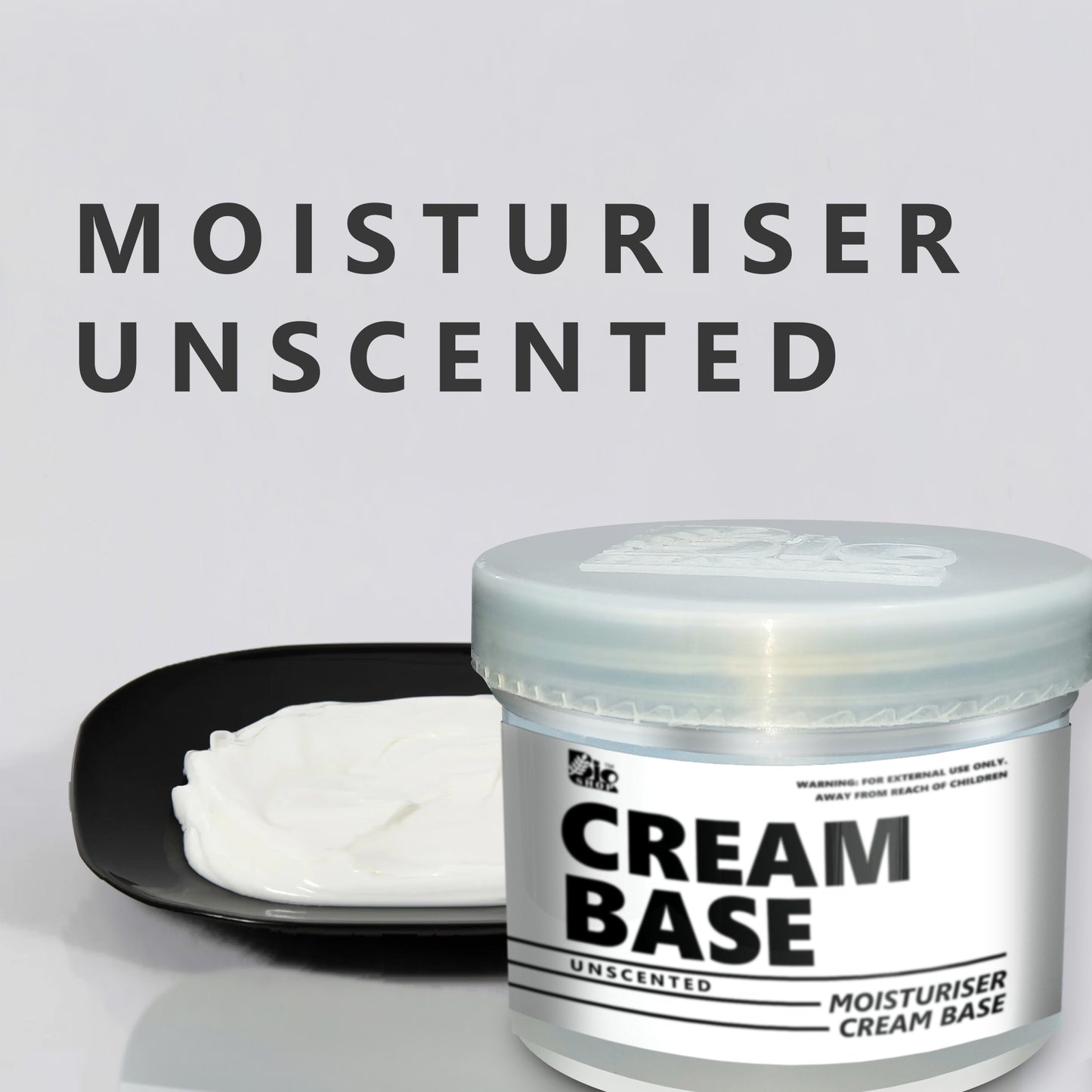
Moisturizing Cream Base

Moisturizing Cream Base

Regular price Rs.200.00
Regular price Rs.350.00 Sale price Rs.200.00
Sale Sold out
Shipping calculated at checkout.

Key Functions: Hydrates skin, serves as customizable base, provides smooth texture, and ensures stable emulsion.

Weight
Quantity
🚚 Estimated delivery time:
Learn More About This Ingredient View full details

Explore

Information About Moisturizing Cream Base

✅ Key Features

✦ Ready-to-use oil-in-water emulsion base that requires no emulsification from scratch
✦ Lightweight, non-greasy texture that absorbs quickly and leaves skin feeling soft
✦ Easily customizable with active ingredients, essential oils, fragrances, and botanical extracts
✦ Provides long-lasting moisture retention and improves skin smoothness
✦ Suitable for facial creams, body lotions, hand creams, and massage formulations
✦ Stable formulation base that maintains consistency across a range of added ingredients
✦ Ideal for beginners and professionals looking for a reliable starting point in product development

🔬 Description

Moisturizing Cream Base is a pre-formulated cosmetic emulsion designed to simplify the process of creating custom skincare products. It is a complete oil-in-water cream system that includes emulsifiers, humectants, and emollients already blended into a stable, smooth base. Cream bases have been a staple of cosmetic manufacturing for decades, allowing formulators to focus on active ingredients and customization rather than building emulsions from scratch.

What makes this base particularly valuable is its versatility and ease of use. The balanced emulsion system accepts a wide range of additives including water-soluble actives like niacinamide and hyaluronic acid, oil-soluble ingredients like vitamin E, and fragrance or essential oil blends. The base maintains its stability and texture even after customization, making it a dependable foundation for both small-batch and commercial production.

Bio Shop Pakistan supplies cosmetic-grade Moisturizing Cream Base suitable for DIY skincare formulators, beauty entrepreneurs, spa professionals, and cosmetic students.

📊 Technical Data

INCI Name : Aqua, Glycerin, Cetearyl Alcohol, Mineral Oil, Ceteareth-20 (typical composition — verify with supplier)
Chemical Name : Pre-formulated Oil-in-Water Emulsion Base
CAS Number : Not Applicable (multi-component blend)
Molecular Formula : Not Applicable
Appearance : White to off-white smooth cream
Odor : Mild, neutral or faintly waxy
pH (1% solution) : 5.5 to 7.0 (varies by supplier)
Solubility : Dispersible in water
Specific Gravity : 0.95 to 1.05 (typical)
Flash Point : Not Applicable
HLB Value : Not Applicable (pre-emulsified system)
Recommended Use Level : 70 to 95% of total formulation (base portion)
Type : Pre-formulated Emulsion Base
Shelf Life : 12 to 24 months when stored properly (verify with supplier)

🧪 Recommended Usage

Skincare (Creams, Serums, Lotions) ★★★★★
This is the primary application for moisturizing cream base, offering an ideal foundation for facial and body moisturizers. Add water-soluble actives at cool-down phase and blend gently to maintain emulsion stability.

Haircare (Leave-In Conditioners, Styling Creams) ★★★☆☆
Can be used as a base for leave-in conditioning creams or light styling products, though it is not optimized for rinse-off hair applications. Add lightweight oils like argan or jojoba at 2 to 5% for improved hair softness.

Soap Making (Cold Process, Melt and Pour) ★☆☆☆☆
Not suitable for soap making as it is an emulsion-based product and not a saponifiable material. This category does not apply to cream bases.

Body Care (Scrubs, Butters, Balms) ★★★★★
Excellent base for body creams, massage creams, and after-shower moisturizers. Incorporate exfoliants at 5 to 10% for a gentle scrub cream or shea butter at 3 to 5% for richer body cream formulations.

Functional Cosmetics (Deodorants, Sunscreen, Baby Care) ★★★★☆
Works well as a carrier base for zinc oxide sunscreens, gentle baby moisturizers, and barrier creams. Ensure any active sunscreen agents are properly dispersed and test final SPF independently.

💡 Pro Tip

As a formulator, I rely on cream bases when developing product prototypes or when clients need fast turnaround on custom skincare lines. The key to getting professional results from a cream base is restraint — overloading it with additives destabilizes the emulsion. I keep total additions under 15% of the base weight and always add water-soluble and oil-soluble ingredients separately, blending each thoroughly before combining.

ADVANCED TIP: When adding active serums or essential oils, cool the base to below 40°C first, then incorporate oil-phase additions at no more than 5% while mixing at low shear speed. If you need to thin the base for a lotion consistency, add distilled water at 5 to 10% incrementally while stirring — never dump water in all at once, as this can break the emulsion.

👩‍🔬 Skin Type Suitability

Normal Skin : ★★★★★ — Provides balanced hydration without heaviness, ideal everyday base.
Dry Skin : ★★★★☆ — Delivers good moisture but may need added oils or butters for severely dry skin.
Oily Skin : ★★★☆☆ — Can feel slightly heavy; reduce usage level or add mattifying agents for oily skin types.
Combination : ★★★★☆ — Works well on normal-to-dry zones; apply sparingly on oily areas.
Sensitive Skin : ★★★★☆ — Generally well-tolerated, but check supplier INCI for potential irritants like fragrance or parabens.
Mature Skin : ★★★★★ — Excellent carrier for anti-aging actives like retinol, peptides, and vitamin C derivatives.
Acne-Prone : ★★★☆☆ — May contain comedogenic ingredients like mineral oil; verify supplier formulation before use on acne-prone skin.

🧴 Formulation Ideas

CONCEPT 1: Vitamin C Brightening Day Cream
Usage Level : 85%
Key Ingredients: Sodium Ascorbyl Phosphate (3%), Niacinamide (4%), Hyaluronic Acid Solution (2%)
Result : A lightweight daily moisturizer that targets dullness, uneven tone, and fine lines with a smooth, non-greasy finish.

CONCEPT 2: Lavender Night Repair Cream
Usage Level : 80%
Key Ingredients: Rosehip Seed Oil (5%), Lavender Essential Oil (1%), Vitamin E Tocopherol (2%), Allantoin (0.5%)
Result : A nourishing overnight cream that supports skin repair, calms irritation, and leaves skin deeply hydrated by morning.

CONCEPT 3: Aloe Vera After-Sun Body Cream
Usage Level : 75%
Key Ingredients: Aloe Vera Gel (10%), Panthenol (3%), Peppermint Essential Oil (0.5%), Glycerin (5%)
Result : A cooling, soothing body cream that relieves sun-exposed skin while restoring moisture and reducing redness.

💧 Safety and Regulatory:

INCI Declared : Yes — full INCI of base components must appear on product label
EU Cosmetics Reg : Permitted — individual components must comply with EU Regulation 1223/2009
Rinse-Off Limit : No specific limit for the base itself; limits apply to individual components
Leave-On Limit : No specific limit for the base itself; limits apply to individual components
Allergen Alert : Possible — check supplier INCI for known allergens such as cetearyl alcohol sensitivity or added fragrance
Skin Safety : Safe at recommended levels; patch test advised when adding new actives
Eye Area Use : Use with caution — depends on specific base composition and added ingredients
Ingestion : Not for internal use
Pregnancy Use : Generally safe — verify base does not contain retinoids or restricted ingredients
Child Safety : Safe for children above 3 years when base is fragrance-free and paraben-free
Ventilation : Not required
Storage : Cool dry place away from direct sunlight; keep container tightly sealed
Container : HDPE or PET jars; airless pump bottles preferred for hygiene

⚠️ Always review the full INCI list from your supplier. Some cream bases contain parabens, mineral oil, or synthetic fragrance that may not be suitable for sensitive skin, baby care, or natural product claims.

Stability and Compatibility

Working pH Range : 5.0 to 7.5 (adding highly acidic actives below pH 4.0 may destabilize the emulsion)
Heat Stability : Stable up to 60°C; avoid prolonged heating above 70°C as emulsion may separate
Freeze-Thaw Stable : No — freezing can break the emulsion irreversibly
Emulsion Type : O/W (Oil-in-Water)
Emulsification Phase: Not Applicable — pre-emulsified system; add ingredients at cool-down phase
Compatible With : Water-soluble actives, glycerin, aloe vera, lightweight carrier oils, botanical extracts
Incompatible With : High concentrations of electrolytes (salts above 2%), strong acids below pH 3.5, high alcohol concentrations above 15%
Oxidation Risk : Low to Medium — depends on oil phase composition; add tocopherol at 0.5% as a precaution
Discoloration Risk : Possible — exposure to high heat, certain botanical extracts, or vanilla-based fragrances may cause yellowing
Formulation Notes : Always add heat-sensitive actives below 40°C. Total additives should not exceed 15 to 20% of base weight to maintain emulsion integrity. Blend gently at low shear to avoid air incorporation.

❓ FAQs

Q: Can I use this cream base as-is without adding anything?
A: Yes, moisturizing cream base works as a standalone daily moisturizer straight out of the container. However, customizing it with actives, essential oils, or extracts allows you to target specific skin concerns and create unique products.

Q: How much essential oil or fragrance can I add to this base?
A: For leave-on products, keep total fragrance or essential oil additions between 0.5 to 2% of the total weight. Going above 2% risks skin irritation and may destabilize the emulsion depending on the oil type.

Q: Do I need to add a preservative to this cream base?
A: Most commercial cream bases already contain a preservative system. Check the supplier INCI list to confirm. If you add water-based ingredients like aloe vera gel or hydrosols, you may need to boost preservation with a broad-spectrum preservative at 0.5 to 1%.

Q: Why did my cream base separate after adding ingredients?
A: Emulsion separation usually happens when too much additive is introduced at once, the ingredient pH is too extreme, or blending was too vigorous. Add ingredients slowly at below 40°C, keep total additions under 15%, and stir gently rather than using high-speed mixing.

Q: How does a cream base compare to making a cream from scratch with emulsifying wax?
A: A cream base saves significant time and eliminates the technical challenge of building a stable emulsion. Making cream from scratch with emulsifying wax gives full control over every ingredient and texture, but requires precise temperatures, HLB calculations, and formulation skill. Cream base is best for beginners and rapid prototyping, while from-scratch formulation suits advanced formulators wanting complete customization.

Where Can You Safely Use Moisturizing Cream Base

Discover how Moisturizing Cream Base performs across different products — rated for safety, stability, and effectiveness.

Skincare
Serums
2
Stability Issues
Creams & Lotions
9
Very Good
Eye Creams
6
Fair
Face Masks
7
Reasonable
Cleansers
3
Discoloration
Toners
0
Not Recommended
Lip Balms
2
Stability Issues
Ointments
5
Mediocre
Body & Hair Care
Body Butters
7
Reasonable
Shampoos
0
Not Recommended
Conditioners
4
Slight Issues
Hair Masks
3
Discoloration
Soap & Specialty
Soaps
0
Not Recommended
Deodorants
5
Mediocre