Bio Shop
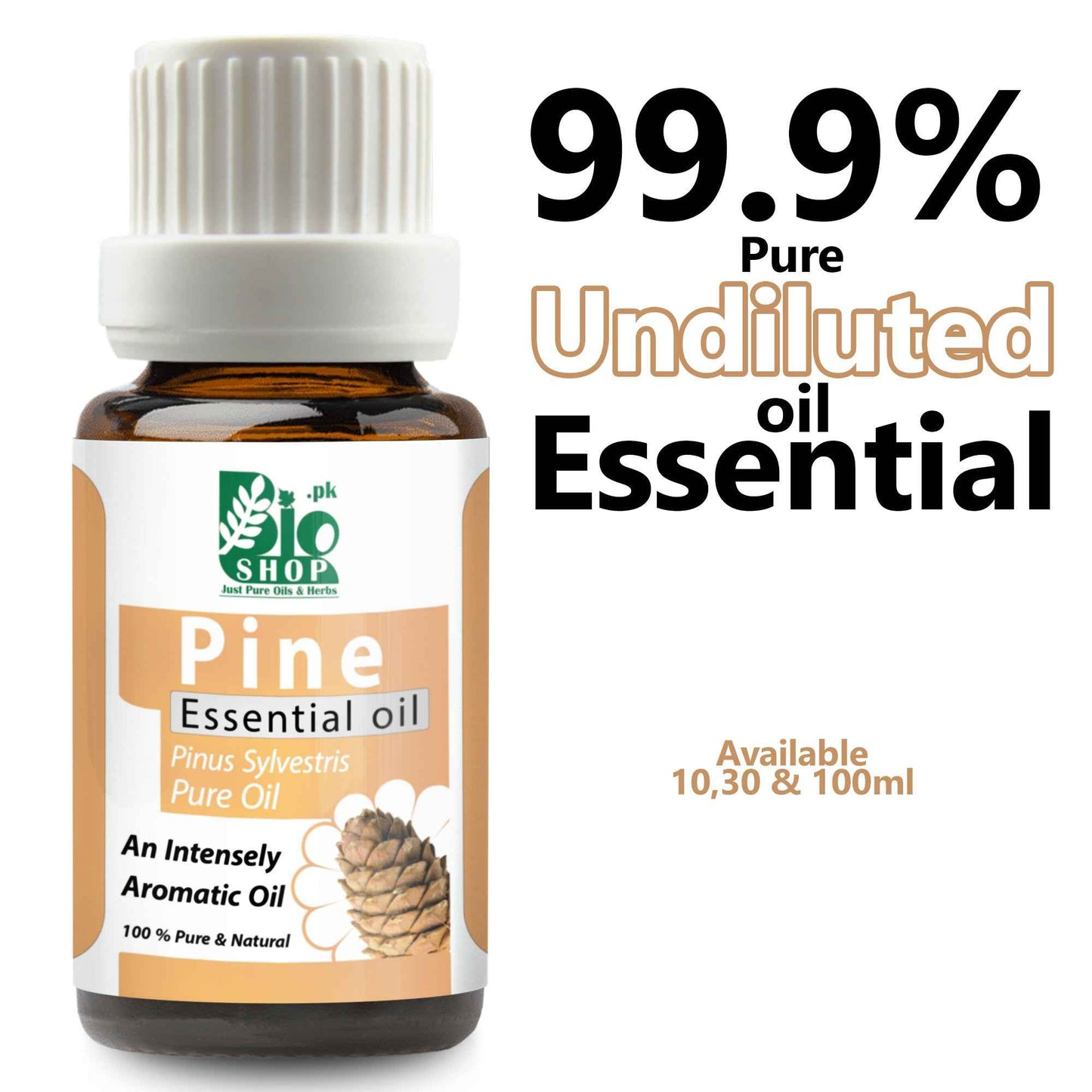
Pine Essential Oil
Pine Essential Oil
Olfactory Notes: Piney · Fresh · Resinous · Green · Woody · Sharp
Couldn't load pickup availability


Explore
Information About Pine Essential Oil
Key Features
✦ Pure Pinus sylvestris (Scots Pine) needle oil — the industry standard for pine fragrance in perfumery and personal care
✦ Rich in alpha-pinene and bornyl acetate — delivers an authentic fresh, resinous, forest-floor character
✦ Versatile across fine fragrance, functional fragrance, soap, shampoo, candles, and household cleaners
✦ Key building block in aromatic fougere, fresh chypre, and green woody masculine compositions
✦ Naturally antibacterial-associated scent — widely used in household and hygiene product categories
✦ Steam distilled from pine needles — natural, vegan, and not tested on animals
✦ Cosmetic-grade purity — suitable for leave-on and rinse-off formulations within recommended usage limits
About Pine Essential Oil
Pine essential oil has been used for centuries across cultures for its medicinal associations, clean scent, and preservative reputation. Scots pine (Pinus sylvestris), native to northern Europe and Siberia, became the primary commercial source due to its consistent chemical profile and wide cultivation. Steam distillation of the fresh needles and young twigs yields an oil that has long been a foundational material in both pharmacy-inspired colognes and functional household fragrances. From classic German pine bath salts to Soviet-era pine soap, the ingredient carries a global heritage of cleanliness and vitality.
What makes Scots pine essential oil particularly valuable is its chemical backbone. Alpha-pinene provides the sharp, dry, resinous lift; bornyl acetate adds a sweet, camphoraceous softness that prevents the oil from smelling purely medicinal; and trace limonene brings a hint of citrus brightness. This combination produces a scent that is simultaneously clean, natural, and complex — neither too sharp nor too sweet — making it far more interesting to work with than simple synthetic pine reconstructions. The oil also performs well in functional applications where a hygiene-associated scent is commercially expected.
Bio Shop Pakistan supplies cosmetic-grade pine essential oil suitable for Pakistani DIY perfumers, soap makers, candle crafters, shampoo formulators, and home care product developers seeking a reliable, true-to-nature forest accord base.
Olfactory Profile
SCENT DESCRIPTION : Pine essential oil opens with a sharp, clean, resinous rush that immediately conjures a cold conifer forest after rain. The heart settles into a softer, slightly camphoraceous, balsamic warmth carried by bornyl acetate. A faint citrus brightness from natural limonene keeps the drydown fresh and airy rather than dark or tarry. The overall impression is bracing, natural, and deeply familiar — one of the most universally recognised scents in both fragrance and household products.
NOTE POSITION : Top to Mid
FRAGRANCE FAMILY : Aromatic · Fresh · Woody Green
FACETS : Resinous · Camphoraceous · Forest · Balsamic · Clean
TENACITY : Medium — 3 to 5 hours in fragrance applications; longer in functional/rinse-off products
SILLAGE : Medium — projects clearly on initial application, settles to a close skin-level freshness within a few hours
Technical Specifications
CHEMICAL NAME : Pinus sylvestris Leaf Oil (Scots Pine Needle and Twig Oil)
CAS NUMBER : 8023-99-2
SYNONYMS : Scots Pine Oil · Pinus sylvestris Oil · Pine Needle Essential Oil · Forest Pine Oil
PURITY : Minimum 95% natural constituents — verify exact GC/MS profile with supplier CoA
APPEARANCE : Clear, pale yellow to almost colourless mobile liquid
ODOR THRESHOLD : Very low — perceptible at approximately 0.01 to 0.05 ppm
SOLUBILITY : Soluble in ethanol and fixed oils — not water soluble
SPECIFIC GRAVITY : 0.862 – 0.880 g/cm³ at 20°C — verify with supplier CoA
FLASH POINT : Approximately 35°C — classify as flammable liquid — verify with supplier CoA
TYPE : Natural — steam distilled from Pinus sylvestris needles and twigs
FIELD 5 — APPLICATIONS & USAGE
Applications & Usage Guidelines
Fine Fragrance : ★★★★☆
Pine essential oil is a core natural used in aromatic, fougere, fresh chypre, and woody masculine compositions. It adds genuine forest naturalness that synthetic pine accords cannot fully replicate. Best used as a top-to-mid note contributor at 0.5 to 3% in EDPs and EDTs.
Attar and Oriental Blending : ★★★☆☆
Pine is less traditional in pure attar formats but works meaningfully in woody-resinous oudh blends and green chypre attars. It provides a cooling, refreshing contrast against warm base notes like sandalwood, agarwood, and labdanum. Use sparingly to avoid overwhelming the oriental warmth.
Functional Fragrance and Home Care : ★★★★★
This is where pine essential oil truly dominates. Household cleaners, disinfectant-associated products, air fresheners, and floor cleaners globally rely on pine's association with hygiene and freshness. A natural fit for the Pakistani home care formulator seeking trusted, consumer-familiar scent.
Shampoo, Hair Care and Bath Products : ★★★★☆
Pine essential oil is a classic in dandruff-control shampoos, scalp-stimulating treatments, shower gels, and bath salts. The fresh, clean character reinforces the sensory promise of the product. Use at IFRA-compliant levels with a carrier blend in rinse-off formulations.
Candles and Home Fragrance : ★★★★☆
Pine delivers excellent cold throw and a natural, authentic forest accord in soy and paraffin candles. Works well in reed diffusers for a consistent clean forest ambience. Monitor flash point — pine essential oil has a relatively low flash point and requires correct candle safety assessment.
IFRA & Usage Rate
RECOMMENDED USAGE RATES BY APPLICATION
EDP (Eau de Parfum) : 1.0 – 3.0%
EDT (Eau de Toilette) : 1.5 – 4.0%
Body Lotion / Cream : 0.3 – 0.7%
Shampoo / Body Wash : 0.5 – 1.5% (rinse-off allows slightly higher)
Bar Soap : 0.5 – 1.5%
Candle : 5.0 – 8.0% (monitor flash point — test carefully)
Reed Diffuser : 10.0 – 25.0% (in diluent base)
Household Cleaner : 0.5 – 3.0%
IFRA 51ST AMENDMENT LIMITS — PINUS SYLVESTRIS LEAF OIL
⚠️ Pine essential oil is subject to IFRA standards primarily due to skin sensitization potential, particularly from oxidised terpene content (alpha-pinene oxidation products).
IFRA Category 4 (Body and Hand Products, Leave-on) : Approximately 0.7% — verify at ifrafragrance.org
IFRA Category 5A (Face Moisturisers) : Approximately 0.4% — verify at ifrafragrance.org
IFRA Category 9 (Rinse-off Hair Products) : Approximately 2.0% — verify at ifrafragrance.org
IFRA Category 11A (Rinse-off Body Products) : Approximately 2.0% — verify at ifrafragrance.org
IFRA Category 1 (Lip Products) : Very restrictive — not recommended for lip application
⚠️ Always use fresh pine essential oil and store away from heat and light. Oxidised pine oil is significantly more sensitising than fresh material. Discard any oil that has yellowed or developed a sharp, acrid, off-note character. Verify exact IFRA 51st Amendment limits for your specific application at ifrafragrance.org before formulating for leave-on skin contact products.
Blending Guide
METHOD 1 — FRESH FOUGERE ACCORD
Use pine essential oil as the green, resinous top note in a classic fougere framework. Pair with lavender as the mid note anchor and coumarin or oakmoss in the base. Pine at 1 to 2% gives just enough forest freshness without overwhelming the structure. This is the most commercially proven use of pine in fine fragrance.
METHOD 2 — FOREST CLEANING CONCENTRATE
For functional fragrance and home care formulation, combine pine essential oil with eucalyptus, tea tree, and a touch of lemon essential oil. This creates a universally familiar "clean and disinfected" accord that performs strongly in floor cleaners, bathroom sprays, and dish soaps. Total aromatic load of 1 to 3% in the final product is usually sufficient.
METHOD 3 — RESINOUS CANDLE ACCORD
Blend pine essential oil with cedarwood, fir balsam, and a small percentage of frankincense for a deep forest candle accord. The pine provides the bright, fresh opening while cedarwood and frankincense anchor the warmth and longevity. Balance pine at no more than 30 to 40% of the total fragrance load in candle applications.
Perfumer's Note
Pine essential oil is one of those ingredients that experienced perfumers respect precisely because of how deceptively simple it appears. Beginners often underuse it out of fear of making something smell like a cleaning product — and then overuse it when they become confident, making it dominate everything. The real skill is understanding that pine works best as a freshness modifier rather than a hero note. At 0.5 to 1.5% in a fine fragrance, it adds a naturalness and green lift that no synthetic terpene combination can quite match. At 3% and above, it starts to own the composition. I almost always use it in combination — never alone — and I always smell it against my other top notes on a blotter before committing to a formula.
ADVANCED TIP : If your pine-containing fragrance smells flat or loses its opening freshness after a few weeks of maceration, the alpha-pinene is likely oxidising. To stabilise the composition, add a small percentage of a non-oxidising fixative top note alongside the pine — hedione at 0.5 to 1% works extremely well here, adding a diffusive, soft floral lift that extends the perception of freshness and masks early oxidation notes before they become perceptible. Always store pine-containing formulations away from light and heat, and consider adding a small amount of antioxidant (BHT at 0.01 to 0.05%) to your fragrance concentrate if long shelf life is a formulation requirement.
Safety & Storage
Physical State : Clear mobile liquid — handle with standard liquid chemical care
Skin Safety : Potential skin sensitiser — always dilute before skin contact — do not apply undiluted — perform patch test for leave-on applications — risk increases with oxidised material
Eye Contact : Irritant — avoid contact — if contact occurs, rinse thoroughly with water for 15 minutes — seek medical advice if irritation persists
Ingestion : Not for internal use — keep away from children
Ventilation : Use in well-ventilated area — vapours can cause mild irritation at high concentrations in confined spaces
Storage : Store in a cool, dark place away from heat sources and direct sunlight — tightly sealed container essential to prevent oxidation
Shelf Life : 12 to 18 months from opening if stored correctly — oxidised oil should be discarded
Container : Dark glass (amber) preferred — avoid prolonged storage in plastic
Flammability : Flammable liquid — flash point approximately 35°C — keep away from open flame and heat sources during formulation
FAQ
Q: Can I use pine essential oil directly on skin without diluting?
A: No. Pine essential oil must always be diluted before skin contact. Use within recommended IFRA limits and always perform a patch test for leave-on products.
Q: Why does my pine essential oil smell harsh or acrid — is it still usable?
A: A harsh, sharp, or sour-smelling pine oil has likely oxidised. Oxidised pine oil is more sensitising and less pleasant. Discard and replace with fresh stock.
Q: Is pine essential oil suitable for candle making?
A: Yes, but take care. Pine essential oil has a relatively low flash point of around 35°C. Use correct wick sizing, keep fragrance load within tested limits, and assess fire safety before finalising your candle formula.
Q: Can I use pine essential oil in attar or non-alcoholic perfume formats?
A: Yes, with moderation. Pine blends well into woody and resinous attars, particularly oudh and bakhoor bases. Use at 1 to 3% of the total formula to add a fresh green lift without dominating the traditional warmth.
Q: How does pine essential oil compare to synthetic pine accords like Sylvamber or terpineol-based pine reconstructions?
A: Natural pine essential oil is richer and more complex than single synthetic reconstructions, with the full interplay of alpha-pinene, bornyl acetate, and trace naturals. However, it is also less stable and more variable between batches. Synthetic pine accords offer greater consistency and controlled IFRA compliance. Many professional perfumers combine both — the natural oil for character and the synthetic for stability and longevity.
Where Can You Safely Use Pine Essential Oil?
Discover how Pine Essential Oil performs across different applications—rated for safety, stability, and effectiveness.