Bio Shop
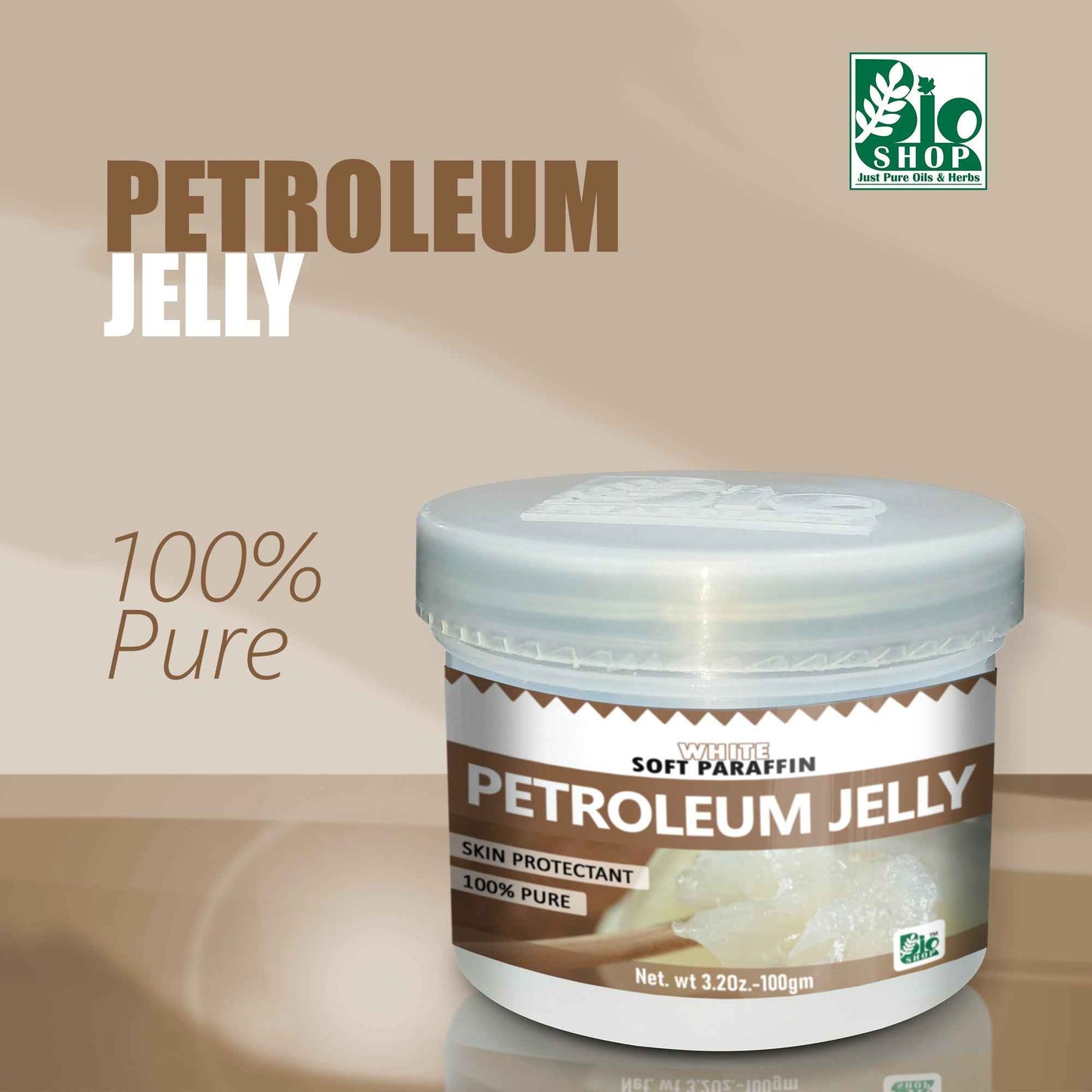
Pure Petroleum Jelly
Pure Petroleum Jelly
Key Functions: Creates occlusive barrier, locks in moisture, soothes dry skin, and protects against environmental damage.
Couldn't load pickup availability

Explore
Information About Pure Petroleum Jelly
✅ Key Features
✦ Powerful occlusive emollient that seals the skin barrier and prevents transepidermal water loss.
✦ Cosmetic and pharmaceutical grade — white, odorless, and safe for use on face, body, and lips.
✦ Ideal base ingredient for lip balms, healing ointments, barrier creams, and cold creams.
✦ Highly compatible with waxes, oils, butters, and most cosmetic actives without interfering with efficacy.
✦ Exceptionally stable — resistant to oxidation, rancidity, and microbial contamination.
✦ Non-comedogenic at low concentrations and widely accepted in dermatological and baby care formulations.
✦ Mineral-derived, fully refined to cosmetic purity — meets pharmacopoeia standards for skin-safe use.
🔬 Description
Petroleum Jelly, officially listed under the INCI name Petrolatum and widely known in the UK pharmacopoeia as White Soft Paraffin, is a semi-solid mixture of hydrocarbons derived from the petroleum refining process. First introduced into cosmetics and pharmacy in the 1870s by Robert Chesebrough, it has been a trusted skin care staple for over 150 years. Its consistent white to translucent appearance and smooth, unctuous texture have made it a foundational ingredient in ointments, lip care, and protective skin formulations worldwide.
What sets Petroleum Jelly apart from other emollients is its purely occlusive mechanism. Unlike humectants that draw moisture into the skin or emollients that simply soften the surface, Petrolatum forms a semi-permeable physical film that dramatically reduces water evaporation from the skin's outer layers. Clinical studies have confirmed it reduces transepidermal water loss by up to 98%, making it one of the most effective moisture-sealing agents in cosmetic science. Its non-reactive nature means it does not penetrate deeply into the dermis, which also contributes to its excellent safety profile across all skin types including sensitive and compromised skin.
Bio Shop Pakistan supplies cosmetic-grade Petroleum Jelly (White Soft Paraffin) suitable for DIY beauty formulators, lip balm makers, soap and balm crafters, professional cosmetic manufacturers, and herbal ointment producers.
📊 Technical Data
INCI Name : Petrolatum
Chemical Name : White Petrolatum / White Mineral Hydrocarbon
CAS Number : 8009-03-8
Molecular Formula : Mixture of hydrocarbons — no single molecular formula
Appearance : White to off-white translucent semi-solid
Odor : Odorless to faintly characteristic
pH (1% solution) : Not Applicable — not water soluble
Solubility : Insoluble in water; soluble in chloroform, ether, and light petroleum
Specific Gravity : 0.815 – 0.880 at 25°C
Flash Point : Above 200°C
HLB Value : Not Applicable
Recommended Use Level : 1% – 100% depending on application; typically 5% – 40% in finished formulas
Type : Occlusive emollient, skin protectant, base/carrier
Shelf Life : 3 – 5 years when stored in sealed containers away from heat and light
🧪 Recommended Usage
Skincare (Creams, Serums, Lotions) ★★★★☆
Petroleum Jelly is highly effective in barrier creams, overnight repair formulas, and healing balms but is too heavy for lightweight serums or daily moisturizers. Use at 5% – 15% in rich creams as an occlusive component alongside lighter emollients for a balanced texture.
Haircare (Shampoo, Conditioner, Masks) ★★☆☆☆
Petrolatum has limited use in rinse-off hair products and can leave residue when used at high concentrations in conditioners. If used in hair care, restrict to pomades, edge control, or scalp protectant sticks at 20% – 80% with wax bases.
Soap Making (Cold Process, Melt and Pour) ★★☆☆☆
Petroleum Jelly does not saponify in cold process soap and contributes no lather, so it is not recommended for soap bars. It can be used sparingly in melt and pour at 1% – 3% as a moisturizing additive, though it may cloud the bar.
Body Care (Scrubs, Butters, Balms) ★★★★★
This is the ideal category for Petroleum Jelly — it excels in lip balms, body balms, healing salves, barrier sticks, and protective ointments. Use at 20% – 80% as the base, blended with beeswax, carnauba wax, or shea butter for structure and skin feel.
Functional Cosmetics (Deodorants, Sunscreen, Baby Care) ★★★★★
Petroleum Jelly is a primary ingredient in diaper rash creams, baby barrier ointments, and healing formulas for sensitive and compromised skin. In baby care, use at 30% – 60% combined with zinc oxide for maximum barrier protection.
💡 Pro Tip
As a formulator, I consider Petroleum Jelly one of the most underrated workhorse ingredients in the cosmetic toolkit. Many formulators dismiss it as old-fashioned, but its occlusive power is genuinely unmatched for barrier repair, wound-adjacent skin care, and dry weather protection formulas. I routinely use it as the dominant base in overnight lip masks, heel repair balms, and cold-weather skin protectants where sealing in moisture is the primary goal. The key is pairing it correctly — Petrolatum alone can feel heavy and greasy, but blended thoughtfully with a lighter liquid oil and a small amount of a fast-absorbing emollient ester, the skin feel improves dramatically without sacrificing barrier performance.
ADVANCED TIP: To improve the skin feel of a Petrolatum-heavy formula without reducing its occlusive performance, blend 40% Petrolatum with 20% Caprylic/Capric Triglyceride, 15% Cetyl Esters Wax, and 10% Dimethicone 350. Melt together at 70°C, cool to 45°C, and incorporate 5% Allantoin and 5% Panthenol before the mass sets. This delivers a barrier-grade heal cream that absorbs with a silky after-feel rather than the expected greasiness — ideal for clinical-style ointments positioned as premium formulations.
👩🔬 Skin Type Suitability
Normal Skin : ★★★★☆ — Provides excellent moisture sealing and protection, especially in harsh weather or low-humidity environments.
Dry Skin : ★★★★★ — Highly effective at relieving severe dryness, cracking, and flaking by creating an impermeable moisture barrier.
Oily Skin : ★★☆☆☆ — Too heavy and occlusive for oily skin; may feel suffocating and increase congestion when used on the face.
Combination : ★★★☆☆ — Best used on dry zones only such as lips, elbows, or heels rather than on the full face or T-zone.
Sensitive Skin : ★★★★★ — One of the safest occlusive ingredients for sensitive and reactive skin due to its inert chemistry and non-irritating profile.
Mature Skin : ★★★★★ — Exceptional for mature skin that struggles to retain moisture; supports barrier restoration and reduces the appearance of fine dry lines.
Acne-Prone : ★★☆☆☆ — Not recommended on acne-prone facial skin due to its occlusive nature; suitable for spot use on non-acne areas like lips and hands.
🧴 Formulation Ideas
CONCEPT 1: Overnight Barrier Repair Lip Mask
Usage Level : 55%
Key Ingredients: Beeswax, Castor Oil, Vitamin E (Tocopherol), Shea Butter
Result : A thick, cushioning overnight lip treatment that seals in moisture, repairs cracked lips, and leaves them visibly plump and healed by morning.
CONCEPT 2: Intensive Heel and Elbow Repair Balm
Usage Level : 45%
Key Ingredients: Beeswax, Coconut Oil, Allantoin, Camphor (low concentration)
Result : A firm, slow-melting repair balm that softens severely calloused and cracked skin while forming a long-lasting protective layer that works through the night.
CONCEPT 3: Baby Barrier Diaper Rash Ointment
Usage Level : 40%
Key Ingredients: Zinc Oxide, Castor Oil, Cetyl Alcohol, Calendula Extract
Result : A gentle, pharmacopoeia-inspired barrier ointment that protects sensitive baby skin from moisture and friction while supporting natural healing of mild diaper irritation.
💧 Safety and Regulatory:
INCI Declared : Yes — must be declared as Petrolatum on all cosmetic labels
EU Cosmetics Reg : Permitted with conditions — Annex III, Entry 98; refining history must be documented and demonstrate absence of carcinogenic PAH (Polycyclic Aromatic Hydrocarbons)
Rinse-Off Limit : No limit established for fully refined white petrolatum
Leave-On Limit : No limit established for fully refined white petrolatum
Allergen Alert : No — Petrolatum is non-allergenic; no known contact sensitization
Skin Safety : Safe at all recommended levels when cosmetic-grade fully refined material is used
Eye Area Use : Use with caution — suitable as an eye protectant ointment in pharmaceutical grade only; avoid in eye makeup formulas
Ingestion : Not for internal use
Pregnancy Use : Safe for external topical use; consult physician before using on large skin areas during pregnancy
Child Safety : Safe for use on children above 0 years; widely used in baby care formulations
Ventilation : Not required under normal handling conditions
Storage : Store in a cool, dry place away from direct heat and sunlight; keep container tightly sealed
Container : HDPE or glass preferred — avoid open metal containers for long-term storage to prevent contamination
⚠️ EU formulators must ensure the Petrolatum used meets Annex III refining history documentation requirements. Non-fully-refined mineral hydrocarbons are prohibited under Annex II Entry 1240. Always source from a supplier who can provide a Certificate of Analysis confirming PAH-safe refining history for EU-compliant formulations.
Stability and Compatibility
Working pH Range : Not Applicable — anhydrous ingredient with no pH activity
Heat Stability : Stable up to 200°C; melt between 38°C – 60°C depending on grade
Freeze-Thaw Stable : Yes — returns to normal consistency upon warming without structural degradation
Emulsion Type : W/O — contributes to water-in-oil emulsion structure; not suitable as primary emulsifier
Emulsification Phase: Hot — incorporate in the oil phase at 65°C – 75°C
Compatible With : Waxes (beeswax, carnauba, candelilla), vegetable butters, mineral oils, silicones, zinc oxide
Incompatible With : Strong oxidizing agents; avoid mixing with aggressive acids or alkalis in formulation
Oxidation Risk : Low — inherently stable due to saturated hydrocarbon structure; antioxidants not required but Vitamin E at 0.1% is acceptable as a formulation enhancer
Discoloration Risk : None under normal conditions — possible yellowing if exposed to prolonged UV light in transparent packaging
Formulation Notes : Melt completely before blending with liquid oils to ensure homogeneous texture; high concentrations above 60% will produce a firm ointment consistency that may require wax reduction for softer skin feel.
❓ FAQs
Q: Is Petroleum Jelly safe to use on the face every day?
A: Cosmetic-grade Petroleum Jelly is safe for daily facial use on dry or sensitive skin, particularly on the lips, under-eye area, and dry patches. However, it is not recommended for oily or acne-prone skin types on the face due to its highly occlusive nature.
Q: What is the difference between white petrolatum and yellow petrolatum?
A: White Soft Paraffin (White Petrolatum) is more heavily refined than yellow petrolatum, resulting in a purer, odorless, and cosmetically cleaner product. White petrolatum meets pharmacopoeia standards and is the correct grade for all cosmetic and baby care formulations.
Q: Can I use Petroleum Jelly in cold process soap?
A: Petroleum Jelly is not recommended for cold process soap making because it does not saponify — it will not react with lye and will either remain as an unsaponified oil or cause separation issues in the bar. It is better suited to anhydrous balms, ointments, and melt and pour applications.
Q: At what percentage should I use Petroleum Jelly in a lip balm?
A: In lip balms, Petroleum Jelly is typically used between 30% and 60% as the primary occlusive base, depending on the desired firmness and moisturizing intensity. Balance it with beeswax for structure and a liquid oil such as castor oil for glide and shine.
Q: How does Petroleum Jelly compare to Shea Butter as a moisturizer?
A: Petroleum Jelly is a purely occlusive ingredient that works by sealing moisture in from the outside, while Shea Butter is a lipid-rich emollient that penetrates the upper skin layers and delivers fatty acid nourishment directly. For severe barrier damage and water retention, Petrolatum outperforms Shea Butter; for skin nutrition, softness, and a more elegant skin feel, Shea Butter is superior and the two are often blended together for complementary effect.
Where Can You Safely Use Pure Petroleum Jelly
Discover how Pure Petroleum Jelly performs across different products — rated for safety, stability, and effectiveness.
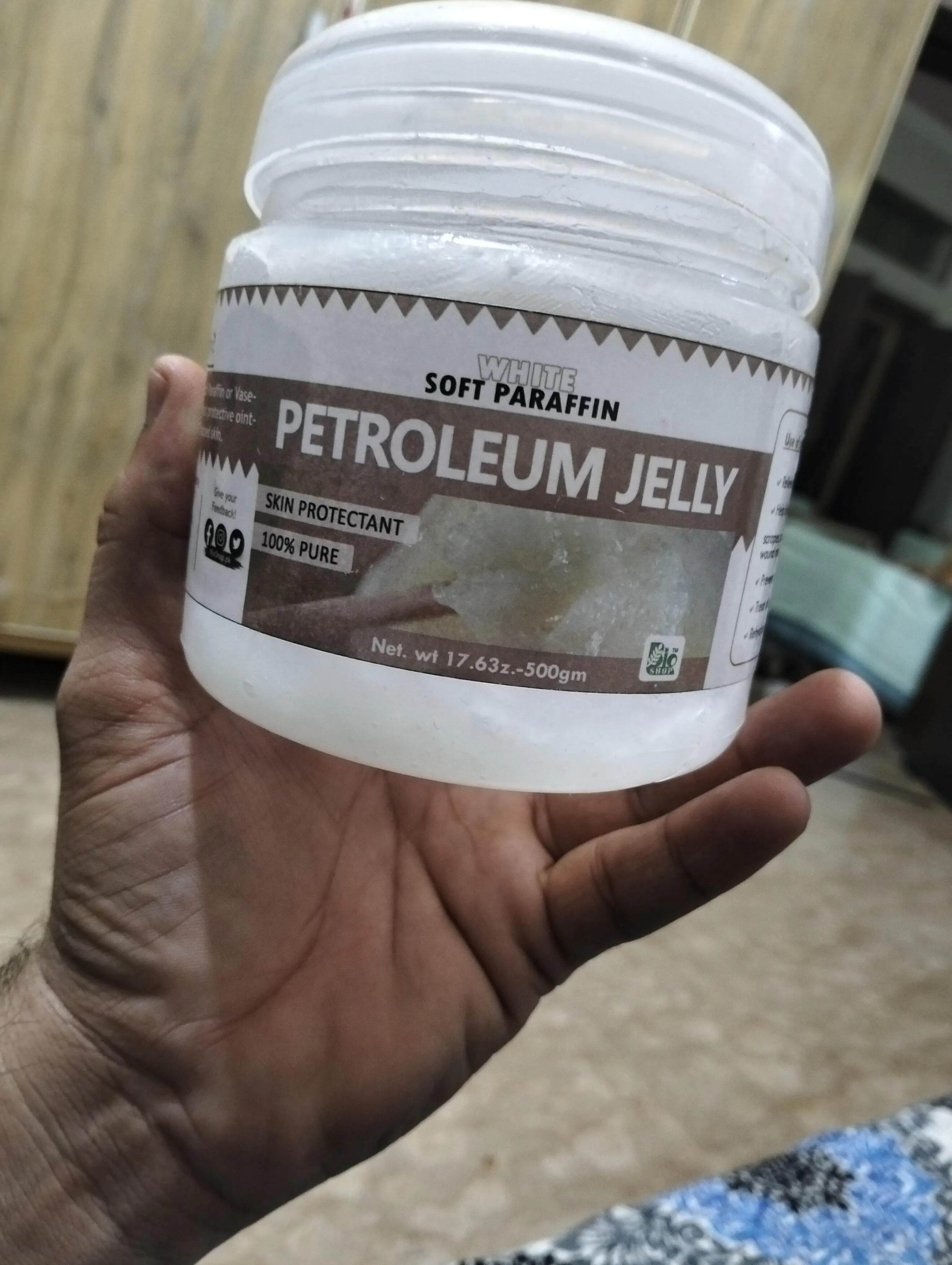
💯% pure and soft texture
I ordered again 3rd time