Bio Shop
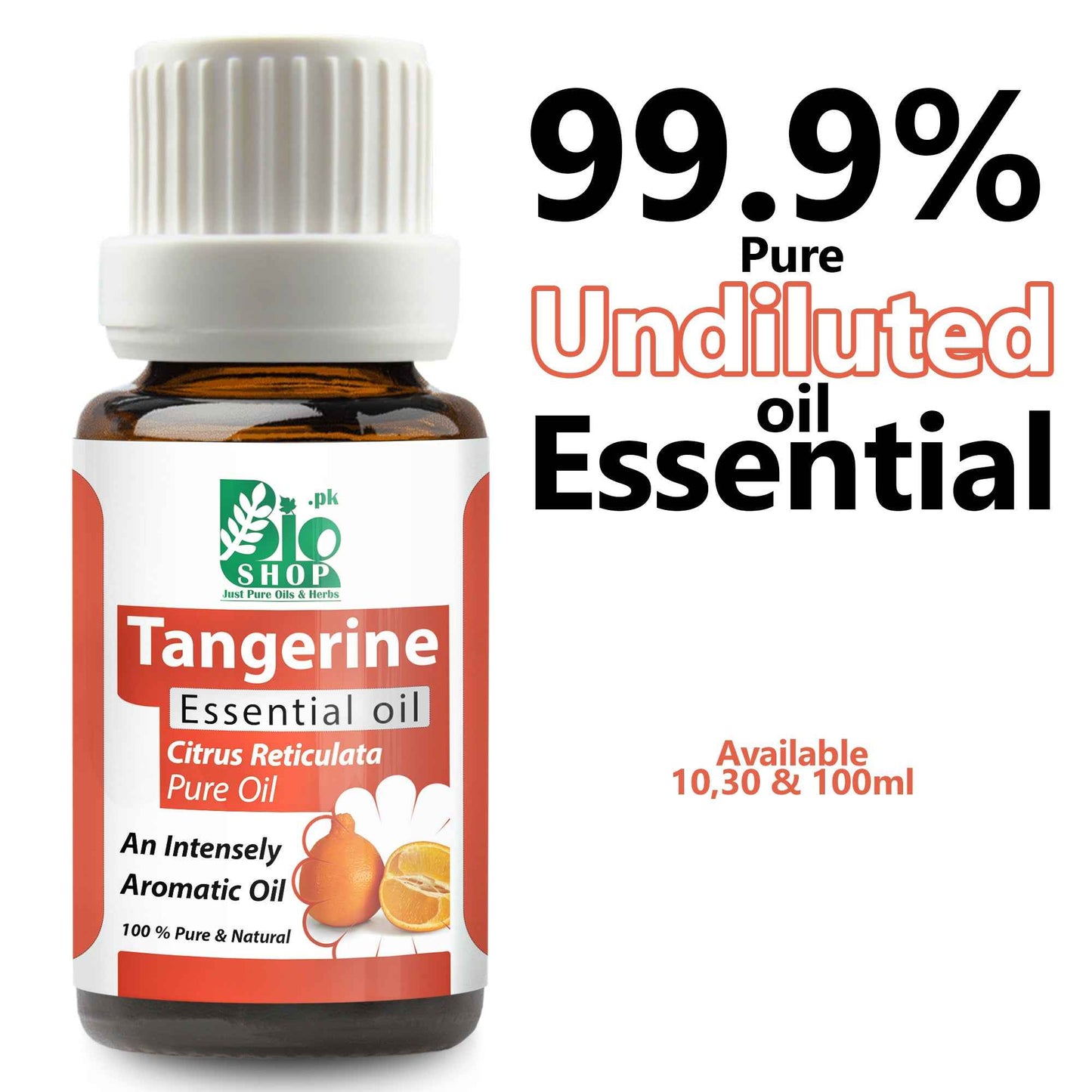
Tangerine Essential Oil
Tangerine Essential Oil
Olfactory Notes & Usage: Juicy · Sweet · Citrus · Fresh · Zesty · Bright
Couldn't load pickup availability


Explore
Information About Tangerine Essential Oil
Key Features
✦ 100% pure cold-pressed essential oil from Citrus reticulata peel with no carriers or diluents
✦ Delivers a warm, sweet, candy-like citrus scent brighter than orange yet softer than lemon
✦ Rich in d-limonene (60–75%) providing an uplifting, mood-enhancing aromatic profile
✦ Classic top note with immediate freshness impact — fades cleanly without off-notes
✦ Widely used in fine fragrance, shampoos, body washes, soaps, candles, and reed diffusers
✦ Natural, vegan, and cruelty-free — no animal-derived ingredients or by-products
✦ Cold-pressed version is phototoxic — keep usage rates within IFRA limits for leave-on products
About Tangerine Essential Oil
Tangerine Essential Oil is derived from the peel of Citrus reticulata Blanco, a small citrus fruit native to Southeast Asia and widely cultivated across China, Spain, Italy, Brazil, and the United States. Cold-press expression, the traditional method used for citrus peel oils, involves mechanically rupturing the oil glands in the fresh peel to release the aromatic oil without heat. This cold mechanical process preserves the full spectrum of volatile top notes that would otherwise be lost during steam distillation, giving cold-pressed tangerine oil its famously vibrant, true-to-fruit character. The oil has been used in perfumery, flavour, and cosmetics for well over a century and remains one of the most commercially important citrus oils in the world.
What sets tangerine apart from other citrus oils is its sweetness. Where bergamot leans floral and lemon stays sharp and tart, tangerine carries a warm, almost honeyed sweetness reminiscent of freshly peeled fruit. Its chemical profile is dominated by d-limonene alongside gamma-terpinene, which contributes a distinctive green-citrus facet. This combination creates a scent that reads as simultaneously bright and approachable, making it one of the most crowd-pleasing citrus raw materials available to the formulator. It is particularly effective at opening a fragrance, creating an immediate positive first impression before the heart and base notes unfold.
Bio Shop Pakistan supplies cosmetic-grade tangerine essential oil suitable for DIY perfumers, attar blenders, soap and candle crafters, shampoo formulators, and independent fragrance developers seeking an authentic, high-purity citrus raw material for professional and home-use applications.
Olfactory Profile
SCENT DESCRIPTION : Tangerine Essential Oil opens with a burst of warm, sweet citrus — juicy, ripe, and candied without being artificial. There is a soft green brightness underneath the sweetness, rounder and less tart than lemon, and a faint floral breath that gives it an almost delicate quality. As the top note settles, a mild waxy-citrus drydown remains, soft and clean on the skin. The overall impression is cheerful, light, and universally pleasant.
NOTE POSITION : Top Note (fades within 1–2 hours in isolation; extends in blends with fixatives)
FRAGRANCE FAMILY : Citrus · Fresh · Fruity
FACETS : Sweet · Juicy · Bright · Green · Warm-Citrus
TENACITY : Low — approximately 1 to 2 hours on skin; longevity improves significantly when blended with base fixatives such as musks, woods, or resins
SILLAGE : Medium on initial application, fades to low within 30–45 minutes in direct use; in diffuser or candle applications, projection is full and lasting
Technical Specifications
Chemical Name : Citrus reticulata Blanco peel oil, expressed
CAS Number : 8016-85-1
Synonyms : Tangerine Peel Oil Expressed · Citrus reticulata Oil · Mandarin Tangerine Oil
Purity : 100% pure essential oil (no additives or diluents)
Appearance : Clear to pale yellow or yellow-orange mobile liquid
Odor Threshold : Very low — detectable at trace concentrations due to high limonene content
Solubility : Soluble in alcohol (ethanol); insoluble in water; soluble in fixed oils
Specific Gravity : 0.842 – 0.853 at 20°C (verify with supplier CoA)
Flash Point : Approximately 46–54°C (verify with supplier CoA)
Type : Natural — cold-pressed from fresh citrus peel
Main Constituents : d-Limonene (60–75%), gamma-Terpinene (14–22%), Myrcene, alpha-Pinene, Linalool (trace)
Applications & Usage Guidelines
Fine Fragrance : ★★★★★
Tangerine EO is a classic opening top note in fine fragrance, cologne, and body spray formulations. Its immediate sweetness and citrus brightness make it ideal for the first impression of a scent, particularly in fresh, fougère, fruity floral, and aquatic compositions. Use alongside bergamot and lemon for layered citrus complexity, anchored with musks or woods for lasting impact.
Attar & Oriental Blending : ★★★★☆
Tangerine adds a fresh, bright counterpoint to the heavier animalic, resinous, and woody base structures typical of attar blending. It lifts oud-based, amber, and sandalwood compositions beautifully without competing with the signature character of the base. Traditional Arabian-inspired citrus-oud accords benefit greatly from tangerine as an opening gesture.
Functional Fragrance & Home Care : ★★★★★
Shampoos, body washes, bath gels, liquid soaps, and household cleaners are among the best applications for tangerine EO. The uplifting citrus scent performs well in rinse-off formats where the phototoxicity of the cold-pressed oil is not a concern, and the bright freshness translates effectively even in functional bases.
Cosmetics & Skincare : ★★★☆☆
Tangerine EO can be incorporated into rinse-off cosmetics and certain leave-on products at controlled rates. In leave-on formulations such as body lotion or facial serums, the cold-pressed oil must be used within IFRA-compliant limits to avoid phototoxic reactions. Steam-distilled tangerine oil is preferable for leave-on skincare where higher usage rates are desired.
Home Fragrance (Candles & Diffusers) : ★★★★★
In reed diffusers, electric diffusers, and aroma burners, tangerine essential oil delivers outstanding performance with a full, natural citrus projection that is more pleasant and less sharp than lemon or grapefruit. In soy and paraffin candles, it performs reasonably well at standard fragrance load rates, though initial cold throw is stronger than hot throw.
IFRA & Usage Rate
RECOMMENDED USAGE RATES
Application : Suggested Rate
EDP (Eau de Parfum) : 3 – 8%
EDT (Eau de Toilette) : 2 – 5%
Body Lotion (leave-on): 0.5% maximum (cold-pressed) — see IFRA note
Shampoo / Body Wash : 1 – 3%
Tablet Soap : 1 – 2.5%
Candle : 6 – 10%
Reed Diffuser : 15 – 25%
IFRA 51ST AMENDMENT LIMITS — CITRUS RETICULATA PEEL OIL EXPRESSED (COLD-PRESSED)
⚠️ Cold-pressed tangerine oil contains naturally occurring furanocoumarins and is classified as a phototoxic material. IFRA restricts its use in leave-on skin products applied to areas exposed to sunlight.
IFRA Category 1 (Lip products) : ~0.7% (verify at ifrafragrance.org)
IFRA Category 3 (Fine fragrance, EDP/EDT) : ~2.8% (verify at ifrafragrance.org)
IFRA Category 4 (Body lotion, leave-on) : ~0.5% (verify at ifrafragrance.org)
IFRA Category 11A (Rinse-off body wash) : No restriction (rinse-off use)
IFRA Category 11B (Rinse-off face wash) : No restriction (rinse-off use)
⚠️ Steam-distilled tangerine oil does not contain significant furanocoumarins and carries no IFRA phototoxicity restrictions. If formulating leave-on products at higher concentrations, sourcing steam-distilled material is recommended.
⚠️ Always verify current IFRA limits at ifrafragrance.org before finalising any formulation intended for commercial sale.
Blending Guide
METHOD 1 — TOP NOTE ANCHOR IN FINE FRAGRANCE
Add tangerine EO at 3–6% as the opening citrus note in your EDP or EDT. To prevent rapid fade, pair it with a small amount of a citrus-enhancing material such as Hedione or Iso E Super in the heart, and anchor the base with a fixative musk or woody-amber. The tangerine will evaporate naturally from the skin but its warmth will echo through the musks for hours.
METHOD 2 — CITRUS LIFT IN FUNCTIONAL PRODUCTS
In shampoos, body washes, and liquid soaps, add tangerine EO at 1–2% into the cool or lukewarm phase of your formulation. Combine with a preservative-compatible solubiliser if needed. Pair with lavender or peppermint for a classic spa freshness, or with eucalyptus and tea tree for an invigorating cleansing product. Rinse-off use eliminates phototoxicity concerns.
METHOD 3 — CITRUS-RESIN ATTAR ACCORD
In attar or reed diffuser work, blend tangerine with oud, sandalwood, and a touch of rose absolute to create a traditional yet modern citrus-oriental accord. Use tangerine at 10–20% of the total formula in diffuser blends. Its sweetness softens the sharpness of oud and adds an approachable freshness to heavy resinous bases.
BEST PAIRINGS
Bergamot EO → Layered citrus complexity; adds floral lift and sophistication
Lemon EO → Bright, clean citrus accord; sharpens and extends the citrus opening
Lavender EO → Classic fougère freshness; versatile and crowd-pleasing
Neroli EO → Elegant citrus-floral accord with uplifting character
Cedarwood → Grounding and balancing; anchors the volatile top note
Sandalwood → Creamy, warm drydown contrasts beautifully with bright tangerine
Rose Absolute → Rich floral-citrus harmony; useful in feminine and oriental blends
Vetiver → Earthy, smoky contrast; adds depth and longevity
Benzyl Benzoate → Fixative function; helps retain citrus in finished formulation
Hedione → Diffusive floral-citrus bridge; enhances tenacity in fine fragrance
AVOID
Do not combine with strongly alkaline bases without pH testing, as limonene can oxidise and generate off-notes in high-pH environments. Avoid prolonged heat exposure during blending. Do not use oxidised or old tangerine oil in leave-on skin products as oxidised limonene is a known skin sensitiser.
Perfumer's Note
Tangerine is one of those ingredients that every formulator underestimates until they try to replace it. In a citrus accord, it provides something neither lemon nor orange can fully deliver — a warm, rounded sweetness with enough brightness to lead, but enough softness not to overwhelm. I reach for it whenever I want a citrus opening that reads as approachable rather than sharp, or when a fruity composition needs a citrus element that doesn't fight with the florals. It is particularly effective in feminine fresh florals and Arabic-inspired citrus-oud accords where the sweetness of the tangerine echoes the sweetness of the oud and sandalwood underneath.
ADVANCED TIP : To meaningfully extend the tenacity of tangerine EO in a fine fragrance, try combining it with a small amount of Linalyl Acetate (0.5–1%) and a transparent floral musk. The ester creates a bridge between the volatile citrus top and the musk base, slowing the evaporation curve of the tangerine and giving the opening note a softer, more extended presence on the skin. This technique is commonly used in commercial fresh-floral and citrus-aromatic masculines where a sustained citrus impression through the heart is desired without increasing the overall concentration of the EO.
Safety & Storage
Physical State : Clear to pale yellow mobile liquid at room temperature
Skin Safety : Safe within IFRA limits; cold-pressed oil is phototoxic — avoid leave-on use on sun-exposed skin above IFRA Category 4 limit (~0.5%); steam-distilled has no phototoxicity restriction
Eye Contact : Irritant — avoid direct contact with eyes; rinse thoroughly with water if contact occurs
Ingestion : Not for internal use; keep away from children
Ventilation : Work in a well-ventilated area when handling undiluted oil; avoid prolonged inhalation of concentrated vapour
Oxidation Warning : Limonene-rich oils oxidise on prolonged air and light exposure; oxidised oil can cause skin sensitisation — do not use oil that has turned hazy or taken on an off-note
Storage : Store in a tightly sealed dark glass or aluminium container away from heat, light, and moisture; refrigeration recommended for long-term storage
Shelf Life : 12–18 months if stored correctly; discard if significant colour change or off-note is detected
Container : Dark glass (amber), aluminium, or HDPE — avoid PET for long-term storage
Flammability : Flammable liquid — keep away from open flame; flash point approximately 46–54°C
FAQ
Q: Is this tangerine essential oil 100% pure or diluted?
A: Bio Shop Pakistan supplies undiluted, 100% pure cold-pressed tangerine essential oil with no carriers or diluents. You can use it directly in your formulations at the rates recommended for each application.
Q: Can I use tangerine essential oil in a leave-on lotion or face cream?
A: Cold-pressed tangerine oil is phototoxic and must be kept at or below the IFRA Category 4 limit (approximately 0.5%) in leave-on products applied to sun-exposed skin. If you need higher usage rates in leave-on skincare, use steam-distilled tangerine oil instead, which has no IFRA phototoxicity restriction.
Q: Why does the scent fade so quickly on my skin?
A: Tangerine EO is a volatile top note composed primarily of d-limonene, which evaporates rapidly from skin. To extend its longevity, blend it with fixative ingredients such as musks, benzyl benzoate, or woody bases like cedarwood or sandalwood. Hedione and other transparent musks also help bridge the citrus top into the mid notes.
Q: Can I use tangerine essential oil in candles?
A: Yes, it performs well in soy and paraffin candles at 6–10% fragrance load. Cold throw is generally stronger than hot throw due to the volatility of limonene. For better hot throw, combine tangerine with a small amount of lower-volatility citrus or floral materials and ensure proper cure time before testing.
Q: How does tangerine essential oil compare to mandarin essential oil?
A: Tangerine and mandarin oils both come from varieties of Citrus reticulata and are very similar in character, which is why the terms are sometimes used interchangeably in trade. However, tangerine oil tends to have a slightly brighter, more intensely sweet and fruity character, while mandarin oil — particularly red mandarin — has a deeper, slightly more herbal-green quality and is sometimes perceived as richer. In formulation, both are largely interchangeable as citrus top notes, though the specific chemical profile (especially gamma-terpinene content) can vary between batches and origins.
Where Can You Safely Use Tangerine Essential Oil?
Discover how Tangerine Essential Oil performs across different applications—rated for safety, stability, and effectiveness.