


Bio Shop
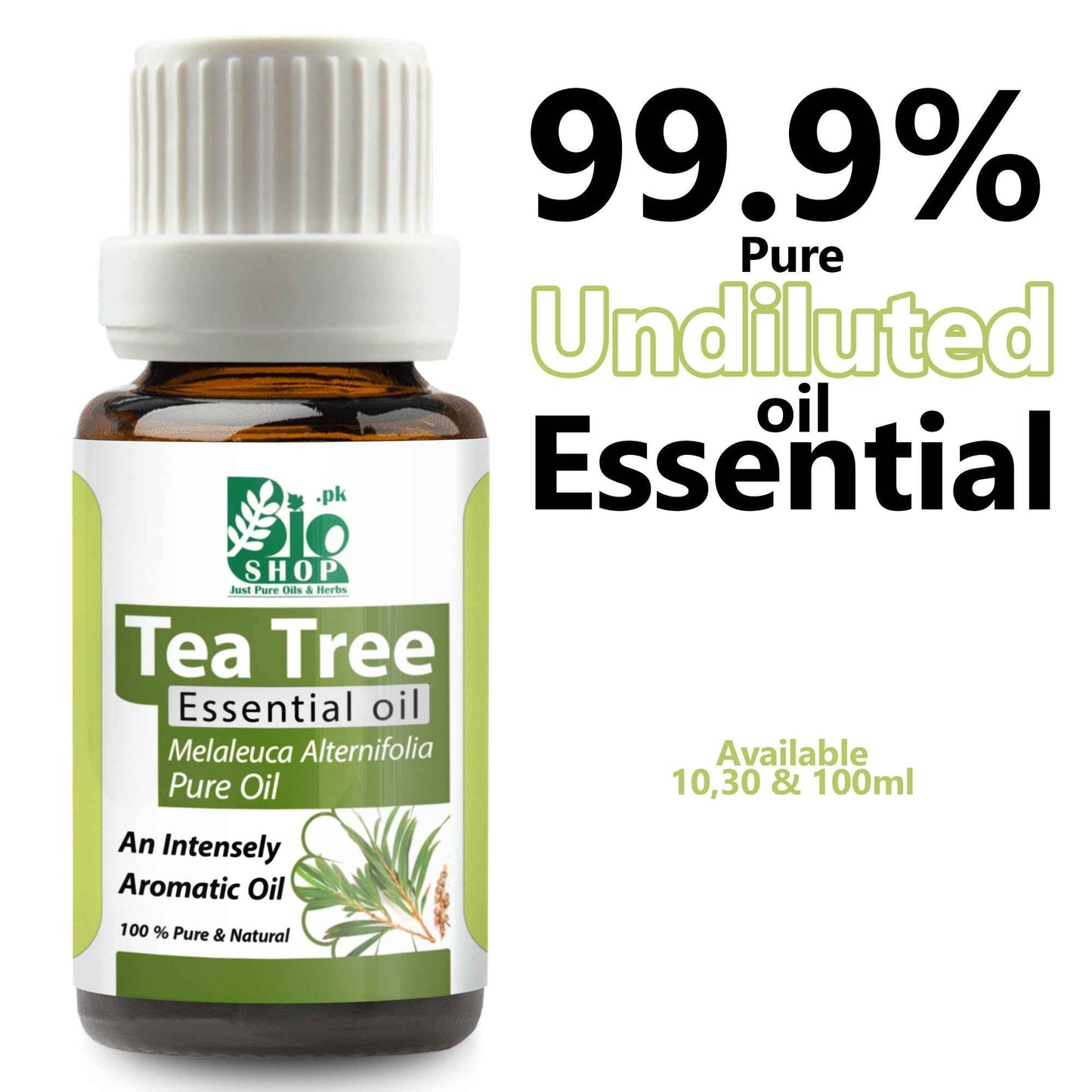
Tea tree Essential Oil
Tea tree Essential Oil
Olfactory Notes: Herbal · Medicinal · Fresh
Couldn't load pickup availability


Explore
Information About Tea tree Essential Oil
Key Features
✦ Steam-distilled from Melaleuca alternifolia leaves, native to New South Wales, Australia
✦ Rich in terpinen-4-ol (minimum 30%), the primary antimicrobial and anti-inflammatory compound
✦ Broad-spectrum antiseptic action against bacteria, fungi, and certain viruses
✦ Core ingredient in acne treatments, dandruff shampoos, foot care, and natural cleaning products
✦ Crisp, camphoraceous, medicinal scent with a clean green undertone
✦ Vegan, cruelty-free, and non-animal-derived
✦ Widely used in brands such as The Body Shop Tea Tree line, Thursday Plantation, and Dettol-style natural formulations
About Tea tree Essential Oil
Tea Tree Essential Oil is derived by steam distillation of the leaves and terminal branches of Melaleuca alternifolia, a small tree native to the coastal regions of New South Wales, Australia. Indigenous Australians of the Bundjalung nation used crushed tea tree leaves as a traditional remedy for wounds, skin infections, and respiratory ailments for centuries before the oil was formally documented by Western science in the early 20th century. Arthur Penfold, an Australian chemist, published the first scientific account of its antiseptic properties in 1925, sparking widespread commercial interest. By World War II, tea tree oil was included in first-aid kits for Australian soldiers.
What sets tea tree oil apart from other essential oils is the unique combination of over 100 individual compounds, dominated by terpinen-4-ol, gamma-terpinene, and alpha-terpinene. ISO 4730 defines the international quality standard for tea tree oil, specifying minimum terpinen-4-ol content and maximum 1,8-cineole content, the latter being linked to skin sensitization at high levels. High-grade tea tree oil balances maximum antimicrobial potency with minimum irritation risk. Its versatility across skincare, hair care, oral care, household hygiene, and aromatherapy makes it one of the few essential oils that straddles both the cosmetic and functional product worlds with equal authority.
Bio Shop Pakistan supplies cosmetic-grade Tea Tree Essential Oil suitable for DIY skincare formulators, shampoo and conditioner makers, natural soap crafters, candle makers seeking a clinical-clean scent, and home care product developers looking for a natural antimicrobial ingredient.
Olfactory Profile
SCENT DESCRIPTION : Tea tree opens with a sharp, camphoraceous burst that is medicinal and immediately recognizable. Beneath the clinical top lies a cool, herbal freshness with faint woody and earthy undertones. The dry-down settles into a clean, slightly spicy, and resinous base that lingers without becoming heavy. It is not a conventionally pretty scent — it is purposeful, functional, and unmistakably clean.
NOTE POSITION : Top to Mid
FRAGRANCE FAMILY : Herbal · Medicinal · Fresh
FACETS : Camphoraceous · Medicinal · Fresh · Herbal · Woody-Earthy
TENACITY : Medium — active presence for 2 to 4 hours; softens considerably after the initial dry-down
SILLAGE : Medium — projects noticeably in functional products and cleaning applications; more subdued in diluted cosmetic formulations
Technical Specifications
Chemical Name : Melaleuca alternifolia (Tea Tree) Leaf Oil
CAS Number : 68647-73-4
Synonyms : Melaleuca Oil · Ti Tree Oil · Australian Tea Tree Oil · Melaleuca alternifolia leaf oil
Purity : 100% pure, undiluted (ISO 4730 compliant; terpinen-4-ol min. 30%)
Appearance : Clear to very pale yellow mobile liquid
Odor Threshold : Approximately 0.5–2 ppm (highly perceptible even at low concentrations)
Solubility : Slightly soluble in water; fully miscible with ethanol, carrier oils, and most cosmetic solvents
Specific Gravity : 0.885 – 0.906 at 20°C (verify with supplier CoA)
Flash Point : Approximately 54°C – 60°C (verify with supplier CoA)
Type : Natural — steam-distilled essential oil
Applications & Usage Guidelines
Fine Fragrance : ★★☆☆☆
Tea tree is rarely used as a primary note in fine fragrance due to its intensely medicinal character. It can appear as a micro-dosage functional accent in spa-concept or fresh herbal compositions, but its role is supportive and technical rather than aromatic. Most fine perfumers use it at under 0.2% as a sharpening agent in green or aquatic accords.
Attar & Oriental Blending : ★★☆☆☆
Tea tree has limited application in traditional attar blending. Its camphoraceous sharpness clashes with the warm, resinous base structures typical of Oriental and attar compositions. It may be used sparingly in medicinal or herbal attars where a cooling contrast is desired, but it is not a conventional attar ingredient in the Pakistani or Gulf tradition.
Functional Fragrance : ★★★★★
This is where tea tree excels. Antiseptic wipes, surface cleaners, hand sanitizers, floor cleaners, and bathroom sprays all benefit from its natural antimicrobial action combined with a recognizable clean scent. It performs double duty as both a fragrance and an active ingredient in functional product categories. Highly recommended at 0.5% to 2% in cleaning formulations.
Cosmetics & Skincare : ★★★★★
Tea tree is a cornerstone of natural acne care, foot care, and scalp treatment formulations. At properly diluted rates it provides antiseptic, anti-inflammatory, and keratolytic benefits. It works well in spot treatments, clay masks, toners, scalp serums, and natural deodorant sticks. Always dilute to safe levels as undiluted use can cause irritation.
Home Fragrance : ★★★★☆
Tea tree works well in diffuser blends, especially in wellness, clean-air, and eucalyptus-adjacent compositions. Its antimicrobial vapour action adds functional value in room diffusers and humidifier applications. In candles it performs reliably though its medicinal note is polarizing — best blended with complementary herbals, eucalyptus, or mint to round out the profile.
IFRA & Usage Rate
RECOMMENDED USAGE RATES
EDP / Parfum : 0.5% – 1.5% (accent/modifier role only)
EDT : 0.3% – 1%
Body Lotion / Cream : 0.5% – 1%
Shampoo / Body Wash : 0.5% – 2%
Facial Serum / Spot Treatment : 0.5% – 1% (diluted)
Bar Soap (Cold Process) : 0.5% – 2%
Reed Diffuser : 5% – 15%
Candle (Soy / Paraffin) : 3% – 6%
Surface Cleaner / Functional Spray : 0.5% – 2%
Aromatherapy Diffuser Blend : 1% – 5%
IFRA 51ST AMENDMENT LIMITS
(Melaleuca alternifolia Leaf Oil — verify current limits at ifrafragrance.org)
Category 1 (Lip products, children's toys) : 0.1%
Category 2 (Deodorant, underarm) : 0.3%
Category 3 (Eye area cosmetics) : 0.1%
Category 4 (Face and body leave-on) : 0.5%
Category 5a (Hand cream) : 0.5%
Category 5b (Face cream, moisturizer) : 0.5%
Category 5c (Body lotion) : 0.5%
Category 6 (Mouthwash, oral care) : Not recommended — verify separately
Category 7a (Rinse-off hair) : 1%
Category 7b (Leave-on hair) : 0.5%
Category 9 (Soap, body wash, rinse-off skin) : 1%
Category 11a (Candles) : No IFRA restriction — apply general safe usage rates
Category 12 (Incense, reed diffusers) : No IFRA restriction
⚠️ Tea tree oil is classified as a moderate skin sensitizer at high concentrations. Always dilute before skin contact. Avoid undiluted application on broken or sensitive skin.
⚠️ Oxidized tea tree oil has significantly higher sensitization potential. Store tightly sealed, away from heat and light, and use within 12 months of opening.
⚠️ IFRA limits above are provided as guidance — always verify the most current amendment at ifrafragrance.org before commercial production.
Blending Guide
METHOD 1 — DIRECT ADDITION TO CARRIER
Add tea tree oil directly to a pre-weighed carrier oil (jojoba, sweet almond, rosehip) at 1% to 2% dilution before incorporating into formulation. This is the standard method for skincare and massage oil applications. Ensure thorough mixing as tea tree disperses quickly in fatty carriers.
METHOD 2 — PRE-BLEND WITH COMPLEMENTARY ESSENTIAL OILS
Create a functional essential oil blend by combining tea tree with eucalyptus, lavender, and peppermint before adding to your base. This approach softens the medicinal edge and creates a balanced spa or therapeutic fragrance profile suitable for diffusers, room sprays, and shampoos.
METHOD 3 — SOLUBILIZATION FOR WATER-BASED PRODUCTS
For toners, mists, and aqueous formulations, tea tree must first be solubilized using a suitable solubilizer such as polysorbate 20 at a 1:5 ratio (tea tree to solubilizer) before adding to the water phase. Skipping this step will result in a cloudy, unstable product.
BEST PAIRINGS
Lavender → Softens medicinal harshness, adds floral calm, ideal for acne care blends
Eucalyptus Globulus → Reinforces camphoraceous freshness, excellent in respiratory and cleaning blends
Peppermint → Adds cool menthol contrast, good in scalp serums and cooling foot creams
Rosemary → Herbal reinforcement, excellent in dandruff shampoos and scalp treatments
Lemon Essential Oil → Adds citrus brightness, lifts the medicinal character in cleaning products
Frankincense → Adds depth and skin-regenerating resin, balances clinical note in serums
Clary Sage → Adds earthy floral warmth, softens in natural deodorant formulations
Cedarwood → Grounds the blend with dry woodiness, good in men's grooming products
AVOID
✦ Avoid blending with heavy sweet musks or gourmand bases — the contrast is jarring and unpleasant
✦ Avoid high concentrations alongside other potential sensitizers (cinnamon, clove, oregano) in leave-on products
✦ Avoid using in products stored for extended periods in oxidizing conditions — oxidized tea tree is a significantly stronger sensitizer
Perfumer's Note
As a functional fragrance specialist, I rarely reach for tea tree when building a scent for its aromatic beauty — I reach for it when I want a product to smell honest. There is a reason consumers trust tea tree-scented products: that sharp, camphoraceous freshness communicates cleanliness, efficacy, and purpose in a way no synthetic interpretation quite captures. In my cleaning product work and natural skincare lines, tea tree is often the first oil I add, not because it smells refined, but because it signals truth. When I use it in fine fragrance contexts, it is always in micro-amounts — less than 0.2% — purely to add a herbal crispness to green or aquatic accords without the scent ever being identifiable as tea tree.
ADVANCED TIP : Try combining tea tree at 0.5% with an equal amount of lemon myrtle essential oil (Backhousia citriodora) in a shampoo or body wash base. Lemon myrtle contains very high citral content that creates a vivid lemon-herbal top note while tea tree provides the functional antimicrobial backbone. The result smells far more elegant than standard tea tree products and still delivers full antibacterial benefits. This combination also has documented synergistic antimicrobial activity in peer-reviewed literature, meaning the blend works harder than either oil alone.
Safety & Storage
Physical State : Clear to pale yellow liquid at room temperature
Skin Safety : Dilute to 1% or below for leave-on products; up to 2% for rinse-off. Never apply undiluted to skin. Perform patch test before use. Avoid on broken or compromised skin.
Eye Contact : Avoid all eye contact. In case of contact, rinse thoroughly with clean water for 15 minutes. Seek medical advice if irritation persists.
Ingestion : Not for internal use. Keep away from children. Do not ingest under any circumstances.
Ventilation : Use in well-ventilated areas when handling large quantities. Avoid prolonged inhalation of concentrated vapour.
Storage : Store in a tightly sealed dark glass or aluminium container, away from heat, light, and air. Refrigeration extends shelf life and prevents oxidation.
Shelf Life : 12 months unopened; 6 to 9 months once opened if stored correctly. Discard any oil with a changed odor (more harsh, solvent-like) as this indicates oxidation.
Container : Dark amber glass or aluminium — never store in clear glass or standard plastic containers
Flammability : Flammable liquid — flash point approximately 54°C to 60°C. Keep away from open flames. Do not add to candles while hot.
FAQ
Q: Can I apply tea tree oil directly to a pimple without diluting it?
A: This is a common but risky practice. Undiluted tea tree can cause redness, dryness, and chemical burns, especially on sensitive skin. Always dilute to 1% to 2% in a suitable carrier oil or gel before spot application.
Q: What percentage of tea tree should I use in a homemade shampoo?
A: For a rinse-off product like shampoo, 0.5% to 2% is appropriate and safe. Start at 0.5% and increase if needed. Above 2% in rinse-off products can cause scalp irritation with repeated use.
Q: Why does my tea tree oil smell different from a new bottle compared to an old one?
A: Oxidation. Tea tree oil oxidizes when exposed to air, light, or heat, and oxidized terpenes develop a harsher, more solvent-like odor. Oxidized oil also has significantly higher sensitization potential. Always store tightly sealed and refrigerated after opening, and replace after 6 to 9 months of use.
Q: Is tea tree safe to use in candles?
A: Yes, but with care. Tea tree has a relatively low flash point around 54°C, so it should only be added to cooled wax — typically below 50°C. Use at 3% to 6% in soy wax. Paraffin can hold it at slightly higher rates. IFRA places no restriction on tea tree in candle applications.
Q: How does pure tea tree essential oil compare to tea tree fragrance oil?
A: Pure tea tree essential oil is a natural steam-distilled product containing terpinen-4-ol and other bioactive compounds that provide genuine antimicrobial and therapeutic properties. Tea tree fragrance oil is a synthetic or blended aromatic copy — it may smell similar but carries no functional antiseptic activity. For skin care, medicinal, and functional applications, always use the pure essential oil. Fragrance oil is only appropriate for scenting purposes.
Where Can You Safely Use Tea tree Essential Oil?
Discover how Tea tree Essential Oil performs across different applications—rated for safety, stability, and effectiveness.
Ma na apnay ointment ma use Kiya buhat ACHA results maila ha. Best ha yar Bioshop ki products.
Karachi ki garmi mein paseene ki smell se bachne ke liye tea tree body wash mein add ki. Fresh clean feel din bhar rehti hai. Oil ekdum pure aur genuine hai. Price bhi market mein sab se better tha. Very happy.
Aloe vera gel aur tea tree oil se hand sanitizer banaya lockdown ke waqt ki aadat hai ab bhi. Skin drying nahi hoti aur antibacterial bhi hai. Tea tree oil Bio Shop se lena shuru kiya - quality outstanding hai compared to local market.
Maine kai jagah se essential oils try ki hain. Bio Shop ka tea tree oil unme se best hai quality ke lihaz se. Smell authentic hai - medicinal camphoraceous aur fresh. Packaging secure tha. Lagatar repeat order karta rahunga.
Paon ki care ke liye tea tree peppermint aur coconut oil ka blend banaya. Foot soak mein bhi use kiya. Athletes foot prevention ke liye bhi helpful. Oil quality genuine aur potent hai. Will continue buying from Bio Shop.


