Bio Shop
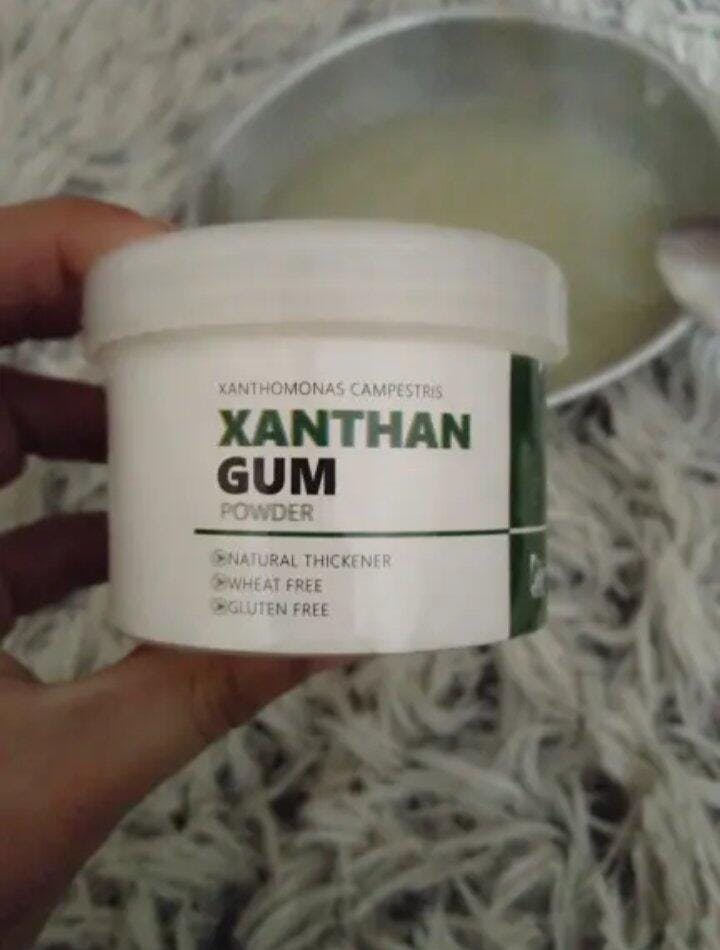
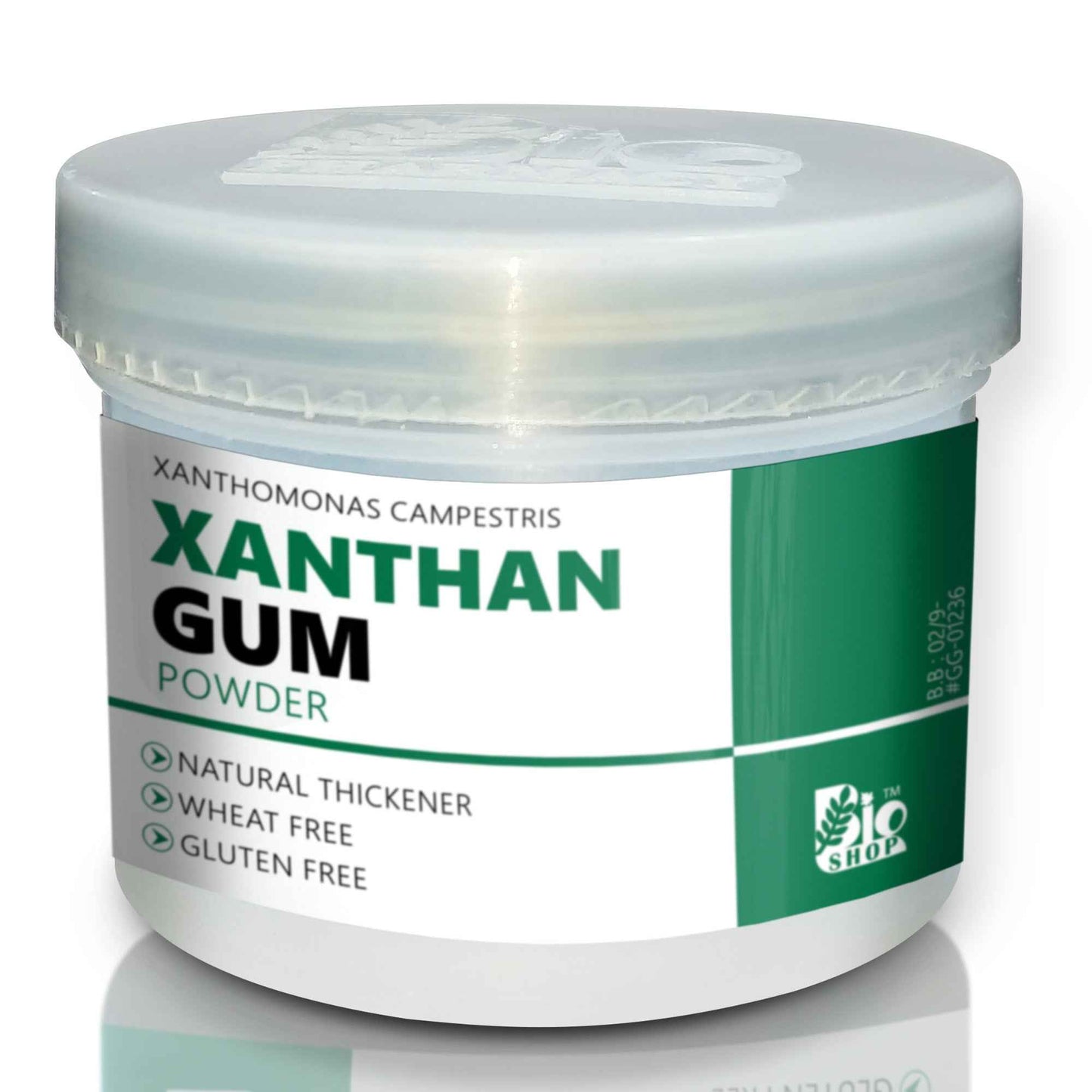
Xanthan Gum
Xanthan Gum
Key Functions: Thickens, stabilizes emulsions, suspends particles, and conditions.
Couldn't load pickup availability
Explore
Information About Xanthan Gum
✅ Key Features
✦ Builds smooth, professional-grade viscosity at ultra-low concentrations of 0.1–0.8% — extremely cost-efficient
✦ Pseudoplastic (shear-thinning) behavior: flows under pump or hand pressure, then thickens instantly at rest
✦ Exceptionally stable across a wide pH range of 4.0–10.0 and highly resistant to freeze-thaw cycling
✦ Cold-processable — fully hydrates in room-temperature water with no heating phase required
✦ Effective emulsion stabilizer and suspending agent for particles, pigments, and active ingredients
✦ Naturally derived from bacterial fermentation — vegan, non-animal-derived, and biosynthetic
✦ Compatible with humectants, AHAs, vitamin C, niacinamide, and most cosmetic preservative systems
🔬 Description
Xanthan gum is a high-molecular-weight polysaccharide biopolymer produced through the controlled aerobic fermentation of carbohydrate substrates by the gram-negative bacterium Xanthomonas campestris. First developed in the 1960s by the United States Department of Agriculture, it entered the food industry before becoming one of the most widely adopted thickening and stabilizing agents in modern cosmetics and personal care. Its combination of natural origin, functional versatility, and processing ease has established it as a foundational ingredient in professional formulation practice worldwide.
What distinguishes xanthan gum from most other cosmetic gums and thickeners is its pseudoplastic or shear-thinning rheological character. When shear force is applied — such as when a pump is pressed or the product is spread onto skin — viscosity drops sharply, allowing the formula to dispense and spread effortlessly. The moment that force is removed, the viscosity is restored almost immediately, giving the finished product a luxuriously thick, stable, and spa-quality texture. This behavior is particularly prized in pump-dispenser serums, lightweight gel moisturizers, and leave-on treatments where on-skin elegance and dispensing ease are both critical performance requirements.
Bio Shop Pakistan supplies cosmetic-grade xanthan gum suitable for DIY beauty formulators, independent cosmetic chemists, natural skincare entrepreneurs, soap makers, and professional formulators across Pakistan.
📊 Technical Data
INCI Name : Xanthan Gum
Chemical Name : Xanthan Gum (Polysaccharide from Xanthomonas campestris fermentation)
CAS Number : 11138-66-2
Molecular Formula : Complex heteropolysaccharide — no single molecular formula
Appearance : Off-white to cream-colored free-flowing powder
Odor : Odorless to faintly earthy
pH (1% solution) : 6.0 – 7.5
Solubility : Freely dispersible in cold and hot water; insoluble in most organic solvents
Specific Gravity : 1.50 – 1.60 g/cm³ (bulk density approximately 0.60 g/cm³)
Flash Point : Not applicable — non-flammable solid
HLB Value : Not applicable
Recommended Use Level : 0.1% – 1.5% (0.2% – 0.8% typical in finished cosmetics)
Type : Natural polysaccharide biopolymer / Rheology modifier / Stabilizer
Shelf Life : 2 years in sealed airtight packaging under cool, dry conditions
🧪 Recommended Usage
Skincare (Creams, Serums, Lotions) ★★★★★
Xanthan gum is an outstanding thickener and emulsion stabilizer for all water-based skincare systems. Use at 0.2–0.5% in serums and 0.3–0.8% in creams and lotions for smooth, professional-grade viscosity without heaviness.
Haircare (Shampoo, Conditioner, Masks) ★★★★☆
Xanthan gum adds body and viscosity to shampoos and conditioning treatments while improving slip and detangling feel on hair. Use at 0.1–0.4% in shampoo and 0.3–0.8% in conditioning masks for clean, non-tacky texture.
Soap Making (Cold Process, Melt and Pour) ★★☆☆☆
Xanthan gum degrades in the high-alkaline environment of cold process saponification and is not recommended for use in traditional bar soap. It can be incorporated at 0.1–0.3% in finished liquid soap bases or clear glycerin melt-and-pour soap as a mild suspending agent only.
Body Care (Scrubs, Butters, Balms) ★★★★☆
In water-containing emulsified body scrubs and lotion-based balms, xanthan gum acts as a reliable stabilizer and particle suspending agent to keep exfoliants evenly distributed throughout the formula. Use at 0.2–0.5% to prevent phase separation and maintain stable, visually appealing product texture.
Functional Cosmetics (Deodorants, Sunscreen, Baby Care) ★★★★☆
Xanthan gum is well-suited for mineral sunscreen gels, roll-on deodorant bases, and gentle baby care formulations where a clean, non-irritating gel matrix is required. Its mild profile and broad global regulatory acceptance make it a dependable choice for these sensitive-use product categories.
💡 Pro Tip
As a formulator, I rely on xanthan gum as my primary water-phase thickener whenever I need clean viscosity without the drag, tackiness, or stickiness that comes with higher-use-level cellulose gums. I particularly value how it builds a stable gel structure at concentrations as low as 0.3%, making it highly efficient and economical in both small-batch and scale-up production. When formulating with low-pH actives such as ascorbic acid, AHAs, or salicylic acid — environments where many gums lose performance — xanthan gum remains functionally stable and effective in ways other polymers often cannot match.
ADVANCED TIP: To eliminate clumping and fisheyes during dispersion, pre-mix xanthan gum with a water-miscible liquid carrier at a ratio of 1 part xanthan gum to 3–5 parts glycerin or propylene glycol before introducing it to the main water phase. Add the pre-dispersion slowly to the water phase under moderate continuous agitation (300–500 RPM). This technique ensures complete, lump-free hydration and typically reduces full hydration time from 20+ minutes to under 8 minutes while delivering a noticeably smoother gel texture.
👩🔬 Skin Type Suitability
Normal Skin : ★★★★★ — Enhances texture and spreadability in any formulation without altering healthy skin balance.
Dry Skin : ★★★★☆ — Forms a light film on skin surface that helps lock in moisturizing actives and reduces transepidermal water loss.
Oily Skin : ★★★★☆ — Lightweight gel structures built with xanthan gum feel non-greasy and are particularly well-tolerated by oily skin types.
Combination : ★★★★☆ — Builds non-occlusive, lightweight texture that works comfortably across both dry and oily facial zones.
Sensitive Skin : ★★★★☆ — Generally very well-tolerated; mild, non-irritating, and free from known sensitizing components at standard cosmetic concentrations.
Mature Skin : ★★★★★ — Creates a soft, flexible surface film that temporarily improves skin smoothness and reduces the visible appearance of fine lines.
Acne-Prone : ★★★★☆ — Non-comedogenic with no known pore-clogging risk; works especially well as the gel base in lightweight serums designed for acne-prone skin.
🧴 Formulation Ideas
CONCEPT 1: Hyaluronic Acid Hydrating Serum
Usage Level : 0.3%
Key Ingredients: Sodium Hyaluronate (1%), Niacinamide (5%), Panthenol (2%), Allantoin (0.2%)
Result : A lightweight, gel-textured hydrating serum that delivers layered surface and deep moisture with a smooth, non-sticky after-feel.
CONCEPT 2: Vitamin C Brightening Gel
Usage Level : 0.4%
Key Ingredients: Ascorbic Acid (10%), Ferulic Acid (0.5%), Propanediol (5%), Sodium Citrate (pH adjuster to 3.2)
Result : A stable low-pH brightening gel with clean, fluid texture suited for daily vitamin C application without instability or separation.
CONCEPT 3: Mineral Sunscreen Gel SPF 30
Usage Level : 0.5%
Key Ingredients: Micronized Zinc Oxide (15%), Aloe Vera Juice (30%), Glycerin (3%), Phenoxyethanol (1%)
Result : A water-based mineral sunscreen gel with xanthan gum providing stable suspension of zinc oxide particles for uniform UV protection and a non-greasy finish.
💧 Safety and Regulatory:
INCI Declared : Yes — full INCI declaration required on all cosmetic product labels
EU Cosmetics Reg : Permitted — not listed in Annex II (prohibited), III (restricted), IV, V, or VI; freely permitted for use in cosmetic products
Rinse-Off Limit : No limit established
Leave-On Limit : No limit established
Allergen Alert : No — not a recognized cosmetic contact allergen
Skin Safety : Safe at recommended cosmetic concentrations; no known sensitization risk
Eye Area Use : Safe — widely used in eye gels, under-eye serums, and contact-lens-compatible formulas
Ingestion : Not for internal use
Pregnancy Use : Generally considered safe at cosmetic use levels; consult physician for clinical or therapeutic applications
Child Safety : Safe for use in baby and child care products at standard cosmetic concentrations
Ventilation : Not required in finished formulations; avoid inhaling fine powder during weighing and manufacturing
Storage : Store in a cool, dry place away from moisture, humidity, and direct heat in a sealed airtight container
Container : HDPE or glass preferred; avoid storage in humid conditions which cause premature clumping
⚠️ Fine inhalable powder: always wear a dust mask or respirator when weighing or handling xanthan gum powder in open manufacturing environments to avoid respiratory irritation from airborne particles.
Stability and Compatibility
Working pH Range : 4.0 – 10.0 (optimal viscosity performance between 5.0 and 8.0)
Heat Stability : Stable up to 80°C; viscosity recovers fully upon cooling to room temperature
Freeze-Thaw Stable : Yes — among the most freeze-thaw stable biopolymer gums available for cosmetic use
Emulsion Type : Both O/W and W/O systems
Emulsification Phase: Cold or hot — cold-processable without any heating requirement
Compatible With : Glycerin, sodium hyaluronate, niacinamide, AHAs, ascorbic acid, phenoxyethanol, nonionic emulsifiers, panthenol
Incompatible With : High concentrations of electrolytes and salts significantly reduce viscosity; extreme pH below 3.0 or above 11.0 causes degradation
Oxidation Risk : Low — antioxidants not required to protect xanthan gum stability
Discoloration Risk : None under standard formulation and storage conditions
Formulation Notes : Always pre-disperse in glycerin or propylene glycol before hydration to prevent lump formation; high-shear mixing at 500–800 RPM significantly accelerates full polymer hydration.
❓ FAQs
Q: What is xanthan gum and what role does it play in cosmetic formulations?
A: Xanthan gum is a naturally derived polysaccharide biopolymer produced through bacterial fermentation, used in cosmetics as a thickener, stabilizer, and rheology modifier. It builds smooth, stable gel and lotion textures at very low use levels of 0.1–0.8%, making it both highly efficient and cost-effective in professional formulation.
Q: Can xanthan gum be used in cold-process formulations without applying heat?
A: Yes — xanthan gum is fully cold-processable and hydrates at room temperature without any heat phase required. Pre-disperse it in glycerin at a 1:3 ratio first, then slowly introduce it to the water phase under continuous agitation for a smooth, lump-free result.
Q: Will xanthan gum affect the pH of my finished formulation?
A: A 1% aqueous solution of xanthan gum has a natural pH of approximately 6.0–7.5, giving it minimal impact on formulation pH at typical cosmetic use levels of 0.2–0.8%. It remains stable and fully functional across the broad pH range of 4.0–10.0, so you can freely adjust formulation pH after incorporation without affecting its performance.
Q: Why does my xanthan gum gel sometimes feel stringy or drag on the skin?
A: Stringiness is typically caused by using xanthan gum at too high a concentration (above 0.8–1.0%) or insufficient shear mixing during hydration. Reduce the concentration to 0.2–0.5% and blend with a co-thickener such as hydroxyethylcellulose or carbomer at lower combined levels to achieve a smoother, more elegant skin feel.
Q: How does xanthan gum compare to hydroxyethylcellulose as an alternative thickener?
A: Both are water-soluble, naturally derived thickeners, but xanthan gum delivers superior freeze-thaw stability, better functionality at lower concentrations, and works across a wider pH range. Hydroxyethylcellulose (HEC) tends to produce slightly clearer gels with less stringiness, but xanthan gum's pseudoplastic shear-thinning behavior produces a more elegant on-skin application feel that is preferred in pump-dispenser serums and professional-grade lightweight formulas.
Where Can You Safely Use Xanthan Gum
Discover how Xanthan Gum performs across different products — rated for safety, stability, and effectiveness.
Have received MashaAllah it's good
Outstandingresults
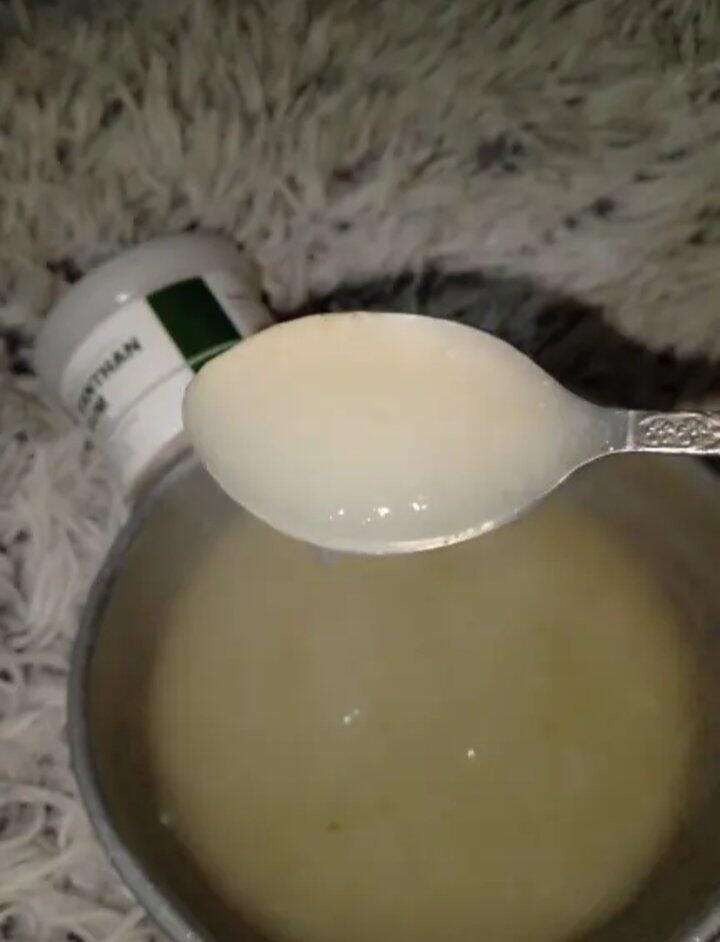
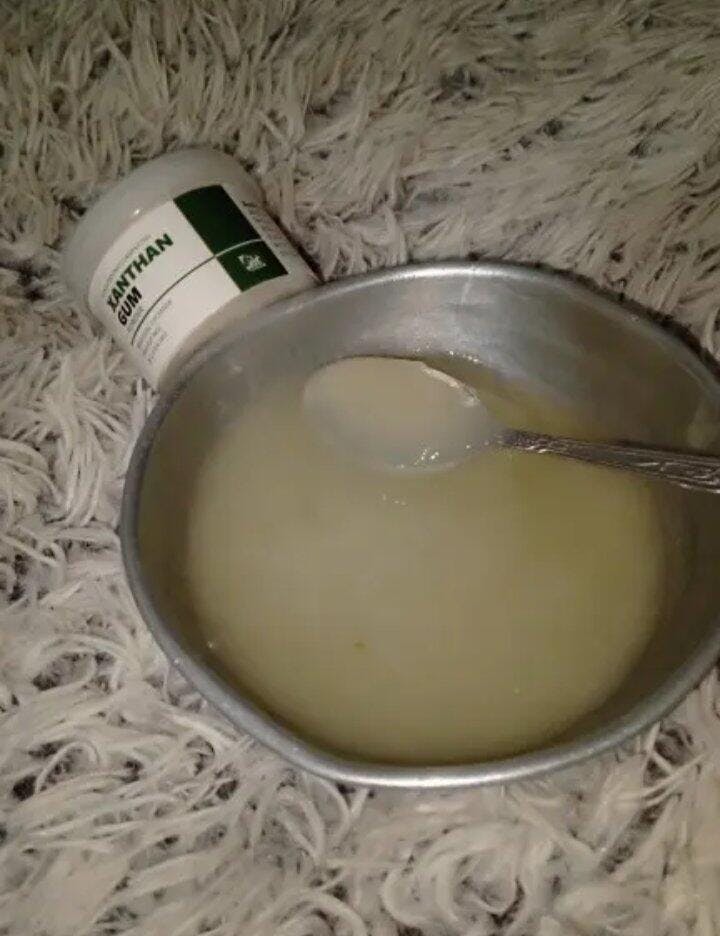
bhut hi zbrdst... aap daikh sakty Hy main NY Ghar pr alovera ka fresh gel banaya . is achy product k madad Sy.