Bio Shop
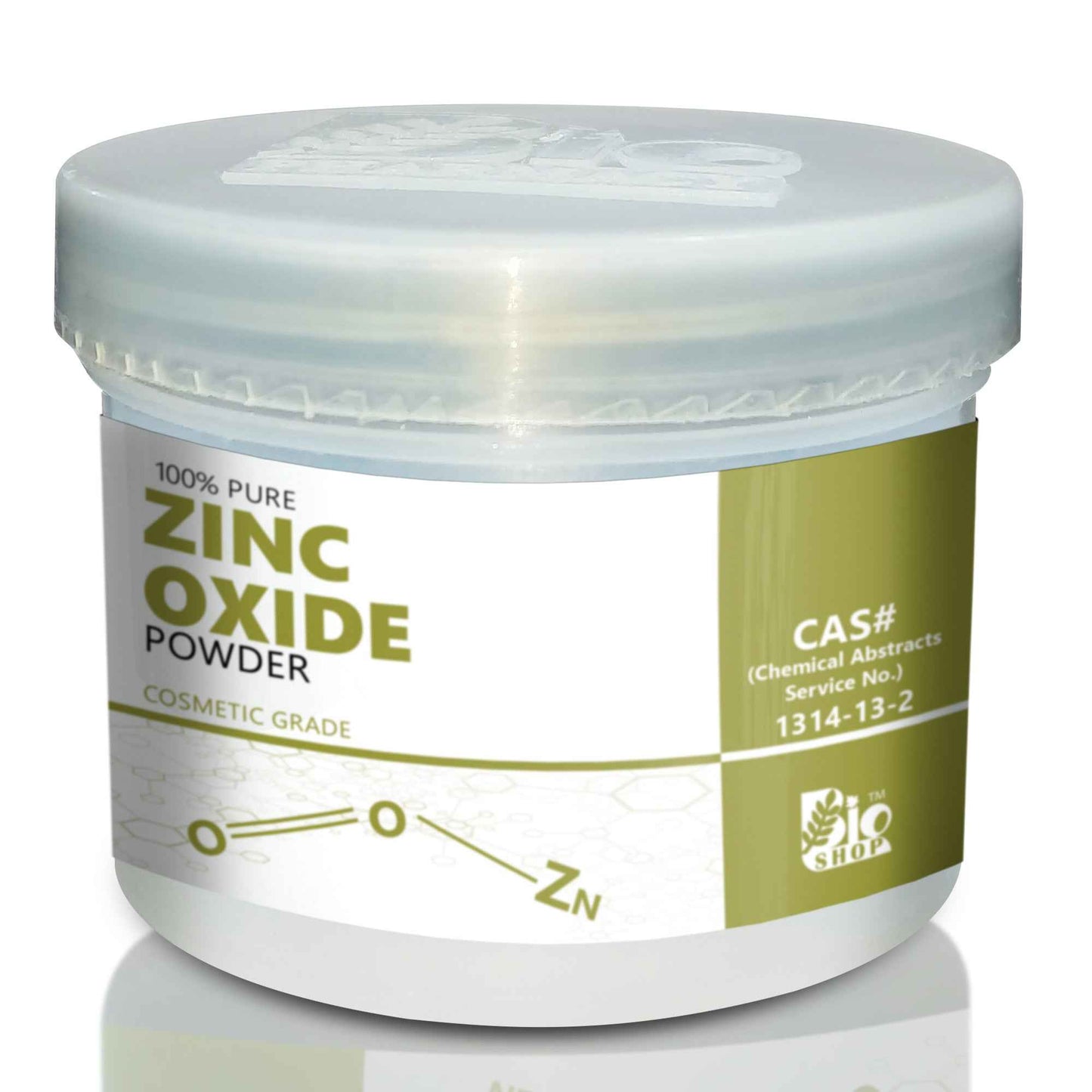
Zinc Oxide Powder
Zinc Oxide Powder
Key Functions: road-spectrum UV filter, soothes irritation, antimicrobial, and protects skin barrier.
Couldn't load pickup availability
Explore
Information About Zinc Oxide Powder
✅ Key Features
✦ Broad-spectrum UVA and UVB physical UV filter approved under EU Cosmetics Regulation Annex VI up to 25%
✦ Soothes, calms, and reduces inflammation in sensitive, irritated, and reactive skin conditions
✦ Natural antimicrobial agent effective against acne-causing bacteria and suitable for baby skin formulations
✦ Used in mineral sunscreens, diaper rash creams, deodorants, wound ointments, and mineral makeup
✦ Non-nano cosmetic grade available — preferred for skin safety and regulatory compliance
✦ Inorganic, vegan, free from synthetic fragrance, and compatible with clean beauty standards
✦ Functions as an opacifier and white pigment in color cosmetics and soap formulations
🔬 Description
Zinc Oxide is a naturally occurring inorganic mineral compound derived from the element zinc. It has been used in medicinal and cosmetic preparations for centuries, with documented use in ancient Egyptian, Roman, and Ayurvedic healing preparations as a soothing powder and wound treatment. In modern cosmetic science, it is recognized as one of only two globally approved inorganic UV filters and is a cornerstone active in mineral sunscreens, pharmaceutical skin preparations, and protective personal care products.
What sets zinc oxide apart from organic UV filters is its physical mechanism of action. Rather than absorbing UV radiation and converting it to heat, zinc oxide sits on the skin surface and reflects and scatters both UVA and UVB rays simultaneously. In addition to this broad-spectrum UV performance, zinc oxide exhibits well-documented anti-inflammatory, mild astringent, and antimicrobial properties. These secondary functions make it highly valuable beyond sunscreen applications — in barrier creams, diaper rash formulas, acne treatments, and calamine-type soothing preparations.
Bio Shop Pakistan supplies cosmetic-grade Zinc Oxide suitable for independent sunscreen formulators, baby care product developers, mineral makeup artists, diaper rash cream makers, and professional cosmetic chemists.
📊 Technical Data
INCI Name : Zinc Oxide
Chemical Name : Zinc Oxide
CAS Number : 1314-13-2
Molecular Formula : ZnO
Appearance : Fine white powder
Odor : Odorless
pH (1% solution) : 6.95 – 7.37 (aqueous suspension)
Solubility : Insoluble in water; soluble in dilute acids and alkalis
Specific Gravity : 5.6 g/cm³
Flash Point : Not Applicable (inorganic solid)
HLB Value : Not Applicable
Recommended Use Level : 1 – 25% (up to 25% as UV filter per EU Annex VI; 0.5 – 2% as opacifier)
Type : Inorganic mineral UV filter / skin protectant / antimicrobial agent
Shelf Life : 2 – 3 years in sealed container away from moisture and strong acids
🧪 Recommended Usage
Skincare (Creams, Serums, Lotions) : ★★★★★
Zinc oxide is a primary active in mineral sunscreens, barrier repair creams, and soothing formulations for sensitive skin. Use at 5 – 25% for UV protection or at 1 – 5% for its anti-inflammatory and skin-calming benefits in serums and daily creams.
Haircare (Shampoo, Conditioner, Masks) : ★★☆☆☆
Zinc oxide has limited application in standard haircare but can be used in scalp-targeted treatments for dandruff and scalp irritation. Use at 0.5 – 2% in medicated scalp serums or shampoos and account for the opaque white appearance in the finished formula.
Soap Making (Cold Process, Melt and Pour) : ★★★☆☆
Zinc oxide functions as an opacifier and mild skin-soothing agent in soap bases and does not provide UV protection in rinse-off formats. Add at 0.5 – 2% to produce a clean white, smooth bar with gentle skin-conditioning properties.
Body Care (Scrubs, Butters, Balms) : ★★★★★
Zinc oxide is ideal in baby balms, diaper rash creams, protective body ointments, and barrier sticks. Use at 5 – 20% in barrier formulas for effective physical protection, skin soothing, and occlusive coverage.
Functional Cosmetics (Deodorants, Sunscreen, Baby Care) : ★★★★★
This is where zinc oxide delivers its highest performance — as the core UV active in mineral sunscreens, the primary functional ingredient in diaper creams, and as an antimicrobial agent in natural deodorant formulations. Use at 15 – 25% in sunscreens and up to 40% in diaper barrier creams.
💡 Pro Tip
As a formulator, I consider zinc oxide one of the most technically demanding actives to work with correctly — not because of its chemistry, but because of its physical behavior in formulation. Dispersion is everything. Zinc oxide particles agglomerate readily, and if not properly dispersed before incorporation, the result is white streaking, uneven texture, and unpredictable SPF performance. I always pre-disperse it in an oil or silicone phase before adding it to any emulsion. At low concentrations, zinc oxide quietly does remarkable work in acne creams, protective ointments, and deodorant bars where most customers do not even know it is there.
ADVANCED TIP: To minimize white cast in mineral sunscreen formulations, pre-disperse non-nano zinc oxide at 20 – 25% in a low-viscosity silicone carrier such as cyclopentasiloxane or dimethicone 5 cst, and add polyhydroxystearic acid at 0.5 – 1% of the total dispersion as a steric dispersant. Incorporate this dispersion into your emulsion during the cool-down phase below 40°C with slow, consistent mixing. Blending with 2 – 5% iron oxide pigments (yellow and red) further neutralizes the grey-white finish on medium to deep skin tones without compromising UV performance.
👩🔬 Skin Type Suitability
Normal Skin : ★★★★★ — Provides excellent broad-spectrum UV protection and barrier reinforcement without disrupting balanced skin.
Dry Skin : ★★★★☆ — Performs well in rich emollient and barrier cream bases, though the formula must carry sufficient occlusive agents to prevent a drying feel.
Oily Skin : ★★★★☆ — Mild astringency helps regulate sebum and its antimicrobial action reduces breakout-causing bacteria, best used in lightweight gel-cream or fluid emulsions.
Combination : ★★★★☆ — Effective across both zones when incorporated into a balanced, lightweight emulsion that does not over-occlude oily areas.
Sensitive Skin : ★★★★★ — One of the most recommended UV filters for reactive and sensitized skin due to its inert, non-penetrating, and non-irritating nature.
Mature Skin : ★★★★☆ — Provides UV photoprotection and barrier repair, though its opacity requires careful base formulation to achieve a natural, non-chalky finish.
Acne-Prone : ★★★★☆ — Its antimicrobial and sebum-regulating properties are beneficial for acne-prone skin; widely regarded as non-comedogenic in properly formulated bases.
🧴 Formulation Ideas
CONCEPT 1: Broad-Spectrum Mineral Sunscreen SPF 30+
Usage Level : 20%
Key Ingredients: Zinc Oxide, Caprylic/Capric Triglyceride, Cetearyl Alcohol, Glycerin, Polyhydroxystearic Acid
Result : A smooth, broad-spectrum mineral sunscreen lotion providing UVA/UVB protection with a lightweight, non-greasy skin feel.
CONCEPT 2: Baby Diaper Rash Barrier Cream
Usage Level : 15%
Key Ingredients: Zinc Oxide, Beeswax, Castor Oil, Shea Butter, Chamomile Extract
Result : A thick, occlusive barrier cream that physically protects irritated skin from moisture contact, reduces redness, and calms diaper rash.
CONCEPT 3: Acne-Control Mattifying Serum Cream
Usage Level : 5%
Key Ingredients: Zinc Oxide, Niacinamide, Salicylic Acid, Aloe Vera Gel, Dimethicone
Result : A lightweight, matte-finish serum cream that controls sebum, fights surface bacteria, and delivers light mineral coverage for blemish-prone skin.
💧 Safety and Regulatory:
INCI Declared : Yes — required on all finished cosmetic product labels
EU Cosmetics Reg : Permitted — listed in Annex VI as UV filter; max 25% in face products and body lotions (non-spray); nano form requires [nano] labeling and is prohibited in spray/aerosol applications
Rinse-Off Limit : No UV protection limit established for rinse-off; use as opacifier at 0.5 – 2% only
Leave-On Limit : 25% as UV filter in face products and body lotions (non-spray) per EU Annex VI
Allergen Alert : No — not a classified contact allergen; rare individual sensitivity possible at high concentrations
Skin Safety : Safe at recommended levels for topical use
Eye Area Use : Use with caution — avoid direct eye contact; safe in mineral eye makeup at low concentrations
Ingestion : Not for internal use
Pregnancy Use : Considered safe for topical use; consult physician for prolonged use of high-concentration sunscreen formulas
Child Safety : Safe for use on infants above 6 months as directed; widely used and clinically accepted in baby care products
Ventilation : Recommended during weighing and handling — avoid prolonged inhalation of fine powder; use a dust mask
Storage : Cool, dry place away from moisture, strong acids, and humidity; keep container tightly sealed
Container : HDPE or glass — avoid reactive metal containers
⚠️ WARNING: Nano-form zinc oxide (particle size below 100 nm) is subject to mandatory [nano] labeling under EU Cosmetics Regulation and is prohibited in spray or aerosol applications due to inhalation risk. Inhalation of fine zinc oxide powder during manufacturing is a health hazard — always handle with a dust mask and adequate ventilation. Avoid combining with strongly acidic ingredients below pH 5 as this causes dissolution and loss of function.
Stability and Compatibility
Working pH Range : 6.0 – 9.0 (stable across a wide range; dissolves below pH 5 and above pH 11)
Heat Stability : Stable as a raw material up to 200°C; add to formulation during cool-down phase below 40°C to preserve dispersion quality
Freeze-Thaw Stable : Yes
Emulsion Type : O/W / W/O / Both
Emulsification Phase: Cold (incorporate into pre-formed emulsion below 40°C for best particle distribution)
Compatible With : Emollients, silicones, waxes, mineral pigments, niacinamide, chamomile extract, allantoin, titanium dioxide
Incompatible With : Strong acids below pH 5, chelating agents at high concentrations, reactive metal ions, aggressive surfactants in high-concentration acid systems
Oxidation Risk : Low — inorganic mineral; no antioxidant required for zinc oxide itself
Discoloration Risk : Possible — may contribute to yellowing in formulations containing certain reactive plant extracts or amine-based ingredients over extended storage
Formulation Notes : Always pre-disperse zinc oxide in an oil or silicone phase with a suitable dispersant before emulsification to prevent agglomeration and white streaking. Avoid prolonged contact with concentrated acidic aqueous phases during the blending process.
❓ FAQs
Q: What is the difference between nano and non-nano zinc oxide in cosmetics?
A: Non-nano zinc oxide has particles larger than 100 nm and sits on the skin surface without penetrating, providing visible coverage with a slight white cast. Nano zinc oxide is more transparent on the skin but requires mandatory [nano] labeling under EU regulations and is prohibited in spray and aerosol formats due to inhalation safety concerns.
Q: Can zinc oxide provide UV protection in a rinse-off product like a wash-off sunscreen?
A: Zinc oxide does not deliver meaningful UV protection in rinse-off formats because it is removed from the skin before it can form a protective film. For effective UV protection, zinc oxide must be used exclusively in leave-on formulations such as lotions, creams, sticks, and sunscreen serums.
Q: How do I reduce the white cast when formulating with zinc oxide?
A: Pre-disperse zinc oxide in a low-viscosity silicone such as dimethicone and include a steric dispersant like polyhydroxystearic acid at 0.5 – 1% to improve particle distribution. Blending with iron oxide pigments in warm and red tones can further neutralize the chalky white finish on medium and deeper skin tones.
Q: What percentage of zinc oxide do I need to formulate an SPF 30 sunscreen?
A: Achieving SPF 30 with zinc oxide alone typically requires 18 – 22% in a well-formulated leave-on emulsion, but the exact result depends on particle size, dispersion quality, base viscosity, and film formation. Always validate SPF claims through accredited in vitro or in vivo SPF testing before making marketing claims.
Q: How does zinc oxide compare to titanium dioxide as a mineral UV filter?
A: Zinc oxide provides broader UVA coverage than titanium dioxide, making it the preferred choice for genuine broad-spectrum mineral sun protection. Titanium dioxide has a higher refractive index for greater opacity and produces a slightly less pronounced white cast, but lacks zinc oxide's antimicrobial and anti-inflammatory skin benefits. Many professional mineral sunscreen formulas combine both actives to optimize SPF value, UV coverage, and aesthetic performance.
Where Can You Safely Use Zinc Oxide Powder
Discover how Zinc Oxide Powder performs across different products — rated for safety, stability, and effectiveness.
Ghar pe itni behtar sunscreen banti hai. Ingredients clear hain. Quality guaranteed. Bio Shop zindabad.
Zabardast ❤️ products
Sardi mein haath aur munhe ki skin bahut chap jaati thi. Zinc oxide protective barrier cream banaya - castor oil aur beeswax ke saath. Wind aur cold se skin protected rahi. Chapping dramatically reduce hui. Bio Shop quality excellent. Winter essential.
January se use kar raha hoon. Sunscreen diaper cream wound healing sab mein. Bio Shop zinc oxide quality hamesha same. Versatile ingredient jo har ghar mein hona chahiye. Highest recommend to entire Pakistani skincare community.
Zinc oxide niacinamide aur vitamin E se anti-pollution day cream banaya. Lahore ki pollution se skin protect hoti hai. Physical barrier pollution particles ko bhi block karta hai. Bio Shop quality excellent. Urban skin care ke liye highly recommend.