


Bio Shop
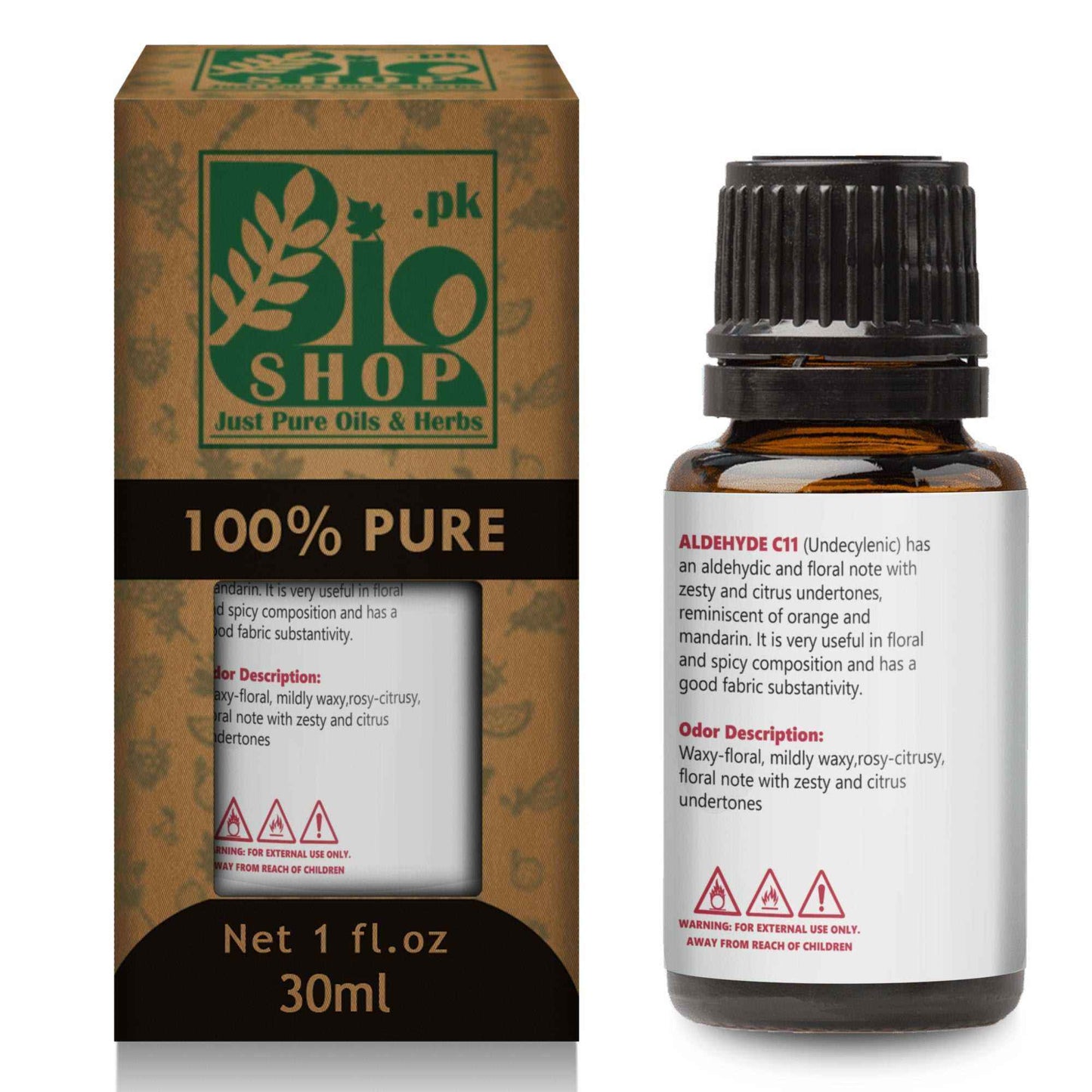
Aldehyde C11 (Undecanal)
Aldehyde C11 (Undecanal)
Olfactory Notes: Laundry-fresh, clean, and slightly rosy.
Couldn't load pickup availability

Explore
Information About Aldehyde C11 (Undecanal)
Key Features
✦ Synthetic aliphatic aldehyde delivering the iconic waxy, soapy, and fatty note central to the classic aldehydic fragrance family.
✦ Essential raw material for replicating Chanel No.5-style, Arpège-style, and all powdery aldehydic floral compositions.
✦ Extremely potent — effective at 0.05% to 0.5% in finished fragrance; a little goes a very long way.
✦ Adds sparkling lift, diffusion, and clean soapy radiance to any accord — useful in citrus, floral, fougère, and oriental bases.
✦ Suitable for use in fine fragrance, functional fragrance, home fragrance, shampoo, and fabric softener at controlled dosage.
✦ Vegan and not animal-derived; produced by synthetic organic chemistry from fatty acid precursors.
✦ Cosmetic-grade purity (97–99%), supplied as a clear to pale yellow mobile liquid with immediate aldehydic character.
About Aldehyde C11 (Undecanal)
Aldehyde C11, known by its IUPAC name Undecanal, is a straight-chain aliphatic aldehyde with eleven carbon atoms. It belongs to the family of fatty aldehydes (C7 through C12) that revolutionised perfumery in the early twentieth century. When Ernest Beaux incorporated a blend of aliphatic aldehydes into what would become Chanel No.5 in 1921, the world encountered a new type of abstract beauty in fragrance. Aldehyde C11 was among those responsible — its waxy, soapy, luminous quality lending the composition an almost metallic, airy cleanness that no natural material could replicate.
What makes Aldehyde C11 uniquely valuable is its dual personality. At high concentration it smells overwhelmingly fatty and soapy — reminiscent of fresh laundry soap and orange peel wax. When diluted to the levels at which perfumers actually use it (fractions of a percent), it transforms into a shimmering, radiant topnote that lifts every accord it enters. It increases diffusion, opens up a fragrance, and creates the impression of bright, airy cleanliness. This behaviour at different concentrations makes it one of the most instructive materials a beginner perfumer can study, and one of the most nuanced tools in an expert's kit.
Bio Shop Pakistan supplies cosmetic-grade Aldehyde C11 (Undecanal) suitable for independent perfumers, DIY fragrance formulators, cosmetic product developers, and home fragrance makers across Pakistan who require a reliable, high-purity aldehydic building block for their creative and commercial work.
Olfactory Profile
SCENT DESCRIPTION : Aldehyde C11 opens with an immediate, sharp, and unmistakably waxy aldehydic blast — clean, soapy, and faintly reminiscent of freshly grated orange zest and warm candlewax. As it breathes on a smelling strip the fatty edge softens, revealing a luminous, almost powdery radiance with a suggestion of clean musk. At extreme dilution it becomes bright, airy, and abstract — a shimmering quality that lifts everything around it. It is one of the most recognisable and historically significant aroma chemicals in the perfumer's palette.
NOTE POSITION : Top to Mid
FRAGRANCE FAMILY : Aldehydic · Citrus · Powdery
FACETS : Waxy · Soapy · Fatty · Citrus-Orange · Clean
TENACITY : Medium-High — 6 to 10 hours on strip; 3 to 5 hours on skin
SILLAGE : High — projects strongly in the opening, creates a bright, diffusive radiance before softening
Technical Specifications
Chemical Name : Undecanal
CAS Number : 112-44-7
Synonyms : Undecyl Aldehyde · C11 Aldehyde · Hendecaldehyde · 1-Undecanal · Aldehyde C-11
Purity : 97–99%
Appearance : Colorless to pale yellow clear mobile liquid
Odor Threshold : Approximately 0.001–0.003 ppm (extremely low)
Solubility : Freely soluble in ethanol, IPM, DPG, and most perfumery solvents; insoluble in water
Specific Gravity : 0.825–0.832 at 20°C
Flash Point : 93°C (199°F)
Type : Synthetic (produced from fatty acid/aldol chemistry)
Applications & Usage Guidelines
Fine Fragrance ★★★★★
Aldehyde C11 is a cornerstone of fine fragrance formulation and the defining material of the aldehydic family. It is indispensable for recreating classic Chanel-style feminines, powdery florals, and abstract modern compositions. Even in non-aldehydic fragrances a micro-dose adds brightness and lift to the topnote structure.
Attar and Oriental Blending ★★★★
In attar and oriental composition, a trace of Aldehyde C11 adds a soapy luminosity that modernises heavy oud, amber, and rose bases. It contrasts beautifully with animalic and resinous materials, preventing compositions from becoming too dark or heavy. Use with great restraint — typically 0.05 to 0.15% in the final blend.
Functional Fragrance ★★★★
Aldehyde C11 performs well in shampoo, body wash, and fabric softener fragrances where its soapy-clean character reads as freshness and hygiene. It reinforces the perception of cleanliness in washing and personal care products. Formulators should keep it below 0.1% in rinse-off bases to stay within safety guidelines.
Cosmetics ★★★
At highly diluted levels Aldehyde C11 can be used in body lotions and cream fragrances to add a clean, powdery lift. Sensitisation potential at higher levels means careful dosing is required and patch testing is recommended. It is generally avoided in leave-on products targeting sensitive skin unless kept at very low concentrations.
Home Fragrance ★★★★
In candles and reed diffusers, Aldehyde C11 contributes a clean, waxy, and abstract quality that reads as sophisticated and modern. It blends naturally with white florals, musk bases, and citrus accords in home fragrance applications. Use at 0.2 to 0.5% in diffuser blends for a subtle but recognisable aldehydic signature.
IFRA & Usage Rate
RECOMMENDED USAGE RATES
Application : Suggested Range
EDP : 0.1% – 0.5%
EDT : 0.05% – 0.3%
Body Lotion : 0.02% – 0.1%
Shampoo/Body Wash : 0.02% – 0.08%
Candle : 0.1% – 0.5%
Reed Diffuser : 0.2% – 0.8%
Soap (Bar) : 0.05% – 0.2%
Note: These are usage rates of Aldehyde C11 as a pure material in the finished product. If used as part of a fragrance compound, the compound is used at standard fragrance loading and Aldehyde C11 contributes its share proportionally.
IFRA 51ST AMENDMENT LIMITS (Approximate — verify with current IFRA database)
Undecanal (CAS 112-44-7) is classified as a skin sensitiser and falls under QRA (Quantitative Risk Assessment) restrictions in the IFRA 51st Amendment.
IFRA Category 4 (Fine Fragrance — leave-on) : Max approx. 1.0% in finished fragrance
IFRA Category 5A (Body lotion, leave-on) : Max approx. 0.1% in finished product
IFRA Category 8 (Non-skin contact — candle) : No specific restriction cited
IFRA Category 9A (Soap, rinse-off) : Max approx. 0.2% in finished product
IFRA Category 11A (Fabric softener) : Verify with supplier for current limits
⚠ Undecanal has skin sensitisation potential. Always use within IFRA guidelines. Always confirm limits against the current published IFRA 51st Amendment standard before commercial formulation. These figures are provided as guidance only.
⚠ Not for use in lip products, eye-area products, or baby products without thorough safety assessment.
⚠ Odor threshold is extremely low. Never increase usage rates in the belief that more will smell proportionally stronger — the result will be overwhelming and unpleasant.
Blending Guide
METHOD 1 — Micro-dosing Technique
Prepare a 1% or 10% dilution of Aldehyde C11 in ethanol or DPG before use. Adding the pure material directly to a blend risks overdosing. Work from your dilution, adding drop by drop, and always evaluate after 24 hours as aldehydes evolve significantly on ageing.
METHOD 2 — Classic Aldehydic Floral Base
Combine Aldehyde C11 at 0.2–0.4% with rose absolute or rose oxide, iris/orris, jasmine, and a clean synthetic musk. This is the structural template behind dozens of iconic feminine fragrances. The aldehyde lifts the florals and creates the characteristic abstract brightness of the aldehydic family.
METHOD 3 — Soapy Clean Accord for Functional Fragrance
Use Aldehyde C11 at 0.05–0.1% alongside Hedione, Linalool, Galaxolide, and a citrus topnote (Bergamot, Lemon) for a crisp, clean shampoo or fabric accord. The aldehyde reinforces the cleanliness cue and gives the blend a polished, sophisticated edge without reading as overtly perfumey.
BEST PAIRINGS
Rose Absolute/Rose Otto → Creates the quintessential aldehydic floral heart; shimmering and timeless
Iris/Orris Root → Adds powdery depth and violet-root character; softens the waxy edge
Ylang Ylang → Tropical, creamy counterpoint that grounds the aldehyde beautifully
Bergamot EO → Reinforces citrus facet; brightens and freshens the topnote
Jasmine Absolute → Pushes composition toward indolic florals with aldehydic radiance
Ambrette Seed → Musky, waxy synergy that extends the soapy character into the base
Vetiver/Oakmoss → Anchors the composition; prevents the aldehydic note from floating away
Clean Musks (Galaxolide) → Extends the soapy-clean character; reinforces the laundry-clean impression
AVOID
Avoid combining Aldehyde C11 at high levels with heavy animalic materials (civet, castoreum bases) as the contrast can read as rancid rather than interesting. Also avoid direct combination with strong oxidising agents in formulation as aldehydes are prone to oxidation and rancidity. Avoid using at full strength in any leave-on skin product.
Perfumer's Note
I think of Aldehyde C11 as the material that most directly connects modern perfumery to its own history. Every time I work with it I am, in some sense, working in the same tradition as Ernest Beaux and the great French maîtres who defined what fine fragrance could be in the twentieth century. Its quality is abstract in a way that naturals rarely are — it does not smell like a flower or a fruit or a wood. It smells like the idea of cleanness, of laundered linen in winter light, of something refined and considered. Learning to use it is one of the most valuable exercises a developing perfumer can undertake, because it teaches restraint, proportion, and the concept of a material that changes its character completely depending on concentration.
ADVANCED TIP : Make four smelling strips — Aldehyde C11 at 100% (undiluted), 10%, 1%, and 0.1% in ethanol. Evaluate all four at 10 minutes and again at 1 hour. Document your observations carefully. This single exercise will teach you more about olfactory threshold, concentration-dependent character, and the behaviour of volatile materials than almost any other experiment in your development as a perfumer. You will begin to understand instinctively why all formulators work from pre-prepared dilutions rather than neat materials.
Safety & Storage
Physical State : Clear to pale yellow mobile liquid at room temperature
Skin Safety : Skin sensitiser — use within IFRA limits; always dilute before skin contact; avoid undiluted application
Eye Contact : Irritant — avoid contact; if contact occurs flush immediately with clean water for 15 minutes and seek advice
Ingestion : Not for consumption; keep out of reach of children
Ventilation : Use in a well-ventilated area; avoid prolonged inhalation of vapours at high concentration
Storage : Store in a cool, dark location away from direct sunlight and heat sources; ideal temp 10–20°C
Shelf Life : 12–24 months if stored correctly in sealed container away from heat, light, and oxygen
Container : Store in original amber glass or HDPE container; avoid prolonged contact with PET or reactive metals
Flammability : Combustible liquid; flash point 93°C — keep away from open flame and ignition sources
FAQ
Q: What does Aldehyde C11 smell like and why is it used so sparingly?
A: It smells waxy, soapy, and fatty with a faint orange-citrus edge at normal concentration. Its odor threshold is extremely low (around 0.001 ppm), so trace amounts create a huge olfactory impact. Overuse results in an unpleasant, overwhelming soapy-rancid effect.
Q: Is Aldehyde C11 the same thing as the aldehydes in Chanel No.5?
A: Chanel No.5 uses a blend of aliphatic aldehydes including C10, C11, and C12. Aldehyde C11 (Undecanal) is one of the key components responsible for that iconic waxy, luminous aldehydic character. It does not replicate the full formula on its own but is an essential ingredient in any faithful recreation.
Q: How do I add Aldehyde C11 to my blend without overdosing?
A: Always work from a 1% or 10% dilution in ethanol or DPG — never add the undiluted material directly. Start at 0.05% in your finished blend, evaluate after 24 hours, and increase incrementally. Smell at a distance from the strip, not directly, as concentrated aldehydes can overwhelm your nose instantly.
Q: Can I use Aldehyde C11 in soaps and candles?
A: Yes, but at low concentrations. In soap, use 0.05–0.2% (be aware alkaline saponification can diminish the aldehyde over time). In candles and reed diffusers it performs well at 0.2–0.5%, adding a clean, waxy, modern signature to white floral and musk-based home fragrance blends.
Q: How does synthetic Aldehyde C11 compare to naturally occurring Undecanal from essential oils?
A: Undecanal occurs naturally in trace amounts in citrus peel oils (orange, grapefruit) and a handful of other botanical sources, but natural concentrations are far too low and inconsistent for reliable perfumery use. Synthetic Aldehyde C11 provides the consistent purity (97–99%), reliable odor profile, and cost efficiency that makes it the universal standard. The synthetic version is chemically identical to the natural compound and is the only practical option for formulation work.
Where Can You Safely Use Aldehyde C11 (Undecanal)?
Discover how Aldehyde C11 (Undecanal) performs across different applications—rated for safety, stability, and effectiveness.


