Bio Shop
Alpha Ionone
Alpha Ionone
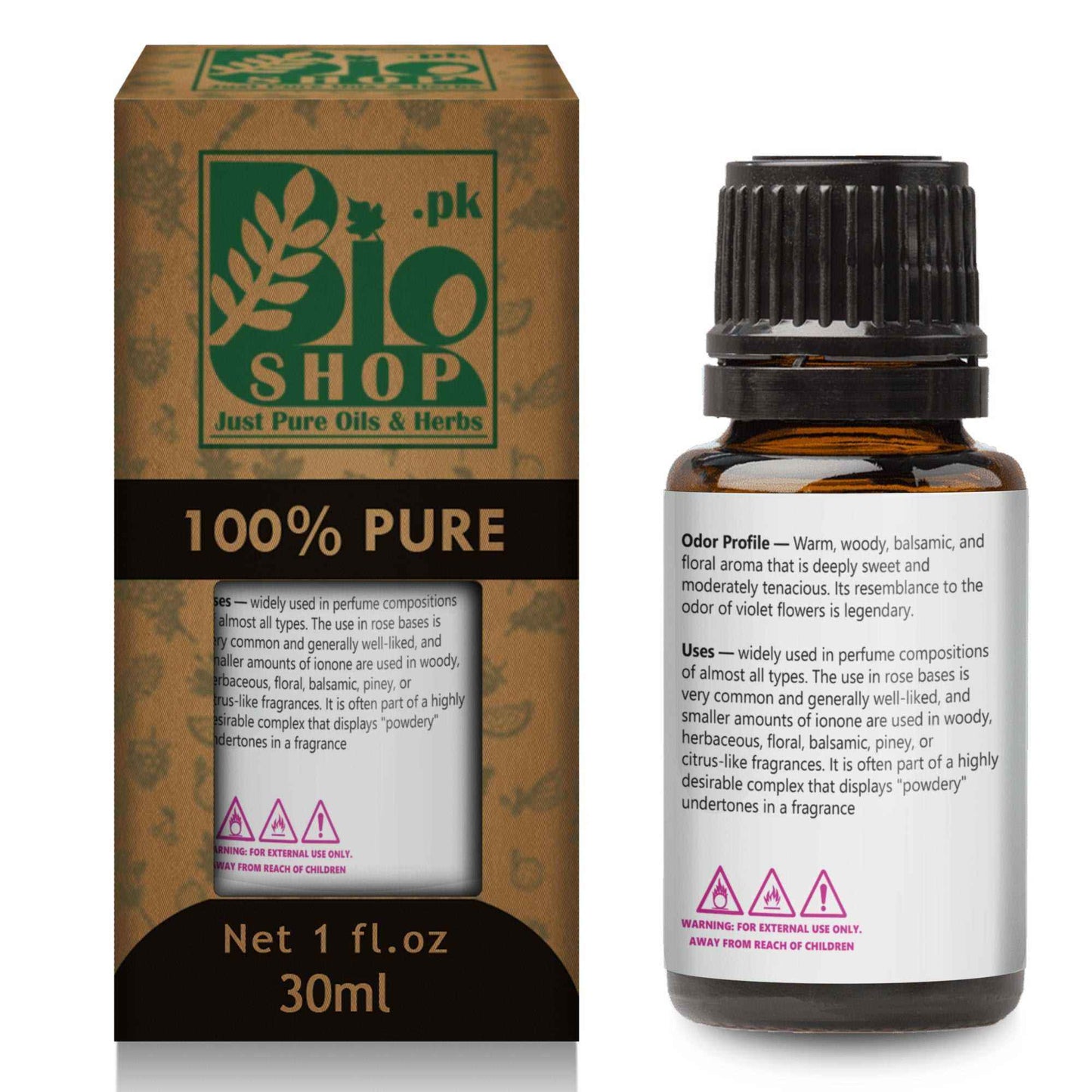
Olfactory Notes: Classic powdery violet and sweet iris (Orris) profile.
Couldn't load pickup availability

Explore
Information About Alpha Ionone
Key Features
✦ Soft violet and woody aroma chemical with a clean fruity undertone and excellent blending versatility
✦ Semi-synthetic ingredient derived from citral, closely related to natural orris and violet flower chemistry
✦ Widely used in fine fragrance, body lotions, soaps, and hair care to add a delicate floral-woody lift
✦ Lighter and fruitier than Beta Ionone — preferred when a transparent, airy violet effect is needed
✦ Key ingredient in classic violet colognes, powdery florals, and fresh oriental compositions
✦ Stable in alcohol-based and oil-based formulations with moderate tenacity and good diffusion
✦ Vegan and cruelty-free — suitable for natural-inspired and clean beauty formulations
About Alpha Ionone
Alpha Ionone is a member of the ionone family, a group of aroma chemicals first synthesized in the late 19th century by Tiemann and Krüger during research into the chemistry of violets. The ionones were among the earliest synthetic fragrance materials ever developed, and their discovery was a landmark moment in modern perfumery because they allowed perfumers to capture the fleeting scent of violet flowers and orris root without relying entirely on expensive natural extracts. Alpha Ionone specifically is produced through the condensation of citral with acetone, followed by cyclization, yielding a pale yellow liquid with an unmistakably soft and luminous character.
What sets Alpha Ionone apart from its close relative Beta Ionone is its gentler, fruitier quality. Where Beta Ionone leans woody and cedar-like, Alpha Ionone carries a transparent, almost watery violet quality with a raspberry-like fruity facet underneath. This makes it an exceptionally versatile blending tool — it adds radiance without heaviness, lifts floral compositions without overpowering them, and integrates smoothly into both feminine and unisex accords. Its moderate tenacity means it contributes to the heart of a fragrance without dragging into the base, creating a natural, seamless effect.
Bio Shop Pakistan supplies cosmetic-grade Alpha Ionone suitable for DIY perfumers, attar makers, soap and lotion formulators, and fragrance students who want a reliable and authentic ionone material for professional-quality results.
Olfactory Profile
SCENT DESCRIPTION : Alpha Ionone opens with a clean, luminous violet note that feels almost transparent on the skin. It carries a soft fruity undertone reminiscent of ripe raspberry or cassis, giving it a slightly sweet and modern character. As it develops, a gentle woody warmth emerges, dry and smooth without any heaviness. The overall impression is refined, powdery, and elegantly floral — a scent that feels both classical and contemporary.
NOTE POSITION : Mid / Mid-Base
FRAGRANCE FAMILY : Floral (Violet) · Woody · Fruity
FACETS : Violet · Powdery · Fruity · Woody · Clean
TENACITY : Medium — 4 to 6 hours on skin, longer on fabric
SILLAGE : Medium — projects gently without overwhelming, ideal for skin-close and intimate fragrances
Technical Specifications
Chemical Name : (E)-4-(2,6,6-Trimethyl-2-cyclohexenyl)-3-buten-2-one
CAS Number : 127-41-3
Synonyms : α-Ionone · Iralone · alpha-Irisone · 4-(2,6,6-Trimethyl-2-cyclohexenyl)-3-buten-2-one
Purity : ≥98%
Appearance : Pale yellow to colorless clear liquid
Odor Threshold : Approximately 0.4 ppb in air (very low — highly detectable)
Solubility : Insoluble in water · Freely soluble in ethanol, carrier oils, and IPM
Specific Gravity : 0.930–0.934 g/cm³ at 20°C
Flash Point : Approximately 87°C (189°F)
Type : Semi-synthetic (derived from citral via condensation and cyclization)
Applications & Usage Guidelines
Fine Fragrance ★★★★★
Alpha Ionone is a cornerstone material in violet-type and floral-woody fragrances. It adds a clean, transparent lift to heart notes and is widely used in feminine florals, fresh orientals, and powdery accords. Used at 0.5–3% in an EDP formula, it creates a luminous floral presence that blends seamlessly with rose, iris, and musk.
Attar and Oriental Blending ★★★★☆
In attar-style compositions, Alpha Ionone provides a modern contrast to heavier oud and resinous bases, adding brightness and a cool violet facet. It pairs well with sandalwood, ambrette, and rose attars to create a layered floral-woody depth. Keep usage below 2% in concentrated oil formats to avoid dominating the base.
Functional Fragrance ★★★★☆
Alpha Ionone performs well in body lotions, creams, and hair care where a soft clean floral scent is desired. It is stable in emulsions and imparts a pleasant violet character that enhances the perceived freshness and luxury of personal care products. Stick to IFRA-compliant levels for leave-on skin applications.
Cosmetics ★★★☆☆
At low usage rates, Alpha Ionone can be used in facial creams, body butters, and lip-safe formulations. Its low odor threshold means small amounts contribute meaningfully to the scent profile without irritation risk when kept within safe limits. Always patch test in sensitive skin formulations.
Home Fragrance ★★★★☆
In reed diffusers and wax melts, Alpha Ionone contributes a clean, soft violet note that works well as a blending tool in floral and fresh home fragrance accords. It is not a strong standalone home fragrance material but adds refinement and lift to compositions that need a violet or powdery floral dimension.
IFRA & Usage Rate
Recommended Usage Rates
EDP : 1.0 – 3.0%
EDT : 0.8 – 2.0%
Body Lotion : 0.3 – 1.0%
Shampoo / Body Wash : 0.3 – 0.8%
Candle : 2.0 – 5.0%
Reed Diffuser : 5.0 – 15.0%
Soap (Cold Process) : 0.5 – 1.0%
IFRA 51st Amendment Limits (Approximate — verify with current IFRA database)
Category 1 (Lip products) : 0.3%
Category 2 (Face leave-on) : 1.7%
Category 3 (Hand/body leave-on) : 2.9%
Category 4 (Fine fragrance) : 10.0%
Category 5A (Body lotion) : 1.9%
Category 7A (Rinse-off hair) : 4.3%
Category 9 (Candles/home) : No restriction currently listed
Category 10A (Household sprays) : 0.4%
Category 11A (Fabric softener) : 0.9%
⚠️ Alpha Ionone has sensitization potential at elevated concentrations. Always stay within IFRA guidelines for skin-contact products.
⚠️ For leave-on facial products, keep usage conservative and conduct patch testing.
⚠️ Verify all IFRA limits against the official IFRA website before commercial use as amendments are updated periodically.
Blending Guide
Usage Method 1 — Dilution in Perfumer's Alcohol
Dilute Alpha Ionone to 10% in perfumer's alcohol (DPG or IPM also work) before incorporating into a formula. This makes dosing precise and helps the material disperse evenly throughout the blend. Add to the heart note stage of your formula construction.
Usage Method 2 — Oil-Based Attar Blending
For attar and oil-based perfumes, pre-blend Alpha Ionone into a carrier oil such as fractionated coconut oil or IPM at a 10–20% dilution. This softens its initial impact and allows smoother integration with heavier base materials like oud, sandalwood, and musk.
Usage Method 3 — Functional Product Addition
When adding to lotions or wash-off products, incorporate Alpha Ionone in the cool-down phase after emulsification (below 40°C) to preserve the delicate violet character and prevent heat-related volatility loss.
BEST PAIRINGS
Rose Absolute / Rose Otto → Creates a classic violet-rose accord, romantic and timeless
Sandalwood → Adds depth and creamy warmth beneath the violet facet
Benzyl Acetate → Brightens the fruity character with a fresh jasmine-like lift
Ambrette Seed / Musk Ambrette → Adds a natural musky skin softness that anchors the violet
Iso E Super → Creates a woody, transparent violet-cedar accord
Beta Ionone → Deepens the ionone character with more woody richness
Hedione / Methyl Dihydrojasmonate → Lifts the floral quality and adds diffusive radiance
Linalool → Smoothens and freshens the overall violet accord
AVOID
Avoid combining Alpha Ionone with highly acidic pH environments in rinse-off products as this can affect stability. Do not use at full strength on skin without dilution. Avoid excessive heat during blending to preserve olfactory integrity.
Perfumer's Note
Working with Alpha Ionone is one of the quiet pleasures of fragrance blending. Unlike some aroma chemicals that demand attention, Alpha Ionone works subtly — it fills space without announcing itself, adding a luminous quality that makes a formula feel more refined and complete. I often add a small trace of it to rose-based compositions even when violet is not the intended theme, because it rounds the floral character in a way that few other materials can replicate. It is the ingredient that experienced formulators reach for when something in a blend feels flat or lacks transparency.
ADVANCED TIP : Try using Alpha Ionone at two different levels in the same formula — a small percentage in the heart (around 0.3–0.5%) for an early violet impression, and a trace amount in the base (around 0.1%) to create a soft powdery whisper that extends the dry-down. This layering technique is used in classical French perfumery to give violet accords a sense of dimension and natural evolution over time. Combined with a touch of Iso E Super, it creates a violet-cedar effect that feels both modern and deeply classical.
Safety & Storage
Physical State : Liquid at room temperature
Skin Safety : Use within IFRA limits — avoid undiluted skin contact — patch test recommended
Eye Contact : Avoid — rinse thoroughly with clean water if contact occurs — seek medical advice if irritation persists
Ingestion : Not for internal use — keep out of reach of children
Ventilation : Use in a well-ventilated workspace — avoid prolonged inhalation of concentrated vapors
Storage : Store in a cool, dark place away from heat and direct sunlight — ideal temperature 10–25°C
Shelf Life : 2–3 years when stored properly in sealed containers
Container : Store in original amber glass or aluminum container — avoid PET plastic for long-term storage
Flammability : Combustible liquid — flash point approximately 87°C — keep away from open flames and sparks
FAQ
Q: What does Alpha Ionone smell like?
A: It smells like a soft, clean violet flower with a fruity raspberry undertone and a dry woody finish. It is lighter and more transparent than Beta Ionone and has a slightly sweet, powdery quality.
Q: What is the difference between Alpha Ionone and Beta Ionone?
A: Alpha Ionone is softer, fruitier, and more transparent with a clear violet character. Beta Ionone is woodier, stronger, and closer to cedar and woody orris. Both are used in perfumery but serve different purposes in a formula.
Q: Can beginners use Alpha Ionone safely?
A: Yes, but always dilute it before use — a 10% dilution in alcohol or carrier oil is recommended for beginners. Start at 0.5% in your final formula and adjust from there. It is potent at low concentrations due to its very low odor threshold.
Q: Is Alpha Ionone suitable for soap making?
A: Yes, at low usage rates of 0.5–1.0% it performs adequately in cold process soap. It is not the strongest performer in high-pH environments, so the violet character may soften slightly after saponification. Blending with a small amount of Beta Ionone can help maintain the scent profile.
Where Can You Safely Use Alpha Ionone?
Discover how Alpha Ionone performs across different applications—rated for safety, stability, and effectiveness.