


Bio Shop
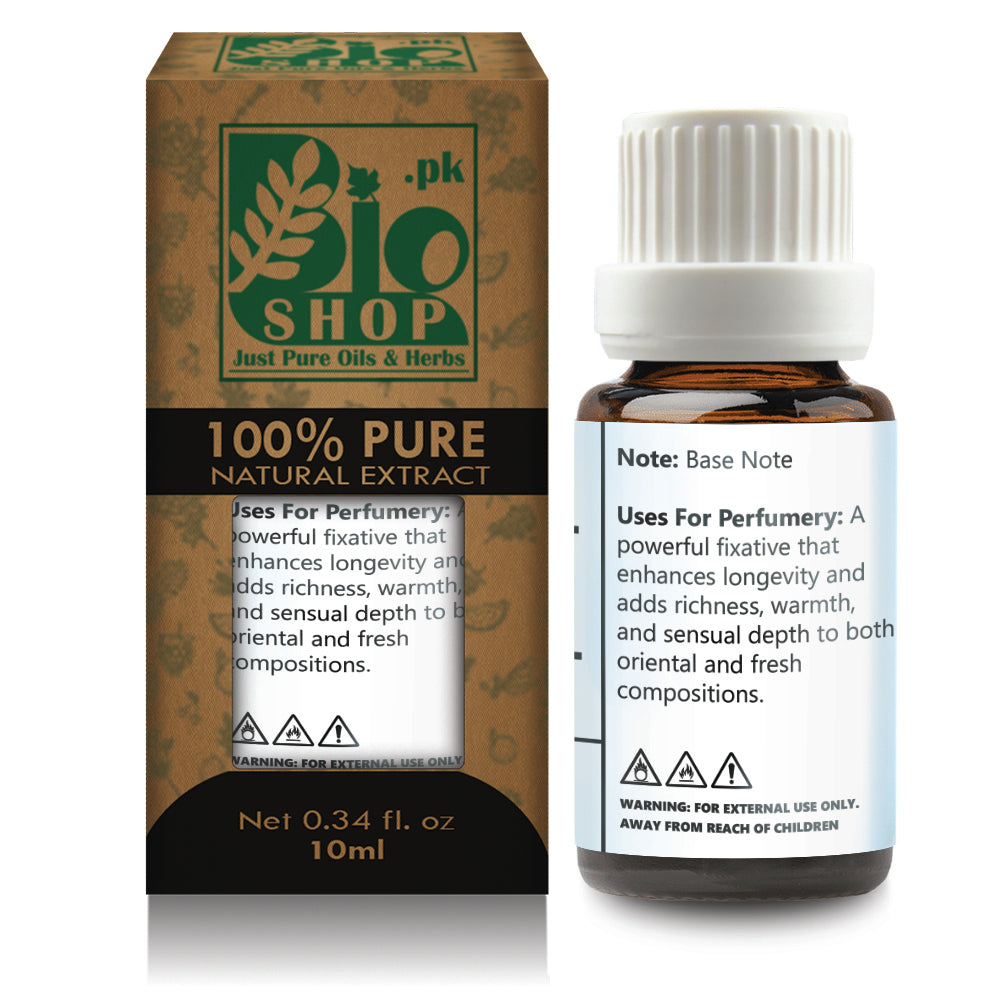
Ambergris Oil (10% in DPG)
Ambergris Oil (10% in DPG)
Olfactory Notes: Amber · Balsamic · Sweet · Powdery · Sensual, and Animalic fixative.
Couldn't load pickup availability

Explore
Information About Ambergris Oil (10% in DPG)
Key Features
✦ Natural ambergris oil derived from oxidized sperm whale secretion — one of perfumery's rarest and most ancient fixatives
✦ Extraordinary fixative power that anchors surrounding notes and extends fragrance longevity dramatically
✦ Complex warm, marine, earthy, and softly animalic scent profile that develops beautifully on skin over time
✦ Revered in Arabian, Mughal, and European perfumery — historically used in royal attars, chypres, and oriental blends
✦ Cosmetic-grade purity suitable for fine fragrance, luxury attars, prestige skincare, and traditional incense
✦ Blends synergistically with oud, musk, sandalwood, rose, civet, labdanum, and amber accords
✦ Animal-derived (not vegan) — for vegan formulations, consider synthetic ambergris alternatives such as Ambroxan
About Ambergris Oil (10% in DPG)
Ambergris has been one of the world's most treasured perfumery materials for over a thousand years. Produced naturally in the digestive tract of the sperm whale, it begins as a dark, soft, and pungent mass, then over decades of floating on open ocean water, oxidizes and matures into a pale grey, waxy, and profoundly aromatic substance that captivated perfumers, traders, and royalty across civilizations. Known as grey amber or anbar in Arabic, it was historically worth more than gold by weight in markets stretching from the Arabian Peninsula to the courts of Mughal India and Elizabethan England.
What makes ambergris oil truly extraordinary is its molecular complexity. The primary compound, ambrein, oxidizes over years to produce a suite of secondary molecules including ambradiol, epicoprostanol, and ambroxide — the last being closely related to the modern synthetic aroma chemical Ambroxan. This transformation from raw marine material to one of the most complex fixatives in nature is unrivaled in perfumery. Its ability to interact with skin chemistry, lift surrounding notes, and anchor a composition's base has never been fully replicated by any single synthetic molecule. The result is a signature warmth, saltiness, and radiance that defines classic oriental and chypre perfumery.
Bio Shop Pakistan supplies cosmetic-grade ambergris essential oil suitable for professional perfumers, luxury attar makers, incense craftsmen, and advanced DIY formulators seeking one of the world's most iconic and historically significant fragrance materials.
Olfactory Profile
SCENT DESCRIPTION: Ambergris essential oil opens with a dry, salty marine breath reminiscent of sun-warmed ocean rocks after a receding tide. As it settles on the skin, a warm earthy sweetness emerges alongside a subtle animalic depth that feels rich but never harsh. With extended wear, the oil develops a radiant, softly powdery amber quality — intimate and deeply sensual. Its complexity defies simple description; it is simultaneously ancient and clean, wild and refined.
NOTE POSITION : Base
FRAGRANCE FAMILY: Oriental · Marine · Animalic / Musky
FACETS : Earthy · Marine · Warm · Animalic · Radiant
TENACITY : Very High — 24 to 48 hours on skin, several days on fabric
SILLAGE : Low to Medium — intimate, skin-close projection with deep and lasting longevity
Technical Specifications
Chemical Name : Complex natural mixture — primary component Ambrein (5α-Cholestane-3β,8,20R-triol) with oxidation derivatives including ambradiol and ambroxide
CAS Number : Complex natural mixture — no single CAS assigned; Ambrein CAS 473-03-0 (verify with supplier)
Synonyms : Grey Amber Oil, Anbar Oil, Ambre Gris, Natural Ambergris Tincture, Sperm Whale Ambergris Oil
Purity % : Varies by extraction method — typically 10% to 25% in carrier base (verify with supplier)
Appearance : Pale yellow to amber viscous liquid
Odor Threshold : Extremely low — detectable at parts per trillion level
Solubility : Fully soluble in alcohol and fixed oils; insoluble in water
Specific Gravity : 0.870 to 0.920 at 20°C (verify with supplier)
Flash Point : Above 60°C (verify with supplier)
Type : Natural — animal-derived, marine origin
Applications & Usage Guidelines
Fine Fragrance ★★★★★
Ambergris oil is the quintessential luxury fixative for fine fragrances. It is used in EDP and EDT concentrations to anchor base accords, add marine-oriental depth, and dramatically improve longevity and sillage. From classic chypres to modern amber orientals, its inclusion elevates a fragrance from technically competent to genuinely unforgettable.
Attar & Oriental Blending ★★★★★
In traditional South Asian and Middle Eastern attar making, ambergris is considered one of the most prized ingredients in existence. It forms the soul of classic anbar attars and adds irreplaceable depth to oud, rose, and musk-based compositions. Even trace amounts of 1% to 2% transform the entire character of a blend.
Functional Fragrance ★★★☆☆
Ambergris oil can be incorporated into functional fragrances such as body lotions, hair care, and skincare at low concentrations. Its fixative nature ensures long-lasting scent on skin and hair. The animalic character may require balancing with clean musks or light florals for broader consumer appeal.
Cosmetics ★★★★☆
In prestige skincare and cosmetic formulations, ambergris oil adds luxurious depth, fixative performance, and a sensory richness associated with premium products. It has centuries of documented use in skin creams and pomades. Best suited to creams, lotions, and hair conditioners at low usage rates of 0.5% to 1.5%.
Home Fragrance ★★★☆☆
Ambergris oil performs well in reed diffusers and traditional incense as a warm, enveloping base note. In candles, performance is moderate as sustained high heat can degrade its more delicate aromatic compounds over time. It performs best in incense sticks and cones where its full complexity is revealed through slow, gentle combustion.
IFRA & Usage Rate
Suggested Usage Rates:
Application : Suggested Rate
EDP : 3.0% to 8.0%
EDT : 2.0% to 5.0%
Body Lotion : 1.0% to 2.5%
Shampoo/Body Wash : 0.5% to 1.5%
Candle : 4.0% to 7.0%
Reed Diffuser : 15.0% to 25.0%
Soap (Cold Process) : 1.0% to 2.5%
IFRA 51st Amendment Notes:
Natural ambergris sourced from sperm whales (Physeter macrocephalus) is subject to international wildlife protection regulations under CITES (Convention on International Trade in Endangered Species). IFRA does not assign a standard per-category amendment limit in the same way it does for synthetic aroma chemicals, but the use of natural animal-derived ambergris is restricted or regulated in many countries including the United States, Australia, and EU member states.
⚠️ Always verify the legal status of natural ambergris in your country or region before incorporating it into commercial cosmetic or fragrance products.
⚠️ For internationally regulated markets or certified vegan formulations, consider using Ambroxan (Ambroxide CAS 6790-58-5) as a compliant synthetic alternative.
⚠️ Request full traceability and origin documentation from your supplier before commercial use. Beach-recovered ambergris (no whale harmed) is generally treated differently under law than commercially traded material.
Blending Guide
Usage Method 1 — As a Pure Fixative
Add ambergris oil to the base of your fragrance formula at 1% to 3% of total weight. At this concentration, it functions primarily as a fixative — its own scent remains subtle, but it significantly enhances the tenacity and radiance of all surrounding notes without dominating the composition. This is the classic professional approach in fine fragrance work.
Usage Method 2 — As a Featured Base Note
Use at 5% to 10% in EDP concentration when you want ambergris to be a recognizable and central element of the fragrance brief. Layer it with oud, vetiver, or labdanum to build a warm, deep oriental-marine accord that reads as distinctly luxurious and fully intentional.
Usage Method 3 — As Attar Enhancement
In traditional attar making on a sandalwood base, add ambergris oil during the final resting phase after the deg-bhapka distillation process is complete. Even 1 ml per 100 ml of sandalwood base transforms the profile entirely into a classic anbar accord revered across South Asian and Middle Eastern fragrance traditions.
BEST PAIRINGS:
Oud Oil → Deepens the woody-animalic register and creates the classic Middle Eastern luxury profile
Sandalwood (Mysore) → Amplifies warm creamy depth; the backbone of all classic anbar attars
Rose Absolute → Creates the iconic Rose Ambre accord — romantic, sensual, and eternally elegant
Civet Absolute → Amplifies the animalic dimension for vintage chypre and deep oriental compositions
Vetiver → Adds smoky, earthy contrast that grounds the marine quality with sophistication
Labdanum Absolute → Builds a rich resinous amber heart — the foundational classic amber accord
White Musk → Modernizes the profile; lifts the animalic edge into a clean, contemporary direction
Frankincense → Adds spiritual resinous depth — ideal for incense, ritual attars, and sacred blends
AVOID:
Dominant fresh-green or ozonic top-note accords at high percentages, as these can clash tonally with the deep animalic base. Citrus-forward compositions may not benefit from ambergris at high concentrations unless the creative brief specifically calls for an intentional contrast effect.
Perfumer's Note
Working with ambergris oil is unlike working with any other ingredient in the palette. I always add it last when building a base accord, and even then in the smallest possible quantity, because its influence is disproportionately large relative to its concentration. A formula that smells technically sound without it will often feel genuinely alive once ambergris enters the blend — there is a warmth and radiance that spreads through the entire composition like sunlight through glass. It does not merely add a note; it transforms the quality of every other ingredient it touches, making musks softer, woods richer, and florals more luminous.
ADVANCED TIP: To maximize the fixative performance of ambergris oil and prevent clouding in an alcohol-based perfume, pre-dissolve it in perfumer's alcohol at a ratio of approximately 10 parts alcohol to 1 part ambergris oil and allow it to macerate for a minimum of 72 hours before incorporating it into your formula. This pre-dissolution step ensures complete integration with the fragrance matrix, eliminates any risk of haziness in the finished product, and allows the ambrein-derived compounds to fully express their radiant, diffusive character within the composition. For attar work, add directly to warm sandalwood base during the final 24-hour resting phase with gentle agitation every few hours.
Safety & Storage
Physical State : Viscous liquid — pale yellow to amber in color
Skin Safety : May cause sensitization in susceptible individuals — always perform a 48-hour patch test; never apply undiluted to skin
Eye Contact : Avoid direct contact; flush immediately and thoroughly with clean water for 15 minutes if contact occurs
Ingestion : Not for internal use under any circumstances — keep away from children and all food preparation areas
Ventilation : Work in a well-ventilated space; avoid prolonged direct inhalation of concentrated vapors
Storage : Store in a tightly sealed dark glass bottle, away from direct heat, sunlight, and moisture
Shelf Life : 3 to 5 years when stored correctly — like fine wine, natural ambergris notes may deepen and improve with careful aging
Container : Dark amber or cobalt glass strongly preferred; avoid plastic storage for any period longer than short-term
Flammability : Flammable liquid — flash point above 60°C; keep away from open flame, sparks, and high heat sources
FAQ
Q: What is ambergris essential oil and where does it come from?
A: Ambergris oil is derived from ambergris, a natural waxy substance produced in the digestive tract of sperm whales. It is collected from the ocean surface or beaches after years of natural oxidation at sea, then processed into an oil or tincture for use in perfumery.
Q: Is ambergris essential oil legal to buy and use in Pakistan?
A: The legal status of natural ambergris varies by country. In Pakistan, domestic regulations should be verified before any commercial application. Beach-recovered ambergris is generally treated as legal in many jurisdictions since no animal is harmed. Always request full origin and traceability documentation from your supplier.
Q: How much ambergris oil should I add to a fragrance formula?
A: For fixative purposes, start between 1% and 2% of total formula weight. For a featured ambergris note in an EDP, use 5% to 8%. It is extremely potent — always begin at the minimum dose, evaluate the blend after 24 hours, and adjust incrementally.
Q: Can I use ambergris essential oil in cold-process soap making?
A: Yes, at low rates of 1% to 2%. Be aware that the saponification process and high alkaline pH of cold-process soap will alter some of its finer aromatic qualities. It performs considerably better in leave-on products such as creams, lotions, hair conditioners, and alcohol-based perfumes.
Q: How does natural ambergris essential oil compare to Ambroxan or synthetic alternatives?
A: Natural ambergris oil carries far greater complexity and depth than any single synthetic can replicate. Ambroxan captures the clean, woody-marine facet of ambergris well and is the dominant commercial substitute used in mainstream perfumery. However, natural ambergris oil contains the full spectrum — animalic, earthy, salty, powdery, radiant — that synthetics approximate only partially. For traditional attar making and luxury perfumery, nothing fully replaces the real material. For regulated markets, vegan formulations, or budget-conscious applications, Ambroxan is an excellent and IFRA-compliant alternative.
Where Can You Safely Use Ambergris Oil (10% in DPG)?
Discover how Ambergris Oil (10% in DPG) performs across different applications—rated for safety, stability, and effectiveness.
just needed few drops to create an enchantment whether any fragrance type.


