Bio Shop
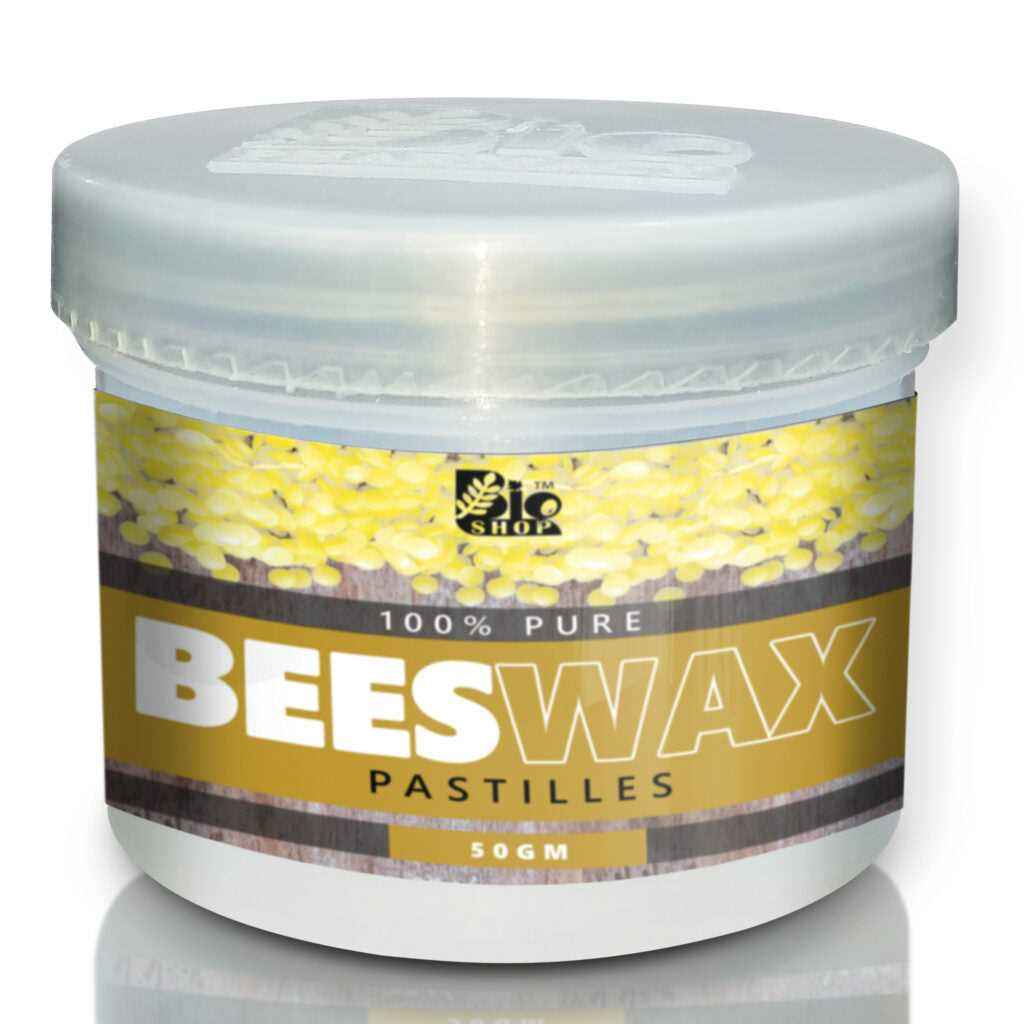
Beeswax Pastilles
Beeswax Pastilles
Key Functions: Hardens formulas, forms protective film, emollient, and thickens blends.
Couldn't load pickup availability
Explore
Information About Beeswax Pastilles
✅ Key Features
✦ Natural animal-derived wax that provides firm structure to lip balms, body balms, salves, pomades, and solid cosmetics.
✦ Forms a breathable occlusive barrier on the skin surface that seals in moisture and reinforces the natural skin barrier.
✦ Dual-function ingredient acting as both a thickener and an emollient for a smooth, non-greasy finished texture.
✦ Pastille format enables precise weighing, faster melting, and better batch consistency compared to block or slab beeswax.
✦ Suitable across lip care, eye area balms, hair pomades, baby salves, cold process soap, and melt and pour applications.
✦ Naturally sourced from Apis mellifera honeycomb — cosmetic-grade supply is free from synthetic additives and excess propolis.
✦ Universally compatible with all carrier oils, plant butters, and natural waxes, making it one of the most formulation-friendly cosmetic waxes available.
🔬 Description
Beeswax is among the oldest cosmetic raw materials in recorded history, referenced in ancient Egyptian, Greek, and Roman beauty preparations for its skin-protective and structure-building properties. It is produced by honeybees of the species Apis mellifera and consists of a complex mixture of monoesters, diesters, triesters, hydroxy polyesters, free fatty acids, and hydrocarbons. The pastille form is produced by passing molten beeswax over a chilled pastillation drum, resulting in small uniform pellets that are far more practical for formulators than traditional block wax in terms of handling, measuring, and melting consistency.
What distinguishes beeswax from plant-based and synthetic wax alternatives is its ester-dominant chemistry. The primary component, myricyl palmitate, gives beeswax its characteristic moderate melting point of 62 to 65 degrees Celsius, its smooth plasticity, and its ability to produce non-tacky finishes in anhydrous formulations. Naturally occurring vitamin A esters within the wax also contribute subtle skin-conditioning benefits. Beeswax delivers structural firmness while maintaining flexibility — a balance that many plant waxes with higher melting points cannot replicate without a supporting wax blend.
Bio Shop Pakistan supplies cosmetic-grade beeswax pastilles suitable for DIY beauty formulators, lip care specialists, soap makers, hair care product developers, and professional cosmetic manufacturers.
📊 Technical Data
INCI Name : Cera Alba (white) / Cera Flava (yellow)
Chemical Name : Beeswax
CAS Number : 8012-89-3 (white) / 8006-40-4 (yellow)
Molecular Formula : Complex mixture — no single molecular formula
Appearance : White to off-white uniform small pastilles or pellets
Odor : Faint characteristic honey-like waxy scent
pH (1% solution) : Not Applicable — insoluble in water
Solubility : Insoluble in water; soluble in warm oils, waxes, and non-polar solvents
Specific Gravity : 0.958 – 0.970 at 15°C
Flash Point : >242°C (>468°F)
HLB Value : Not Applicable
Recommended Use Level : 1 – 30% depending on product type
Type : Natural animal-derived wax
Shelf Life : 3 – 5 years when stored correctly
🧪 Recommended Usage
Skincare (Creams, Serums, Lotions) ★★★★☆
Beeswax performs best in cold creams, rich moisturizers, and ointment-style formulations where body, occlusion, and thickness are desired. Use at 2 to 8% in emulsions and add it fully melted to the hot oil phase before homogenization.
Haircare (Shampoo, Conditioner, Masks) ★★★☆☆
Beeswax is not suited for rinse-off shampoos or water-based conditioners but excels in anhydrous hair products such as pomades, edge control waxes, and solid hair styling bars. Use at 5 to 20% to provide firm hold and natural shine.
Soap Making (Cold Process, Melt and Pour) ★★★★☆
Beeswax at 1 to 3% in cold process soap produces a noticeably harder bar, extends usage life, and helps anchor fragrance in the finished soap. In melt and pour soap, incorporate at low levels for a subtle firming effect and natural character.
Body Care (Scrubs, Butters, Balms) ★★★★★
This is the primary and most effective application for beeswax, covering lip balms, body salves, healing balms, and solid body butters where structure and barrier protection are essential. Use at 10 to 25% in lip balms and 5 to 15% in body balms and salves.
Functional Cosmetics (Deodorants, Sunscreen, Baby Care) ★★★★☆
Beeswax provides the structural backbone of natural solid deodorant sticks and contributes gentle film-forming protection in baby salves and diaper creams. It also adds water-resistance to sunscreen sticks and sun care balm formulations.
💡 Pro Tip
I use beeswax pastilles in nearly every anhydrous formula I develop — from a simple two-ingredient lip balm prototype to complex multi-wax body butter systems built for warm-climate stability. The pastille format is not just about convenience; it genuinely improves reproducibility because each batch melts at the same rate and contributes the same textural baseline. When I begin developing a new lip balm, I always anchor the formula with beeswax at 15 to 20% and then adjust the softer waxes and liquid oils around it to reach the final texture target. The key insight most beginners miss is that beeswax texture in the finished product depends as much on the oils you pair it with as on the wax percentage itself.
ADVANCED TIP: To create a whipped body butter that holds structure in warm climates without feeling heavy or greasy, combine beeswax at 4 to 6% with candelilla wax at 1 to 2% and shea butter at 30 to 40% alongside your liquid oils. Melt the waxes together at 75°C, incorporate the oils, then cool the batch to approximately 30°C before beginning to whip at medium speed. Add actives, fragrance, or essential oils only below 40°C. This dual-wax system raises the softening point of the formula and allows the finished butter to resist melting in ambient temperatures up to 35°C without becoming stiff or difficult to apply.
👩🔬 Skin Type Suitability
Normal Skin : ★★★★★ — Provides balanced moisture support and barrier reinforcement without disrupting normal skin function.
Dry Skin : ★★★★★ — Occlusive film locks in moisture and prevents transepidermal water loss, making it highly effective for very dry or cracked skin.
Oily Skin : ★★☆☆☆ — Feels heavy and overly occlusive on oily skin; use only at very low levels or avoid altogether in leave-on facial products.
Combination : ★★★★☆ — Beneficial on dry areas like cheeks and lips; avoid heavier concentrations on congestion-prone T-zone areas.
Sensitive Skin : ★★★★☆ — Generally well-tolerated; rare sensitivity is associated with residual propolis content in lower-grade wax, so cosmetic-grade sourcing is important.
Mature Skin : ★★★★★ — Occlusive barrier reinforcement and skin-softening emollience make beeswax particularly valuable for mature and barrier-compromised skin types.
Acne-Prone : ★★☆☆☆ — Rated moderately comedogenic at a score of approximately 2 out of 5; avoid heavy leave-on use on acne-prone facial skin.
🧴 Formulation Ideas
CONCEPT 1: Classic Honey Lip Balm
Usage Level : 20%
Key Ingredients: Castor Oil, Shea Butter, Sweet Almond Oil, Honey Fragrance Oil
Result : A firm and non-sticky lip balm with excellent glide and long-lasting moisture retention that softens and conditions dry lips throughout the day.
CONCEPT 2: Natural Healing Body Salve
Usage Level : 12%
Key Ingredients: Calendula-Infused Olive Oil, Coconut Oil, Lavender Essential Oil, Vitamin E Oil
Result : A multi-purpose healing salve with a smooth buttery application that repairs dry and cracked skin on elbows, knees, and heels with a non-greasy protective finish.
CONCEPT 3: Firm Hold Natural Hair Pomade
Usage Level : 18%
Key Ingredients: Castor Oil, Coconut Oil, Argan Oil, Cedarwood Essential Oil
Result : A smooth firm-hold pomade with natural shine that provides long-lasting style control, edge definition, and frizz management for all hair types.
💧 Safety and Regulatory:
INCI Declared : Yes — must appear on all finished cosmetic product labels regardless of concentration
EU Cosmetics Reg : Permitted — Cera Alba and Cera Flava are listed as permitted cosmetic ingredients with no established concentration restrictions under EU Regulation 1223/2009
Rinse-Off Limit : No limit established
Leave-On Limit : No limit established
Allergen Alert : Possible — rare sensitivity may occur in individuals with known bee product or propolis allergies; cosmetic-grade wax minimizes but does not fully eliminate this risk
Skin Safety : Safe at recommended levels — well-established safety profile across decades of cosmetic use
Eye Area Use : Use with caution — suitable in eye area products such as mascara bases and eye salves when formulated at appropriate levels with verified cosmetic-grade material
Ingestion : Not for internal use
Pregnancy Use : Generally considered safe for topical cosmetic use; consult a physician before use in therapeutic or medicinal applications
Child Safety : Safe for topical use in baby products including salves, barrier creams, and diaper balms at standard formulation levels
Ventilation : Recommended when melting in bulk — avoid sustained overheating above 85°C to prevent discoloration and volatile compound release
Storage : Store in a cool dry place away from direct heat, sunlight, and humidity; refrigeration is not required
Container : HDPE or glass preferred — avoid prolonged storage in reactive metal containers
⚠️ Individuals with known bee product, honey, or propolis allergies should perform a patch test before using products containing beeswax. Always source cosmetic-grade beeswax from a verified supplier to ensure consistent propolis reduction and safety compliance.
Stability and Compatibility
Working pH Range : Not Applicable — anhydrous ingredient; pH does not apply in pure wax form
Heat Stability : Stable up to 85°C; avoid prolonged heating above this temperature to prevent yellowing, browning, and loss of characteristic aroma
Freeze-Thaw Stable : Yes — completely unaffected by freeze-thaw cycling in storage or transport
Emulsion Type : Both — suitable in O/W and W/O emulsion systems as a co-emulsifier and oil-phase texture modifier
Emulsification Phase: Hot — must be fully melted and added to the hot oil phase before combining with the water phase
Compatible With : Carrier oils, plant butters, fatty alcohols, natural waxes (carnauba, candelilla, rice bran), silicones, vitamin E tocopherol
Incompatible With : Strong oxidizing agents; highly alkaline systems that may partially saponify wax esters over time
Oxidation Risk : Low — beeswax is inherently stable due to its saturated ester content; include 0.1% vitamin E tocopherol in the oil phase as a precautionary antioxidant
Discoloration Risk : Possible — prolonged overheating above 85°C causes yellowing or browning in white beeswax; store away from UV light to maintain color stability
Formulation Notes : Always melt beeswax using indirect heat such as a double boiler or temperature-controlled hot plate; direct flame is not recommended. In lip balms, pour at 65 to 70°C for smoothest surface finish and minimal air inclusion.
❓ FAQs
Q: What is the difference between white and yellow beeswax pastilles?
A: Yellow beeswax retains its natural color and characteristic mild honey scent because it undergoes minimal processing after filtration from the honeycomb. White beeswax is bleached — typically through natural sun exposure or controlled filtering — to remove pigment and reduce odor, making it the preferred choice for light-colored or unscented cosmetic formulations where color neutrality is important.
Q: How much beeswax should I use in a lip balm formula?
A: A standard lip balm tube typically requires 15 to 25% beeswax depending on the desired firmness and the total softness of the oils and butters in the formula. Start at 20%, assess the stick firmness at room temperature after cooling, and adjust upward for a firmer result or reduce and replace with softer waxes for a more emollient finish.
Q: Can beeswax be used directly in water-based formulations like serums or toners?
A: Beeswax does not dissolve in water and cannot be incorporated directly into water-based formulations without an emulsifier system in place. In emulsions, it must be added fully melted to the heated oil phase at 2 to 8% before the oil and water phases are combined and homogenized together.
Q: Will beeswax cause clogged pores or trigger breakouts on the face?
A: Beeswax carries a comedogenic rating of approximately 2 on the 0 to 5 scale, indicating moderate pore-clogging potential for some individuals particularly in leave-on facial applications. For products targeting oily or acne-prone skin, use beeswax at very low concentrations or consider substituting with candelilla wax, which typically carries a lower comedogenic rating.
Q: How does beeswax compare to carnauba wax as a natural alternative?
A: Carnauba wax is a vegan plant-derived alternative with a significantly higher melting point of approximately 82 to 86°C compared to beeswax at 62 to 65°C, resulting in a harder and more brittle texture in finished products. Beeswax produces a noticeably smoother, more pliable, and skin-conditioning result, while carnauba is preferred when a very hard, high-gloss, or strictly vegan formulation is required.
Where Can You Safely Use Beeswax Pastilles
Discover how Beeswax Pastilles performs across different products — rated for safety, stability, and effectiveness.
I make my own shamooo,soap and creams.i always buy all ingredients from bioshop.they always provide product on time and in best quality.best experience.highly recomended.