Bio Shop
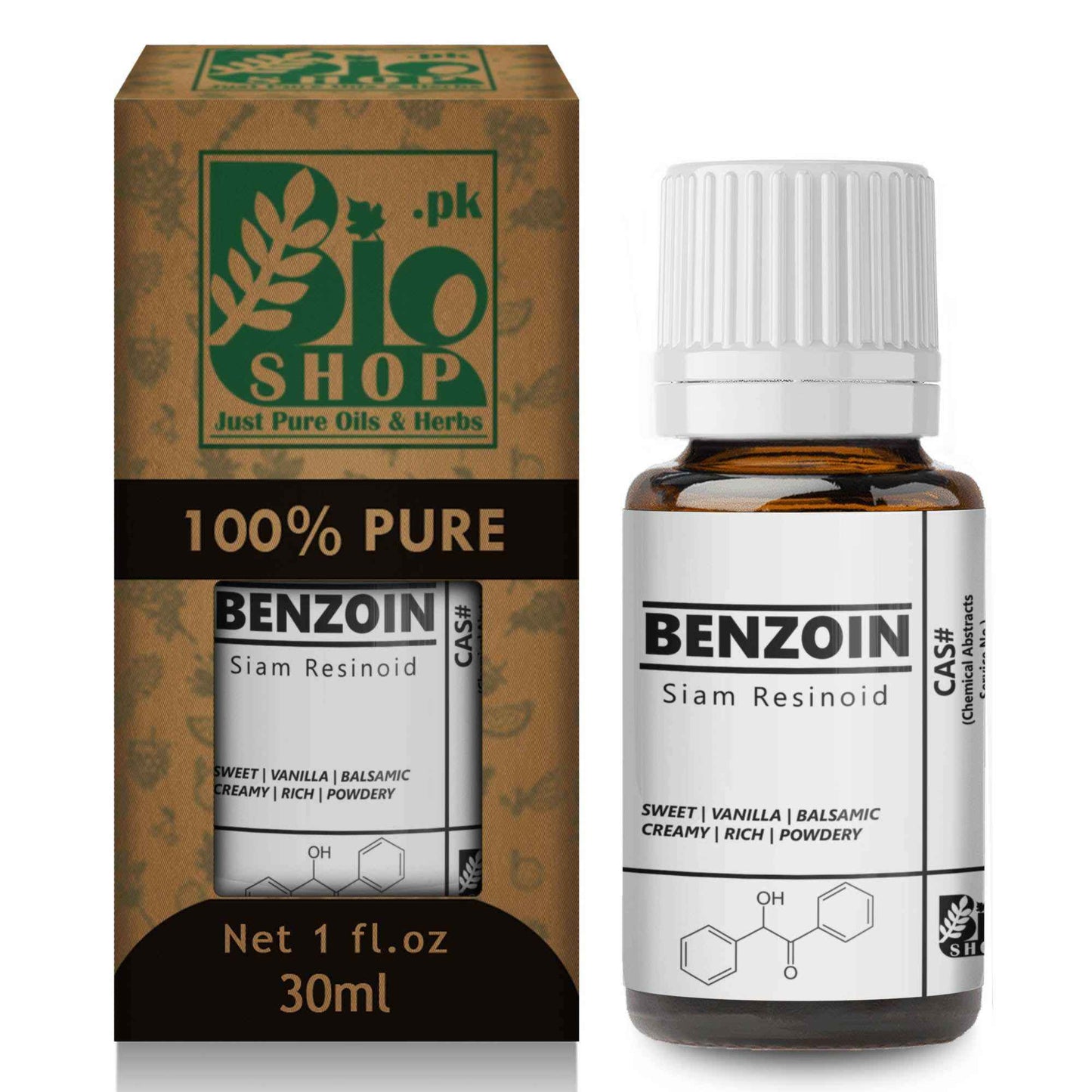
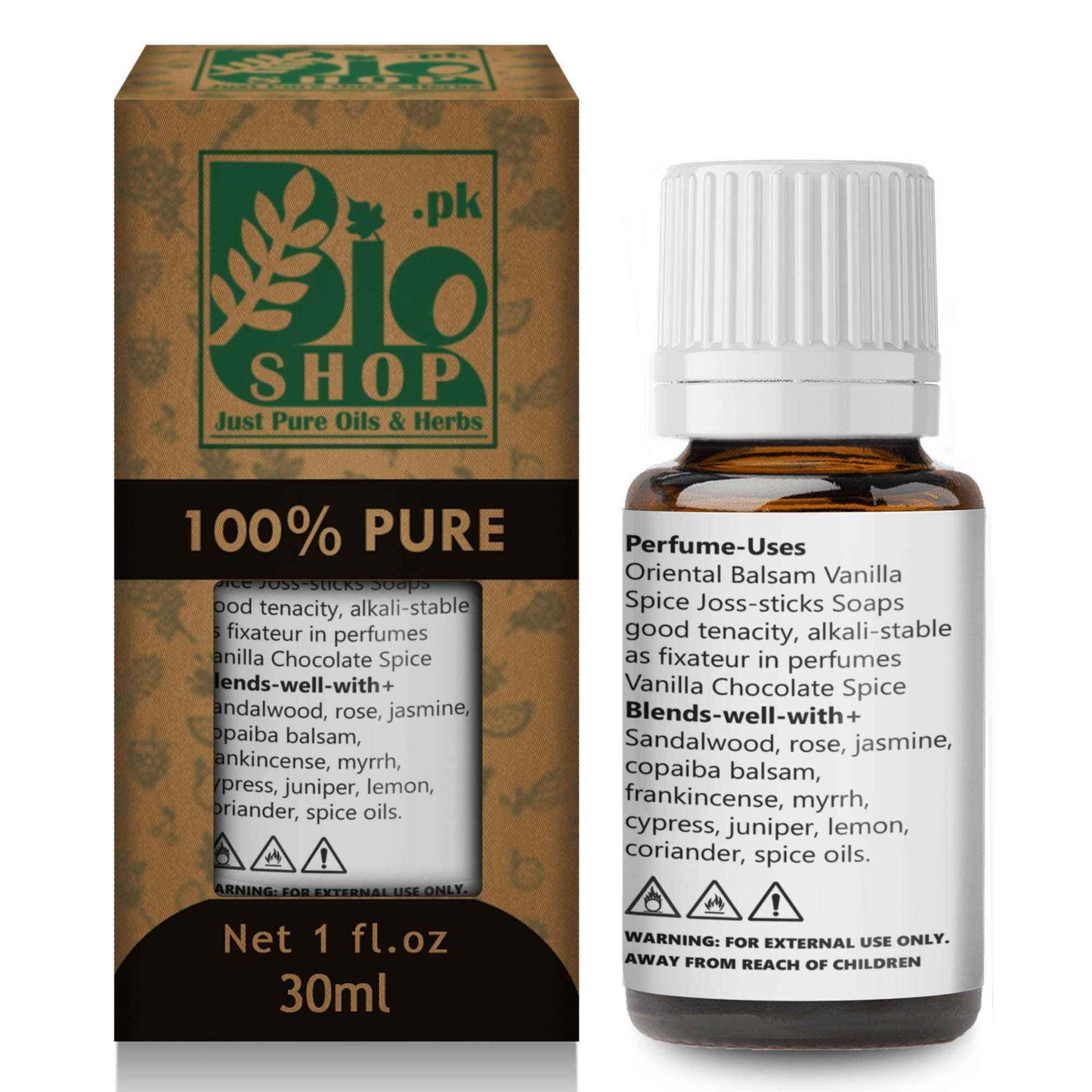
Benzoin Siam Resinoid Oil
Benzoin Siam Resinoid Oil
Olfactory Notes: Sweet, warm, vanilla-like balsamic resin.
Couldn't load pickup availability
Explore
Information About Benzoin Siam Resinoid Oil
Key Features
✦ Natural resinoid extracted from Styrax tonkinensis gum — one of the most valued balsamic base materials in classical perfumery
✦ Rich in free vanillin, benzoic acid, and coniferyl benzoate — delivers genuine sweetness without synthetic musk additions
✦ Outstanding fixative — extends the longevity of top and heart notes significantly when used as a base anchor
✦ Essential in oriental, chypre, and incense-type compositions — cornerstone of traditional attar and mukhallat blending
✦ Excellent performance in candles, incense sticks, and reed diffusers — superior hot and cold throw
✦ Blends seamlessly with musks, woods, florals, and spices — one of the most versatile resinoids in any palette
✦ Natural origin material — suitable for natural and near-natural fragrance formulation where synthetic alternatives are avoided
About Benzoin Siam Resinoid Oil
Benzoin Siam Resinoid Oil is derived from the pathological resin of Styrax tonkinensis, harvested by making incisions in the bark to stimulate resin flow. The practice dates back centuries in Southeast Asia, where benzoin was traded as incense, medicine, and perfume material along the ancient spice routes. Siam benzoin, sourced primarily from Laos and Vietnam, is considered finer and sweeter than its Sumatran counterpart, with higher free vanillin content and a more refined, less smoky character. It has been used in Catholic incense traditions, Ayurvedic preparations, and classical European perfumery since the medieval period.
What makes Benzoin Siam Resinoid Oil exceptional is its natural complexity. Unlike synthetic vanillin or isolated benzoates, the resinoid carries the full chemical matrix of the original gum — benzoic acid, benzyl benzoate, benzyl cinnamate, coniferyl benzoate, and free vanillin — all working together to create a depth that no single synthetic ingredient can replicate. It functions simultaneously as a scent material and a fixative, anchoring volatile top notes while contributing its own warm, balsamic sweetness to the composition. In attar and mukhallat traditions, it has long been used as a base carrier of emotional warmth and spiritual resonance.
Bio Shop Pakistan supplies cosmetic-grade Benzoin Siam Resinoid Oil suitable for DIY perfumers, attar blenders, incense makers, candle crafters, and home fragrance developers seeking a premium natural balsamic base note.
Olfactory Profile
SCENT DESCRIPTION : Benzoin Siam Resinoid Oil opens with a dense, honeyed sweetness laced with warm vanilla and soft incense smoke. As it settles, a powdery tonka-like quality emerges alongside subtle floral undertones of styrene blossom. The dry-down is deeply balsamic, resinous, and slightly woody — long-lasting, intimate, and comforting. It carries a natural warmth that feels both ancient and timeless.
NOTE POSITION : Base
FRAGRANCE FAMILY : Oriental / Balsamic / Resinous
FACETS : Vanilla · Sweet · Balsamic · Incense · Powdery
TENACITY : Very High — 12 to 24+ hours on skin and textiles
SILLAGE : Medium — intimate and close-wearing on skin, but projects well in heated formats such as candles and incense
Technical Specifications
CHEMICAL NAME : Benzoin, Siam (Styrax tonkinensis resinoid extract)
CAS NUMBER : 9000-72-0 (verify with supplier — exact CAS may vary by extraction method and solvent)
SYNONYMS : Siam Benzoin Resinoid, Benzoin Tonkin Resinoid, Gum Benzoin Extract, Styrax Tonkinensis Resinoid
PURITY : Resinoid extract — 100% natural (verify exact specification with supplier CoA)
APPEARANCE : Dark brown to amber viscous liquid or semi-solid; colour and viscosity vary by batch and ambient temperature
ODOR THRESHOLD : Approximately 1–5 ppm (vanilla/balsamic character perceptible at low concentrations)
SOLUBILITY : Soluble in ethanol and most carrier oils; limited solubility in water; partially soluble in DPG
SPECIFIC GRAVITY : Approximately 1.06–1.12 at 25°C (verify with supplier)
FLASH POINT : Approximately 100–115°C (verify with supplier CoA)
TYPE : Natural (solvent-extracted resinoid from Styrax tonkinensis gum)
Applications & Usage Guidelines
Fine Fragrance ★★★★★
Benzoin Siam Resinoid Oil is a foundational base note in oriental, chypre, fougère, and amber-family perfumes. It anchors compositions with balsamic warmth while contributing genuine natural complexity. Particularly effective in EDP and parfum concentrations where its full character has room to develop.
Attar & Oriental Blending ★★★★★
One of the most important natural fixatives in traditional attar and mukhallat formulation. Its resinous, incense-laced sweetness pairs perfectly with oud, rose, sandalwood, and musk — a cornerstone of South Asian and Middle Eastern fragrance traditions.
Home Fragrance ★★★★★
Exceptional performance in candles, reed diffusers, and incense sticks. Benzoin resinoid delivers strong hot throw in wax and excellent cold diffusion in reeds. Its natural incense quality makes it ideal for meditation, prayer, and luxury home ambiance products.
Functional Fragrance ★★★☆☆
Usable at low rates in soaps and body washes as a background note, though its dark colour can affect product appearance. IFRA restrictions and sensitization potential limit usage rates in leave-on products such as lotions and creams. Careful formulation required.
Cosmetics & Skincare ★★☆☆☆
Limited use in rinse-off cosmetics at regulated concentrations. Not recommended for leave-on facial products at standard fragrance rates. IFRA guidelines must be followed strictly. Always perform stability and sensitization assessment before inclusion.
IFRA & Usage Rate
RECOMMENDED USAGE RATES
EDP / Parfum : 2.0 – 5.0%
EDT : 1.0 – 3.0%
Body Lotion : 0.2 – 0.5% (IFRA-limited — see below)
Shampoo/Body Wash : 0.5 – 1.0% (rinse-off — less restricted)
Bar Soap : 0.5 – 1.5%
Candle : 3.0 – 8.0%
Reed Diffuser : 5.0 – 15.0%
Incense Stick : 10.0 – 25.0%
IFRA 51ST AMENDMENT LIMITS (Approximate — verify at ifrafragrance.org)
⚠️ Benzoin Siam Resinoid is an IFRA-restricted material due to sensitization potential from benzoic acid esters and coniferyl benzoate.
IFRA Category 1 (Lip products) : Approx. 0.06% — use with caution
IFRA Category 3 (Eye area, facial leave-on) : Approx. 0.15% — very low rates only
IFRA Category 4 (Body lotion, leave-on) : Approx. 0.6% maximum
IFRA Category 5A (Face rinse-off) : Approx. 1.0%
IFRA Category 9 (Rinse-off body/hair) : Approx. 1.5%
IFRA Category 11A (Candles — non-skin) : No quantitative limit established
IFRA Category 12 (Fragrance only — diffuser) : No quantitative limit established
⚠️ All IFRA limits apply to the resinoid as used in the final product. Confirm exact amendment percentages at ifrafragrance.org before commercial production. Allergen declaration may be required in EU-market products above threshold concentrations.
Blending Guide
METHOD 1 — DISSOLVE IN WARM ALCOHOL FIRST
Benzoin Siam Resinoid is thick and viscous. For alcohol-based perfumes, warm the resinoid gently (do not exceed 40°C) and pre-dissolve in your perfumer's alcohol before adding other materials. This prevents clumping and ensures even distribution through the formula.
METHOD 2 — USE AS BASE FIXATIVE AT 1–3%
Add Benzoin Siam Resinoid at 1–3% as a base fixative in oriental, amber, or woody compositions. It anchors top notes, extends mid-note bloom, and adds natural depth without overpowering the composition. Think of it as a warm, sweet foundation rather than a dominant note.
METHOD 3 — BLEND WITH DPG FOR DIFFUSER AND FUNCTIONAL USE
For reed diffusers or functional fragrances, pre-blend the resinoid with dipropylene glycol (DPG) at a 1:3 ratio and stir until fully homogeneous before incorporating into your blend. This improves solubility and prevents sedimentation in the finished product.
BEST PAIRINGS
Oud Wood → Deepens the resinous darkness; creates classic mukhallat base
Rose Absolute → Softens the incense edge with floral femininity
Sandalwood → Creamy, warm fusion; anchor for meditative compositions
Vanilla / Ethyl Vanillin → Amplifies natural sweetness; creates rich gourmand-oriental accords
Patchouli → Earthy, dark resin accord; ideal for chypre and amber constructions
Frankincense (Olibanum) → Sacred incense pairing; enhances spiritual and ceremonial character
Vetiver → Smoky, rooty base; adds complexity and shadow to oriental blends
Labdanum → Dense amber accord; synergistic fixation with extreme longevity
Cedarwood Atlas → Lifts the heaviness; adds dry woody structure to the sweetness
Coumarin → Tonka-like softness; beautiful in fougère and oriental-sweet accords
AVOID : Very bright aquatic and ozonic compositions where benzoin's warmth will read as a tonal mismatch. Avoid uncontrolled use in light fresh citrus bases — it will flatten the vibrancy without contributing useful structure.
Perfumer's Note
Benzoin Siam Resinoid Oil is one of those materials that experienced perfumers reach for instinctively when a composition needs soul. It does not announce itself — it settles underneath everything and holds the structure together. I use it at 0.5–1% even in compositions where I do not want it to be detectable as benzoin — its job at that level is not to be smelled as itself, but to add a quiet warmth and coherence that makes the rest of the formula feel somehow complete. Siam benzoin is particularly fine in this role because of its natural vanillin content, which gives it an almost edible sweetness that makes even austere woody or herbal compositions feel approachable and wearable.
ADVANCED TIP : Try using Benzoin Siam Resinoid in combination with Labdanum Absolute and Cistus Essential Oil at a combined base rate of 3–5% total. This three-material resinous base — sometimes called an amber triad — functions as a completely natural amber accord without any synthetic aldehydic ambers. Add a touch of Vanilla Absolute or Ethyl Vanillin at 0.3–0.5% to sweeten the accord further. This natural amber base performs excellently as the foundation of any oriental, attar, or woody fragrance and eliminates the need for synthetic amber bases entirely.
Safety & Storage
PHYSICAL STATE : Viscous dark liquid to semi-solid; soften gently before use
SKIN SAFETY : Known sensitizer — contains coniferyl benzoate and benzoic acid esters; observe IFRA limits strictly; patch test recommended
EYE CONTACT : Avoid contact with eyes; rinse thoroughly with water if contact occurs; seek medical advice if irritation persists
INGESTION : Not for internal use; keep out of reach of children
VENTILATION : Use in well-ventilated space; prolonged inhalation of concentrated vapour not recommended
STORAGE : Store in a cool, dark location away from heat and direct sunlight; tightly sealed container
SHELF LIFE : 2–3 years from date of production when stored correctly; natural resinoids may thicken with age but retain olfactory integrity
CONTAINER : Dark glass preferred; avoid plastic containers for long-term storage
FLAMMABILITY : Flash point approximately 100–115°C; not classified as flammable under standard conditions
FAQ
Q: What is Benzoin Siam Resinoid Oil and how is it different from Benzoin absolute or Benzoin resin?
A: Benzoin Siam Resinoid is made by solvent extraction of the raw gum and then removing the solvent — it is a thick, paste-to-liquid material. Benzoin absolute is further refined for maximum purity. The raw resin is the unprocessed gum. Resinoid is the most practical form for perfumery use.
Q: Is Benzoin Siam Resinoid Oil safe to use directly on skin?
A: No — it must be diluted to safe usage rates following IFRA 51st Amendment guidelines. It contains known sensitizers. Always use within regulated limits and perform patch testing before skin-contact applications.
Q: How do I handle Benzoin Siam Resinoid Oil if it is too thick to measure?
A: Gently warm the sealed bottle in a warm water bath (not exceeding 40°C) until it becomes pourable. Alternatively, pre-dissolve your required amount in warm perfumer's alcohol or DPG at 1:3 ratio before adding to your blend.
Q: Can I use Benzoin Siam Resinoid in candles and incense without IFRA restrictions?
A: Yes — IFRA limits apply to skin-contact products. Candles, incense sticks, and reed diffusers are non-skin-contact applications and are not subject to IFRA quantitative limits for this material. Usage rates of 5–25% are common in these formats.
Q: How does Benzoin Siam compare to Benzoin Sumatra?
A: Siam benzoin (Styrax tonkinensis) is sweeter, cleaner, and richer in free vanillin — it smells closer to vanilla and honey. Sumatra benzoin (Styrax benzoin) is darker, smokier, more phenolic, and less sweet. Siam is preferred for fine fragrance and attar work; Sumatra is favoured in incense and heavy oriental compositions where smoke and rawness are desired.
Where Can You Safely Use Benzoin Siam Resinoid Oil?
Discover how Benzoin Siam Resinoid Oil performs across different applications—rated for safety, stability, and effectiveness.
Excellent texture and packing
Teesri baar order kiya. Har baar same genuine balsamic vanilla character. Koi off notes. Bio Shop reliable supplier hai. Fragrance community mein highly recommended. 5 stars hamesha.
Imported balsamic resins itne mehngay hote hain. Bio Shop benzoin price reasonable aur quality excellent.
Frankincense aur benzoin ka blend - ek deeply meditative spiritual accord bana. Bakhoor aur incense ke liye perfect. Islamic aromatic tradition mein dono resins sacred hain. Bio Shop frankincense EO bhi rakhta hai. Quality dono excellent. Highly recommend.
Shukriya Rabia! Frankincense + Benzoin is one of the most ancient and sacred fragrance combinations in Islamic and oriental aromatic tradition. Both are warm resinous balsamic materials that beautifully complement each other!
Shahi bridal attar bana raha tha. Rose oud sandalwood ke saath benzoin add kiya - composition mein ek regal balsamic richness aa gayi. Dulhan aur family sab ne bohut tarif ki. Bio Shop benzoin quality excellent. Premium attar ka zaroori ingredient.