Bio Shop
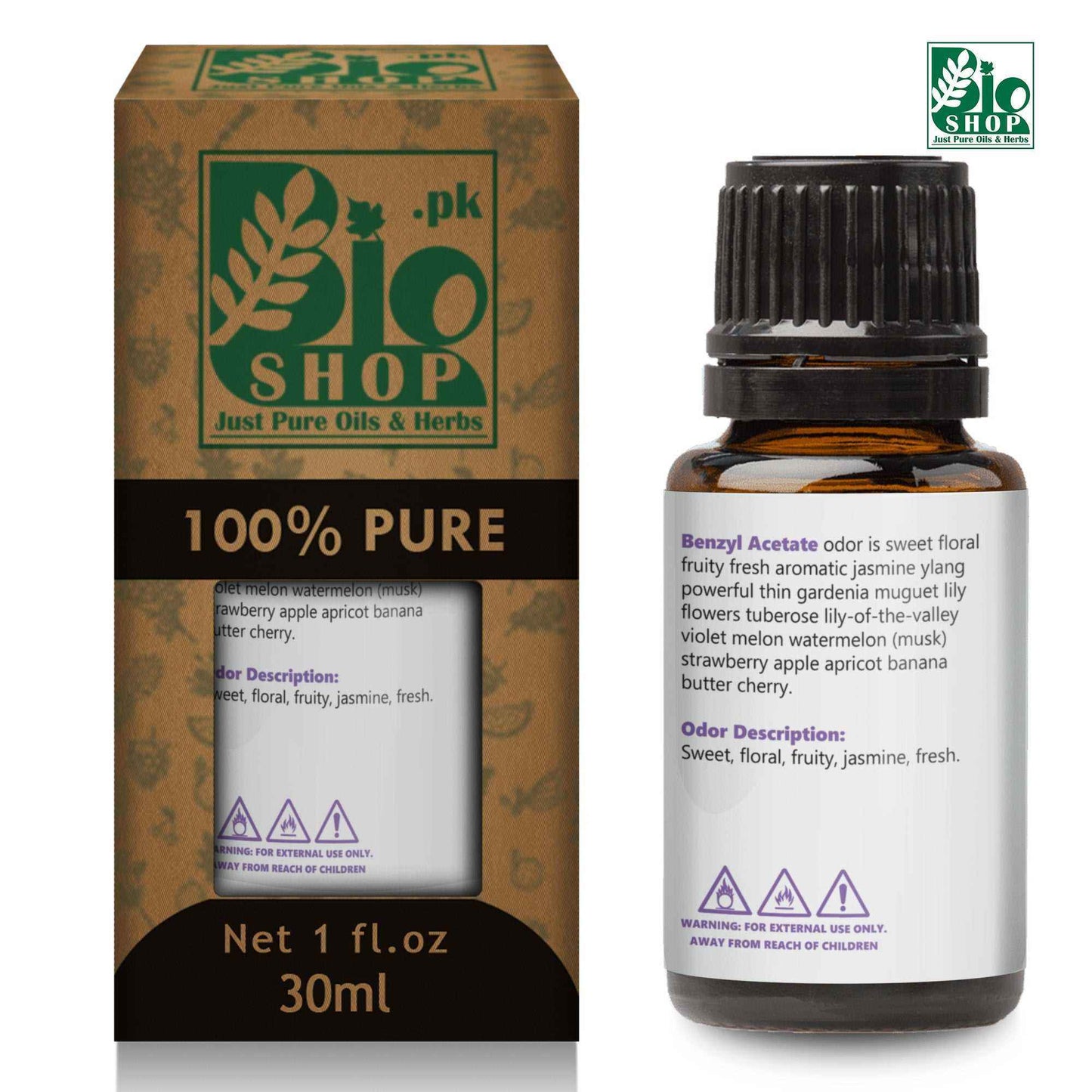
Benzyl Acetate
Benzyl Acetate
Olfactory Notes: Fresh, fruity-floral Jasmine top note.
Couldn't load pickup availability

Explore
Information About Benzyl Acetate
Key Features
✦ Synthetic ester with a sweet, jasmine-floral and slightly fruity aroma profile used globally in fine fragrance and cosmetic formulation.
✦ Key building block for jasmine, white floral, ylang ylang, and gardenia accords in both oriental and fresh fragrance styles.
✦ Highly diffusive top-to-mid note material with excellent radiance and natural-smelling sweetness at low usage concentrations.
✦ Used in iconic fragrance families including floral aldehydics, fresh florals, and fruity-floral EDPs and EDTs.
✦ Compatible with soaps, shampoos, body washes, lotions, candles, and reed diffusers with appropriate IFRA-guided usage rates.
✦ Vegan and cruelty-free synthetic material — produced without animal-derived raw materials.
✦ Declared EU allergen — must be listed on finished cosmetic product labels above regulatory thresholds.
About Benzyl Acetate
Benzyl Acetate is an aromatic ester formed by the esterification of benzyl alcohol and acetic acid. It was first isolated from jasmine absolute in the late 19th century and has since become one of the most commercially important aroma chemicals in the fragrance industry. It occurs naturally in jasmine sambac, jasmine grandiflorum, ylang ylang, gardenia, and hyacinth, contributing significantly to their characteristic floral sweetness. Today it is produced synthetically at high purity for consistent performance in industrial and artisanal fragrance creation.
What makes benzyl acetate particularly valuable is its combination of sweetness, florality, and fruitiness within a single molecule. It provides an immediate burst of recognizable jasmine character without the green indolic notes found in natural jasmine absolute, making it more versatile and easier to work with in clean and fresh compositions. Its high vapor pressure gives it strong radiance and diffusion, ensuring the scent projects well even at moderate usage levels. This diffusivity also makes it an effective top note bridge into floral heart notes in complex accords.
Bio Shop Pakistan supplies cosmetic-grade benzyl acetate suitable for DIY perfumers, soap makers, cosmetic formulators, candle crafters, and home fragrance creators looking for a reliable, high-purity jasmine aroma chemical at competitive pricing.
Olfactory Profile
SCENT DESCRIPTION : Benzyl Acetate opens with a bright, sweet, and unmistakably jasmine-like aroma that carries a soft fruity undertone reminiscent of ripe pear or mild banana. The sweetness is clean rather than cloying, with a slightly green and fresh facet that keeps it from becoming heavy. As it dries down it reveals a soft, rounded floral quality that blends seamlessly into white floral and oriental heart accords. The overall impression is luminous, diffusive, and recognizably natural in character despite being synthetically produced.
NOTE POSITION : Top – Mid
FRAGRANCE FAMILY : Floral · Fruity · Fresh
FACETS : Sweet · Jasmine · Fruity · Green · Luminous
TENACITY : Medium — 4 to 6 hours on skin, longer on fabric
SILLAGE : Medium to High — projects well and radiates noticeably from the skin surface
Technical Specifications
Chemical Name : Benzyl Acetate
CAS Number : 140-11-4
Synonyms : Benzyl Ethanoate · Acetic Acid Benzyl Ester · Phenylmethyl Acetate
Purity : 99% minimum (GC)
Appearance : Clear, colorless to very pale yellow mobile liquid
Odor Threshold : Approximately 0.002 ppm
Solubility : Slightly soluble in water · Miscible with ethanol, IPM, DPG, and fragrance oils
Specific Gravity : 1.054 – 1.058 at 20°C
Flash Point : 90°C (194°F)
Type : Synthetic (also naturally occurring in jasmine and ylang ylang)
Applications & Usage Guidelines
Fine Fragrance : ★★★★★
Benzyl Acetate is a cornerstone of fine fragrance formulation, particularly in jasmine, white floral, and fruity-floral compositions. It is used in both EDPs and EDTs to deliver radiant floral sweetness and natural-smelling diffusion. It pairs perfectly with hedione, linalool, and aldehydes to construct full-bodied floral accords.
Attar and Oriental Blending : ★★★★☆
In traditional attar and oriental blending, benzyl acetate adds a sweet jasmine brightness that complements oud, musks, and sandalwood bases. It prevents heavy compositions from feeling dense by introducing a luminous, airy floral facet. Use it with care in high-concentration attar bases to avoid sweetness overload.
Functional Fragrance : ★★★★☆
Benzyl Acetate performs well in soaps, shampoos, body washes, and detergents where a fresh jasmine note is desired. It is stable in rinse-off formulations and survives the alkaline pH of soap making reasonably well. Usage rates must be kept within IFRA guidance for each product category.
Cosmetics : ★★★☆☆
In leave-on cosmetics such as body lotions and creams, benzyl acetate can be used at low concentrations. However, it is a declared EU allergen and must be listed on label when above 0.001% in leave-on and 0.01% in rinse-off products. Patch test recommendations apply for sensitive skin formulations.
Home Fragrance : ★★★★★
Benzyl Acetate excels in reed diffusers, room sprays, wax melts, and candles where allergen declaration is not required. Its high volatility ensures strong cold throw in diffusers and respectable hot throw in soy and paraffin candles. It is a cost-effective way to add jasmine character to home fragrance blends.
IFRA & Usage Rate
Usage Rate Guidelines
Application : Recommended Usage Rate
EDP : 5% – 20%
EDT : 3% – 15%
Body Lotion : 0.5% – 2% (IFRA limit applies)
Shampoo/Body Wash : 0.5% – 3%
Bar Soap : 0.5% – 2%
Candle : 3% – 8%
Reed Diffuser : 10% – 25%
IFRA 51st Amendment Limits (approximate — verify with current IFRA database)
Category 4 (Body lotion, leave-on skin) : 4.3%
Category 5A (Face cream, leave-on face) : 1.7%
Category 5C (Body cream, leave-on body) : 4.3%
Category 7A (Rinse-off hair products) : 3.4%
Category 9 (Rinse-off body, soap, gel) : 11%
Category 10A (Household, fabric contact) : 3.8%
Category 11A (Candles, no skin contact) : No restriction listed
⚠ Benzyl Acetate is a QRA-regulated skin sensitizer under IFRA. Always calculate your usage rate based on the concentration of the fragrance mixture in the finished product, not as a percentage of the formula.
⚠ Declared EU allergen above 0.001% in leave-on products and 0.01% in rinse-off products. Label disclosure is mandatory in EU-compliant cosmetics.
⚠ Always verify limits against the current IFRA amendment at ifrafragrance.org before commercial production.
Blending Guide
Method 1 — Direct Dissolution
Add benzyl acetate directly to your alcohol or carrier oil base and stir well. No heat is required. It mixes easily with IPM, DPG, ethanol, and fractionated coconut oil. Allow 24 to 48 hours for the blend to macerate before evaluating the final scent character.
Method 2 — Pre-blend in Accord
Build a jasmine accord by combining benzyl acetate with linalool, linalyl acetate, and hedione before adding the accord into your main formula. This distributes the floral character more evenly and avoids any single material dominating the initial impression.
Method 3 — Dilution for Delicate Applications
For leave-on cosmetics or sensitive skin products, pre-dilute benzyl acetate in DPG at 10% or 20% before adding to your formula. This allows more precise measurement at low usage levels and reduces the risk of overdosing.
BEST PAIRINGS
Linalool → Softens sweetness and adds fresh floral lift
Linalyl Acetate → Creates classic jasmine-lavender floral bouquet
Hedione → Adds transparent, diffusive jasmine radiance
Ylang Ylang EO → Deepens and naturalizes the floral character
Benzyl Alcohol → Rounds the profile and adds soft floral depth
Geraniol → Introduces rosy facets and green floral brightness
ISO E Super → Adds woody diffusion and modern ambience
Bergamot EO → Brightens with citrus and adds freshness
Musk Ketone → Extends tenacity and blends into dry down
Coumarin → Creates warm, sweet floral oriental character
AVOID
Avoid combining with strongly acidic materials as ester hydrolysis can occur over time, weakening the scent. Do not use near strong oxidizing agents. In high-alkalinity soap bases, expect some scent degradation — anchor with a fixative musk or benzyl benzoate.
Perfumer's Note
Benzyl Acetate is one of those aroma chemicals that smells more natural than most naturals. When I use it in a jasmine accord, it functions as the backbone — the molecule that listeners recognize immediately and associate with real flowers. It does not merely approximate jasmine; it captures the sweet, radiating core of it. The challenge with benzyl acetate is knowing when to stop. It is generous and eager, and if you let it dominate, your composition loses complexity. The best jasmine accords I have built use it as one voice among many — supported by hedione for transparency, linalool for freshness, and a touch of indole if the brief allows a more animalic, natural edge.
ADVANCED TIP : Try using benzyl acetate as a blender rather than a featured note in non-floral compositions. Adding 1 to 3% to a woody or oriental base introduces an unexpected luminosity that lifts the blend without making it read as floral. It works particularly well under oud and vetiver bases where a sweet, airy counterpoint prevents the composition from feeling too dark or earthy. This technique is common in niche oriental perfumery but rarely discussed openly.
Safety & Storage
Physical State : Clear colorless liquid at room temperature
Skin Safety : Skin sensitizer — patch test recommended. Keep within IFRA limits. May cause irritation or allergic reaction in sensitized individuals.
Eye Contact : Irritant — avoid direct contact. If contact occurs, flush immediately with clean water for 15 minutes and seek medical advice.
Ingestion : Not for internal use. If swallowed, do not induce vomiting. Seek immediate medical attention.
Ventilation : Use in a well-ventilated area. Avoid prolonged inhalation of vapors, especially in enclosed spaces.
Storage : Store in a cool, dry place away from heat sources, open flame, and direct sunlight. Keep tightly sealed.
Shelf Life : 2 to 3 years from date of manufacture when stored correctly. Check for off-notes before use.
Container : Store in glass or HDPE plastic containers. Avoid PET and PVC which may interact over time.
Flammability : Combustible liquid — flash point 90°C. Keep away from open flames and high heat sources.
FAQ
Q: What does Benzyl Acetate smell like?
A: It smells sweet, floral, and jasmine-like with a soft fruity undertone. It is bright and diffusive with a clean, slightly green character that makes it easy to identify.
Q: Is Benzyl Acetate safe to use in skin care products?
A: Yes, at IFRA-compliant usage rates it is considered safe. It is however a declared EU allergen and must be listed on cosmetic labels when used above 0.001% in leave-on and 0.01% in rinse-off products.
Q: Can I use Benzyl Acetate in candles and reed diffusers?
A: Yes, it performs very well in home fragrance applications. There are no IFRA restrictions for candles and it provides excellent cold throw in reed diffusers at 10 to 25% in the diffuser base.
Q: What is the best solvent to use with Benzyl Acetate in perfumery?
A: It dissolves easily in perfumer's alcohol, DPG, IPM, and most fragrance oils. For water-based applications use a solubilizer such as Polysorbate 20 as it has very low water solubility.
Q: How does Benzyl Acetate compare to natural Jasmine Absolute?
A: Benzyl Acetate captures the sweet, radiant core of jasmine but lacks the indolic depth, waxy complexity, and green freshness of true jasmine absolute. Natural absolute is far more expensive and variable in quality. In professional accords, both are often used together — benzyl acetate for brightness and volume, jasmine absolute for naturalness and depth.
Where Can You Safely Use Benzyl Acetate?
Discover how Benzyl Acetate performs across different applications—rated for safety, stability, and effectiveness.
I m really admired of ur service