Bio Shop
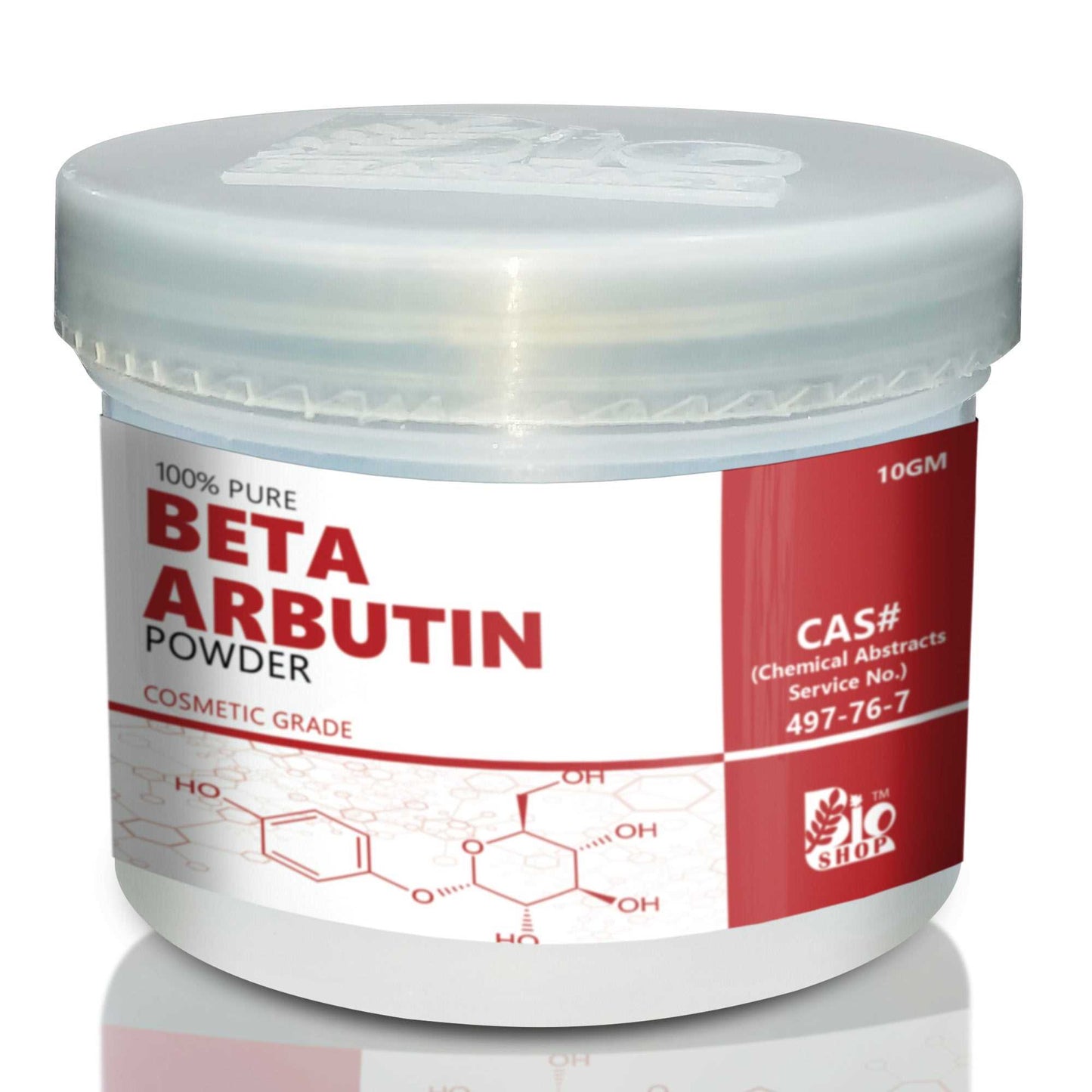
Beta Arbutin Powder
Beta Arbutin Powder
Key Functions: Inhibits melanin synthesis, brightens skin tone, fades dark spots, and evens complexion.
Couldn't load pickup availability
Explore
Information About Beta Arbutin Powder
✅ Key Features
✦ Potent tyrosinase inhibitor that reduces melanin synthesis for a visibly brighter and more even skin tone.
✦ Naturally derived from bearberry leaves; a safer, skin-friendly alternative to hydroquinone at cosmetic use levels.
✦ Water-soluble white crystalline powder that dissolves cleanly into the water phase of any aqueous formula.
✦ Effective at low concentrations of 0.5% to 2%, delivering excellent cost efficiency for finished product formulation.
✦ Suitable for serums, toners, brightening creams, face masks, and targeted dark spot treatments across all skin types.
✦ Vegan-friendly and cruelty-free with no animal-derived components or by-products.
✦ Compatible with key brightening co-actives including niacinamide, vitamin C derivatives, ferulic acid, and AHA blends.
🔬 Description
Beta Arbutin is a naturally occurring glycosylated phenolic compound first identified in the leaves of the bearberry shrub (Arctostaphylos uva-ursi) and also found in small quantities in pear skin, wheat, and certain other plants. It has been a staple of Japanese cosmetic formulation since the 1990s and is widely recognized by dermatologists and cosmetic chemists as one of the most evidence-supported skin brightening ingredients available in the professional cosmetic ingredient market today.
Its primary mechanism involves competitive inhibition of tyrosinase, the key enzyme in the melanogenesis pathway. By occupying the enzyme's active site, beta arbutin prevents the conversion of tyrosine to melanin at the cellular level without causing cytotoxic damage to melanocytes. The result is a gradual, natural-looking reduction in hyperpigmentation over several weeks of consistent use. Its beta-glucoside molecular structure also contributes to good formulation stability, particularly when the finished product is maintained at a pH between 5.0 and 6.5.
Bio Shop Pakistan supplies cosmetic-grade Beta Arbutin Powder suitable for independent skincare formulators, professional cosmetic brands, soap and serum makers, and beauty product developers across Pakistan.
📊 Technical Data
INCI Name : Arbutin
Chemical Name : 4-Hydroxyphenyl-beta-D-glucopyranoside
CAS Number : 497-76-7
Molecular Formula : C12H16O7
Appearance : White to off-white crystalline powder
Odor : Odorless
pH (1% solution) : 5.0 – 7.0
Solubility : Freely soluble in water; slightly soluble in ethanol
Specific Gravity : Not Applicable (solid powder)
Flash Point : Not Applicable (solid powder)
HLB Value : Not Applicable
Recommended Use Level : 0.5% – 2.0% leave-on; up to 7% in face care per EU proposed limits
Type : Water-soluble skin brightening active; tyrosinase inhibitor
Shelf Life : 24 – 36 months when stored sealed in cool, dry conditions
🧪 Recommended Usage
Skincare (Creams, Serums, Lotions) ★★★★★
Beta Arbutin is purpose-built for leave-on skincare applications targeting hyperpigmentation, dark spots, and uneven tone. Dissolve in the water phase at 0.5% to 2%, maintain pH below 6.5, and combine with an antioxidant for optimal stability and performance.
Haircare (Shampoo, Conditioner, Masks) ★☆☆☆☆
Beta Arbutin has no established cosmetic benefit in haircare and is not a recognized active for scalp or hair fiber applications. This category is not recommended for this ingredient.
Soap Making (Cold Process, Melt and Pour) ★★☆☆☆
High alkalinity in cold process soap rapidly degrades beta arbutin, rendering it inactive before the soap cures. Melt and pour at cooler pour temperatures may retain trace activity, but efficacy cannot be reliably claimed in a finished soap product.
Body Care (Scrubs, Butters, Balms) ★★★☆☆
Well-suited for brightening body lotions and targeted treatments for areas prone to discoloration such as underarms, elbows, and knees. Use at the lower end of the concentration range and ensure the formulation pH is adjusted appropriately before incorporation.
Functional Cosmetics (Deodorants, Sunscreen, Baby Care) ★★☆☆☆
Occasionally included in brightening deodorant formulations for underarm tone correction at low use levels. Not suitable for baby care products. Sunscreen compatibility is possible but the formula pH and thermal processing must be carefully controlled.
💡 Pro Tip
When I formulate with Beta Arbutin, I treat it as a pH-sensitive active and design the entire formula around maintaining a finished product pH between 5.0 and 6.5. At pH levels above 7.0, the glucoside bond can hydrolyze under prolonged conditions, releasing trace free hydroquinone — a concern both for efficacy and for regulatory compliance in markets where hydroquinone is restricted. I always dissolve Beta Arbutin in warm distilled water below 60°C before incorporating it into the emulsion, and I include EDTA at 0.1% as a chelating agent to prevent oxidation triggered by trace metals commonly found in unfiltered water.
ADVANCED TIP: Build a multi-pathway brightening serum by combining Beta Arbutin at 1.5% with Niacinamide at 4%, Sodium Ascorbyl Phosphate at 1%, and Ferulic Acid at 0.5% in a water-based gel, adjusted to pH 5.5 using a 10% citric acid solution. This stack inhibits tyrosinase via arbutin, suppresses melanosome transfer via niacinamide, delivers antioxidant-stabilized vitamin C activity, and quenches free radical-induced pigmentation — producing a synergistic brightening effect measurably stronger than any single active used alone.
👩🔬 Skin Type Suitability
Normal Skin : ★★★★★ — Beta Arbutin is well-tolerated by normal skin and delivers consistent, visible brightening without disrupting a balanced skin barrier.
Dry Skin : ★★★★☆ — Effective for brightening but must be combined with humectants and emollients, as beta arbutin itself provides no moisturizing function.
Oily Skin : ★★★★★ — Ideal for oily skin types as it is completely oil-free and integrates seamlessly into lightweight water-based serums and gel formulas.
Combination : ★★★★☆ — Works well across both the T-zone and drier areas; best delivered in a gel-cream or lightweight water-based serum format.
Sensitive Skin : ★★★☆☆ — Generally tolerated at concentrations below 1%, but patch testing is strongly advised and combination with harsh exfoliants in the same formula should be avoided.
Mature Skin : ★★★★★ — Highly effective for addressing age spots, sun-induced discoloration, and uneven tone in mature skin, particularly when paired with peptides or retinoids.
Acne-Prone : ★★★★☆ — Excellent for fading post-inflammatory hyperpigmentation (PIH) from acne breakouts; non-comedogenic and well-suited to acne-prone formulations.
🧴 Formulation Ideas
CONCEPT 1: Brightening Serum with Beta Arbutin and Niacinamide
Usage Level : 2%
Key Ingredients: Niacinamide 4%, Hyaluronic Acid 1%, Sodium Ascorbyl Phosphate 1%
Result : A lightweight water-based serum that targets dark spots and uneven tone through dual-pathway brightening while delivering hydration and antioxidant support.
CONCEPT 2: Dark Spot Brightening Day Cream
Usage Level : 1%
Key Ingredients: Emulsifying Wax NF, Squalane, Ferulic Acid 0.5%, Allantoin 0.2%
Result : A smooth, skin-perfecting day cream that gradually brightens hyperpigmentation while soothing irritation and reinforcing the skin barrier with emollient protection.
CONCEPT 3: Underarm Brightening Gel Lotion
Usage Level : 1.5%
Key Ingredients: Carbomer 0.5%, Glycerin 5%, Lactic Acid (pH adjust to 5.5), Panthenol 1%
Result : A non-greasy gel lotion designed to gradually correct underarm discoloration through targeted tyrosinase inhibition paired with gentle exfoliating and conditioning action.
💧 Safety and Regulatory:
INCI Declared : Yes — required on all cosmetic product labels globally
EU Cosmetics Reg : Restricted — Arbutin (beta form) is under SCCS assessment; proposed maximum 7% in face care products and 0.5% in body lotions; verify current Annex III entry before exporting to EU markets
Rinse-Off Limit : No established limit; not commonly used in rinse-off products
Leave-On Limit : 7% face care / 0.5% body lotions (proposed EU limits; verify with current regulatory guidance)
Allergen Alert : No known listed allergens; rare sensitization reported at high concentrations in isolated cases
Skin Safety : Safe at recommended use levels (0.5–2%); patch test advised for sensitive skin and higher concentrations
Eye Area Use : Use with caution — avoid direct ocular contact; not recommended for eyelid or undereye formulas without safety assessment
Ingestion : Not for internal use
Pregnancy Use : Consult physician — insufficient clinical safety data exists for topical use during pregnancy
Child Safety : Avoid in products intended for children under 3 years; use diluted and supervised for older children
Ventilation : Not required for routine handling; standard laboratory hygiene and dust avoidance recommended when working with bulk powder
Storage : Store in a cool, dry place away from direct light, heat, and moisture; reseal container tightly after each use
Container : HDPE or amber glass — avoid moisture-permeable packaging and direct contact with reactive metals
⚠️ Warning: Beta Arbutin may undergo slow hydrolysis under alkaline conditions (pH above 7.0) or prolonged heat exposure, releasing trace amounts of free hydroquinone. In markets where hydroquinone is regulated or prohibited in cosmetics (including the EU), strict pH control between 5.0 and 6.5 and compliance with proposed concentration limits is mandatory. Do not combine with oxidizing agents or iron and copper ions in formulation.
Stability and Compatibility
Working pH Range : 4.5 – 6.5 (optimal); significant degradation risk above pH 7.0
Heat Stability : Moderately stable; dissolve in water at or below 60°C; avoid prolonged exposure to temperatures above 70°C
Freeze-Thaw Stable : Yes — stable in most water-based systems through freeze-thaw cycling
Emulsion Type : O/W (oil-in-water) preferred; also suitable in water-based gels, toners, and essence formulas
Emulsification Phase: Add to cool or warm water phase below 60°C; do not introduce into a hot oil phase
Compatible With : Niacinamide, Hyaluronic Acid, Vitamin C derivatives (SAP, MAP), Ferulic Acid, AHAs (at controlled pH), Allantoin
Incompatible With : High pH systems above 7.0, free hydroquinone formulas, strong oxidizing agents, iron ions, copper ions, high-alkalinity raw materials
Oxidation Risk : Low to Medium — include EDTA at 0.1% as chelating agent and Ferulic Acid at 0.2–0.5% as antioxidant support for extended shelf stability
Discoloration Risk : Possible — may develop faint yellowing under prolonged heat or alkaline conditions; store finished product away from direct light
Formulation Notes : Always neutralize the aqueous phase to the target pH range before adding Beta Arbutin. Use citric acid or lactic acid solution for pH adjustment. Avoid post-addition pH correction with alkaline neutralizers after beta arbutin has been incorporated.
❓ FAQs
Q: What does Beta Arbutin do and how does it brighten the skin?
A: Beta Arbutin inhibits tyrosinase, the enzyme that converts tyrosine into melanin in skin cells, thereby slowing down pigment production at the source. With consistent daily use over four to eight weeks, it visibly reduces dark spots, sun spots, melasma patches, and post-acne marks for a more even complexion.
Q: What is the correct concentration of Beta Arbutin for a serum or cream?
A: The effective and widely used range for Beta Arbutin in leave-on formulations is 0.5% to 2%. Most formulators achieve visible brightening results at 1% to 2%; concentrations up to 7% in face care are under EU regulatory evaluation but are not required for effective consumer formulations.
Q: Can Beta Arbutin be used in the same formula as Vitamin C and Niacinamide?
A: Yes, Beta Arbutin is highly compatible with both Vitamin C derivatives and Niacinamide and this combination is considered a best-practice brightening stack in professional formulation. Ensure the finished formula is maintained between pH 5.0 and 6.0 to keep all three actives stable and effective simultaneously.
Q: Why is pH control so critical when formulating with Beta Arbutin?
A: Above pH 7.0, the glucoside bond in beta arbutin can hydrolyze under certain conditions, releasing free hydroquinone and reducing the ingredient's brightening efficacy. Keeping the formulation pH between 5.0 and 6.5 preserves both the stability and the safety profile of the finished product, which is especially important in regulated markets.
Q: How does Beta Arbutin compare to Alpha Arbutin?
A: Both are tyrosinase-inhibiting glucosides derived from hydroquinone, but alpha arbutin is generally considered more potent and faster acting at lower use levels of 0.1% to 0.5%. Beta arbutin is more stable at higher concentrations, more widely available, and more cost-effective, making it a practical and efficient choice for most brightening formulations where value and proven performance are the priority.
Where Can You Safely Use Beta Arbutin Powder
Discover how Beta Arbutin Powder performs across different products — rated for safety, stability, and effectiveness.
Nice product