Skip to product information
1 of 2

Bio Shop

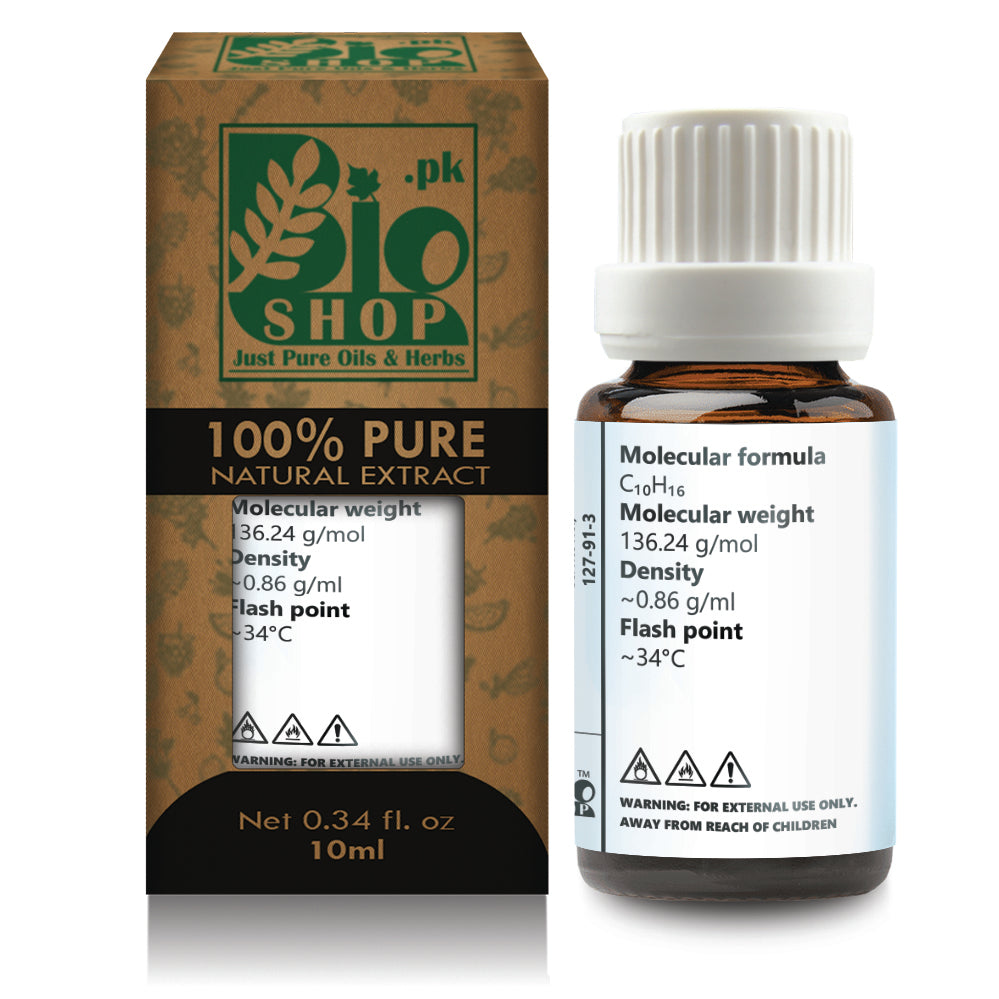
Beta Pinene

Beta Pinene

Regular price Rs.350.00
Regular price Sale price Rs.350.00
Sale Sold out
Shipping calculated at checkout.

Olfactory Notes: Coniferous · Terpenic · Woody · Pine · Dry · Green · Resinous · Fresh

Volume
Quantity
🚚 Estimated delivery time:
View full details

Explore

Information About Beta Pinene

Key Features

✦ Fresh, dry pine and coniferous top-note terpene

✦ Naturally found in pine, turpentine, and rosemary oils

✦ Adds crisp resinous lift to forest and fougère accords

✦ Used in fine fragrance, soaps, diffusers, and incense

✦ Common building block for pine and citrus-woody bases

✦ Highly volatile — bright impact, short tenacity

✦ Vegan and non-animal derived

About Beta Pinene

Beta Pinene is a bicyclic monoterpene and one of the two main pinene isomers, the other being alpha pinene. It occurs widely in nature, found in pine resin, turpentine, rosemary, basil, and countless essential oils. It has been used in scent and solvent applications for well over a century, originally isolated from pine turpentine fractions.

What makes beta pinene special is its clean, dry, slightly green pine character — fresher and less sharp than alpha pinene, with a more woody-resinous edge. This makes it a reliable top-note material for natural-smelling coniferous, herbal, and forest effects, and a versatile feedstock for further aroma chemical synthesis.

Bio Shop Pakistan supplies cosmetic-grade beta pinene suitable for perfumery, attar and mukhallat blending, soap and candle making, and household fragrance formulation.

Olfactory Profile

SCENT DESCRIPTION: Beta pinene opens with a crisp, dry pine-forest freshness, like crushed needles and cool resin. It is greener and softer than alpha pinene, with a clean terpenic lift. A faint woody-balsamic undertone keeps it from feeling thin. The overall effect is bright, airy, and natural.

NOTE POSITION : Top

FRAGRANCE FAMILY: Coniferous · Terpenic · Woody

FACETS : Pine · Dry · Green · Resinous · Fresh

TENACITY : Low — 1 to 2 hours

SILLAGE : Medium — bright initial diffusion that fades quickly

Technical Specifications

Chemical Name : Beta-Pinene (6,6-Dimethyl-2-methylenebicyclo[3.1.1]heptane)

CAS Number : 127-91-3 (verify with supplier; optical isomers differ)

Synonyms : β-Pinene, Nopinene, 2(10)-Pinene

Purity % : Verify with supplier CoA

Appearance : Clear colorless liquid

Odor Threshold : Low (verify with supplier)

Solubility : Insoluble in water; soluble in alcohol and oils

Specific Gravity: Approx. 0.867–0.872 (verify with CoA)

Flash Point : Approx. 33–39°C (flammable — verify with CoA)

Type : Natural / Nature-identical (verify source with supplier)

Applications & Usage Guidelines

Fine Fragrance ★★★★☆

Excellent for fresh pine, forest, and fougère top notes. Adds natural lift and dryness. Fades fast, so support with longer terpenes or woods.

Attar & Oriental Blending ★★★☆☆

Useful for adding a green coniferous opening to woody or resinous attars. Use sparingly as it is volatile and can dominate early.

Functional Fragrance ★★★★☆

Strong performer in pine-type household and air-care scents. Cost-effective and recognisable. Watch oxidation in stored products.

Cosmetics ★★☆☆☆

Limited cosmetic use due to volatility and oxidation/sensitisation risk. Best in rinse-off rather than leave-on.

Home Fragrance ★★★★☆

Great in diffusers and incense for a fresh forest effect. Diffuses well but needs replenishing due to fast evaporation.

IFRA & Usage Rate

EDP : 0.5 – 5%

EDT : 0.5 – 5%

Body Lotion : 0.1 – 0.5%

Shampoo/Body Wash: 0.2 – 1%

Candle : 1 – 5%

Reed Diffuser : 1 – 8%

Soap : 0.5 – 2%

IFRA 51st Amendment: Pinenes are subject to IFRA standards relating to peroxide value (oxidation). Verify current category limits at ifrafragrance.org before finalising any formula.

⚠️ Highly flammable — low flash point.

⚠️ Oxidises readily; oxidised material raises sensitisation risk.

Blending Guide

Top-Note Lift : Add small amounts to brighten openings with fresh pine air.

Forest Accord : Combine with woody and balsamic bases for a natural conifer effect.

Functional Boost: Use in soaps and cleaners for a clean, recognisable pine scent.

BEST PAIRINGS

Alpha Pinene → Rounds out a fuller, natural pine

Limonene → Fresh citrus-pine lift

Cedarwood → Dry woody depth and fixation

Rosemary → Green herbal-coniferous freshness

Galbanum → Sharp green resinous edge

AVOID

✦ Overuse — dominates and turns thin/turpentine-like

✦ Pairing with delicate florals you want to keep clean

✦ Storing diluted in warm, oxygen-exposed conditions

Perfumer's Note

Beta pinene is my go-to when I want real outdoor freshness rather than a synthetic "pine cleaner" smell. It is drier and greener than alpha pinene and reads more natural in a forest accord, but it is fleeting — treat it as a flash of brightness at the very top, not a structural note.

ADVANCED TIP: Pre-blend beta pinene at 10% in alcohol or DPG before dosing, then build a "conifer module" of beta pinene + alpha pinene + a touch of cedarwood at roughly 3:2:1. This stabilises the impression and stops the volatile terpene from spiking and vanishing.

Safety & Storage

Physical State : Liquid

Skin Safety : Can sensitise, especially when oxidised; patch test and limit leave-on use

Eye Contact : Irritant — avoid contact, flush if exposed

Ingestion : Do not ingest

Ventilation : Use in well-ventilated area

Storage : Cool, dark, airtight; minimise headspace

Shelf Life : Best within 12 months; oxidises over time

Container : Amber glass or HDPE, tightly sealed

Flammability : Highly flammable — keep away from heat and flame

FAQ

Q: What does beta pinene smell like?

A: Fresh, dry pine and forest with a clean green-woody edge. It is softer and greener than alpha pinene.

Q: How much beta pinene should I use in perfume?

A: Start around 0.5–5% in alcoholic perfume. It is volatile, so it acts as a top note only.

Q: Why does my beta pinene smell sharp or turpentine-like?

A: Usually oxidation or overdosing. Store it cold and airtight, and use smaller amounts.

Q: Is beta pinene safe for skin products?

A: Use it cautiously and at low levels, mainly in rinse-off products. Oxidised terpenes raise sensitisation risk, so keep it fresh.

Q: How does beta pinene compare to natural pine essential oil?

A: Beta pinene is a single isolated terpene, cleaner and more consistent than full pine oil. Pine essential oil is more complex and rounded but less predictable.

Where Can You Safely Use Beta Pinene?

Discover how Beta Pinene performs across different applications—rated for safety, stability, and effectiveness.

Alcoholic Perfume
8
Good
Anti-perspirants/Deo
7
Reasonable
Creams and Lotions
6
Fair
Lipsticks
5
Mediocre
Talcum Powder
6
Fair
Tablet Soap
7
Reasonable
Liquid Soap
7
Reasonable
Shampoo
7
Reasonable
Hair Conditioner
6
Fair
Bath/Shower Gel
7
Reasonable
Reed Diffuser
7
Reasonable
Cold Wave
5
Mediocre
Detergent Powder
6
Fair
Liquid Detergent
6
Fair
Fabric Softener
6
Fair
Candles
7
Reasonable
Incense
7
Reasonable