Bio Shop
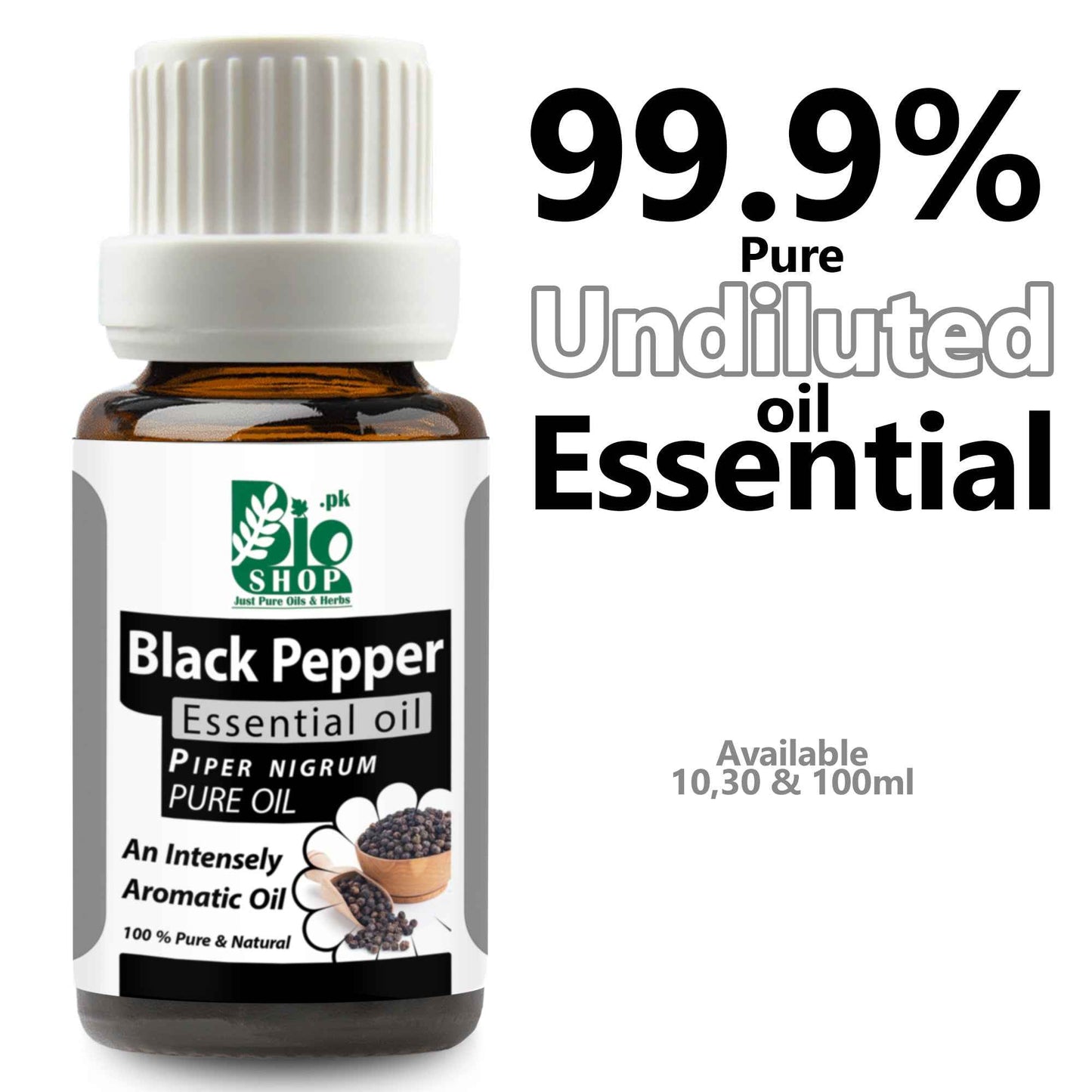
Black Pepper Essential Oil
Black Pepper Essential Oil
Olfactory Notes:
Couldn't load pickup availability


Explore
Information About Black Pepper Essential Oil
Key Features
✦ 100% pure steam-distilled essential oil from Piper nigrum dried berries
✦ Sharp, dry, spicy-woody scent with fresh peppery top notes and warm base character
✦ Rich in beta-caryophyllene, limonene, alpha-pinene, and sabinene
✦ Core ingredient in masculine perfumes, oriental attars, and spice accord bases
✦ Used in aromatherapy for circulation support and warming massage blends
✦ Naturally vegan, cruelty-free, and free from synthetic additives
✦ Cosmetic grade — suitable for perfumery, skincare, and functional fragrance applications
About Black Pepper Essential Oil
Black Pepper Essential Oil is derived from the dried berries of Piper nigrum, a climbing vine that has been cultivated in South and Southeast Asia for thousands of years. Black pepper was among the most prized spices in ancient trade, valued for both culinary and medicinal purposes across Indian, Arab, and European civilizations. The essential oil, obtained through steam distillation of the dried peppercorns, captures the volatile aromatic compounds responsible for the spice's characteristic warmth and pungency without the irritating piperin alkaloid present in the whole spice.
What sets Black Pepper Essential Oil apart in modern perfumery and cosmetics is its remarkable versatility. As a top-to-mid note material, it contributes a crisp, invigorating spiciness that reads as fresh rather than heavy. Unlike synthetic spice materials, natural black pepper EO carries a subtle green, woody undertone and a dry-down that blends seamlessly with musks, woods, and citrus accords. It is a staple of classic masculine compositions and has found renewed relevance in niche and artisan perfumery where natural complexity and authenticity are valued.
Bio Shop Pakistan supplies cosmetic-grade Black Pepper Essential Oil suitable for fine fragrance development, attar creation, skincare formulations, and aromatherapy product manufacturing across Pakistan.
Olfactory Profile
SCENT DESCRIPTION : Black Pepper Essential Oil opens with a bold, sharp, and dry spiciness that is unmistakably peppery yet surprisingly fresh. There is a crackling, almost effervescent quality in the opening that quickly settles into a warm, woody, slightly earthy mid-character. Subtle green and resinous facets emerge on dry-down, giving depth and naturalness that synthetic pepper materials rarely replicate. The overall impression is invigorating, clean-spicy, and quietly sensual.
NOTE POSITION : Top to Mid
FRAGRANCE FAMILY : Spicy · Woody · Aromatic
FACETS : Peppery · Dry · Woody · Warm · Earthy
TENACITY : Medium — 4 to 6 hours on skin, longer on fabric
SILLAGE : Medium — projects well in the opening, settles to a close skin scent in the dry-down
Technical Specifications
Chemical Name : Piper nigrum fruit oil
CAS Number : 8006-82-4
Synonyms : Black Pepper EO · Pepper Oil · Piper nigrum Oil · Oil of Black Pepper
Purity : 100% pure, undiluted
Appearance : Colorless to pale yellow mobile liquid
Odor Threshold : Very low — detectable at trace concentrations
Solubility : Soluble in alcohol, fixed oils, and carrier oils; insoluble in water
Specific Gravity : 0.862 – 0.876 g/cm³ at 20°C (verify with supplier CoA)
Flash Point : Approximately 48°C / 118°F (verify with supplier CoA)
Type : Natural — steam distilled from Piper nigrum dried berries
Applications & Usage Guidelines
Fine Fragrance : ★★★★★
Black Pepper EO is a premier natural spice note in fine fragrance. It adds sharp, dry, invigorating opening character to masculine, oriental, and woody perfumes. Featured in iconic fragrances such as Poivre by Caron and countless modern niche creations, it blends beautifully with woods, resins, and musks.
Attar and Oriental Blending : ★★★★★
Black pepper is a traditional cornerstone of spice-forward attars and oriental blends. It pairs naturally with oud, sandalwood, vetiver, and rose to create complex, warm, and deeply evocative compositions. Pakistani and Middle Eastern attar traditions commonly use black pepper as a structural spice accord.
Aromatherapy and Functional Fragrance : ★★★★☆
Widely used in aromatherapy for its stimulating, warming, and circulatory properties. It is blended into sports massage oils, warming balms, and diffuser compositions for invigoration and focus. Effective in roll-on blends at low concentrations.
Cosmetics and Skincare : ★★★☆☆
Usable in leave-on cosmetics at low concentrations within IFRA limits. Suitable for warming massage creams, body scrubs, and exfoliant formulas. Not suitable for lip products at practical usage rates due to very low IFRA category limits for that application.
Home Fragrance and Candles : ★★★★☆
Excellent in reed diffusers, room sprays, and potpourri where a spicy, warm character is desired. Blends well with citrus, wood, and resin notes in home fragrance. In candles, use with caution and good ventilation; confirm flash point with your supplier's CoA.
IFRA & Usage Rate
RECOMMENDED USAGE RATES
EDP (Eau de Parfum) : 2.0 – 5.0%
EDT (Eau de Toilette) : 1.5 – 3.0%
Body Lotion / Body Cream : 0.3 – 0.5% (stay within IFRA Cat 5A limit)
Shampoo / Body Wash : 0.5 – 1.0% (rinse-off allowance)
Candle : 3.0 – 6.0% (verify flash point with CoA)
Reed Diffuser : 10.0 – 25.0% in carrier
Bar Soap (rinse-off) : 0.5 – 1.0%
IFRA 51ST AMENDMENT LIMITS — Piper nigrum oil (CAS 8006-82-4)
⚠️ Black Pepper Essential Oil is regulated under the IFRA 51st Amendment due to its limonene content and potential skin sensitization. Always observe these limits in leave-on applications.
Category 1 (Children's toys) : 0.01%
Category 2 (Deodorant / Antiperspirant spray) : 0.13%
Category 3 (Lip products / Mouthwash) : 0.09%
Category 4 (Hand cream / Face cream) : 0.62%
Category 5A (Body lotion / Body cream) : 0.62%
Category 5B (Face moisturizer) : 0.62%
Category 7A (Rinse-off hair products) : 1.02%
Category 7B (Rinse-off body products) : 1.02%
Category 8 (Intimate leave-on) : 0.12%
Category 9 (Rinse-off soap) : 1.02%
Category 11A (Alcoholic perfume) : 8.5%
Category 12 (Candle — non-skin contact) : Not restricted
⚠️ Always verify current limits at ifrafragrance.org before finalizing formulations.
⚠️ Conduct patch testing before use in any leave-on skin application.
⚠️ Not recommended for use in lip products at practical fragrance rates.
Blending Guide
USAGE METHOD 1 — SPICE ACCORD BUILDER
Use Black Pepper EO as the spice top note in a multi-material accord alongside cardamom, pink pepper, or coriander. Start at 0.5% of the total accord and evaluate; it is potent and can overpower delicate florals if used heavy-handed.
USAGE METHOD 2 — ORIENTAL BASE ANCHOR
Combine with oud base, labdanum, sandalwood, and vetiver in oriental and attar compositions. Black pepper in this context acts as a dry, sharp counterpoint to the richness of the base materials, providing lift and freshness without disturbing warmth.
USAGE METHOD 3 — AROMATHERAPY WARMING BLEND
In a carrier oil base, blend at 1–3% total with ginger, eucalyptus, and rosemary for warming massage applications. Keep total essential oil concentration within safe topical limits and IFRA guidelines for the application type.
BEST PAIRINGS
Oud / Agarwood → Deepens the spicy-resinous character and adds oriental complexity
Sandalwood → Softens pepper's sharpness into a creamy, warm spice accord
Vetiver → Creates a dry, smoky, earthy spice foundation for masculine perfumes
Cardamom EO → Spice-on-spice with sweet aromatic facets; classic oriental opening
Bergamot EO → Contrasts the dry pepper with fresh citrus for a bright spice fougere
Cedarwood → Adds woody dryness that extends pepper's natural character beautifully
Labdanum / Cistus → Resinous warmth that rounds out the sharp peppery opening
Rose Otto / Rose Attar → Unexpected but classic; rose and pepper is a sophisticated floral spice accord
Frankincense EO → Adds resinous incense depth to spicy-woody orientals and attars
AVOID
Avoid combining at high concentrations with other high-sensitizer naturals such as cinnamon bark oil or clove bud oil in leave-on products. Combined sensitizer load in leave-on applications can exceed safe limits quickly.
Perfumer's Note
Black Pepper Essential Oil is one of those naturals that earns its place in a formula not through sweetness or spectacle but through character. It has a dryness and a crackle that no synthetic spice note has fully replicated — there is a green, raw-fruity backbone beneath the heat that gives it life and movement. I reach for it whenever a masculine or oriental composition needs a crisp, authoritative opening that avoids the cloying sweetness of synthetic spice materials. At low usage rates, below 0.5% in leave-on, it functions almost like a bridge — quietly lifting whatever sits beneath it without drawing attention to itself.
ADVANCED TIP
To extract maximum value from black pepper's natural complexity without risking sensitization in leave-on formulas, consider using it in an alcohol-diluted pre-blend at 10% concentration and evaluating its contribution at incremental addition rates starting from 0.1% in the final formula. This approach makes fine adjustments easier and helps you identify the precise loading at which the pepper reads clearly without dominating. For rinse-off applications such as shower gels and shampoos, you have more headroom — use up to 1% in the finished formula and pair with citrus top notes to amplify the peppery freshness in a functional fragrance context.
Safety & Storage
Physical State : Clear to pale yellow mobile liquid at room temperature
Skin Safety : Dilute before skin contact; leave-on use must observe IFRA limits; may cause sensitization in susceptible individuals at elevated concentrations
Eye Contact : Avoid; rinse immediately with clean water if contact occurs and seek medical advice if irritation persists
Ingestion : Not for internal consumption; keep out of reach of children
Ventilation : Work in a well-ventilated area; avoid prolonged inhalation of undiluted oil vapors
Storage : Store in a tightly sealed amber glass or HDPE container away from direct sunlight, heat, and humidity
Shelf Life : 2 to 3 years from production date when stored correctly; monoterpene-rich essential oils are prone to oxidation — discard if odor turns harsh or resinous
Container : Dark glass (amber) preferred; avoid PET plastic for long-term storage
Flammability : Flammable liquid; flash point approximately 48°C — keep away from open flames and sparks
FAQ
Q: Can I use Black Pepper Essential Oil directly on my skin without diluting it?
A: No. Always dilute in a carrier oil or formulation before skin application. Undiluted essential oils can cause sensitization, redness, and irritation, and IFRA limits for leave-on use are very low.
Q: What products is Black Pepper EO best suited for as a beginner?
A: Start with reed diffusers, candles, and room sprays where skin contact is not involved and concentration limits are more flexible. This lets you learn the scent character before working with it in skin-contact formulas.
Q: Why is the IFRA limit for body lotion so low at 0.62%?
A: Black Pepper EO contains limonene and other components classified as potential skin sensitizers in leave-on applications. IFRA sets conservative limits to protect consumers, especially with repeated daily exposure to leave-on products like body lotion.
Q: How do I stop the pepper note from fading too quickly in my perfume?
A: Anchor it with a compatible base material. Pairing black pepper with labdanum, ambrette, or a woody musk base extends the perception of the spice note well into the dry-down. You can also add a small amount of dihydromyrcenol or Iso E Super to amplify the crackling freshness.
Q: How does Black Pepper Essential Oil compare to synthetic pepper materials like Timbersilk or Iso E Super?
A: They are not direct equivalents. Synthetic materials like Timbersilk deliver a woody-mineral spice character with much higher tenacity and stability. Natural Black Pepper EO is sharper, drier, more volatile, and carries a genuine raw-botanical complexity that synthetics do not replicate. For an authentic spice character in natural or naturally-based perfumery, nothing substitutes for the real oil — but for stability in functional fragrance or household products, a synthetic spice material may be more practical.
Where Can You Safely Use Black Pepper Essential Oil?
Discover how Black Pepper Essential Oil performs across different applications—rated for safety, stability, and effectiveness.
Once again BioShop wins my heart for the quality essential oils and fragrance molecules timely delivery, I am continuously searching for new but reliable suppliers for my Research and development in Perfume design but always BioShop wins the race. I will definitely recommend BioShop for newly entering perfume industry particularly DIY buddies, for price and quality I didn’t found any one to match with BioShop, whenever I found I will inform you definitely, for now trust on BioShop.
And to BioShop! You should never let me down for my positive comment and recommendation to provide quality and price.
Marvelous 😍 stuff Nd service ⭐