Skip to product information
1 of 3

Bio Shop

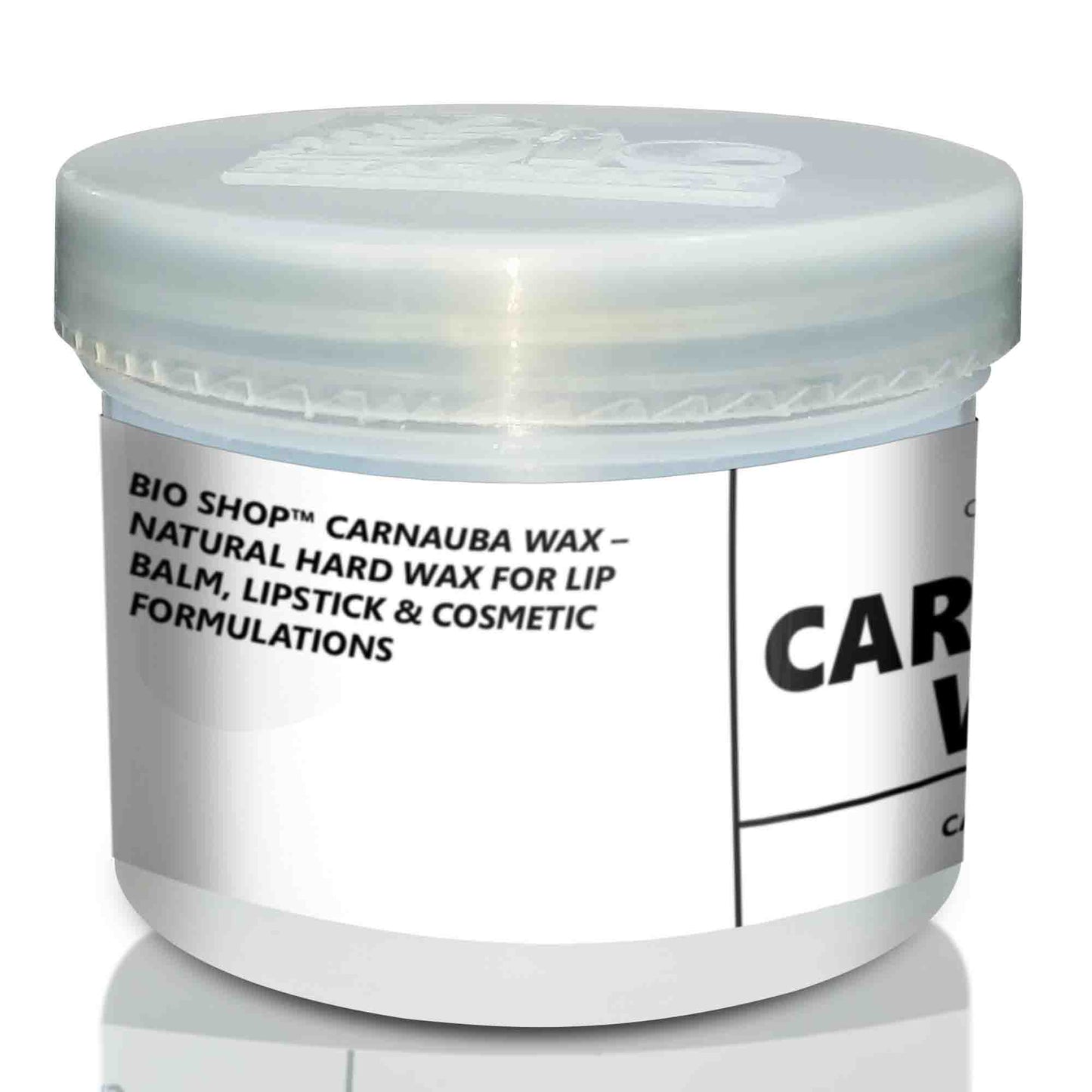
Carnauba Wax

Carnauba Wax

Regular price Rs.860.00
Regular price Sale price Rs.860.00
Sale Sold out
Shipping calculated at checkout.

Key Functions: Adds hardness and gloss, raises melting point, forms protective film, and stabilizes emulsions.

Weight
Quantity
🚚 Estimated delivery time:
Learn More About This Ingredient View full details

Explore

Information About Carnauba Wax

✅ Key Features

✦ Provides the highest natural gloss of any plant wax, ideal for lip and stick products
✦ Raises the melting point and structural firmness of softer wax blends
✦ Forms a breathable, protective film that locks in moisture without occluding skin
✦ Excellent thickener and viscosity modifier for balms, creams, and ointments
✦ Naturally vegan and plant-derived from Copernicia prunifera palm leaves
✦ Outstanding oxidative stability with a long shelf life and minimal rancidity risk
✦ Compatible with a wide range of oils, butters, and other natural waxes in hot-process formulations

🔬 Description

Carnauba wax is a hard, brittle, plant-derived wax harvested from the leaves of the Copernicia prunifera palm, native to northeastern Brazil. Often called the queen of waxes, it has been used in cosmetic and pharmaceutical preparations for over a century due to its unmatched hardness and brilliant shine. The wax is collected by drying and beating the palm leaves, then refining the raw flakes into cosmetic-grade material available in yellow or bleached white forms.

What makes carnauba wax exceptional in cosmetics is its high melting point of approximately 82 to 86 degrees Celsius, the highest of any commercially available natural wax. This property allows formulators to harden lip balms, lipsticks, mascaras, and solid perfumes while imparting a smooth, glossy finish that resists heat and humidity. Its film-forming ability also makes it effective in protective hair waxes and barrier creams where long-lasting hold and shine are desired.

Bio Shop Pakistan supplies cosmetic-grade carnauba wax suitable for DIY beauty formulators, independent skincare brands, soap makers, and professional cosmetic chemists.

📊 Technical Data

INCI Name : Copernicia Cerifera Cera
Chemical Name : Carnauba Wax
CAS Number : 8015-86-9
Molecular Formula : Complex mixture of esters, fatty alcohols, acids, and hydrocarbons
Appearance : Hard yellow to pale yellow flakes or powder
Odor : Faint characteristic waxy odor
pH (1% solution) : Not Applicable
Solubility : Insoluble in water; soluble in warm turpentine and hot chloroform
Specific Gravity : 0.990 to 0.999 at 25°C
Flash Point : Approximately 300°C
HLB Value : Not Applicable
Recommended Use Level : 1% to 10% depending on product type
Type : Natural Plant Wax — Film Former, Viscosity Modifier, Emollient
Shelf Life : 24 to 36 months when stored properly

🧪 Recommended Usage

Skincare (Creams, Serums, Lotions) ★★★☆☆
Carnauba wax can be used at low levels in creams and lotions to add body and a protective film, though it is not a primary skincare active. Use at 1% to 3% in the oil phase to improve texture and water resistance.

Lip Care (Lipsticks, Lip Balms, Lip Gloss) ★★★★★
This is where carnauba wax truly excels, providing hardness, gloss, and heat stability unmatched by other natural waxes. Use at 2% to 8% to firm up balm sticks and add a professional shine to lipstick formulations.

Haircare (Pomades, Styling Waxes, Hair Balms) ★★★★☆
Carnauba wax adds strong hold and natural sheen to hair styling products. Use at 3% to 7% in pomades and wax bars, blending with softer waxes like beeswax for pliability.

Body Care (Body Butters, Salves, Balms) ★★★★☆
Excellent for firming body balms and protective salves that need to hold their shape in warm climates. Use at 2% to 5% alongside shea butter and carrier oils for a firm yet spreadable texture.

Soap and Candle Making (Melt and Pour, Container Candles) ★★★☆☆
In soap making, carnauba wax is used sparingly at 0.5% to 2% to harden bars and add a slight gloss to the surface. In container candles it improves burn quality, though it is not a primary candle wax.

💡 Pro Tip

In my years of formulating lip products, I have learned that carnauba wax is indispensable but must be handled with respect. It is the hardest natural wax you will encounter, and even a small increase in percentage can shift a formula from silky to brittle. I always start at the lower end of the range and increase by half-percent increments until I reach the desired firmness. The key is blending it with medium-hardness waxes and soft butters to achieve a balanced melt profile that feels comfortable on the lips without cracking or dragging.

ADVANCED TIP: When formulating lipsticks, create a ternary wax blend using 4% carnauba wax → 10% beeswax → 6% candelilla wax. Melt the carnauba first at 90°C, then add the other waxes sequentially as temperature drops. This layered melting approach produces a microcrystalline matrix that improves pigment suspension, snap strength, and gloss retention compared to melting all waxes together simultaneously.

👩‍🔬 Skin Type Suitability

Normal Skin : ★★★★☆ — Provides a smooth protective barrier without heaviness or irritation.
Dry Skin : ★★★★★ — Excellent moisture-locking film helps prevent transepidermal water loss on dehydrated skin.
Oily Skin : ★★☆☆☆ — Heavy film-forming nature can feel occlusive and may contribute to congestion at higher levels.
Combination : ★★★☆☆ — Best limited to targeted application on dry zones rather than full-face use.
Sensitive Skin : ★★★★☆ — Very low irritation potential and no known sensitizers, well tolerated by most reactive skin types.
Mature Skin : ★★★★★ — Protective film and moisture retention benefit aging skin that struggles with barrier function.
Acne-Prone : ★★☆☆☆ — Occlusive nature may trap sebum and debris, best avoided in leave-on facial products for breakout-prone skin.

🧴 Formulation Ideas

CONCEPT 1: Tropical Mango Tinted Lip Balm
Usage Level : 5%
Key Ingredients: Mango butter, beeswax, castor oil, iron oxide pigments
Result : A firm, glossy tinted balm with excellent heat resistance that maintains its shape in warm Pakistani summers.

CONCEPT 2: High-Hold Matte Hair Pomade
Usage Level : 6%
Key Ingredients: Beeswax, lanolin, argan oil, kaolin clay
Result : A strong-hold pomade with natural sheen and a slightly matte finish that tames coarse or curly hair all day.

CONCEPT 3: Protective Barrier Balm for Dry Hands
Usage Level : 4%
Key Ingredients: Shea butter, sweet almond oil, vitamin E, allantoin
Result : A rich, solid balm that melts on contact and leaves a long-lasting protective film on cracked, overworked hands.

💧 Safety and Regulatory:

INCI Declared : Yes — required when used as a cosmetic ingredient
EU Cosmetics Reg : Permitted — no restriction on use level in cosmetic products
Rinse-Off Limit : No limit established
Leave-On Limit : No limit established
Allergen Alert : No — no known allergens associated with refined carnauba wax
Skin Safety : Safe at recommended levels
Eye Area Use : Use with caution — not irritating but solid particles may cause mechanical discomfort
Ingestion : Not for internal use in cosmetic-grade form
Pregnancy Use : Safe — no known concerns at cosmetic use levels
Child Safety : Safe for use in children's lip and skin products at recommended levels
Ventilation : Not required under normal use conditions
Storage : Cool dry place away from direct sunlight and heat sources
Container : HDPE, glass, or PET containers — no special material restrictions

Stability and Compatibility

Working pH Range : Not pH dependent — performs across the full cosmetic pH range
Heat Stability : Stable up to approximately 300°C; requires melting at 82 to 86°C for incorporation
Freeze-Thaw Stable : Yes — maintains structural integrity through temperature cycling
Emulsion Type : O/W and W/O — functions as a co-emulsifier and stabilizer in both systems
Emulsification Phase: Hot phase only — must be fully melted before incorporation
Compatible With : Beeswax, candelilla wax, plant butters, carrier oils, fatty alcohols
Incompatible With : No significant incompatibilities; may crystallize unevenly if cooled too rapidly
Oxidation Risk : Low — highly resistant to oxidative degradation due to its ester-rich composition
Discoloration Risk : Possible — yellow grades may impart slight color to white formulations; use bleached grade for colorless products
Formulation Notes : Always melt carnauba wax separately or first in the wax blend due to its high melting point. Stir continuously during cooling to promote uniform microcrystalline structure and prevent graininess in the finished product.

❓ FAQs

Q: What is carnauba wax and where does it come from?
A: Carnauba wax is a natural plant wax harvested from the leaves of the Copernicia prunifera palm tree in northeastern Brazil. It is refined into cosmetic-grade flakes and is valued as the hardest natural wax available for beauty and personal care formulations.

Q: How much carnauba wax should I use in a lip balm?
A: For lip balms, start at 3% and increase up to 8% depending on how firm you want the final stick. Always balance it with softer ingredients like beeswax and castor oil to avoid a waxy or draggy feel on the lips.

Q: Can I use carnauba wax on its own to make a solid product?
A: Carnauba wax alone would produce an extremely hard and brittle product that cracks easily. It works best when blended with medium and soft waxes or butters to create a balanced texture with both structure and flexibility.

Q: Does carnauba wax clog pores or cause breakouts?
A: At low concentrations in well-formulated products, carnauba wax is generally non-comedogenic. However, at higher levels or in occlusive leave-on facial products, its film-forming nature may contribute to congestion in acne-prone individuals.

Q: How does carnauba wax compare to candelilla wax?
A: Carnauba wax is significantly harder with a melting point of 82 to 86°C versus candelilla at 68 to 73°C, and it provides a higher gloss. Candelilla wax is softer and more flexible, making it easier to work with alone, while carnauba is best used as a hardening and shine-boosting additive within a wax blend. Both are vegan alternatives to beeswax.

Where Can You Safely Use Carnauba Wax

Discover how Carnauba Wax performs across different products — rated for safety, stability, and effectiveness.

Skincare
Serums
0
Not Recommended
Creams & Lotions
5
Mediocre
Eye Creams
4
Slight Issues
Face Masks
3
Discoloration
Cleansers
2
Stability Issues
Toners
0
Not Recommended
Lip Balms
9
Very Good
Ointments
7
Reasonable
Body & Hair Care
Body Butters
7
Reasonable
Shampoos
1
Major Problems
Conditioners
2
Stability Issues
Hair Masks
3
Discoloration
Soap & Specialty
Soaps
5
Mediocre
Deodorants
4
Slight Issues
