Skip to product information
1 of 3

Bio Shop

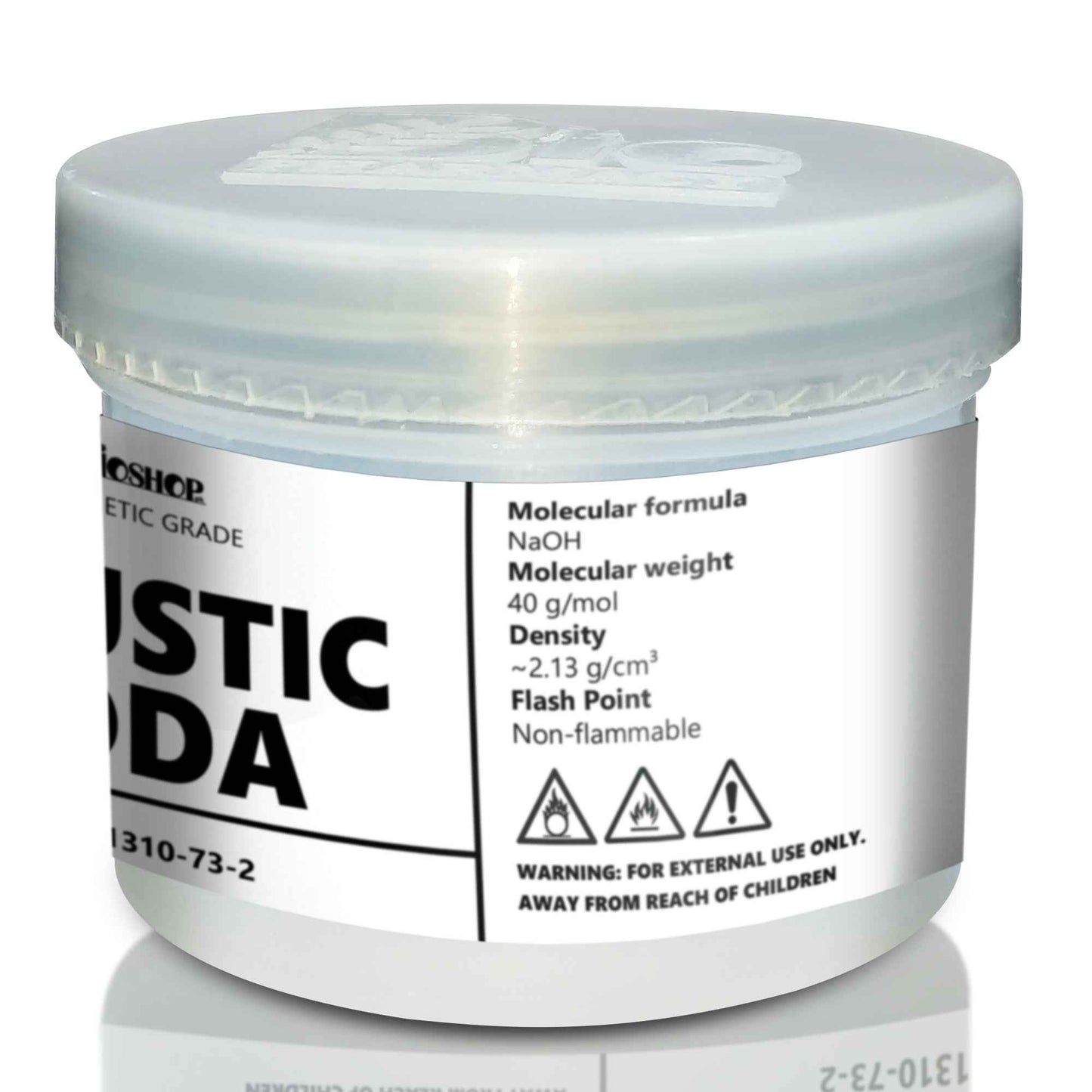
Caustic Soda

Caustic Soda

Regular price Rs.200.00
Regular price Sale price Rs.200.00
Sale Sold out
Shipping calculated at checkout.

Key Functions: Drives saponification, adjusts pH, neutralizes carbomer gels, and enables soap production.

Weight
Quantity
🚚 Estimated delivery time:
Learn More About This Ingredient View full details

Explore

Information About Caustic Soda

✅ Key Features

✦ The essential saponification agent required for all cold process and hot process soap making
✦ Functions as a precise pH adjuster in cosmetic creams, lotions, and gel formulations
✦ Neutralizes carbomer and acrylate polymers to form clear, stable gels
✦ Produces hard bar soaps when paired with solid oils and fats through lye-based reactions
✦ Cosmetic-grade purity ensures accurate lye calculations and batch consistency
✦ Used in micro-quantities as a buffering agent in professional skincare formulations
✦ Highly versatile across soap making, emulsion chemistry, and cosmetic pH correction

🔬 Description

Caustic Soda, chemically known as Sodium Hydroxide, is a white crystalline solid that has been central to soap making for centuries. Historically, early civilizations used wood ash lye as a crude form of sodium and potassium hydroxides to produce the first soaps. Modern cosmetic-grade Sodium Hydroxide is manufactured to high purity standards, giving formulators precise control over saponification and pH adjustment in their products.

What makes Caustic Soda indispensable is its role as the primary saponification agent. When dissolved in water and combined with oils or fats, it triggers an irreversible chemical reaction that produces soap and glycerin. In non-soap cosmetic applications, trace amounts of Sodium Hydroxide are used to raise pH, neutralize acid-based thickeners like Carbomer 940, and fine-tune the final pH of leave-on and rinse-off products to skin-compatible levels.

Bio Shop Pakistan supplies cosmetic-grade Caustic Soda suitable for artisan soap makers, DIY beauty formulators, and professional cosmetic chemists.

📊 Technical Data

INCI Name : Sodium Hydroxide
Chemical Name : Sodium Hydroxide
CAS Number : 1310-73-2
Molecular Formula : NaOH
Appearance : White pellets, flakes, or granules
Odor : Odorless
pH (1% solution) : 13 to 14
Solubility : Freely soluble in water and ethanol (exothermic reaction)
Specific Gravity : 2.13
Flash Point : Not applicable (non-flammable solid)
HLB Value : Not applicable
Recommended Use Level : 100% for soap lye solutions; 0.1 to 2% as pH adjuster in cosmetics
Type : Inorganic alkali / pH adjuster / saponification agent
Shelf Life : Indefinite if stored sealed away from moisture and CO2

🧪 Recommended Usage

Soap Making (Cold Process, Hot Process, Liquid Soap) ★★★★★
Caustic Soda is the defining ingredient in bar soap production through cold and hot process methods. Calculate lye amounts precisely using a reliable soap calculator and always account for a 3 to 8% superfat range for skin-safe bars.

Skincare (Creams, Serums, Lotions) ★★★☆☆
Used only in micro-quantities as a pH adjuster to bring acidic formulations into the optimal 4.5 to 6.5 range. Add a dilute NaOH solution drop by drop while monitoring pH with a calibrated meter.

Gel Formulations (Carbomer Gels, Serum Gels) ★★★★☆
Essential for neutralizing carbomer-based gels into clear, thickened systems. Prepare a 10 to 18% NaOH solution and add slowly to the carbomer dispersion while stirring until the gel forms and pH reaches 5.5 to 7.0.

Haircare (Relaxers, pH Adjustment) ★★★☆☆
Sodium Hydroxide is the active agent in lye-based hair relaxers at controlled concentrations. This is a professional-grade application requiring strict safety protocols and is not recommended for untrained home use.

Cleaning and Industrial (Household Soap, Detergent Bases) ★★★★★
Widely used to saponify waste oils for household cleaning bars and liquid soap pastes. For liquid soap production, Potassium Hydroxide is preferred, but NaOH can be blended in for firmer paste consistency.

💡 Pro Tip

In my years of soap formulation, the single most important habit I developed was always adding lye to water — never water to lye. This prevents dangerous exothermic splashing. I prepare my lye solution in a heat-resistant polypropylene or stainless steel container, allow it to cool to approximately 38 to 43°C, and then combine it with oils at a similar temperature for optimal trace development. For cosmetic pH adjustment, I never use dry NaOH pellets directly — I always prepare a dilute 10% aqueous solution and add it incrementally with continuous pH monitoring.

ADVANCED TIP: When neutralizing Carbomer 940 at 0.5% concentration, prepare an 18% NaOH solution and add it at roughly a 1:1 weight ratio to the dry carbomer used. Add the NaOH solution slowly to the carbomer dispersion while stirring at moderate speed to avoid air incorporation. Stop addition when pH reads between 5.5 and 6.5 on a calibrated meter — over-neutralization above pH 7.5 will thin the gel irreversibly.

👩‍🔬 Skin Type Suitability

Normal Skin : ★★★★★ — Soap made with properly cured NaOH lye is gentle and suitable for daily use on normal skin.
Dry Skin : ★★★★☆ — Cold process soaps with higher superfat levels (6 to 8%) compensate well for dry skin needs.
Oily Skin : ★★★★★ — Lye-based soaps effectively cleanse excess oil without the need for synthetic detergents.
Combination : ★★★★☆ — Well-formulated NaOH soaps with balanced oil profiles work across combination skin zones.
Sensitive Skin : ★★★☆☆ — Requires thorough curing of 4 to 6 weeks and mild oil choices to avoid irritation.
Mature Skin : ★★★☆☆ — Soap can be drying for mature skin unless heavily superfatted with nourishing butters.
Acne-Prone : ★★★★☆ — Properly made soap with non-comedogenic oils provides a clean rinse without pore-clogging residue.

🧴 Formulation Ideas

CONCEPT 1: Olive Castile Soap Bar
Usage Level : 100% of required lye (calculated via soap calculator for chosen oil weight)
Key Ingredients: Extra Virgin Olive Oil, Distilled Water, Sodium Hydroxide, Lavender Essential Oil
Result : A traditional all-olive Castile bar that produces a mild, conditioning lather after a minimum 6-week cure.

CONCEPT 2: Gentle Oatmeal Exfoliating Soap
Usage Level : 100% of required lye at 5% superfat
Key Ingredients: Coconut Oil, Shea Butter, Sweet Almond Oil, Colloidal Oatmeal
Result : A moderately lathering exfoliating bar with skin-soothing oatmeal particles and a creamy, moisturizing feel.

CONCEPT 3: Clear Carbomer Gel Base
Usage Level : 0.5 to 1.0% NaOH (as 18% solution) to neutralize carbomer
Key Ingredients: Carbomer 940, Distilled Water, Glycerin, Phenoxyethanol
Result : A crystal-clear gel base at pH 5.5 to 6.0 suitable for adding water-soluble actives like Niacinamide or Hyaluronic Acid.

💧 Safety and Regulatory:

INCI Declared : Yes — declared as Sodium Hydroxide when present above trace levels in finished product
EU Cosmetics Reg : Permitted — listed as a pH adjuster; no Annex restriction for cosmetic use at appropriate levels
Rinse-Off Limit : No specific limit established — must be fully reacted in soap or used at safe pH-adjusting levels
Leave-On Limit : No specific limit established — final product pH must fall within 3.0 to 11.0 per EU guidelines
Allergen Alert : No — not a recognized allergen, but is a severe corrosive hazard in raw form
Skin Safety : Severely corrosive as raw material; completely safe in properly made and cured soap or pH-adjusted cosmetics
Eye Area Use : Avoid raw contact; finished soap and pH-adjusted cosmetics at safe pH are acceptable
Ingestion : Not for internal use — causes severe chemical burns
Pregnancy Use : Safe — finished NaOH soap and pH-adjusted cosmetics present no pregnancy concern
Child Safety : Raw NaOH must be kept away from children at all times; finished soap is safe for all ages
Ventilation : Required — lye solution releases heat and fumes; always mix in a well-ventilated area
Storage : Airtight container in cool, dry place away from moisture, acids, and aluminum
Container : HDPE plastic, polypropylene, or stainless steel — avoid aluminum, tin, zinc, and glass long-term

⚠️ WARNING: Caustic Soda is extremely corrosive and causes severe chemical burns on contact with skin, eyes, and mucous membranes. Always wear chemical-resistant gloves, safety goggles, and long sleeves when handling. Always add NaOH to water, never water to NaOH. Keep white vinegar nearby to neutralize small skin splashes. Store locked and out of reach of children.

Stability and Compatibility

Working pH Range : 13 to 14 in solution; used to adjust final product pH to target range (typically 4.5 to 7.0 in cosmetics, 9.0 to 10.5 in fresh soap)
Heat Stability : Fully stable at all cosmetic processing temperatures; dissolving in water is highly exothermic
Freeze-Thaw Stable : Yes — dry NaOH is unaffected; aqueous solutions remain stable through freeze-thaw
Emulsion Type : Not applicable — functions as a pH adjuster, not an emulsifier
Emulsification Phase: Water phase — always dissolve in water phase when used as pH adjuster
Compatible With : Carbomers, fatty acids (saponification), most cosmetic oils and butters, anionic surfactants
Incompatible With : Aluminum and zinc metals (generates hydrogen gas), strong acids (violent exothermic reaction), ammonium salts, phenolic compounds
Oxidation Risk : Low — NaOH itself does not oxidize, but absorbs CO2 from air forming sodium carbonate over time
Discoloration Risk : Possible — prolonged air exposure converts pellets to a chalky white carbonate layer; does not affect soap quality if used promptly
Formulation Notes : Always seal container immediately after use to prevent moisture absorption and carbonation. When preparing lye solution, add pellets to cold or room-temperature water slowly while stirring — never the reverse. Allow lye solution to cool before combining with oils.

❓ FAQs

Q: What is the difference between Caustic Soda and Caustic Potash for soap making?
A: Caustic Soda (Sodium Hydroxide / NaOH) produces hard bar soaps, while Caustic Potash (Potassium Hydroxide / KOH) produces liquid soap paste. NaOH is the standard choice for cold process and hot process bar soap. KOH is used exclusively for liquid soap formulations.

Q: How do I calculate the correct amount of Caustic Soda for my soap recipe?
A: Every oil has a unique saponification value that determines how much NaOH it requires. Use a trusted online soap calculator, input your exact oil weights, and set a superfat percentage of 3 to 8%. Never estimate lye amounts manually as inaccurate measurements produce lye-heavy or excessively soft soap.

Q: Can I use Caustic Soda in leave-on skincare products?
A: Yes, but only as a pH adjuster in very small amounts. Prepare a dilute 10% NaOH solution and add it drop by drop to your formulation while monitoring pH. The final product pH must be within a skin-safe range of 4.5 to 6.5 for leave-on products.

Q: How long does cold process soap made with NaOH need to cure?
A: Cold process soap requires a minimum cure of 4 to 6 weeks. During curing, excess water evaporates, the crystal structure hardens, and the bar becomes milder and longer-lasting. Castile soaps made with 100% olive oil benefit from 8 to 12 weeks or longer.

Q: Is Sodium Hydroxide the same as baking soda or washing soda?
A: No. Sodium Hydroxide (NaOH) is a strong alkali with a pH of 13 to 14 and is the only alkali that can saponify oils into bar soap. Baking soda (Sodium Bicarbonate) and washing soda (Sodium Carbonate) are mild alkalis and cannot produce true soap. They are not interchangeable in any formulation context.

Where Can You Safely Use Caustic Soda

Discover how Caustic Soda performs across different products — rated for safety, stability, and effectiveness.

Skincare
Serums
3
Discoloration
Creams & Lotions
4
Slight Issues
Eye Creams
2
Stability Issues
Face Masks
3
Discoloration
Cleansers
5
Mediocre
Toners
3
Discoloration
Lip Balms
0
Not Recommended
Ointments
2
Stability Issues
Body & Hair Care
Body Butters
0
Not Recommended
Shampoos
4
Slight Issues
Conditioners
3
Discoloration
Hair Masks
3
Discoloration
Soap & Specialty
Soaps
9
Very Good
Deodorants
1
Major Problems