Bio Shop
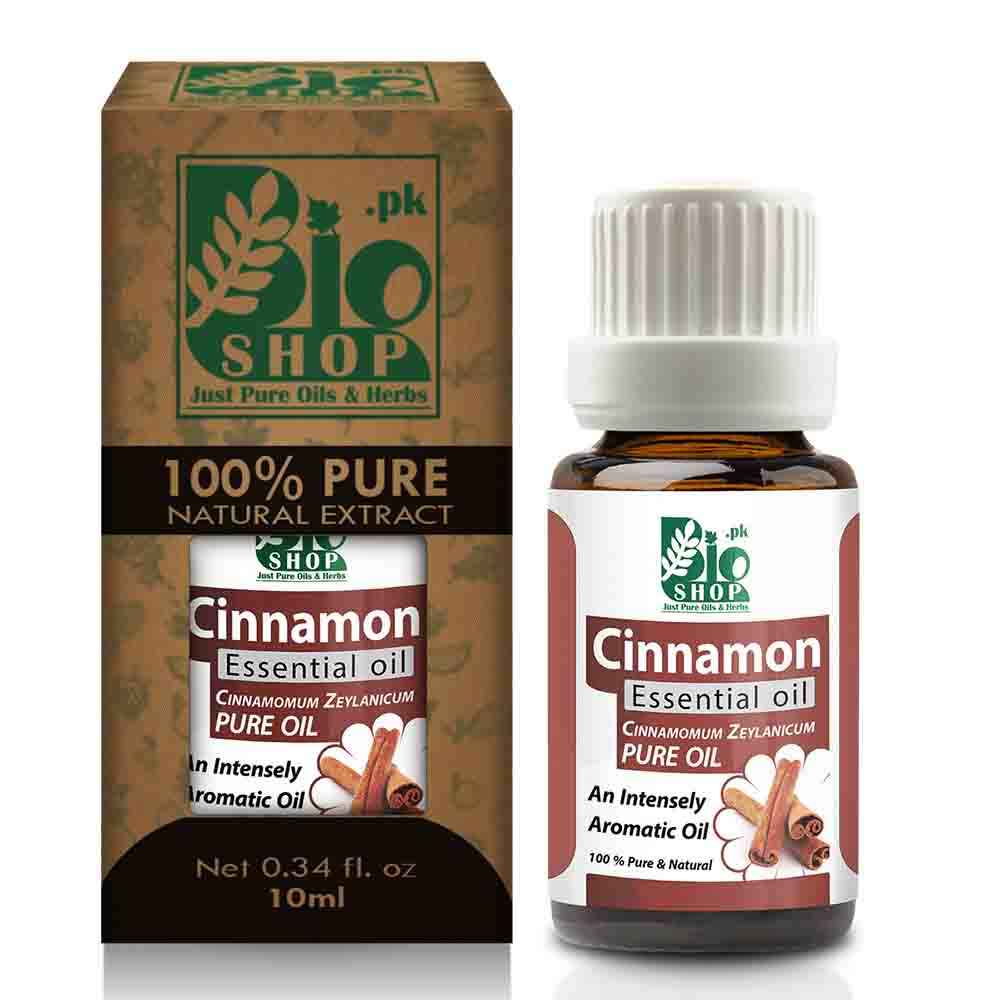
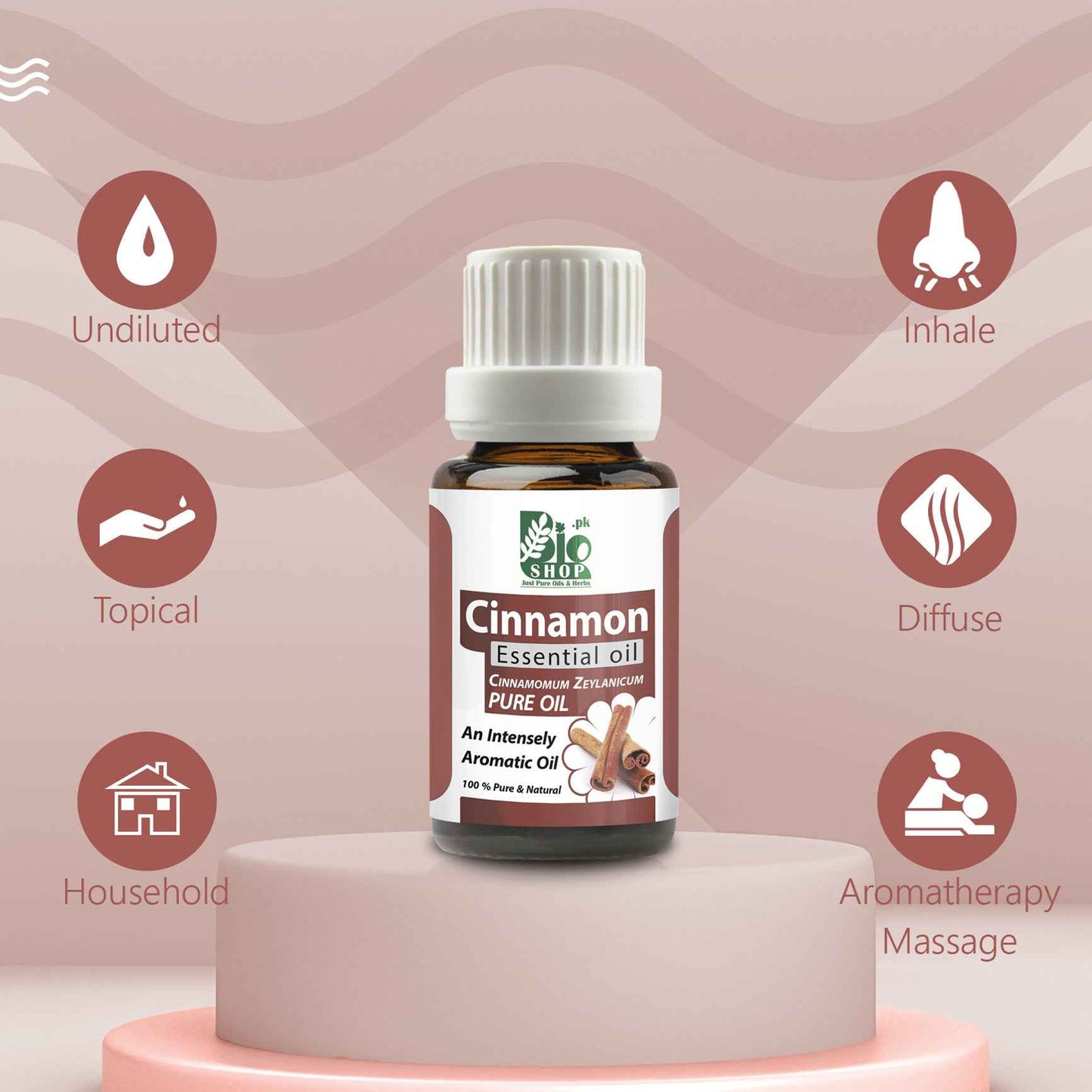
Cinnamon Essential Oil
Cinnamon Essential Oil
Olfactory Notes: Classic warm, dry, and woody spice; very powerful.
Couldn't load pickup availability
Explore
Information About Cinnamon Essential Oil
Key Features
✦ Steam-distilled from the bark of Cinnamomum verum (Ceylon Cinnamon) — the finest cinnamon species globally
✦ Dominant note of trans-cinnamaldehyde delivers intense, authentic, and diffusive warm spice
✦ Foundational spice material in oriental attars, Oud blends, chypres, and festive fragrance compositions
✦ High natural potency — effective at very low usage levels (0.1% to 0.5% in fragrance blends)
✦ Known skin sensitiser — strict IFRA limits apply; ideal for rinse-off, diffuser, candle, and non-skin-contact use
✦ Rich in cinnamaldehyde, eugenol, and linalool — complex and multidimensional spice profile
✦ Natural, vegan, and cruelty-free; sustainably sourced from Sri Lanka and South Asian cinnamon-growing regions
About Cinnamon Essential Oil
Cinnamon has been prized for thousands of years across ancient Egyptian, Persian, Arab, and South Asian cultures as both a culinary spice and a sacred aromatic substance. Cinnamon Bark Essential Oil is obtained through steam distillation of the dried inner bark of Cinnamomum verum, commonly known as Ceylon Cinnamon or True Cinnamon. Native to Sri Lanka and parts of southern India, it was historically one of the most traded and valuable commodities on the ancient spice routes. Its use in perfumery dates back to classical antiquity, where it was blended into incense, ritual oils, and royal fragrance compositions across the Arab world and the Indian subcontinent.
What distinguishes Cinnamon Bark Oil from other cinnamon-derived materials is its exceptional aromatic richness and complexity. The bark oil contains a significantly higher concentration of trans-cinnamaldehyde — typically 60 to 75 percent — compared to cinnamon leaf oil, which is dominated by eugenol. This gives bark oil its characteristic deep, warm, balsamic-spicy character that sits in marked contrast to the more medicinal, clove-like quality of the leaf variant. Even trace amounts of the bark oil assert themselves powerfully in a blend, making it one of the most impactful and economical spice materials available to formulators.
Bio Shop Pakistan supplies cosmetic-grade Cinnamon Essential Oil suitable for DIY perfumers, attar blenders, artisan soap makers, candle crafters, reed diffuser formulators, and home fragrance developers seeking an authentic, natural spice base for their creative work.
Olfactory Profile
SCENT DESCRIPTION : Cinnamon Bark Essential Oil opens with a fierce, radiant burst of warm spice — dry, woody, and almost peppery in its initial heat. The heart reveals a sweet, balsamic depth driven by cinnamaldehyde that feels simultaneously ancient and comforting, evoking freshly peeled bark in a tropical spice garden. At low diffusion, a faintly floral and phenolic undertone emerges, adding complexity that lifts the material beyond a simple kitchen spice note. It is an oil that commands a blend — assertive, rich, and deeply aromatic.
NOTE POSITION : Mid to Base
FRAGRANCE FAMILY : Oriental · Spicy · Woody-Balsamic
FACETS : Warm · Spicy · Sweet · Balsamic · Phenolic
TENACITY : Very High — 12 to 24+ hours in composition; fixative-level persistence on strip
SILLAGE : High — Projects strongly even at very low concentration; use with precision
Technical Specifications
Chemical Name : Cinnamomum verum bark oil (trans-cinnamaldehyde predominant)
CAS Number : 84649-98-9 (verify with supplier CoA)
Synonyms : Ceylon Cinnamon Bark Oil · True Cinnamon Oil · Cinnamomum zeylanicum Bark Oil
Purity : 100% pure steam-distilled essential oil (no carrier added)
Appearance : Dark yellow to amber-brown mobile liquid
Odor Threshold : Extremely low — detectable at parts per billion; use with extreme precision
Solubility : Soluble in alcohol (96% ethanol and above); insoluble in water; soluble in fixed oils
Specific Gravity : 1.010 – 1.030 at 20°C (verify with supplier)
Flash Point : Approx. 70°C to 75°C (verify with supplier CoA)
Type : Natural (steam-distilled essential oil)
⚠️ Note: CAS numbers for complex natural essential oils may vary by supplier origin and extraction method. Always cross-reference with your certificate of analysis.
Applications & Usage Guidelines
RECOMMENDED USAGE RATES
EDP (Eau de Parfum) : 0.2% – 0.5% (IFRA Category 4 limit applies)
EDT (Eau de Toilette) : 0.1% – 0.3%
Body Lotion / Cream (Leave-on) : 0.02% – 0.05% (very restricted — verify IFRA Cat. 5)
Shampoo / Body Wash (Rinse-off) : 0.05% – 0.1%
Bar Soap (Rinse-off) : 0.1% – 0.3%
Candle (Non-skin-contact) : 2% – 6%
Reed Diffuser : 5% – 15%
Incense / Dakhoon Blend : 2% – 10%
IFRA 51ST AMENDMENT LIMITS — Cinnamomum verum bark oil
⚠️ Cinnamon Bark Essential Oil is subject to strict IFRA usage restrictions due to its naturally high cinnamaldehyde content, a recognised dermal sensitiser.
IFRA Category 1 (Lip products) : 0.01%
IFRA Category 2 (Deodorant / Axilla) : 0.05%
IFRA Category 3 (Eye area / Baby leave-on) : 0.01%
IFRA Category 4 (Fine fragrance) : 0.6% (verify against current amendment)
IFRA Category 5a (Face leave-on) : 0.05%
IFRA Category 5b (Hand/body leave-on) : 0.05%
IFRA Category 6 (Mouthwash / oral) : Not permitted
IFRA Category 9 (Rinse-off hair/body) : 0.1%
IFRA Category 11a (Fabric leave-on) : 0.05%
IFRA Category 12 (Candle / non-skin) : No restriction
⚠️ Always verify current limits at ifrafragrance.org before production. IFRA limits for natural essential oils are cinnamaldehyde-content-dependent and may vary by oil batch and origin.
⚠️ EU Cosmetics Regulation: Cinnamaldehyde (present naturally in this oil) must be declared in the ingredient list when it exceeds 0.001% in leave-on products and 0.01% in rinse-off products. Label compliance is mandatory for commercial cosmetics.
IFRA & Usage Rate
RECOMMENDED USAGE RATES
EDP (Eau de Parfum) : 0.2% – 0.5% (IFRA Category 4 limit applies)
EDT (Eau de Toilette) : 0.1% – 0.3%
Body Lotion / Cream (Leave-on) : 0.02% – 0.05% (very restricted — verify IFRA Cat. 5)
Shampoo / Body Wash (Rinse-off) : 0.05% – 0.1%
Bar Soap (Rinse-off) : 0.1% – 0.3%
Candle (Non-skin-contact) : 2% – 6%
Reed Diffuser : 5% – 15%
Incense / Dakhoon Blend : 2% – 10%
IFRA 51ST AMENDMENT LIMITS — Cinnamomum verum bark oil
⚠️ Cinnamon Bark Essential Oil is subject to strict IFRA usage restrictions due to its naturally high cinnamaldehyde content, a recognised dermal sensitiser.
IFRA Category 1 (Lip products) : 0.01%
IFRA Category 2 (Deodorant / Axilla) : 0.05%
IFRA Category 3 (Eye area / Baby leave-on) : 0.01%
IFRA Category 4 (Fine fragrance) : 0.6% (verify against current amendment)
IFRA Category 5a (Face leave-on) : 0.05%
IFRA Category 5b (Hand/body leave-on) : 0.05%
IFRA Category 6 (Mouthwash / oral) : Not permitted
IFRA Category 9 (Rinse-off hair/body) : 0.1%
IFRA Category 11a (Fabric leave-on) : 0.05%
IFRA Category 12 (Candle / non-skin) : No restriction
⚠️ Always verify current limits at ifrafragrance.org before production. IFRA limits for natural essential oils are cinnamaldehyde-content-dependent and may vary by oil batch and origin.
⚠️ EU Cosmetics Regulation: Cinnamaldehyde (present naturally in this oil) must be declared in the ingredient list when it exceeds 0.001% in leave-on products and 0.01% in rinse-off products. Label compliance is mandatory for commercial cosmetics.
Blending Guide
USAGE METHOD 1 — ALCOHOL-BASED PERFUMERY
Dissolve Cinnamon Bark Oil in 96% perfumer's ethanol before adding other components. Due to its density and colour, always add it early in your blend and allow at least 48 hours of maceration before evaluation. Start at 0.1% of total formula and adjust upward carefully — it dominates quickly. Works best in oriental and spicy-woody constructions.
USAGE METHOD 2 — ATTAR AND OIL-BASED BLENDING
In fixed-oil carriers such as fractionated coconut oil, DPG, or isopropyl myristate, Cinnamon Bark Oil disperses smoothly and retains its warmth over time. For traditional mukhallat blending, introduce it as a base note anchor at 0.5% to 2% of the total oil composition. It synergises powerfully with aged Oud, white musk, and sandalwood.
USAGE METHOD 3 — CANDLE AND HOME FRAGRANCE
For candles and reed diffusers, Cinnamon Bark Oil can be used at much higher rates since skin-contact restrictions do not apply. Blend it into your fragrance oil component at 5% to 20% of the fragrance load, and test throw in your specific wax or diffuser base. It performs well in paraffin, soy, and coconut wax candles, and gives excellent cold and hot throw in festive seasonal blends.
BEST PAIRINGS
Oud Oil / Oud Accord → Deepens the resinous character; classic mukhallat foundation
Clove Bud EO → Amplifies spice intensity; adds medicinal phenolic edge — use both sparingly
Cardamom Essential Oil → Brightens and lifts the spice; adds fresh green-herbal contrast
Sandalwood (Mysore / Synthetic)→ Softens and creams the spice into a warm, smooth oriental base
Rose Absolute / Rose Attar → Creates the iconic rose-oud-cinnamon heart of classic Pakistani attars
Benzyl Benzoate / Benzoin → Adds balsamic sweetness and smooths raw spice edges
Frankincense (Boswellia) → Adds sacred, resinous, smoky dimension in incense-style blends
Vanilla / Ethyl Vanillin → Turns the blend gourmand and cosy; popular in festive candle fragrances
Cedarwood Atlas EO → Grounds the spice in a dry, woody, masculine base
Black Pepper Essential Oil → Adds peppery brightness and a cool dry note that contrasts the warmth
AVOID
Combining at high rates with other strong sensitisers (e.g. clove at high %) in the same leave-on formula — cumulative sensitisation risk. Avoid blending with citrus EOs intended for UV-exposure applications without full photosensitisation risk assessment.
Perfumer's Note
There is a moment in every oriental blend where you need heat — not synthetic warmth, not approximate spice, but true, raw, almost dangerous heat. That is where Cinnamon Bark Oil steps in. I treat it as one of the most potent tools in the spice arsenal, not a note to casually add but one to deliberately deploy. In our attar and mukhallat tradition, cinnamon bark has been used for centuries as the bridge between rose and Oud — it softens the earthiness of Oud while elevating the sweetness of rose without becoming candy-like. It has that rare quality of being ancient and alive simultaneously. I use it like a spice chef uses chilli — with total respect and precision.
ADVANCED TIP
To tame the raw sharpness of Cinnamon Bark Oil in fine fragrance applications while preserving its warmth, try pre-blending it 1:3 with benzyl benzoate before introducing it to your alcohol-based formula. The benzyl benzoate acts as a fixative extender and softens the aggressive cinnamaldehyde edge, allowing the sweeter, more balsamic facets to emerge more clearly. This technique is widely used in classical oriental perfumery construction and is particularly effective when building a warm spice base alongside sandalwood and musks. Your fragrance will smell like cinnamon — but richer, rounder, and more wearable.
Safety & Storage
Physical State : Dark amber to yellow-brown mobile liquid at room temperature
Skin Safety : Known dermal sensitiser — strictly follow IFRA limits; avoid undiluted skin contact; patch test mandatory
Eye Contact : Severe irritant — avoid all contact; flush immediately with clean water for 15 minutes if contact occurs; seek medical attention
Ingestion : Not for internal use under any circumstances; keep away from children
Ventilation : Use in a well-ventilated space; prolonged inhalation of concentrated vapour may cause irritation
Storage : Store in a cool, dark place away from direct sunlight and heat; keep tightly sealed when not in use
Shelf Life : 2 to 3 years from manufacture when stored correctly; cinnamaldehyde may polymerise and darken with age and oxidation
Container : Store in amber or dark glass; avoid prolonged contact with plastic containers
Flammability : Combustible — flash point approx. 70°C to 75°C; keep away from open flames during handling
⚠️ Cinnamaldehyde, the primary constituent, is an EU-listed fragrance allergen. Declaration on cosmetic labels is required above threshold concentrations. Always review your regional cosmetics regulation compliance requirements before commercial use.
FAQ
Q: Can I use Cinnamon Bark Essential Oil directly on my skin?
A: No. It must always be diluted and used within IFRA limits. Undiluted application causes irritation, sensitisation, and potential chemical burns. Patch testing is mandatory even in diluted formulations.
Q: What is the difference between Cinnamon Bark Oil and Cinnamon Leaf Oil?
A: Bark oil is dominated by cinnamaldehyde (60 to 75%) and has a deep, warm, intensely spicy aroma — it is stronger and more restricted in skin applications. Leaf oil is dominated by eugenol and smells more medicinal and clove-like. For fine fragrance and attars, bark oil is the preferred choice.
Q: What is the maximum safe usage level for Cinnamon Bark Oil in a spray perfume?
A: Under IFRA 51st Amendment Category 4, the limit is approximately 0.6% in fine fragrance — but always verify the most current limit at ifrafragrance.org, as limits depend on the cinnamaldehyde content of your specific batch. Formulate conservatively and test on skin with extended wear evaluation.
Q: Is Cinnamon Bark Essential Oil suitable for candles and reed diffusers?
A: Yes — it is one of the best materials for home fragrance. No skin-contact IFRA restrictions apply, so you have much greater formulation freedom. It delivers outstanding hot throw in candles and performs beautifully in seasonal and oriental-themed diffuser blends.
Q: How does Cinnamon Bark Oil compare to synthetic cinnamaldehyde?
A: Pure synthetic trans-cinnamaldehyde is a single molecule — sharp, linear, and very intense. Cinnamon Bark Essential Oil is a complex natural matrix with cinnamaldehyde as the dominant note alongside eugenol, linalool, and other minor aromatic compounds, giving it far greater depth, roundness, and naturalness. For formulations where a natural claim is important or where full olfactive complexity is desired, the essential oil is preferable — though both are subject to IFRA sensitisation limits since they contain cinnamaldehyde.
Where Can You Safely Use Cinnamon Essential Oil?
Discover how Cinnamon Essential Oil performs across different applications—rated for safety, stability, and effectiveness.