


Bio Shop
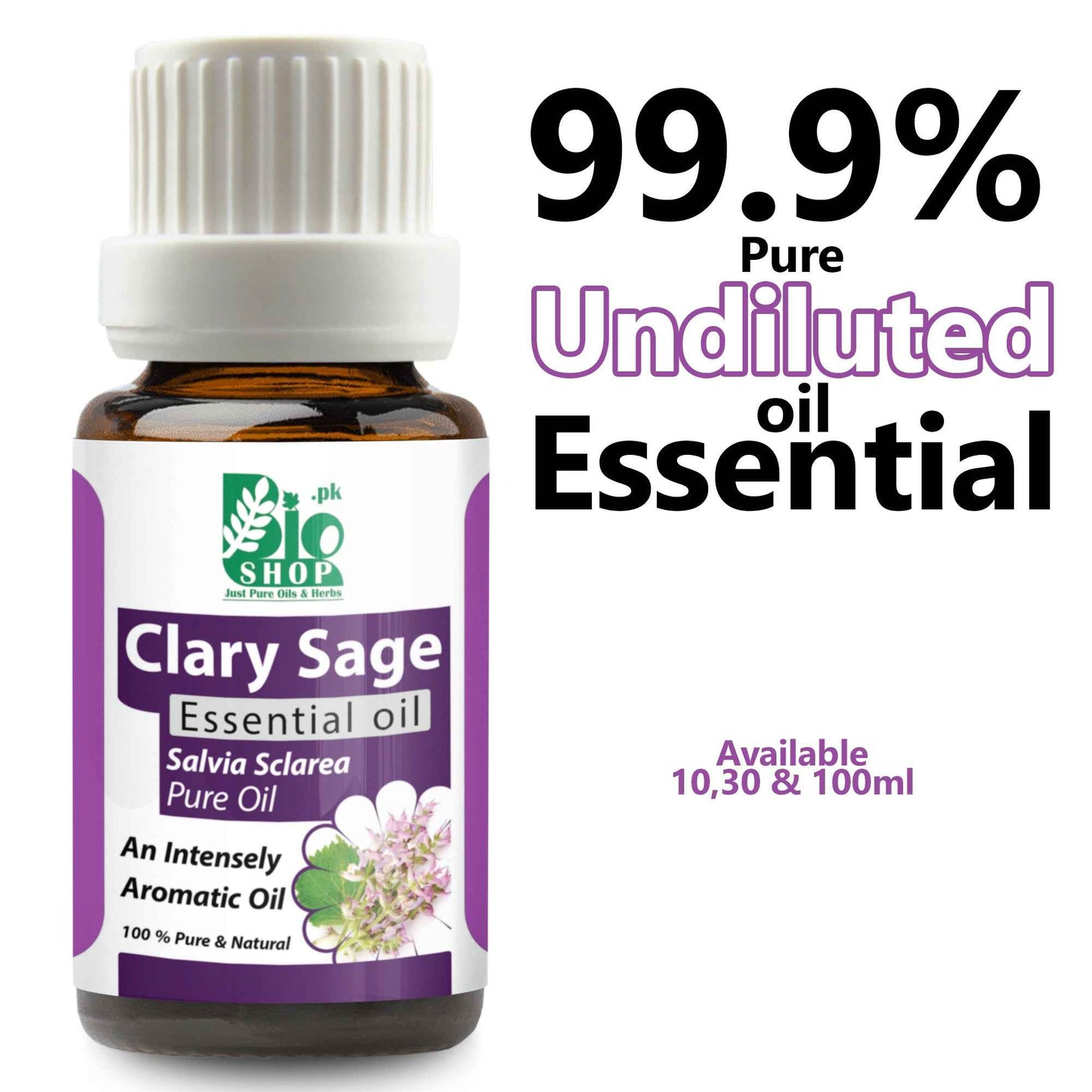
Clary Sage Essential Oil
Clary Sage Essential Oil
Olfactory Notes: Sweet, herbal, and tea-like with a slight "ambergris" facet.
Couldn't load pickup availability


Explore
Information About Clary Sage Essential Oil
Key Features
✦ Steam-distilled from Salvia sclarea flowering tops — 100% natural, unadulterated essential oil
✦ Rich in linalyl acetate (45–75%) and linalool (10–20%) — key components driving its floral-herbaceous character
✦ Classic perfumery ingredient for fougère, chypre, and oriental accords — used in iconic masculine and unisex fragrances
✦ Reported sebum-regulating and scalp-balancing properties — valued in hair care and facial oil formulations
✦ Bridges top and heart notes in blends — enhances diffusion and softens sharp synthetics
✦ Vegan and cruelty-free — suitable for natural and clean-label cosmetic formulations
✦ Approved for cosmetic use under IFRA guidelines with category-specific concentration limits
About Clary Sage Essential Oil
Clary Sage Essential Oil is obtained by steam distillation of the flowering tops and foliage of Salvia sclarea, a robust biennial herb in the mint family. Cultivated predominantly in France, Bulgaria, Russia, and Morocco, clary sage has been used since the Middle Ages for its medicinal, culinary, and aromatic properties. The name "clary" derives from the Latin "clarus," meaning clear — a reference to its historical use in eye treatments. Its essential oil emerged as a prized perfumery material during the early twentieth century, finding its way into some of the most enduring classic fragrances in history.
What sets Clary Sage apart from common sage is its linalyl acetate dominance — a fruity, floral ester also found in lavender and bergamot — balanced by earthy sesquiterpenes, sclareol, and trace musks that give it a warm, almost amber-like drydown. This unique chemical fingerprint makes it simultaneously fresh and deep, sharp and smooth. Its natural complexity allows a single drop to add layers to a composition that would otherwise feel flat or one-dimensional.
Bio Shop Pakistan supplies cosmetic-grade Clary Sage Essential Oil suitable for perfumers, aromatherapists, hair care formulators, skincare makers, soap crafters, and candle artisans seeking a versatile natural material with proven performance across multiple product categories.
Olfactory Profile
SCENT DESCRIPTION : Clary Sage opens with a crisp, herbal freshness — green and slightly camphorous — that quickly softens into a warm, floral heart with lavender-like facets and a hint of fruity sweetness from its high linalyl acetate content. As it dries down, an earthy, tobacco-like muskiness emerges alongside subtle woody and balsamic undertones reminiscent of ambergris. The overall effect is simultaneously fresh, sensual, and grounding — a rare combination that perfumers prize for its bridging quality. It possesses a slightly intoxicating, wine-like character that distinguishes it from all other sage varieties.
NOTE POSITION : Top-Mid
FRAGRANCE FAMILY : Herbal · Floral · Earthy-Musky
FACETS : Herbaceous · Floral · Earthy · Musky · Sweet-Balsamic
TENACITY : Medium — 4 to 8 hours on strip; moderate substantivity in formulation
SILLAGE : Medium — radiates pleasantly at body temperature, diffuses well in alcohol-based fine fragrance without overwhelming
Technical Specifications
CHEMICAL NAME : Salvia sclarea flower/leaf oil
CAS NUMBER : 8016-63-5
SYNONYMS : Clary Oil, Clary Sage Oil, Muscat Sage Oil, Salvia sclarea herb oil
PURITY : 100% pure — no carriers, no diluents (cosmetic grade)
APPEARANCE : Clear to pale yellow mobile liquid
ODOR THRESHOLD : Approximately 0.05–0.1 ppm (very low — potent at trace levels)
SOLUBILITY : Soluble in alcohol and fixed oils; insoluble in water; dispersible with emulsifiers
SPECIFIC GRAVITY : 0.893–0.920 g/cm³ at 20°C
FLASH POINT : Approximately 68°C (154°F) — verify with supplier CoA
TYPE : Natural — steam-distilled essential oil
ORIGIN : France / Bulgaria / Russia / Morocco (batch-dependent — verify with supplier)
REFRACTIVE INDEX : 1.457–1.473 at 20°C
Applications & Usage Guidelines
FINE FRAGRANCE : ★★★★★
Clary Sage is a classical fine fragrance ingredient found in iconic fougère and chypre compositions. It anchors herbaceous accords, softens sharp citrus top notes, and adds naturalistic warmth to the heart. An indispensable material for formulators working on masculine, unisex, or Mediterranean-inspired perfumes.
ATTAR & ORIENTAL BLENDING : ★★★★☆
In attar and oriental formulations, Clary Sage contributes an earthy-musky depth that complements oud, sandalwood, and ambergris materials. Its balsamic drydown harmonizes well with animalic and resinous bases. Use sparingly to prevent the herbal note from overpowering warm oriental accords.
COSMETICS & SKINCARE : ★★★★☆
Valued in facial oils, serums, and scalp treatments for its reported sebum-regulating, anti-inflammatory, and soothing properties. Particularly popular in formulations targeting oily or combination skin and dandruff-prone scalps. Must remain within IFRA concentration limits for leave-on applications due to linalool allergen content.
HAIR CARE : ★★★★☆
Clary Sage is a popular addition to scalp serums, hair oils, and conditioning treatments. It is reputed to balance scalp sebum production, promote a healthy scalp environment, and impart a clean herbal fragrance. Combines well with rosemary, cedarwood, and lavender in hair care blends.
HOME FRAGRANCE : ★★★☆☆
Performs well in reed diffusers and room sprays where its fresh-herbal-musky character adds sophistication. In candles, the top note volatilizes well in soy and coconut wax. Avoid excessive usage rates in candles as high linalyl acetate content can affect combustion behavior at concentrations above 8%.
IFRA & Usage Rate
RECOMMENDED USAGE RATES
EDP (Eau de Parfum) : 3–8%
EDT (Eau de Toilette) : 2–5%
Body Lotion / Cream : 0.5–1%
Shampoo / Body Wash : 0.5–2%
Cold Process Soap : 1–3%
Candle (soy/coconut wax) : 3–8%
Reed Diffuser : 10–20%
Hair Oil / Scalp Serum : 0.5–2%
Facial Oil / Serum : 0.2–0.5%
IFRA 51ST AMENDMENT LIMITS (Key Categories)
⚠️ Clary Sage Essential Oil contains linalool and linalyl acetate — both declared EU cosmetic allergens above 0.001% (leave-on) and 0.01% (rinse-off). Labeling is required at these thresholds in products sold in the EU or under EU-aligned regulation.
IFRA Category 3 (Fine Fragrance) : Approximately 2.5% — verify at ifrafragrance.org
IFRA Category 4 (Eau de Toilette) : Approximately 4.5% — verify with current amendment
IFRA Category 5A (Body Lotion, Face Cream) : Approximately 0.4% — verify with current amendment
IFRA Category 5B (Hand Cream) : Approximately 0.7% — verify with current amendment
IFRA Category 9 (Shampoo, Body Wash) : Approximately 5.0% — verify with current amendment
IFRA Category 10A (Soap, Detergent) : Approximately 5.0% — verify with current amendment
IFRA Category 11A (Non-skin-contact) : Generally unrestricted — verify with current amendment
⚠️ IFRA limits are based on the cumulative linalool and linalyl acetate content of the specific batch. Always obtain constituent analysis (GC-MS report) from your supplier and calculate actual IFRA compliance before finalizing formulations.
Blending Guide
USAGE METHOD 1 — DIRECT ADDITION TO ALCOHOL BASE
Add Clary Sage to your perfume alcohol after dissolving all synthetic components. Its natural constituents can cloud or slightly haze the solution initially — allow 24–48 hours of maceration and the blend will typically clarify. Start at 1% and titrate upward to avoid an overly herbaceous opening.
USAGE METHOD 2 — PRE-BLEND WITH FIXED OIL (FOR COSMETICS)
For leave-on cosmetic applications, pre-blend Clary Sage into a carrier oil such as jojoba, rosehip, or marula at a 2–3% dilution before incorporating into your final formulation. This ensures even dispersion and reduces the risk of uneven concentration in finished products.
USAGE METHOD 3 — ANCHORING IN WAX-BASED PRODUCTS
In candles and solid perfumes, add Clary Sage to melted wax at 65–70°C — just before pouring. Adding at higher temperatures accelerates volatile loss. Pair with a fixative such as cedarwood or benzoin resinoid to extend the herbal note's burn performance.
BEST PAIRINGS
Lavender True → Creates a calming, herbal-floral accord — the backbone of classic fougère
Bergamot → Lifts the earthy weight and adds citrus-fresh brightness
Cedarwood (Atlas) → Grounds the blend with dry woody depth — excellent for masculine colognes
Geranium Bourbon → Adds rosy-green complexity and strengthens floral facets
Sandalwood (Mysore or synthetic) → Smooths the musk and extends the drydown significantly
Vetiver → Amplifies the earthy, smoky dimension — powerful in oriental and chypre
Ylang Ylang → Adds exotic floral heaviness — use at 1:3 ratio (ylang:clary sage)
Frankincense (Boswellia) → Creates a meditative, resinous-herbal accord for spiritual blends
Patchouli → Deepens the base — enhances the earthy musk of the clary drydown
AVOID
Clary Sage can clash with very sharp green materials such as violet leaf absolute or galbanum at high concentrations — the competing green facets create an unpleasant vegetal sharpness. Also avoid combining with high-dose camphor materials or eucalyptus as the herbal conflict becomes medicinal rather than aromatic.
Perfumer's Note
When I first worked with Clary Sage seriously, I made the mistake most beginners make — I treated it as a simple lavender substitute. It is not. Lavender is linear; Clary Sage is dimensional. Its linalyl acetate dominance gives it an almost fruity, white wine quality in the top, but underneath that is a sclareol base note that smells faintly of ambergris — earthy, warm, and slightly animalic. That's the magic. You're getting a natural material that bridges the fresh-herbal world and the musky-resinous world in a single drop. In fougère construction, it is the material that makes the accord feel human and worn rather than clinical. I use it specifically when I need a composition to feel like it belongs on skin rather than on paper.
ADVANCED TIP: Try building a micro-accord of Clary Sage (4 parts), Linalool (2 parts), and Coumarin (1 part) as a fougère heart module. This combination amplifies the herbaceous-sweet facets of the clary while the coumarin smooths the earthy drydown into something almost tobacco-like. Add Ambroxan or Iso E Super at 0.5–1% on top of this accord and you have a compact, natural-feeling masculine heart that performs well in both EDPs and body care applications. It is far more convincing than using lavender alone.
Safety & Storage
PHYSICAL STATE : Clear to pale yellow mobile liquid at room temperature
SKIN SAFETY : Dilute before skin application — do not use undiluted on skin; patch test recommended; observe IFRA category limits
EYE CONTACT : Avoid — if contact occurs, rinse thoroughly with clean water for 15 minutes and seek medical advice
INGESTION : Not for internal use — keep out of reach of children; contact a poison control center if ingested
VENTILATION : Use in well-ventilated areas; prolonged inhalation of concentrated vapor may cause headache or dizziness
SENSITIZATION : Contains linalool and linalyl acetate — known skin sensitizers at high concentrations; EU allergen labeling required above threshold
STORAGE : Store in tightly sealed amber or dark glass bottles away from heat, light, and moisture; ideal storage between 10–20°C
SHELF LIFE : 2–3 years unopened from date of distillation; 12–18 months once opened; refrigeration extends stability
CONTAINER : Dark glass preferred; HDPE acceptable; avoid PET — essential oils can permeate or interact with low-grade plastics
FLAMMABILITY : Combustible liquid — flash point approximately 68°C; keep away from open flame and ignition sources
FAQ
Q: Can I apply Clary Sage Essential Oil directly to my skin?
A: No — always dilute in a carrier oil at 0.5–2% before skin application. Undiluted essential oils can cause sensitization or irritation. Patch test on a small area before full use.
Q: Is Clary Sage the same as common sage or white sage?
A: No — all three are different species. Clary Sage is Salvia sclarea; common sage is Salvia officinalis (higher in thujone and more restricted); white sage is Salvia apiana. Clary Sage is the safest and most widely used of the three in cosmetics and perfumery.
Q: What is Clary Sage used for in hair care formulations?
A: It is commonly used in scalp serums and hair oils for its reported ability to balance sebum production and support scalp health. Use at 0.5–1.5% in hair oils and 0.5–1% in rinse-off shampoo formulations, staying within IFRA limits.
Q: Does Clary Sage contain any restricted allergens?
A: Yes — it contains linalool and linalyl acetate, both of which are listed EU cosmetic allergens. Products sold above the 0.001% (leave-on) or 0.01% (rinse-off) threshold must list these on the ingredient label in EU-compliant markets.
Q: How does Clary Sage Essential Oil compare to Clary Sage Absolute or synthetic linalyl acetate?
A: Clary Sage Essential Oil has a complex, rounded character that the absolute intensifies but also makes heavier and more resinous. Synthetic linalyl acetate isolates only one facet — the fruity-floral ester note — without the earthy sclareol drydown or full herbal complexity. For perfumery, the essential oil delivers the most naturalistic and multidimensional result; synthetics are used for cost control or specific accord construction.
Where Can You Safely Use Clary Sage Essential Oil?
Discover how Clary Sage Essential Oil performs across different applications—rated for safety, stability, and effectiveness.


