Bio Shop
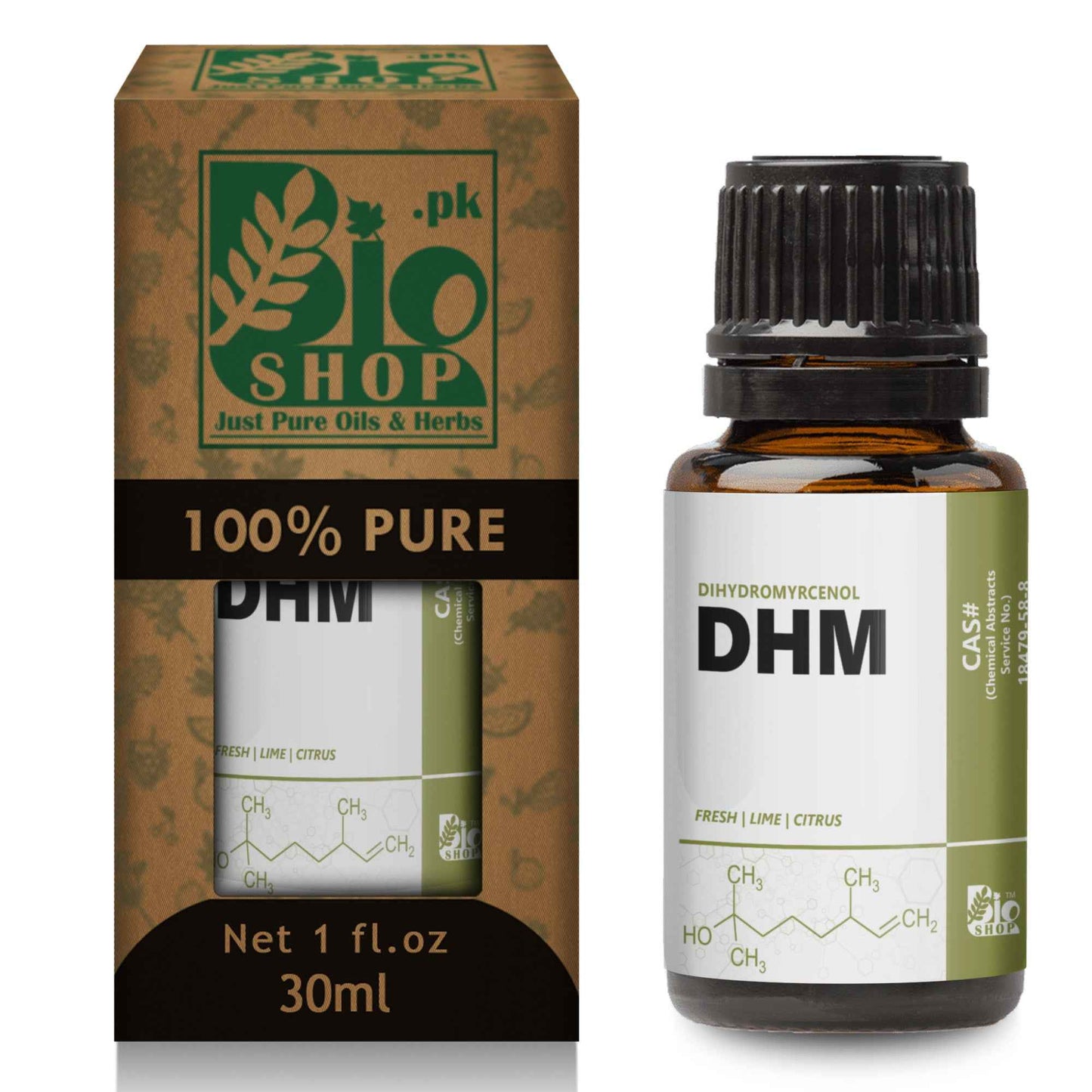
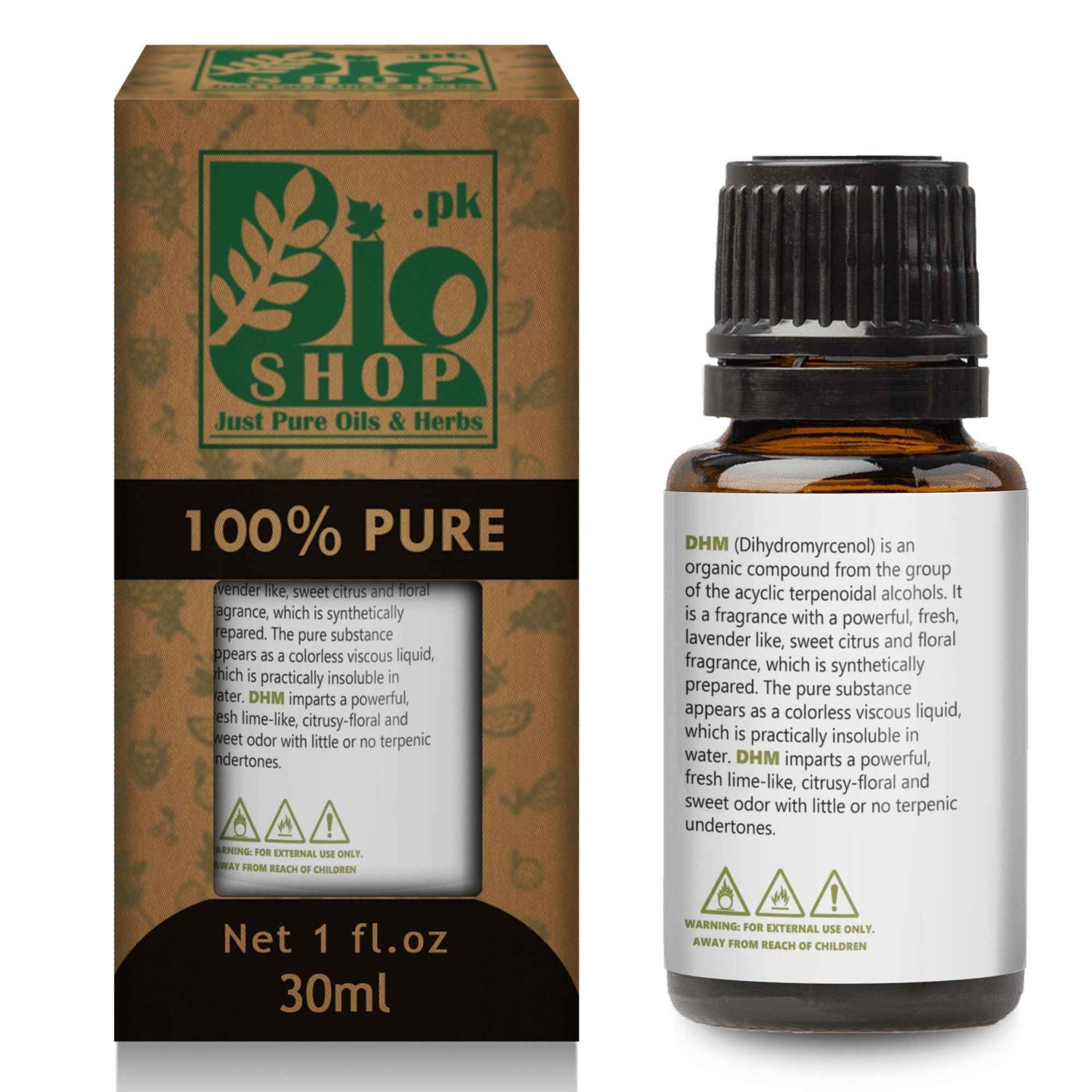
DHM (Dihydromyrcenol)
DHM (Dihydromyrcenol)
Olfactory Notes: Powerful fresh, citrusy, and lavender-like note.
Couldn't load pickup availability
Explore
Information About DHM (Dihydromyrcenol)
Key Features
✦ Dihydromyrcenol is a synthetic terpene alcohol delivering an intensely fresh, citrus-lime, and clean marine character — one of the most recognizable scent profiles in modern perfumery.
✦ Among the highest-volume aroma chemicals produced globally — the foundational fresh note in sport colognes, fougères, and aquatic fragrances since the 1980s.
✦ Exceptional organ strength and diffusion — a small percentage creates a bold, expansive fresh accord with very strong projection and lift.
✦ Highly versatile across fine fragrance, functional fragrance, personal care, and home fragrance — a true industry workhorse.
✦ Key ingredient in iconic compositions including Davidoff Cool Water and numerous sport and fresh masculine fragrances worldwide.
✦ Vegan and cruelty-free — produced synthetically from myrcene with no animal or endangered botanical sources involved.
✦ Supplied at 98% minimum purity — cosmetic and fragrance grade, suitable for beginner and professional formulators alike.
About DHM (Dihydromyrcenol)
Dihydromyrcenol is a synthetic aroma chemical that emerged from terpene chemistry research in the mid-20th century. It is produced by the catalytic hydrogenation of myrcene, a naturally occurring terpene found in hops, thyme, and bay leaves, resulting in a stable, odor-stable alcohol with remarkable fragrance properties. By the 1980s and 1990s, DHM had become central to a new wave of fresh, aquatic, and sport fragrances that redefined contemporary masculinity in perfumery. Its rise tracks directly with the global explosion of fresh citrus-aquatic colognes — a category it helped define and continues to dominate.
What distinguishes Dihydromyrcenol from most synthetic aroma chemicals is the combination of extraordinary diffusion power with a clean, non-offensive character. Many powerful synthetics smell harsh or synthetic at elevated concentrations. DHM, by contrast, remains transparent and wearable even at high dose — it amplifies without distorting. This makes it equally useful as a top note driver in fine fragrance and as a freshness booster in functional applications where organ strength is critical at low inclusion rates. Its compatibility across citrus, floral, woody, musky, and aquatic registers gives it a flexibility rarely found in a single molecule.
Bio Shop Pakistan supplies cosmetic-grade Dihydromyrcenol suitable for DIY perfumers, attar blenders, functional fragrance developers, and cosmetic formulators across Pakistan who require a reliable, high-purity fresh base material for professional formulation work.
Olfactory Profile
SCENT DESCRIPTION : Dihydromyrcenol opens with a sharp, transparent burst of fresh citrus-lime paired with a cool, slightly metallic marine quality that is immediately recognizable from sport colognes and clean laundry products. As it settles, a subtle terpenic woody warmth emerges underneath that anchors the freshness without pulling it toward any particular floral or gourmand direction. The overall impression is clean, expansive, and modern — evoking crushed lime peel, sea breeze, and freshly laundered linen in the same breath. At higher concentrations it develops an almost cologne-like intensity that few other single materials can replicate.
NOTE POSITION : Top to Top-Mid
FRAGRANCE FAMILY : Fresh Citrus, Aquatic/Marine, Fougère
FACETS : Fresh · Citrus-Lime · Marine · Clean · Terpenic
TENACITY : Medium-High — detectable on skin for 4 to 6 hours; significantly longer on fabric and paper
SILLAGE : High — strong diffusion and projection, particularly pronounced in the first 1 to 2 hours after application
Technical Specifications
Chemical Name : 2,6-Dimethyl-7-octen-2-ol
CAS Number : 18479-58-8
Synonyms : DHM, 2,6-Dimethyloct-7-en-2-ol, Dihydromyrcerol
Purity : 98% minimum (fragrance and cosmetic grade)
Appearance : Colorless to very pale yellow clear mobile liquid
Odor Threshold : Approximately 6 to 10 ppb — very low, indicating high organ strength
Solubility : Freely soluble in alcohol, IPM, and most fragrance solvents; slightly soluble in water
Specific Gravity : 0.838 – 0.848 g/mL at 20°C
Flash Point : Approximately 82°C (180°F)
Type : Synthetic — terpene alcohol produced by hydrogenation of myrcene
Applications & Usage Guidelines
Fine Fragrance ★★★★★
DHM is the cornerstone of fresh masculine and unisex fine fragrance construction. It builds the citrus-lime core of colognes, sport fragrances, fougères, and aquatics with speed and efficiency. Use at 5 to 12% in EDP and 8 to 15% in EDT for a crisp, diffusive, and long-lasting fresh opening that sets up the entire composition.
Attar and Oriental Blending ★★★☆☆
DHM is not a traditional attar ingredient but can be used strategically to modernize heavy oriental compositions. A micro-dose of 0.5 to 2% in oud, amber, or musk blends introduces a clean, contemporary freshness that prevents heaviness without displacing the traditional character. Use with restraint as DHM dominates easily at higher doses.
Functional Fragrance ★★★★★
Among the most cost-effective materials for functional fragrance in shampoos, body washes, fabric softeners, and household cleaners. Its very low odor threshold means it delivers strong fresh impact at minimal inclusion rates, making it essential for budget-efficient functional formulation without sacrificing scent quality.
Cosmetics ★★★★☆
Performs well in body lotions, creams, and deodorant formulations where a fresh, clean character is desired. DHM is chemically stable in most emulsion systems and maintains its freshness through standard cosmetic processing. Use within recommended rates and pre-dilute in a carrier for best dispersion in water-based systems.
Home Fragrance ★★★★★
Excellent in reed diffusers and wax melts where its high volatility and strong diffusion create an immediately impactful fresh room scent. Works very well as the fresh backbone in cleaning product fragrances, linen sprays, and fabric care compositions, where freshness perception is directly linked to product quality perception.
IFRA & Usage Rate
RECOMMENDED USAGE RATES
Application : Suggested Rate
EDP : 5 – 12%
EDT : 8 – 15%
Body Lotion/Cream : 0.5 – 2%
Shampoo/Body Wash : 0.5 – 1.5%
Bar Soap : 1 – 3%
Candle : 5 – 10%
Reed Diffuser : 10 – 20%
Fabric Softener : 0.3 – 1%
IFRA 51st AMENDMENT STATUS
Dihydromyrcenol is not listed as a restricted or prohibited ingredient under the IFRA 51st Amendment. No category-specific IFRA usage limits apply to this material. Standard good manufacturing practice and safe usage rate guidelines should be followed based on application type and skin contact level.
⚠️ Avoid undiluted application directly onto skin. Always dilute to final usage concentration before skin contact. Perform a patch test when formulating for sensitive skin types. Keep away from eyes and mucous membranes at all times.
⚠️ As a combustible liquid with a flash point of approximately 82°C, exercise standard precautions during storage and handling. Keep away from open flames and heat sources.
Blending Guide
Method 1 — Fresh Cologne Accord
Combine DHM at 8 to 12% with a bergamot or lime essential oil, a clean musk such as Galaxolide or Habanolide, and a supporting touch of lavender absolute or lavender essential oil. This three-element framework forms the complete backbone of a classic fresh fougère or aquatic cologne. DHM provides transparent lift and diffusion, citrus adds natural brightness, and the musk anchors the dry-down for longevity.
Method 2 — Functional Fragrance Freshness Booster
In shampoos, body washes, or fabric softeners, add DHM at 0.5 to 1.5% into a pre-built simple citrus or floral accord. DHM's exceptional organ strength significantly amplifies the overall fresh impression on application and through the rinse, raising perceived quality without requiring large additions of more expensive naturals or specialty materials.
Method 3 — Oriental Composition Modernizer
In an oud, amber, or heavy oriental blend, introduce DHM at 0.5 to 1% as a precision tool for contemporary lift. This micro-dose adds a transparent freshness that prevents the composition from reading as dated or oppressively heavy. Use cautiously — DHM is dominant and will unbalance a traditional composition if overdosed above 1 to 2%.
BEST PAIRINGS
Linalool → Softens the sharp lime edge and adds transparent floral warmth without competing
Bergamot EO → Reinforces citrus brightness with natural complexity and realistic freshness
Lavender EO → Classic fougère pairing — aromatic, fresh, and immediately masculine
Iso E Super → Contributes woody, smoky depth with excellent tenacity as a base support
Hedione → Adds transparent jasmine lift and magnifies overall diffusion and bloom
Galaxolide → Musky anchor that extends DHM's fresh character deep into the dry-down
Ambroxan → Clean amber warmth that grounds citrus freshness with modern elegance
Calone → Amplifies marine and aquatic quality for powerful ozonic or oceanic accords
AVOID
Heavily phenolic materials such as eugenol or high-phenol clove compositions — these create an incongruent fresh-spicy clash with DHM's clean profile. Also avoid stacking DHM at high percentages alongside Calone or other powerful ozonic materials simultaneously. Over-saturation of the fresh register using multiple strong fresh materials creates a harsh, synthetic aquatic impression that is difficult to correct without reformulation.
Perfumer's Note
I have reached for Dihydromyrcenol more consistently than almost any other single aroma chemical in my work. Its appeal is its democratic quality — it performs with equal reliability for someone building their first cologne and for an experienced formulator constructing a layered multi-accord composition. The insight most beginners miss is that DHM is not purely a top note material. At very low doses within base-heavy oriental or amber blends, it becomes almost imperceptible as an individual scent yet transforms the entire composition — elevating it, brightening it, and giving it a modernity that feels felt rather than smelled. That invisible freshness-lifting function is one of the most valuable tools in a perfumer's arsenal.
ADVANCED TIP — When using DHM in emulsion-based cosmetics such as lotions or creams, pre-dilute it at 10% concentration in IPM (Isopropyl Myristate) or DPG before adding to the formulation. This dramatically improves dispersion uniformity and prevents the separation artifacts that can occur when adding neat aroma chemicals to water-based systems. For minimal fragrance compositions, try a base of DHM and Iso E Super at a 3:1 weight ratio anchored with a single clean musk — this two-material backbone alone forms a fully wearable modern fresh-woody fragrance that demonstrates how much performance can be achieved with structural simplicity.
Safety & Storage
Physical State : Clear colorless to very pale yellow mobile liquid at room temperature
Skin Safety : Safe at recommended usage rates; undiluted contact may cause irritation or sensitization in sensitive individuals; always dilute before skin application
Eye Contact : Irritant — avoid direct contact; if contact occurs flush immediately with cool running water for a minimum of 15 minutes and seek medical advice if irritation does not resolve
Ingestion : Not for consumption — keep out of reach of children; if ingested do not induce vomiting and contact a physician or poison control center immediately
Ventilation : Work in a well-ventilated area; avoid prolonged or repeated inhalation of concentrated vapor particularly in enclosed workspaces
Storage : Store tightly sealed away from heat, direct light, and humidity; recommended storage temperature 15 to 25°C in a cool, dark location
Shelf Life : 24 to 36 months from manufacture date when stored correctly under recommended conditions
Container : Store in original HDPE or glass container; avoid prolonged contact with PVC, low-density polyethylene, or soft plastics which may be affected by solvent action
Flammability : Combustible liquid — flash point approximately 82°C; keep away from open flames, sparks, static ignition sources, and temperatures approaching or exceeding flash point
FAQ
Q: What does Dihydromyrcenol actually smell like?
A: DHM has a powerful fresh, citrus-lime, and clean marine character. It is the signature freshness in sport colognes and laundry-fresh products. The impression is crisp, transparent, and expansive rather than sweet or floral.
Q: How much DHM should I use in a cologne or perfume?
A: For EDT use 8 to 15%. For EDP use 5 to 12%. DHM is a high-impact material so always start at the lower end of the range and adjust upward once you evaluate the total formula balance.
Q: Can beginners use DHM or is it only for advanced formulators?
A: DHM is one of the most beginner-friendly aroma chemicals available. It blends easily, smells clean at a wide range of doses, and produces immediate results. It is an ideal starting material for anyone learning fresh fragrance construction.
Q: Is DHM safe to use in soap and shampoo?
A: Yes. DHM performs well in bar soap at 1 to 3% and in shampoo and body wash at 0.5 to 1.5%. It maintains its fresh character through saponification and is stable in surfactant systems. Always stay within safe usage limits for rinse-off skin contact products.
Q: How does DHM compare to natural lime or citrus essential oils?
A: They serve different purposes rather than being direct replacements. Natural lime and bergamot oils provide realistic, complex citrus character but fade quickly due to their volatile top-note composition. DHM provides longer-lasting, significantly stronger fresh diffusion and holds the freshness signature through the dry-down. Professional perfumers typically blend both — the natural oil for character and authenticity, DHM for performance and longevity.
Where Can You Safely Use DHM (Dihydromyrcenol)?
Discover how DHM (Dihydromyrcenol) performs across different applications—rated for safety, stability, and effectiveness.
Perfect