Bio Shop
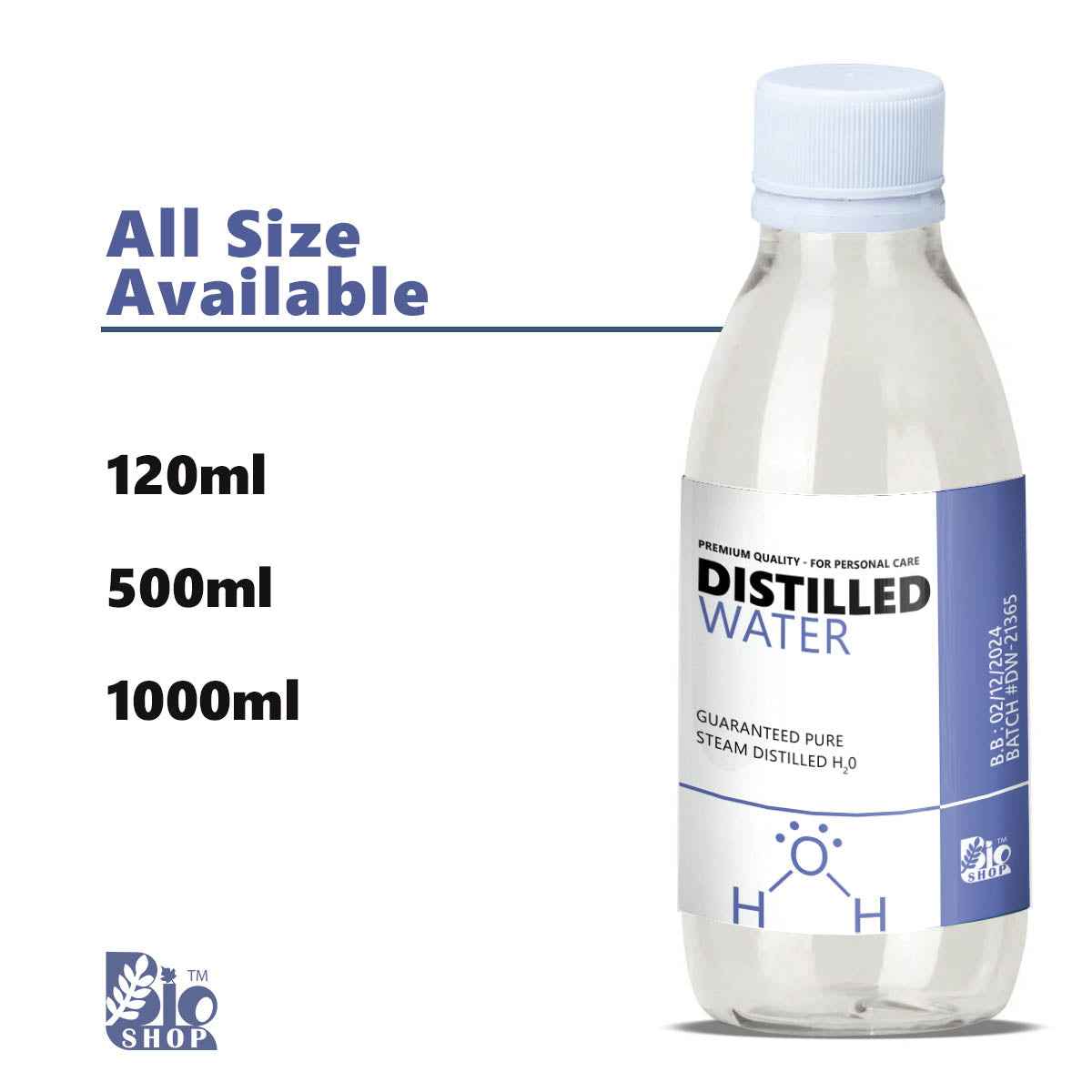
Distilled Water Cosmetics Grade
Distilled Water Cosmetics Grade
Key Functions: Pure aqueous solvent, dissolves actives, enables emulsification, ensures formula stability.
Couldn't load pickup availability



Explore
Information About Distilled Water Cosmetics Grade
✅ Key Features
✦ Cosmetic-grade purity free from chlorine, dissolved minerals, heavy metals, and microbial contaminants
✦ Universal aqueous base for emulsions, serums, toners, shampoos, and all water-phase cosmetic formulations
✦ Dissolves and activates hydrophilic actives including hyaluronic acid, niacinamide, peptides, and botanical extracts
✦ pH-neutral starting point enabling precise and interference-free formulation pH adjustment
✦ Preserves integrity of preservative systems by eliminating chlorine and mineral ions that degrade them
✦ Inert, non-irritating, and non-sensitizing at all cosmetic use levels across all skin types
✦ Vegan, natural, and COSMOS-compatible water source suitable for certified organic and natural cosmetic formulations
🔬 Description
Distilled Water is produced by heating water to boiling point, capturing the resulting steam, and condensing it back into liquid form. This process removes dissolved minerals, chlorine, heavy metals, bacteria, and organic impurities, leaving behind pure H₂O. Known universally by its INCI name Aqua, distilled water has been the standard water source in pharmaceutical and cosmetic manufacturing for over a century. Its adoption in cosmetics was driven by a direct observation that impure water caused emulsion instability, accelerated microbial contamination, and degraded the performance of actives and preservatives in finished products.
What makes cosmetic-grade distilled water essential is not what it contains, but precisely what it does not. The absence of chlorine protects preservative efficacy. The absence of calcium and magnesium ions prevents emulsifier interference, clouding, and pH drift. The absence of heavy metals eliminates oxidative triggers that accelerate rancidity in formulations containing oils and lipid-based actives. Every percentage point of water in a formula is an opportunity for contamination or instability, and cosmetic-grade distilled water eliminates that risk at the source. In regulated cosmetic manufacturing, water quality is treated as a primary raw material and is subject to its own quality standards and batch testing.
Bio Shop Pakistan supplies cosmetic-grade distilled water suitable for DIY formulators, professional cosmetic chemists, soap makers, and home beauty crafters.
📊 Technical Data
INCI Name : Aqua
Chemical Name : Water / Dihydrogen Monoxide
CAS Number : 7732-18-5
Molecular Formula : H₂O
Appearance : Clear, colorless liquid
Odor : Odorless
pH (1% solution) : 5.5 – 7.0 (slight acidity due to dissolved CO₂ on air contact is normal)
Solubility : Miscible with all water-soluble and hydrophilic cosmetic ingredients
Specific Gravity : 1.00 g/cm³ at 20°C
Flash Point : Not Applicable — non-flammable
HLB Value : Not Applicable
Recommended Use Level : 20 – 95% depending on formulation type
Type : Solvent, aqueous base, diluent
Shelf Life : Indefinite if stored sealed; use within 6 months once opened
🧪 Recommended Usage
Skincare (Creams, Serums, Lotions) ★★★★★
Distilled water is the indispensable base for all emulsified and water-based skincare products. Always heat the water phase separately when making hot-process emulsions, and dissolve water-soluble actives into it before combining with the oil phase.
Haircare (Shampoo, Conditioner, Masks) ★★★★★
Essential aqueous base for all haircare formulations from shampoos to leave-in conditioning sprays. Use as the primary solvent to dissolve surfactants, cationic conditioning agents, and haircare actives before phase combination.
Soap Making (Cold Process, Melt and Pour) ★★★★★
Used to prepare the lye solution in cold process soap making by dissolving sodium hydroxide or potassium hydroxide. Always add lye slowly to distilled water — never reverse this order — and work in a well-ventilated space.
Body Care (Scrubs, Butters, Balms) ★★★☆☆
Relevant only for emulsified body products such as body lotions, body milks, or water-containing whipped emulsions. Not applicable to anhydrous scrub bases, solid balms, or pure butter formulations.
Functional Cosmetics (Deodorants, Sunscreen, Baby Care) ★★★★★
The preferred base for water-based deodorant sprays, SPF emulsions, and baby lotions where formulation purity is critical. In baby care formulations especially, distilled water eliminates any mineral or contaminant exposure risk on sensitive infant skin.
💡 Pro Tip
When I begin any emulsion, my first variable is water quality, and I treat it as seriously as any active ingredient. Tap water introduces chlorine that degrades broad-spectrum preservatives, calcium and magnesium ions that interfere with anionic emulsifiers, and a variable mineral load that shifts pH unpredictably between batches. Cosmetic-grade distilled water removes all of those variables at once, giving me a reproducible, controllable starting point that makes troubleshooting far simpler. In professional environments, distilled water is batch-documented and tested just like any other raw material before it enters production.
ADVANCED TIP: When formulating cationic conditioning systems — such as conditioners using behentrimonium chloride, behentrimonium methosulfate, or BTMS-50 at concentrations between 2 and 6% — use distilled water exclusively in the water phase. Hard water minerals form insoluble complexes with quaternary ammonium compounds, resulting in reduced conditioning efficacy, grainy texture, and precipitation in your finished product. At the 70–80% water phase level typical in rinse-off conditioners, even trace mineral contamination at 100 ppm can cause visible cloudiness and measurable reduction in slip performance. Switching to distilled water resolves this issue entirely without any formula changes.
👩🔬 Skin Type Suitability
Normal Skin : ★★★★★ — Universal neutral base that integrates seamlessly into all formulation types for balanced, healthy skin.
Dry Skin : ★★★★☆ — Excellent aqueous base but must be paired with humectants and occlusives to prevent transepidermal water loss after application.
Oily Skin : ★★★★★ — Ideal lightweight, oil-free carrier for non-comedogenic serums, toners, and mattifying water-phase formulations.
Combination : ★★★★★ — Adaptable base suitable for formulations targeting both oily zones and dry areas in the same product.
Sensitive Skin : ★★★★★ — Cosmetic-grade purity eliminates mineral, chlorine, and contaminant exposure in formulations for reactive skin.
Mature Skin : ★★★★☆ — Strong formulation base but works best when enriched with peptides, humectants, and hydrating actives to address mature skin requirements.
Acne-Prone : ★★★★★ — Non-comedogenic and completely free from impurities that could aggravate breakout-prone or sensitized skin conditions.
🧴 Formulation Ideas
CONCEPT 1: 10% Niacinamide Brightening Serum
Usage Level : 78%
Key Ingredients: Niacinamide (10%), Sodium Hyaluronate (1%), Allantoin (0.5%), Phenoxyethanol-Ethylhexylglycerin (1%)
Result : A clear, lightweight water-based serum that brightens uneven skin tone, minimizes enlarged pores, and delivers surface hydration without any residue.
CONCEPT 2: Hydrating Facial Mist Toner
Usage Level : 91%
Key Ingredients: Glycerin (3%), Panthenol (1%), Cucumber Fruit Extract (2%), Preservative Blend (0.5%)
Result : A refreshing, non-sticky facial mist that instantly replenishes surface moisture, soothes skin, and prepares it for subsequent skincare application.
CONCEPT 3: Leave-In Conditioning Hair Spray
Usage Level : 84%
Key Ingredients: Behentrimonium Methosulfate (2%), Cetyl Alcohol (1.5%), Panthenol (1%), Hydrolyzed Keratin (1%)
Result : A lightweight, non-greasy leave-in spray that detangles, smooths the cuticle, and adds shine to all hair types without product buildup.
💧 Safety and Regulatory:
INCI Declared : Yes — must be declared as Aqua in EU and international cosmetic ingredient lists
EU Cosmetics Reg : Permitted — unrestricted; Aqua is a fully approved cosmetic ingredient with no Annex restrictions
Rinse-Off Limit : No limit established
Leave-On Limit : No limit established
Allergen Alert : No — distilled water contains no known cosmetic allergens
Skin Safety : Safe at all cosmetic formulation levels
Eye Area Use : Safe — used widely in eye creams, eye mists, and ophthalmic-adjacent cosmetic formulations
Ingestion : Not for internal use
Pregnancy Use : Safe — no contraindications as a cosmetic base ingredient
Child Safety : Safe for all ages including infants — used in baby cosmetic formulations globally
Ventilation : Not required for water alone; required when combining with sodium hydroxide or potassium hydroxide in soap making
Storage : Store in a sealed container in a cool, dry place away from open air exposure and direct sunlight
Container : HDPE, PET, or glass — avoid reactive metals
⚠️ Warning: Once opened, distilled water must be stored in a sealed, clean container. Exposure to air, unclean tools, or skin contact introduces microbial risk rapidly. All finished formulations containing distilled water must include a validated broad-spectrum preservative system. Unpreserved water-containing formulas are a contamination risk and must never be applied to skin.
Stability and Compatibility
Working pH Range : 5.5 – 7.0 as supplied; adjustable across full cosmetic working pH range of 3.0 – 10.0
Heat Stability : Stable across all cosmetic processing temperatures; boiling point 100°C at standard pressure
Freeze-Thaw Stable : Yes — freezes and thaws without degradation; note volumetric expansion on freezing in sealed containers
Emulsion Type : O/W / W/O / Both — forms the water phase in all emulsion systems
Emulsification Phase: Hot or Cold — compatible with both hot-process and cold-process emulsion methods
Compatible With : Hydrophilic actives, anionic and cationic surfactants, humectants, water-soluble polymers, botanical extracts, hydrocolloid gums
Incompatible With : Anhydrous formulations not intended to emulsify; concentrated lye without proper dilution protocol; undiluted strong acids
Oxidation Risk : None — water itself does not undergo oxidation
Discoloration Risk : None — colorless and stable; any discoloration in a stored sample indicates microbial contamination or ingredient interaction
Formulation Notes : Add your preservative system to any water-containing formula within 24 hours of preparation. Never introduce distilled water into an anhydrous formula unless full emulsification with an appropriate emulsifier is intended and accounted for.
❓ FAQs
Q: Can I substitute tap water for distilled water in cosmetic formulas?
A: Tap water contains chlorine, dissolved minerals, and variable microbial load that degrade preservative systems, destabilize emulsifiers, and introduce batch-to-batch inconsistency. Cosmetic-grade distilled water is the minimum standard for any formula intended to be applied to skin, and tap water substitution is not recommended under any circumstances.
Q: What is the difference between distilled water and deionized water for cosmetic use?
A: Distilled water is purified through vaporization and condensation, removing minerals, organics, and most microorganisms. Deionized water removes ionic minerals through ion exchange resin but may still contain dissolved organics and some microbes. Both are acceptable in cosmetics; distilled water is generally considered the cleaner option for sensitive skin and baby care formulations.
Q: Does distilled water itself need preservation when stored?
A: Distilled water in its sealed original container has an indefinite shelf life, but once opened it is exposed to airborne microbes and must be stored in a clean, sealed container and used promptly. Any finished cosmetic formulation that contains distilled water must include a validated preservative system regardless of how pure the water was at the time of use.
Q: At what percentage is distilled water typically used in cosmetic formulas?
A: Distilled water typically comprises 20 to 95% of water-based cosmetic formulations. Toners and facial mists use up to 90 to 95%, lightweight serums typically range from 70 to 85%, and rich cream emulsions generally use 60 to 75%, with oils, emulsifiers, actives, and functional ingredients making up the remaining percentage.
Q: How does distilled water compare to rose water or floral hydrosols as a formulation base?
A: Distilled water is a completely neutral, ingredient-free base that gives formulators precise control over every compound added to a formula. Rose water and floral hydrosols contain trace volatile aromatic compounds and minor plant actives that introduce mild skin-conditioning benefits and fragrance but also add variability in pH, preservation challenge, and potential sensitization risk. For reproducible, clinically positioned formulas, distilled water is preferred; hydrosols are a value-add choice for natural and botanical-positioned products where their minor bioactivity and scent are desirable.
Where Can You Safely Use Distilled Water Cosmetics Grade
Discover how Distilled Water Cosmetics Grade performs across different products — rated for safety, stability, and effectiveness.
I am very satisfied with this distilled water. The quality feels excellent, and it is clear, clean, and pure. I have been using it for cosmetic purposes and noticed a great difference. The packaging was good, and the product arrived in perfect condition. Highly recommended for anyone looking for high-quality distilled water.
Never had problem with it
Excellent product with excellent packaging
Achy Chezay Hoti h
Excellent service and product