


Bio Shop
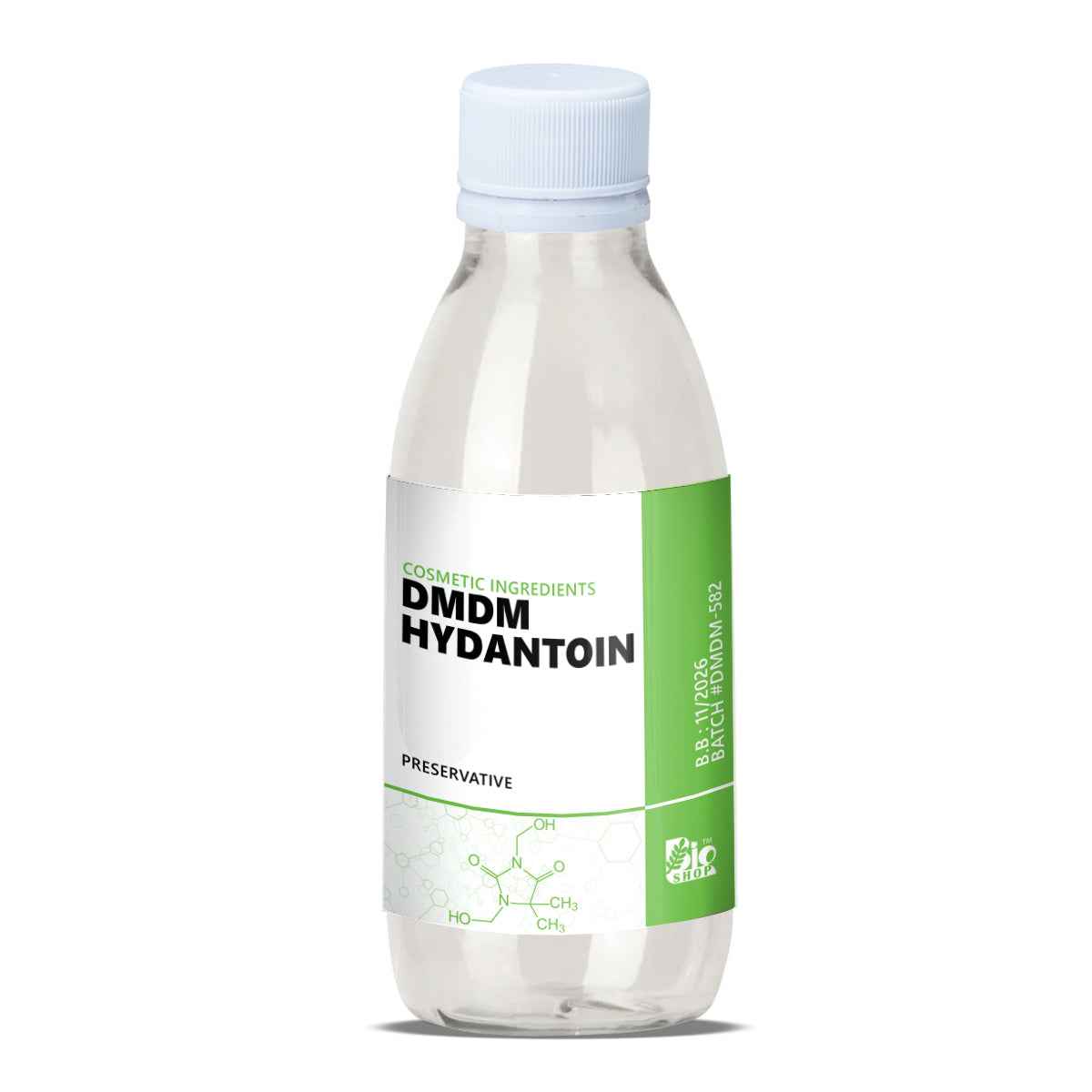
DMDM Hydantoin
DMDM Hydantoin
Key Functions: Broad-spectrum preservation, inhibits bacteria, controls yeast and mold, extends shelf life.
Couldn't load pickup availability


Explore
Information About DMDM Hydantoin
✅ Key Features
✦ Broad-spectrum preservative active against bacteria, yeast, and mold in all water-containing formulations.
✦ Works by slowly releasing controlled amounts of formaldehyde to provide continuous antimicrobial protection throughout product shelf life.
✦ Freely water soluble and easy to incorporate into the aqueous phase of emulsions, gels, and toners without the need for heating.
✦ Effective at low concentrations between 0.1% and 0.6%, leaving skin feel, texture, and fragrance profile unaffected.
✦ Wide pH stability range of 4.0 to 9.0 makes it compatible with the majority of cosmetic formulation types and systems.
✦ Approved preservative listed under EU Cosmetics Regulation Annex V, Entry 29, with a maximum permitted level of 0.6% in finished products.
✦ Synergistic with chelating agents such as EDTA disodium, which significantly boosts antimicrobial efficacy and reduces required concentration.
🔬 Description
DMDM Hydantoin is a synthetic hydantoin-derivative preservative developed in the mid-twentieth century and adopted globally across the personal care and cosmetic industry for its dependable, cost-effective antimicrobial performance. Classified as a formaldehyde-releasing preservative (FRP), it is supplied commercially as a clear to slightly hazy aqueous solution and is incorporated almost exclusively through the water phase of emulsions, rinse-off bases, and aqueous systems. Its straightforward handling, wide compatibility, and proven regulatory standing have made it a staple in both professional manufacturing and small-batch DIY formulation.
Its preservative mechanism is based on the slow, controlled release of formaldehyde within the product environment. At the concentrations typically encountered in finished cosmetics, released formaldehyde disrupts essential metabolic and cellular processes in microorganisms without causing direct tissue irritation under normal use conditions. This passive, sustained-release model provides continuous antimicrobial coverage over the full intended shelf life of the product rather than relying on a single front-loaded dose. Pairing with a secondary preservative such as phenoxyethanol creates a complementary system that addresses both bacteria and fungi with greater confidence.
Bio Shop Pakistan supplies cosmetic-grade DMDM Hydantoin suitable for DIY beauty formulators, soap makers, professional cosmetic chemists, and skincare product developers.
📊 Technical Data
INCI Name : DMDM Hydantoin
Chemical Name : 1,3-bis(hydroxymethyl)-5,5-dimethylhydantoin
CAS Number : 6440-58-0
Molecular Formula : C7H12N2O4
Appearance : Clear to slightly hazy aqueous solution
Odor : Slight characteristic odor
pH (1% solution) : 6.0 to 7.5
Solubility : Freely soluble in water
Specific Gravity : 1.10 to 1.15 (55% solution at 25°C)
Flash Point : Greater than 100°C
HLB Value : Not Applicable
Recommended Use Level : 0.1% to 0.6%
Type : Formaldehyde-releasing preservative (FRP)
Shelf Life : 2 years when stored correctly
🧪 Recommended Usage
Skincare (Creams, Serums, Lotions) ★★★★★
One of the most widely used preservatives for water-containing leave-on skincare including creams, gels, and serums. Use at 0.2% to 0.5% in the aqueous phase and always pair with a co-preservative for full-spectrum challenge test performance.
Haircare (Shampoo, Conditioner, Masks) ★★★★★
A dominant preservative choice for rinse-off hair care due to its flexibility across pH ranges common in shampoos and conditioners. Add to the water phase at 0.2% to 0.6% and verify finished formula pH before finalizing the formulation.
Soap Making (Cold Process, Melt and Pour) ★★☆☆☆
Not recommended for cold process soap as the highly alkaline pH above 9.0 degrades its preservative function entirely. In melt and pour bases where pH is controlled below 9.0, it can be incorporated cautiously at low concentrations.
Body Care (Scrubs, Butters, Balms) ★★★☆☆
Effective in water-containing body lotions, emulsified scrubs, and gel-based balms but entirely unsuitable and unnecessary in fully anhydrous butters or oil balms. Reserve for any formulation that contains a water phase requiring microbial protection.
Functional Cosmetics (Deodorants, Sunscreen, Baby Care) ★★★☆☆
Suitable for deodorant gels and aqueous roll-on bases where water activity is present and preservation is essential. Use with significant caution in baby care products and avoid altogether in products formulated for children under three years of age.
💡 Pro Tip
When I work with DMDM Hydantoin, I always treat it as one component in a preservation system rather than a single-ingredient solution. My standard approach is to pair it with phenoxyethanol at 0.5% and ethylhexylglycerin at 0.1%, which covers the full microbial spectrum without pushing any individual preservative to its maximum permitted limit. I add DMDM Hydantoin to the water phase at the beginning of the process, before thickeners or emulsifiers are introduced, which ensures even distribution throughout the final emulsion. I also include EDTA disodium at 0.05% to 0.1% as a chelating synergist, which measurably improves the system's performance against gram-negative bacteria such as Pseudomonas.
ADVANCED TIP: Build a three-component preservation system using DMDM Hydantoin at 0.3%, phenoxyethanol at 0.5%, and EDTA disodium at 0.1%. Dissolve DMDM Hydantoin and EDTA in the heated water phase above 70°C, then add phenoxyethanol to the cool-down phase below 40°C to prevent volatilization losses. This combination consistently achieves ISO 11930 Category A challenge test results in leave-on emulsions without exceeding EU regulatory limits for any individual ingredient.
👩🔬 Skin Type Suitability
Normal Skin : ★★★★★ — Performs reliably at correct use levels with no notable sensitization concerns in balanced, healthy skin formulations.
Dry Skin : ★★★★☆ — Fully compatible with rich emollient formulas common in dry skin care; ensures microbial safety in high-water-content hydrating creams.
Oily Skin : ★★★★☆ — Works well in lightweight gels, toners, and oil-free serums that are specifically designed for oily and shine-prone skin types.
Combination : ★★★★☆ — Suitable across the range of lightweight and balanced emulsions typically developed for dual-zone combination skin.
Sensitive Skin : ★★☆☆☆ — Formaldehyde-releasing preservatives carry a recognized sensitization risk in reactive or sensitized individuals; alternative preservation systems are strongly recommended for this skin type.
Mature Skin : ★★★★☆ — Effective in anti-aging serums and richer moisturizing creams at low use levels without interfering with the performance of active ingredients.
Acne-Prone : ★★★☆☆ — Functionally compatible in most acne formulations but sensitization risk is elevated in compromised or inflamed acne-prone skin; non-FRP alternatives may be preferable.
🧴 Formulation Ideas
CONCEPT 1: Hydrating Daily Face Lotion
Usage Level : 0.3%
Key Ingredients: Glycerin, Cetearyl Alcohol, Caprylic/Capric Triglyceride, Phenoxyethanol
Result : A lightweight daily moisturizer with reliable broad-spectrum preservation and a smooth, non-greasy skin feel.
CONCEPT 2: Moisturizing Shampoo Base
Usage Level : 0.4%
Key Ingredients: Sodium Laureth Sulfate, Cocamidopropyl Betaine, Panthenol, Citric Acid
Result : A well-preserved foaming shampoo base with stable pH, good scalp compatibility, and extended microbial shelf life.
CONCEPT 3: Emulsified Body Scrub
Usage Level : 0.25%
Key Ingredients: Sugar, Polysorbate 80, Sweet Almond Oil, Ethylhexylglycerin, EDTA Disodium
Result : A microbiologically stable emulsified scrub base that remains fully preserved throughout its intended shelf life.
💧 Safety and Regulatory:
INCI Declared : Yes — EU label must state "contains formaldehyde" when free formaldehyde exceeds 0.05% in the finished product
EU Cosmetics Reg : Permitted — Annex V, Entry 29; maximum 0.6% in finished cosmetic products
Rinse-Off Limit : 0.6% maximum
Leave-On Limit : 0.6% maximum
Allergen Alert : Yes — releases formaldehyde; known skin sensitizer in individuals with formaldehyde contact allergy
Skin Safety : Safe at recommended use levels; patch test strongly advised for sensitive and reactive skin types
Eye Area Use : Use with caution — compliant concentrations are acceptable in eye-area products but direct contact must be avoided
Ingestion : Not for internal use
Pregnancy Use : Consult physician — formaldehyde-releasing nature and limited pregnancy-specific safety data warrant professional guidance
Child Safety : Avoid in products intended for children under 3 years; use with caution in older children's leave-on formulations
Ventilation : Recommended when handling concentrated stock solutions in enclosed spaces
Storage : Cool dry place away from direct light and heat; do not freeze
Container : HDPE or glass — avoid reactive metals
⚠️ DMDM Hydantoin is a formaldehyde-releasing preservative. Formaldehyde is classified as a potential sensitizer and known allergen. Individuals with existing formaldehyde or FRP sensitivity may develop contact dermatitis even at permitted use levels. Always use at the minimum effective concentration. EU labeling requires the statement "contains formaldehyde" when free formaldehyde exceeds 0.05% in the finished product. Avoid use in aerosol spray formats and in all products designed for infants and young children.
Stability and Compatibility
Working pH Range : 4.0 to 9.0 (optimal 5.0 to 7.0)
Heat Stability : Stable up to 80°C; add to water phase during standard manufacturing
Freeze-Thaw Stable : Yes
Emulsion Type : O/W preferred; compatible with W/O systems at appropriate use level
Emulsification Phase: Hot or Cold — add to water phase before emulsification
Compatible With : Glycerin and polyols, anionic and nonionic surfactants, most carbomer and xanthan thickeners, chelating agents (EDTA significantly enhances efficacy), humectants
Incompatible With : Highly alkaline systems above pH 9.0; strong oxidizing agents; high concentrations of protein-based ingredients which may sequester released formaldehyde and reduce efficacy
Oxidation Risk : Low
Discoloration Risk : Possible — slight yellowing may occur in high-pH systems or under prolonged UV exposure without opaque packaging
Formulation Notes : Always add EDTA disodium at 0.05% to 0.1% as a chelating synergist to enhance gram-negative bacterial coverage. Conduct ISO 11930 challenge testing on the finished formulation to confirm preservation adequacy before commercial release.
❓ FAQs
Q: What is DMDM Hydantoin and how does it work?
A: DMDM Hydantoin is a formaldehyde-releasing preservative that slowly releases controlled amounts of formaldehyde within a cosmetic product to inhibit the growth of bacteria, yeast, and mold. It does not add formaldehyde directly but generates it gradually from its own molecular structure. This sustained-release mechanism provides continuous antimicrobial protection over the full product shelf life.
Q: At what percentage should I use DMDM Hydantoin in my formulas?
A: The typical working range is 0.1% to 0.6% depending on product type, contamination risk, and whether a co-preservative is used. Most formulators use 0.2% to 0.4% in leave-on products and up to 0.6% in rinse-off products. Always confirm effectiveness with microbial challenge testing on the finished formula.
Q: Does DMDM Hydantoin require special label declarations?
A: Yes. Under EU Cosmetics Regulation, if the free formaldehyde concentration in the finished product exceeds 0.05%, the label must carry the declaration "contains formaldehyde." Even at typical use levels this threshold is often crossed, so formulators should verify the free formaldehyde release rate with their supplier data or third-party testing.
Q: Can DMDM Hydantoin be used in natural or organic certified cosmetics?
A: No. DMDM Hydantoin is a synthetic preservative and is not permitted under any major natural or organic cosmetic certification standard, including COSMOS, NATRUE, or Ecocert. For certified natural formulations, consider ferment-based preservatives such as radish root ferment filtrate, or sodium anisate and glycol-based systems.
Q: How does DMDM Hydantoin compare to phenoxyethanol?
A: Phenoxyethanol is a non-formaldehyde-releasing preservative that carries a different and generally lower sensitization profile, making it better suited to sensitive skin formulations. DMDM Hydantoin offers strong antibacterial efficacy at lower individual concentrations but introduces formaldehyde-related sensitization risk that phenoxyethanol does not. Many professional formulators combine both at sub-maximal levels to achieve broader microbial coverage while managing the sensitization risk of each ingredient.
Where Can You Safely Use DMDM Hydantoin
Discover how DMDM Hydantoin performs across different products — rated for safety, stability, and effectiveness.


