Bio Shop
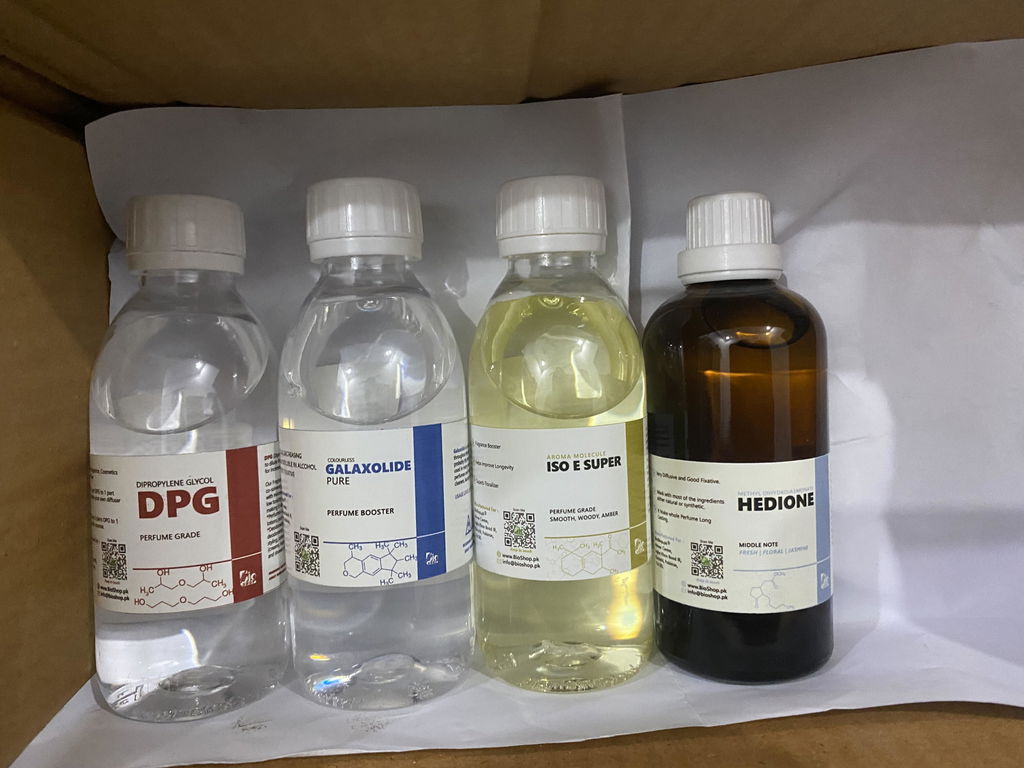
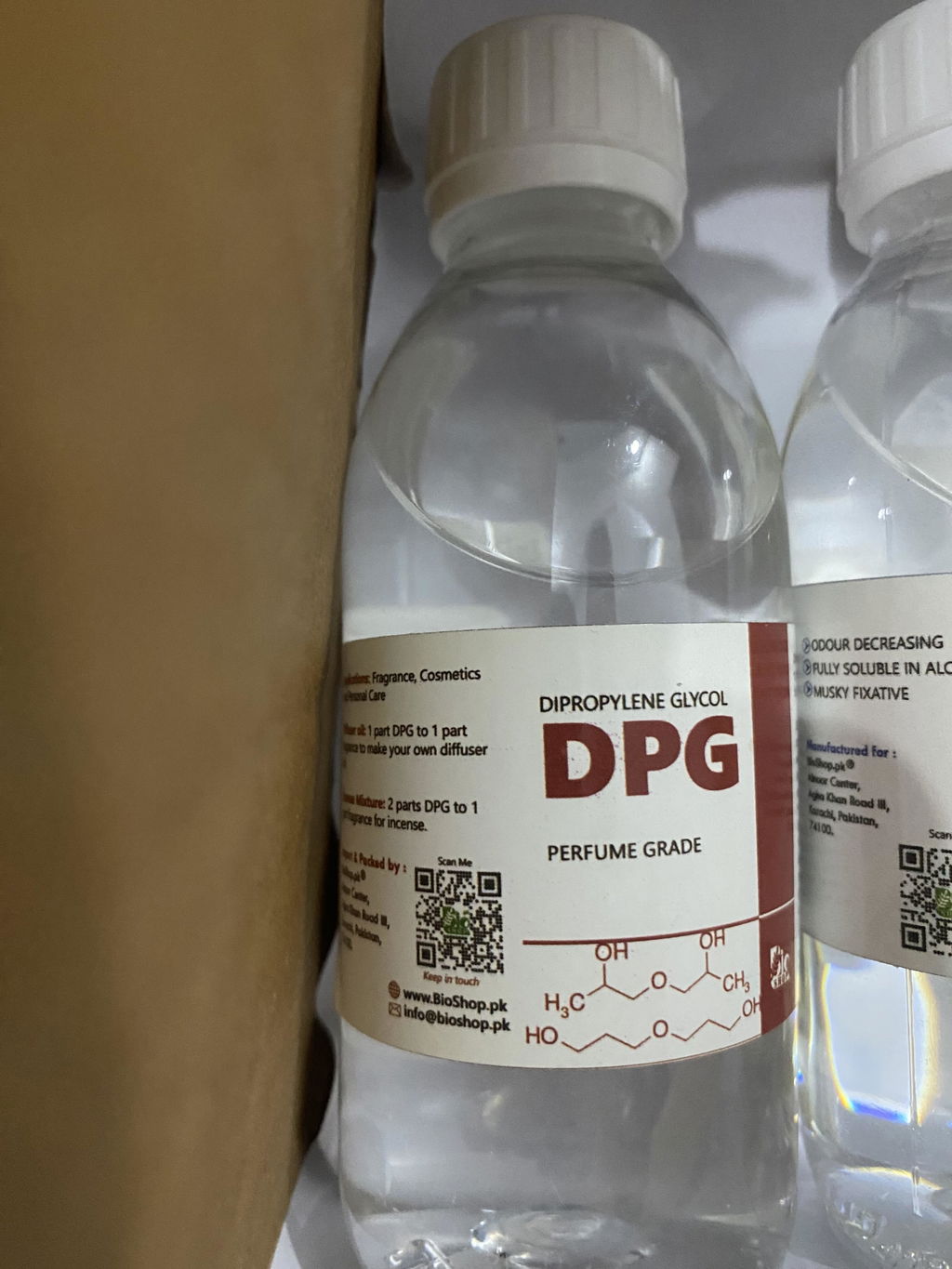
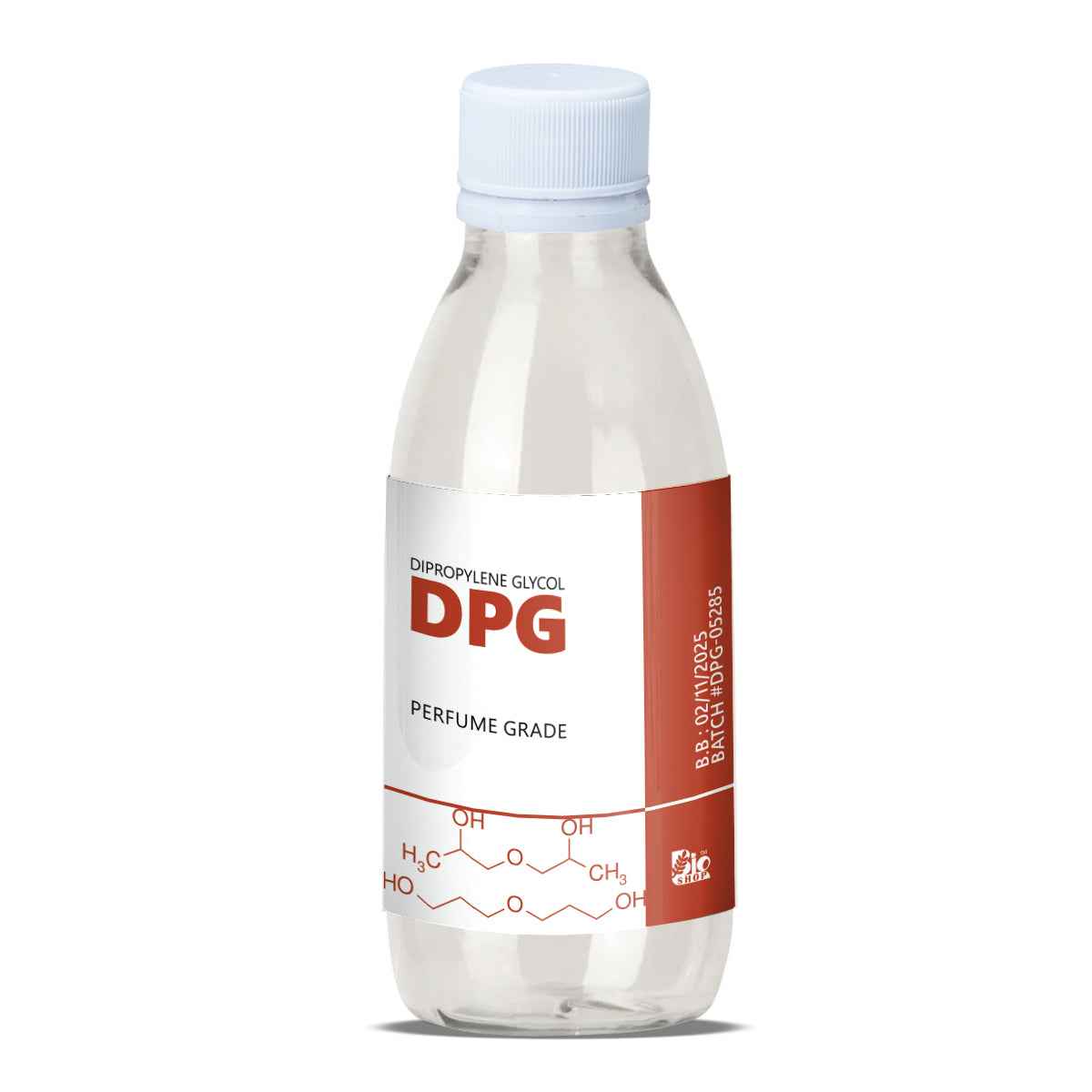
DPG (Dipropylene Glycol)
DPG (Dipropylene Glycol)
Olfactory Notes:
Couldn't load pickup availability


Explore
Information About DPG (Dipropylene Glycol)
Key Features
✦ Dipropylene Glycol (DPG) is the global industry standard carrier and diluent for fragrance oils, aroma chemicals, and essential oils in both perfumery and cosmetic formulation.
✦ Nearly odourless and colourless — it dilutes fragrance materials without altering their scent profile, making it cleaner and more neutral than most alternative carriers.
✦ Excellent solubility — miscible with water, ethanol, and most fragrance materials, giving formulators maximum flexibility across applications.
✦ Used as the primary carrier in attar making, reed diffusers, roll-on perfumes, incense sticks, and body mists across the global fragrance industry.
✦ Functions as a humectant in cosmetic formulations — attracts and retains moisture in skin and hair care products.
✦ 100% vegan, non-toxic, and biodegradable with an outstanding safety profile across all standard cosmetic and fragrance applications.
✦ High flash point of approximately 124°C makes it safer to handle and store compared to alcohol-based carriers.
About DPG (Dipropylene Glycol)
Dipropylene Glycol, universally known in the industry as DPG, is a synthetic glycol belonging to the propylene glycol family. It is produced as a by-product of propylene oxide hydration and exists commercially as a mixture of three isomers, with the 1,1'-oxydipropan-2-ol isomer making up the majority of the blend. First developed for industrial applications, DPG quickly found its way into the fragrance and cosmetic industry due to its exceptional solvent power, near-complete odour neutrality, and excellent safety credentials. Today it is one of the most widely purchased cosmetic ingredients in the world and an essential stock item for any serious formulator.
What makes DPG indispensable is the combination of properties no single alternative fully replicates: it is nearly odourless, miscible with water and alcohol, mild on skin, and capable of dissolving a vast range of fragrance materials from light citrus aroma chemicals to heavy resinous bases. Its hygroscopic nature also means it contributes soft moisturisation in leave-on applications. In reed diffuser formulation, DPG is often preferred over isopropyl myristate or IPM because it wicks cleanly and does not discolour or crystallise. In attar and mukhallat formulation, it is the carrier of choice when a clean, natural-smelling, alcohol-free base is needed.
Bio Shop Pakistan supplies cosmetic-grade Dipropylene Glycol suitable for fragrance dilution, attar and mukhallat making, reed diffuser blending, roll-on perfume formulation, skin care, hair care, and home fragrance manufacturing.12
Olfactory Profile
SCENT DESCRIPTION:
Virtually odorless in high-purity fragrance grade. At most a very faint,
barely perceptible slightly sweet-ethereal character that disappears
completely when any fragrance material is added. Designed to be a
completely transparent carrier — it adds nothing to your fragrance
and takes nothing away from it.
CHARACTER: Completely neutral and transparent
ODOR IMPACT: Virtually zero — designed to be imperceptible
EFFECT ON BLEND: None — pure carrier and solvent function only
SKIN FEEL: Slightly oily, smooth, non-greasy at normal levels
DRYING TIME: Slow evaporation — remains on skin as carrier
Technical Specifications
Chemical Name : Dipropylene Glycol (mixture of isomers)
CAS Number : 25265-71-8 (mixture) / 110-98-5 (primary isomer)
EINECS Number : 246-770-3
Synonyms : DPG, DIPG, Oxydipropanol, Bis(2-hydroxypropyl) ether,
Oxydi-2-propanol, Dipropyleneglycol
Molecular Formula: C6H14O3
Molecular Weight : 134.17 g/mol
Purity : ≥ 99.5% (fragrance grade)
Appearance : Clear colorless liquid
Odor : Virtually odorless — faint sweet-ethereal at most
Boiling Point : 230–232°C
Flash Point : 138°C (non-flammable for practical purposes)
Viscosity : ~100 cP at 25°C
Density : 1.020–1.023 g/cm³
Solubility : Fully miscible with water, ethanol, and most aroma chemicals
NOT miscible with fixed oils (FCO, jojoba, etc.)
Type : Synthetic glycol carrier / solvent
Applications & Usage Guidelines
Fine Fragrance and Roll-On Perfume : ★★★★★
DPG is the carrier of choice for alcohol-free roll-on perfumes and oil-based parfums. It dilutes concentrated fragrance oils smoothly at any ratio, extends coverage, and improves skin feel without affecting the scent character. Typical carrier-to-fragrance ratio is 60–80% DPG to 20–40% fragrance concentrate.
Attar and Oriental Blending : ★★★★★
In traditional attar and mukhallat making, DPG has largely replaced mineral oil as the carrier base due to its cleaner odour profile and better miscibility with modern aroma chemicals. It allows the fragrance concentrate to breathe naturally and project without any carrier interference or oiliness on skin.
Reed Diffuser and Home Fragrance : ★★★★★
DPG is one of the two dominant carriers in reed diffuser formulation worldwide (alongside dipropylene glycol methyl ether). It wicks cleanly through rattan reeds, has excellent fragrance compatibility, and produces no crystallisation or discolouration. Standard formulation is 20–35% fragrance oil in DPG.
Cosmetics and Skin Care : ★★★★☆
Functions as both a solvent and a humectant in creams, lotions, serums, and deodorant sticks. It helps dissolve and distribute fragrance and active ingredients evenly through a formulation. Its moisture-retaining properties contribute a soft skin-feel in leave-on products.
Hair Care and Functional Fragrance : ★★★★☆
Used in hair serums, conditioning sprays, and leave-in treatments both as a solvent and moisturising agent. It improves ingredient distribution and leaves hair feeling smooth. In functional fragrance like body mists and deodorant sprays, it extends the scent while adding a light moisturising effect.
IFRA & Usage Rate
RECOMMENDED USAGE RATES
Application : Suggested Rate
Roll-On Perfume (oil) : 60 – 80% as carrier base
Attar / Mukhallat : 50 – 75% as carrier base
Reed Diffuser : 65 – 80% of total formulation
Body Lotion : 1 – 5% as solvent/humectant
Shampoo / Body Wash : 1 – 3% as solvent/humectant
Candle : Not typically used
Bar Soap : Not recommended (separates in soap matrix)
IFRA STATUS
DPG is not a regulated fragrance ingredient under the IFRA framework. It is a carrier and diluent, not a sensitising or restricted material. All IFRA limits that apply to your formulation are governed by the fragrance materials dissolved in the DPG, not the DPG itself.
⚠️ Always apply IFRA limits based on the fragrance concentrate percentage, not the total formulation weight including DPG carrier.
⚠️ When calculating safe use levels for leave-on or rinse-off products, calculate fragrance ingredient percentages based on the final product weight, not on the DPG-fragrance blend weight only.
⚠️ DPG is not suitable for use in hard bar soap formulation — it does not incorporate into a saponified soap matrix and will separate.
Blending Guide
METHOD 1 — Fragrance Dilution (Standard)
Measure your DPG into a clean glass or HDPE container. Add your fragrance oil or aroma chemical blend at the desired concentration. Stir or cap and roll gently — no heat required. DPG dissolves most fragrance materials at room temperature within minutes. For difficult-to-dissolve materials, gentle warming to 40°C speeds dissolution.
METHOD 2 — Reed Diffuser Construction
Blend your fragrance concentrate into DPG at 20–35% fragrance load. For improved reed wicking and slightly faster diffusion, you may replace 5–10% of the DPG with a lighter diluent such as isopropyl myristate or a fragrance-grade mineral oil. Test in your chosen reed type before committing to bulk production.
METHOD 3 — Cosmetic Humectant Blending
In water-based formulations such as serums, lotions, and mists, add DPG to your water phase before combining with oil phase. At 1–5% it acts as a mild humectant and solvent. For fragrance delivery in water-based cosmetics, pre-dissolve your aroma chemical in DPG first, then incorporate the DPG blend into the water phase with stirring.
BEST PAIRINGS
Isopropyl Myristate (IPM) : Blended with DPG at 10–30% IPM — improves skin absorption and reduces greasiness in roll-on bases
Fractionated Coconut Oil : Adds a natural, nourishing feel to oil-based perfume and attar carriers
Ethanol (Perfumery Grade) : Mixing DPG with alcohol creates hybrid carriers with faster dry-down and lighter feel
Polysorbate 20 : Enables DPG-based fragrance blends to disperse cleanly into water-based cosmetic formulations
Glycerine : Combined at low levels for extra humectancy in skin-care and body mist applications
AVOID
Do not use DPG in cold process or hot process soap — it will not bind into the soap matrix.
Avoid using DPG as a candle carrier or in wax-based products — it does not blend with wax matrices and will separate.
Do not confuse DPG with DPGME (Dipropylene Glycol Methyl Ether) — they are different materials with different properties and applications.
Perfumer's Note
DPG is one of those ingredients that never gets talked about at perfumery events because it is not glamorous — but it is the foundation everything else rests on. I keep it in larger quantities than almost any other single material in my studio. When a client asks me to build an alcohol-free roll-on attar, DPG is my starting point without hesitation. It behaves predictably, respects the fragrance materials I add to it, and never introduces an unwanted note of its own. The best carrier is an invisible one, and DPG is about as invisible as it gets.
ADVANCED TIP
When formulating reed diffusers, experiment with a 70% DPG and 30% DPGME (Dipropylene Glycol Methyl Ether) carrier blend instead of 100% DPG. The DPGME accelerates wicking and improves cold-room performance in winter months, while the DPG maintains stability and prevents the formulation from becoming too thin. This split-carrier approach is common in commercial reed diffuser manufacturing and significantly improves throw consistency across temperature changes.
Safety & Storage
Physical State : Clear colourless liquid, slightly viscous
Skin Safety : Non-irritating at normal use levels. Approved for cosmetic use by major global regulatory bodies. Not a known sensitiser.
Eye Contact : May cause mild transient irritation. Rinse with clean water for 10–15 minutes if contact occurs. Seek advice if irritation persists.
Ingestion : Low acute oral toxicity. Not intended for internal use. Keep out of reach of children. Seek medical attention if large quantities are swallowed.
Ventilation : Standard room ventilation is adequate for normal handling quantities. No special respiratory precautions required at ambient temperature.
Storage : Store in a cool, dry location away from direct sunlight and heat sources. Ideal temperature 15–25°C. Keep container tightly closed.
Shelf Life : 2 years minimum when stored correctly in sealed containers. Hygroscopic — repeated opening in humid environments may affect quality.
Container : Store in original sealed HDPE, glass, or stainless steel containers. Avoid galvanised metal. HDPE drums and jerricans are standard for bulk storage.
Flammability : Combustible liquid with a high flash point of approximately 124°C. Not classified as flammable under standard conditions. Keep away from extreme heat and open flame.
FAQ
Q: What is DPG used for in perfumery?
A: DPG is used as a carrier and diluent — it dilutes concentrated fragrance oils and aroma chemicals to safe, workable usage levels without adding any scent of its own.
Q: Does DPG have a smell?
A: DPG is practically odourless. At very close range on the undiluted material you may detect a faint, clean sweetness, but this disappears completely in any finished blend.
Q: Can I use DPG to make roll-on attar?
A: Yes, this is one of its primary uses. Blend your fragrance concentrate at 20–40% into DPG carrier for a skin-safe, alcohol-free roll-on perfume or attar. Adjust concentration to your preferred strength.
Q: What is the difference between DPG and fractionated coconut oil as a carrier?
A: DPG is odourless, water-miscible, and lighter on skin. Fractionated coconut oil is also odourless but feels more moisturising and nourishing, and is not water-miscible. DPG is preferred for reed diffusers and clinical applications. Coconut oil is preferred when a natural, skin-nourishing carrier is desired.
Q: How does DPG compare to isopropyl myristate (IPM) as a carrier?
A: DPG is more neutral in odour and mixes more easily with water-based formulations. IPM improves skin absorption and gives a drier, less slippery skin feel. Many formulators blend both — typically 70% DPG with 20–30% IPM — to get the best skin feel and absorption profile in roll-on and body oil applications.
Where Can You Safely Use DPG (Dipropylene Glycol)?
Discover how DPG (Dipropylene Glycol) performs across different applications—rated for safety, stability, and effectiveness.
this is a very good product. I used this to make the perfume's quality and lasting better and got the good result.
Achi quality hai or packing bhi safe thi insh allah phir order krenge
Good product 👍
Average Quality.
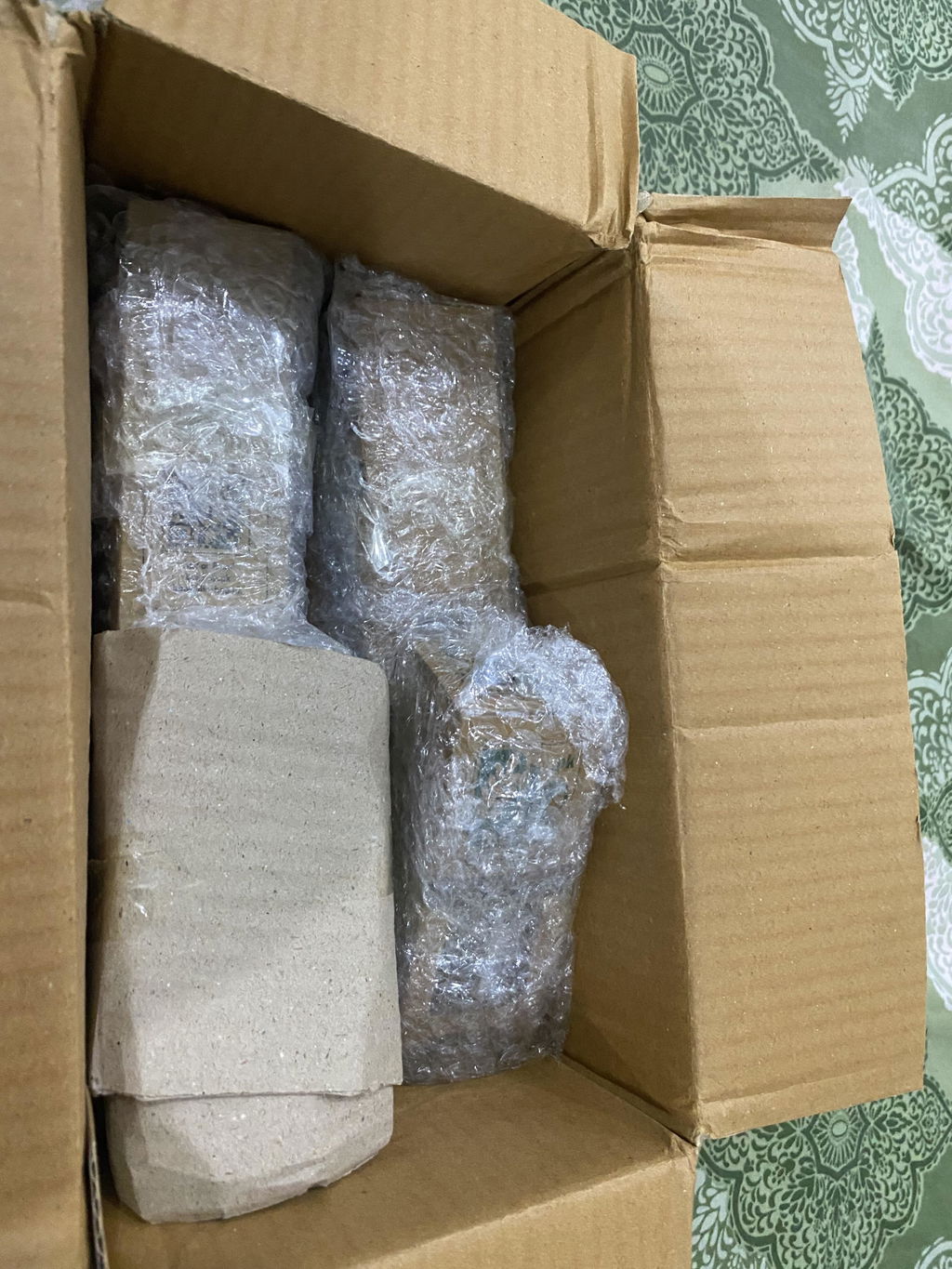
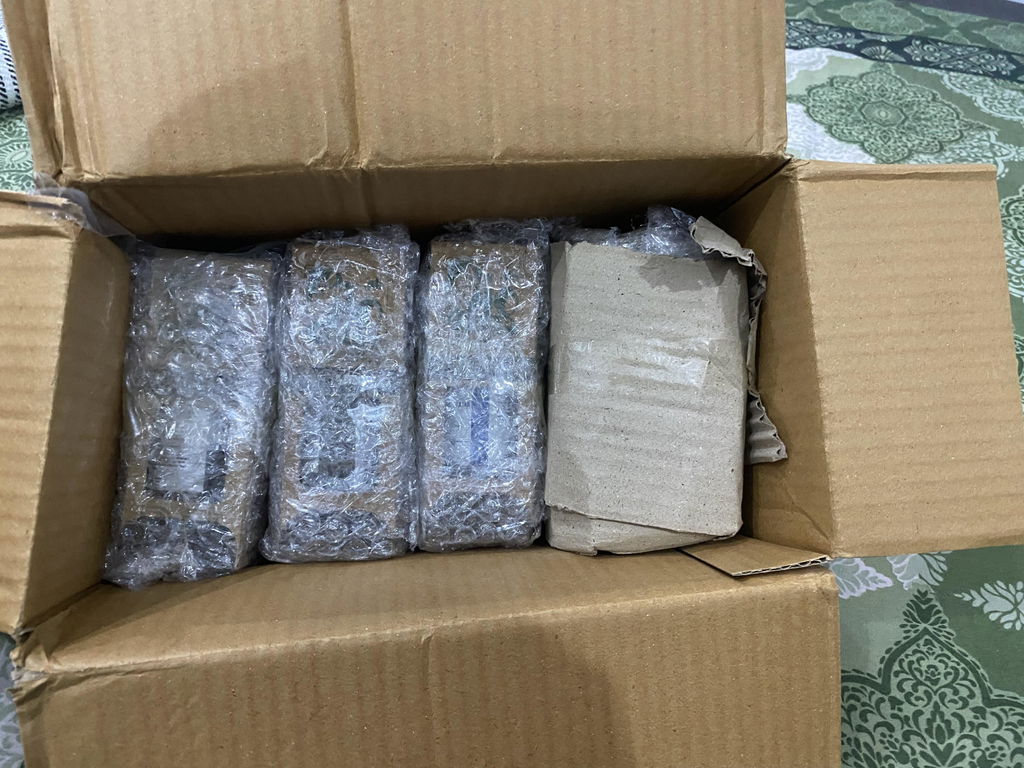
Whenever I receive an order, it always brings me joy. I really appreciate the consistent quality of the products. If someone feels the price is higher than others, I believe they should also consider the excellent quality they are getting.