Bio Shop
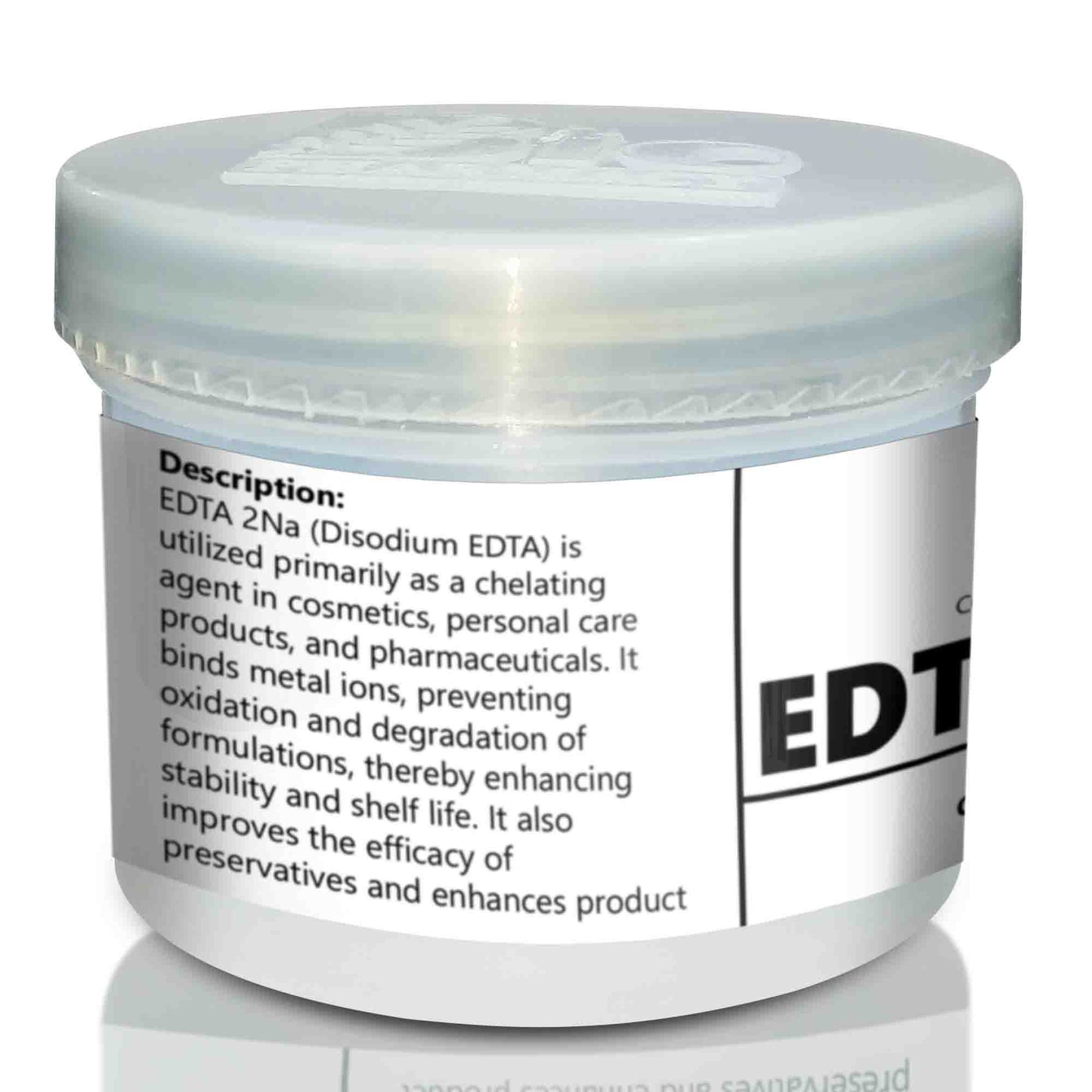
EDTA 2NA
EDTA 2NA
Key Functions: Chelates metal ions, boosts preservative efficacy, stabilizes formulas, extends shelf life.
Couldn't load pickup availability


Explore
Information About EDTA 2NA
✅ Key Features
✦ Powerful chelating agent that binds metal ions to prevent oxidation and formula destabilization.
✦ Significantly boosts the effectiveness of preservative systems including phenoxyethanol, parabens, and organic acids.
✦ Extends product shelf life by preventing metal-catalyzed rancidity in emulsions and surfactant-based formulas.
✦ Prevents discoloration and odor changes caused by trace metals in tap water or raw material contamination.
✦ Water-soluble white crystalline powder compatible with a broad range of leave-on and rinse-off cosmetic systems.
✦ Highly cost-efficient — effective at very low use levels between 0.1% and 0.5%.
✦ Synthetic origin; vegan-friendly and universally accepted in conventional cosmetic manufacturing.
🔬 Description
Disodium EDTA, formally known as disodium ethylenediaminetetraacetate, is a synthetic chelating agent produced from ethylenediamine and acetic acid. It has been a standard component in cosmetic and personal care formulation for decades, originally adopted from industrial and pharmaceutical chemistry before becoming essential in cosmetic manufacturing. Its long track record of use reflects its reliability, safety at recommended concentrations, and consistent performance across diverse product categories.
What makes Disodium EDTA indispensable in modern cosmetic chemistry is its mechanism of chelation — the ability to form stable, water-soluble complexes with free metal ions such as calcium, magnesium, iron, and copper. Even at trace levels, these metals catalyze oxidation, deplete preservative activity, and trigger unwanted shifts in color, texture, and odor that can render a product unstable or unsafe within weeks of production. By neutralizing these ions, Disodium EDTA allows preservatives, antioxidants, and actives to function as intended throughout the product's full shelf life. It also reduces the effects of water hardness in rinse-off products, contributing to improved lather quality and a cleaner rinse in shampoos and cleansers.
Bio Shop Pakistan supplies cosmetic-grade Disodium EDTA suitable for independent formulators, soap makers, cosmetic brands, and professional skincare manufacturers.
📊 Technical Data
INCI Name : Disodium EDTA
Chemical Name : Disodium Ethylenediaminetetraacetate
CAS Number : 139-33-3 (anhydrous); 6381-92-6 (dihydrate)
Molecular Formula : C10H14N2Na2O8
Appearance : White crystalline powder
Odor : Odorless
pH (1% solution) : 4.0 – 5.0
Solubility : Freely soluble in water; insoluble in most organic solvents
Specific Gravity : Approx. 1.85 g/cm³ (true density of solid)
Flash Point : Not Applicable — non-flammable solid
HLB Value : Not Applicable
Recommended Use Level : 0.1% – 0.5%
Type : Chelating Agent / Sequestrant
Shelf Life : 2 – 3 years when stored in a sealed container under recommended conditions
🧪 Recommended Usage
Skincare (Creams, Serums, Lotions) ★★★★★
Disodium EDTA is essential in all water-containing skincare to prevent metal-ion-driven oxidation and preservative failure. Dissolve it in the water phase at 0.1% to 0.3% at the start of your process before introducing any other ingredients.
Haircare (Shampoo, Conditioner, Masks) ★★★★★
It enhances lather quality, prevents soap scum formation in hard water, and reinforces preservative performance across aqueous hair care formulas. Use at 0.1% to 0.5% in the water phase of shampoos, conditioners, and rinse-off treatments.
Soap Making (Cold Process, Melt and Pour) ★★★☆☆
In cold process soap, Disodium EDTA helps reduce dreaded orange spots and rancidity by chelating metal ions in water and oils before saponification. Use at 0.1% to 0.25% dissolved in your lye water, and note that high-pH saponification environments reduce some chelation efficiency.
Body Care (Scrubs, Butters, Balms) ★★☆☆☆
Anhydrous formulas such as body butters and balms contain no water phase, so chelation offers no functional benefit in those systems. Reserve Disodium EDTA for emulsified or water-containing body care products where metal ions are present.
Functional Cosmetics (Deodorants, Sunscreen, Baby Care) ★★★★☆
In water-based deodorants and sunscreens, it stabilizes preservation systems and prevents mineral-related degradation of active ingredients. Use at 0.1% to 0.2% for sensitive skin and baby formulations where minimal ingredient load is preferred.
💡 Pro Tip
As a formulator, I consider Disodium EDTA a non-negotiable baseline ingredient in every water-containing formula I develop. Tap water — and even distilled water — carries trace metal ions that silently destroy preservative systems, accelerate rancidity, and cause formulas to shift in color, odor, or texture weeks after production. Disodium EDTA is the invisible safety net that protects everything else in the formula. It costs almost nothing at typical use levels, but the stability it contributes cannot be achieved by any other single ingredient at the same concentration.
ADVANCED TIP: When formulating with organic acid preservation systems such as sorbic acid or benzoic acid, pair Disodium EDTA at 0.2% with your chosen preservative to achieve a measurable synergistic effect on broad-spectrum microbial control. In hard water regions — including most cities across Pakistan — increase chelant concentration to 0.3% to compensate for elevated calcium and magnesium ion content. Always dissolve Disodium EDTA completely in the water phase before adding emulsifiers, oils, or actives to ensure full dispersion and maximum chelation efficiency throughout the formula.
👩🔬 Skin Type Suitability
Normal Skin : ★★★★★ — Functions effectively as a background stabilizer with no direct impact on healthy, balanced skin at standard concentrations.
Dry Skin : ★★★★☆ — Safe at recommended levels and indirectly beneficial by preserving moisturizing actives; concentrations above 0.5% may contribute to mild barrier disruption in very dry skin.
Oily Skin : ★★★★★ — Performs well in lightweight gels and serums typical for oily skin without contributing any greasiness or occlusion.
Combination : ★★★★☆ — Suitable across all zones; supports formula stability in both gel and emulsion formats common for combination skin types.
Sensitive Skin : ★★★☆☆ — Generally well tolerated but occasional mild sensitivity has been reported; keep concentrations at or below 0.2% in formulas specifically targeting reactive or sensitized skin.
Mature Skin : ★★★★★ — Supports preservation of antioxidants and high-value actives in anti-aging formulas, protecting the efficacy of ingredients most important to mature skin.
Acne-Prone : ★★★★☆ — Non-comedogenic and supports preservation in acne-targeted lightweight formulas; no known pore-clogging or comedogenic activity.
🧴 Formulation Ideas
CONCEPT 1: Stabilized Vitamin C Brightening Serum
Usage Level : 0.2%
Key Ingredients: L-Ascorbic Acid (15%), Niacinamide (5%), Panthenol (2%), Hyaluronic Acid (1%)
Result : A stable high-potency vitamin C serum where Disodium EDTA neutralizes metal ions that would otherwise oxidize ascorbic acid, preserving active efficacy and extending usable shelf life significantly.
CONCEPT 2: Hard Water Clarifying Shampoo
Usage Level : 0.3%
Key Ingredients: Sodium Lauryl Sulfoacetate, Cocamidopropyl Betaine, Zinc Pyrithione (1%), Panthenol (2%)
Result : A scalp-clarifying shampoo that maintains rich lather in hard water conditions while supporting the antimicrobial performance of zinc pyrithione for effective dandruff control.
CONCEPT 3: Preservation-Boosted Micellar Cleansing Water
Usage Level : 0.15%
Key Ingredients: Polysorbate 20 (1%), Phenoxyethanol (0.8%), Glycerin (5%), Allantoin (0.2%)
Result : A gentle yet effectively preserved micellar water that remains stable and crystal clear over time, even when formulated using standard tap water in a home or small-batch environment.
💧 Safety and Regulatory:
INCI Declared : Yes — standard practice to declare at all use levels; required in EU labeling above threshold concentration
EU Cosmetics Reg : Permitted — no maximum concentration restriction established; use in accordance with good manufacturing practice
Rinse-Off Limit : No established maximum; typical use 0.1% – 0.5%
Leave-On Limit : No established maximum; typical use 0.1% – 0.3%
Allergen Alert : No — not classified as a cosmetic allergen under EU Cosmetics Regulation
Skin Safety : Safe at recommended levels; avoid concentrations above 1% in leave-on formulations
Eye Area Use : Use with caution — safe in finished formulations at standard levels; avoid undiluted powder contact with eyes
Ingestion : Not for internal use
Pregnancy Use : Consult physician — systemic absorption through topical use is minimal, but professional guidance is advised during pregnancy
Child Safety : Use diluted; keep concentrations at or below 0.2% in infant and toddler formulations
Ventilation : Recommended when weighing or handling bulk powder to avoid inhalation of fine particles
Storage : Cool, dry place; seal container tightly after each use; protect from moisture and humidity
Container : HDPE or glass; avoid iron, copper, or other reactive metal containers
⚠️ Handling bulk Disodium EDTA powder can cause mild respiratory irritation and eye discomfort. Always wear a dust mask and safety glasses when weighing or handling the raw material in powder form. Do not exceed 0.5% concentration in leave-on facial products without a documented safety assessment. Some regulatory frameworks are evaluating long-term environmental persistence of EDTA compounds — formulators targeting certified natural or eco-certified products should confirm compliance with their certification body before use.
Stability and Compatibility
Working pH Range : 4.0 – 9.0; most effective chelation at pH 4.0 – 7.0
Heat Stability : Stable up to 100°C; can be added in hot or cold water phase without degradation
Freeze-Thaw Stable : Yes
Emulsion Type : Both — suitable for O/W and W/O emulsions when dissolved in the water phase
Emulsification Phase: Hot or Cold — dissolve fully in water phase before combining with oil phase
Compatible With : Preservatives (phenoxyethanol, parabens, organic acids), surfactants, humectants, water-soluble vitamins, most cosmetic actives
Incompatible With : Strongly alkaline environments above pH 11 significantly reduce chelation efficiency; highly concentrated cationic actives at the same pH may interact; avoid formulating alongside high levels of polyvalent cationic quaternary compounds without compatibility testing
Oxidation Risk : Low — Disodium EDTA acts as an antioxidant synergist by removing pro-oxidant metals; no antioxidant addition required for the chelant itself
Discoloration Risk : None under normal conditions; prolonged storage in strongly alkaline or UV-exposed environments may cause minor yellowing in concentrated aqueous solutions
Formulation Notes : Always dissolve Disodium EDTA completely in the water phase before adding emulsifiers, oils, or actives. In high-pH soap systems above pH 9, chelation efficiency drops significantly — consider switching to Tetrasodium EDTA for alkaline applications.
❓ FAQs
Q: What does Disodium EDTA actually do in a cosmetic formula?
A: Disodium EDTA is a chelating agent that captures free metal ions such as calcium, iron, magnesium, and copper present in formulation water and raw materials. These metals would otherwise degrade your preservative system, accelerate oxidation, and cause discoloration or rancidity in your finished product.
Q: Is Disodium EDTA safe for sensitive skin formulations?
A: At standard cosmetic use levels of 0.1% to 0.3%, Disodium EDTA is considered safe and non-irritating for most skin types, including sensitive skin. For highly reactive skin formulations, limit concentration to 0.2% or below and include it in your standard patch test protocol during stability testing.
Q: Do I still need Disodium EDTA if I use distilled or deionized water?
A: Yes, because trace metal contamination can enter your formula through raw materials, equipment, and packaging even when you start with pure water. Including Disodium EDTA at 0.1% to 0.2% remains recommended standard practice to protect your preservation system and formula stability throughout the product shelf life.
Q: At what stage do I add Disodium EDTA when making a cream or lotion?
A: Dissolve Disodium EDTA in the water phase at the very beginning of your formulation process, before adding any other ingredients. It is fully heat stable and can be included in either a heated or room-temperature water phase with complete reliability.
Q: How does Disodium EDTA compare to Tetrasodium EDTA as an alternative?
A: Tetrasodium EDTA is the fully neutralized, higher-pH form of EDTA and performs more effectively in alkaline systems such as cold process soap where Disodium EDTA loses chelation efficiency above pH 8. Disodium EDTA is the preferred choice for acidic to neutral formulas at pH 4 to 7, while Tetrasodium EDTA is better suited for applications at pH 8 and above.
Where Can You Safely Use EDTA 2NA
Discover how EDTA 2NA performs across different products — rated for safety, stability, and effectiveness.