Bio Shop
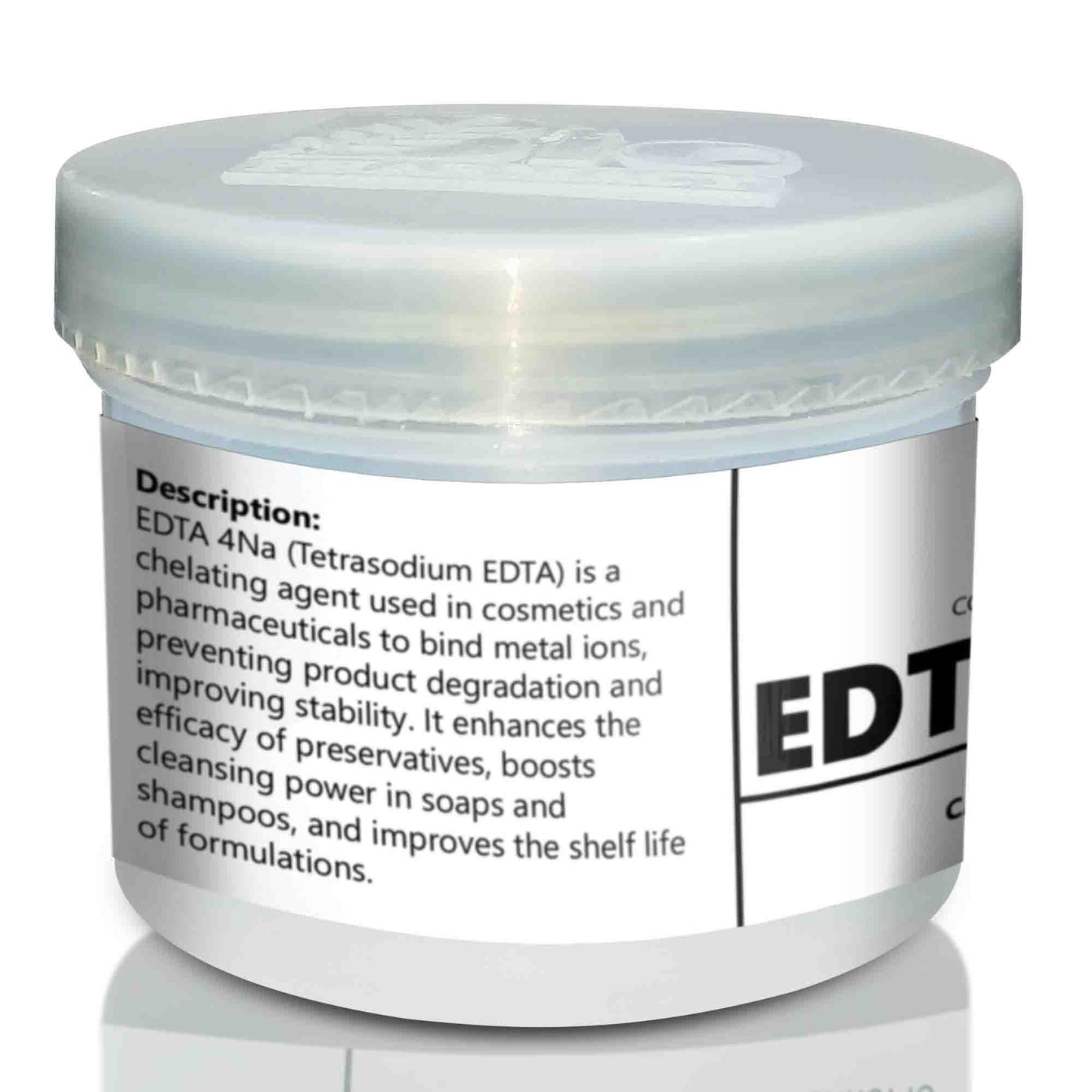
EDTA 4NA
EDTA 4NA
Key Functions:
Couldn't load pickup availability


Explore
Information About EDTA 4NA
✅ Key Features
- Improves stability by binding metal ions
- Enhances preservative performance
- Reduces discoloration, rancidity, and degradation
- Compatible with a wide range of pH and surfactants
- Highly effective in water-based and emulsified systems
🔬 Description
Tetrasodium EDTA, or EDTA 4NA, is the tetrasodium salt of ethylenediaminetetraacetic acid, a synthetic chelating compound developed in the mid-20th century and now one of the most widely used functional ingredients in cosmetic and personal care chemistry. It appears as a white, odorless crystalline powder that dissolves readily in water, making it straightforward to incorporate into aqueous systems at any stage of formulation. Its primary cosmetic role is to bind and deactivate polyvalent metal ions such as iron, copper, calcium, and magnesium that enter formulations through tap water, raw material impurities, and packaging contact throughout the product lifecycle.
The mechanism behind Tetrasodium EDTA lies in its ability to form stable, water-soluble coordination complexes with these metal ions through a process known as chelation. By sequestering these ions, it prevents them from catalyzing the oxidative degradation of oils and sensitive actives, interfering with the molecular function of preservative systems, or disrupting the structural integrity of emulsions over time. In surfactant-based systems such as shampoos and facial cleansers, it simultaneously improves foaming efficiency in hard water by removing the calcium and magnesium minerals responsible for reduced lather and soap film formation, delivering a noticeably cleaner consumer experience.
Bio Shop Pakistan supplies cosmetic-grade Tetrasodium EDTA suitable for DIY beauty formulators, soap makers, cosmetic chemists, and professional batch manufacturers seeking reliable chelation support across their formulation range.
📊 Technical Data
INCI Name : Tetrasodium EDTA
Chemical Name : Tetrasodium Ethylenediaminetetraacetate
CAS Number : 64-02-8
Molecular Formula : C10H12N2Na4O8
Appearance : White crystalline powder or granules
Odor : Odorless
pH (1% solution) : 10.5 – 11.5
Solubility : Freely soluble in water; insoluble in oils and anhydrous solvents
Specific Gravity : Verify with supplier (bulk density approximately 0.70 – 0.85 g/cm³)
Flash Point : Not applicable (non-flammable solid)
HLB Value : Not applicable
Recommended Use Level : 0.1% – 0.5% in cosmetics; up to 1.5% in rinse-off industrial cleansers
Type : Chelating agent / Sequestrant
Shelf Life : 2 – 3 years when stored sealed in cool, dry conditions
🧪 Recommended Usage
Skincare (Creams, Serums, Lotions) : ★★★★★
Tetrasodium EDTA is an essential functional additive in water-based skincare where it prevents metal-induced oxidation of sensitive actives like Vitamin C, retinol, and peptides. Add to the water phase at 0.1–0.2% before combining with emulsifiers or actives.
Haircare (Shampoo, Conditioner, Masks) : ★★★★★
Highly effective in haircare systems where hard water is a daily reality; it chelates calcium and magnesium to dramatically improve lather volume and rinse-off clarity. Use at 0.2–0.4% dissolved in the water phase of shampoos and conditioning formulas.
Soap Making (Cold Process, Melt and Pour) : ★★★☆☆
Useful in melt-and-pour soap bases to help control trace metal rancidity and extend shelf life of the finished bar. For cold process soap, chelation efficacy is limited at high saponification pH and sodium gluconate is generally the preferred alternative.
Body Care (Scrubs, Butters, Balms) : ★★★☆☆
Functional only in water-containing body care products such as emulsified scrubs and body lotions; offers no benefit in anhydrous formulas like pure butters or balms. Use at 0.1–0.2% in the water phase of any emulsified body product.
Functional Cosmetics (Deodorants, Sunscreen, Baby Care) : ★★★★☆
Valuable in water-based deodorant formulas for enhancing antimicrobial preservative systems and in emulsion sunscreens to protect UV filter stability against metal interference. Limit to 0.1–0.2% in baby care formulations and ensure full finished product safety assessment.
💡 Pro Tip
As a formulator, I consider Tetrasodium EDTA one of the most undervalued workhorses in cosmetic chemistry. Most beginners add it as an afterthought, but I treat it as a foundation ingredient in every water-based system I develop. It is especially indispensable when working with tap water from high-mineral areas, which describes most of Pakistan. Without a chelating agent in place, even a well-constructed preservative system can begin failing within weeks because metal ions disable the active antimicrobial components before they can do their job. I include EDTA 4NA at a baseline of 0.2% in virtually every emulsion, cleanser, and serum I produce as non-negotiable stability insurance, then adjust upward only if I know the water source is particularly hard.
ADVANCED TIP: When formulating L-Ascorbic Acid serums at concentrations of 10–15%, combine Tetrasodium EDTA at 0.15–0.2% with Ferulic Acid at 0.5% in the same water phase. The EDTA chelates the iron and copper ions that are the primary catalysts of Vitamin C oxidation and discoloration, while Ferulic Acid contributes radical-scavenging antioxidant protection. Set the formula pH between 2.8 and 3.2 using citric acid for maximum Vitamin C stability. This dual-protection strategy can extend the clear, stable shelf window of a 15% L-Ascorbic Acid serum from a few weeks to four to six months under normal storage conditions.
👩🔬 Skin Type Suitability
Normal Skin : ★★★★★ — Performs reliably as a chelating agent in standard formulations with no reported adverse effects on normal skin types.
Dry Skin : ★★★★☆ — Safe in moisturizing emulsions and contributes no drying effect whatsoever at the recommended use concentration of 0.1–0.5%.
Oily Skin : ★★★★★ — Ideal in lightweight water-based gels, toners, and cleansers that form the core routine for oily skin types.
Combination : ★★★★☆ — Compatible with balanced formulations targeting both dry and oily zones without disrupting skin tolerance or barrier function.
Sensitive Skin : ★★★☆☆ — Generally well-tolerated at low concentrations in finished formulas but concentrated solutions are highly alkaline and must never contact skin undiluted.
Mature Skin : ★★★★★ — Particularly valuable in anti-aging serums and rich creams where it shields sensitive actives like retinol and peptides from metal-catalyzed breakdown.
Acne-Prone : ★★★★☆ — Enhances antimicrobial preservative efficacy in acne-targeting cleansers and treatment serums, supporting both formula hygiene and active stability.
🧴 Formulation Ideas
CONCEPT 1: Stabilized Vitamin C Brightening Serum
Usage Level : 0.2%
Key Ingredients: L-Ascorbic Acid (15%), Ferulic Acid (0.5%), Niacinamide (5%), Distilled Water
Result : A high-potency brightening serum where EDTA 4NA chelates trace metal catalysts to prevent Vitamin C oxidation and discoloration, extending formula clarity and active potency.
CONCEPT 2: Hard Water Clarifying Shampoo
Usage Level : 0.3%
Key Ingredients: Sodium Lauryl Sulfoacetate, Cocamidopropyl Betaine, Panthenol, Citric Acid
Result : A sulfate-reduced clarifying shampoo that delivers improved lather and removes hard water mineral deposits from the scalp while preserving hair moisture balance.
CONCEPT 3: Preservative-Boosted Daily Moisturizer
Usage Level : 0.15%
Key Ingredients: Emulsifying Wax NF, Shea Butter, Glycerin, Phenoxyethanol-Ethylhexylglycerin Blend
Result : A lightweight daily lotion where EDTA 4NA deactivates trace metal contaminants to extend preservative effectiveness and maintain emulsion integrity throughout shelf life.
💧 Safety and Regulatory:
INCI Declared : Yes — required in all EU cosmetics; declare as Tetrasodium EDTA on the full INCI list
EU Cosmetics Reg : Permitted — no Annex II or Annex III restriction at standard cosmetic concentrations; evaluate per individual product safety assessment under Regulation EC 1223/2009
Rinse-Off Limit : No regulatory maximum established; industry standard practice is 0.1% – 0.5%
Leave-On Limit : No regulatory maximum established; industry standard practice is 0.1% – 0.2%
Allergen Alert : No — Tetrasodium EDTA is not a recognized cosmetic allergen under EU or IFRA listings
Skin Safety : Safe at recommended levels in finished formulations; concentrated undiluted solutions are highly alkaline and must not contact skin directly
Eye Area Use : Use with caution — ensure finished formula pH is within ocular tolerance range of 6.5–7.5 before eye area application
Ingestion : Not for internal use
Pregnancy Use : Consult physician
Child Safety : Safe in properly diluted finished formulas for children above age 3; keep raw powder secured away from children at all times
Ventilation : Recommended when handling dry powder in quantity to avoid inhalation of fine particulates
Storage : Cool, dry, well-ventilated place; keep container tightly sealed to prevent moisture absorption and caking
Container : HDPE or polyethylene bags and containers; avoid metal containers due to potential chelation interaction with container walls
⚠️ Warning: Tetrasodium EDTA powder produces a highly alkaline solution at pH 10.5–11.5. Wear gloves and a dust mask when handling dry powder. Do not add concentrated EDTA solution directly to acidic formulations without first diluting to working concentration. Regulatory and environmental bodies in the EU have raised ongoing concerns about the slow biodegradability of EDTA compounds in wastewater systems — always use at the minimum effective concentration required for the formulation.
Stability and Compatibility
Working pH Range : 4.0 – 9.0 (optimal chelation efficacy; activity diminishes significantly below pH 4.0)
Heat Stability : Stable up to 150°C; no degradation observed under standard hot-process cosmetic manufacturing temperatures
Freeze-Thaw Stable : Yes
Emulsion Type : Both (incorporated into the water phase of both O/W and W/O emulsions)
Emulsification Phase: Hot or Cold (pre-dissolve in water phase before combining with oil phase or actives)
Compatible With : Anionic surfactants, nonionic surfactants, most validated preservative systems, water-soluble polymers, humectants, and the majority of cosmetic actives
Incompatible With : Strong oxidizing agents, environments below pH 3.0 where chelation efficacy is severely reduced, and very high concentrations of polyvalent cation ingredients where intentional binding may occur
Oxidation Risk : Low — functions as an antioxidant synergist by deactivating the metal ion catalysts responsible for initiating lipid oxidation chains
Discoloration Risk : None under standard cosmetic formulation and storage conditions
Formulation Notes : Always pre-dissolve Tetrasodium EDTA fully in the water phase before introducing emulsifiers, actives, or oil phase components. For cold process work, dissolve in warm distilled water at 40–50°C to accelerate dispersion and ensure even distribution throughout the batch.
❓ FAQs
Q: What does EDTA 4NA actually do inside a cosmetic formula?
A: Tetrasodium EDTA binds polyvalent metal ions such as iron, copper, calcium, and magnesium that enter formulas through tap water, raw material impurities, and packaging contact. These ions catalyze oxidation, disable preservatives, and destabilize emulsions, so chelating them significantly extends both formula performance and shelf life.
Q: At what percentage should I use EDTA 4NA in my formulations?
A: The standard effective range is 0.1% to 0.5% in most cosmetic formulations. For leave-on skincare such as serums and creams, 0.1–0.2% is sufficient. For rinse-off products like shampoos and cleansers where hard water is a constant factor, 0.2–0.4% is the accepted industry range.
Q: Can EDTA 4NA replace a preservative in my formula?
A: No. Tetrasodium EDTA is a chelating agent and preservative booster, not a standalone antimicrobial preservative. It has no direct inhibitory action against bacteria, yeast, or mold on its own and must always be used alongside a complete, validated preservative system to provide full broad-spectrum protection.
Q: Is Tetrasodium EDTA approved for certified natural or organic cosmetic formulations?
A: Tetrasodium EDTA is a synthetic ingredient and is not permitted in products certified under COSMOS, NATRUE, or similar natural and organic standards. Formulators working within these certification frameworks should substitute it with approved natural chelating agents such as sodium gluconate, phytic acid, or sodium phytate.
Q: How does Tetrasodium EDTA compare to Disodium EDTA?
A: Both are chelating agents from the same EDTA family, but they differ in pH profile and application suitability. Tetrasodium EDTA carries four sodium ions and produces a highly alkaline 1% solution at pH 10.5–11.5, making it suited for neutral to alkaline formulations such as shampoos and body washes. Disodium EDTA produces a more neutral 1% solution at approximately pH 4.0–5.0, making it the preferred choice in low-pH formulations like Vitamin C serums and AHA toners where maintaining an acidic environment is critical for active stability.
Where Can You Safely Use EDTA 4NA
Discover how EDTA 4NA performs across different products — rated for safety, stability, and effectiveness.