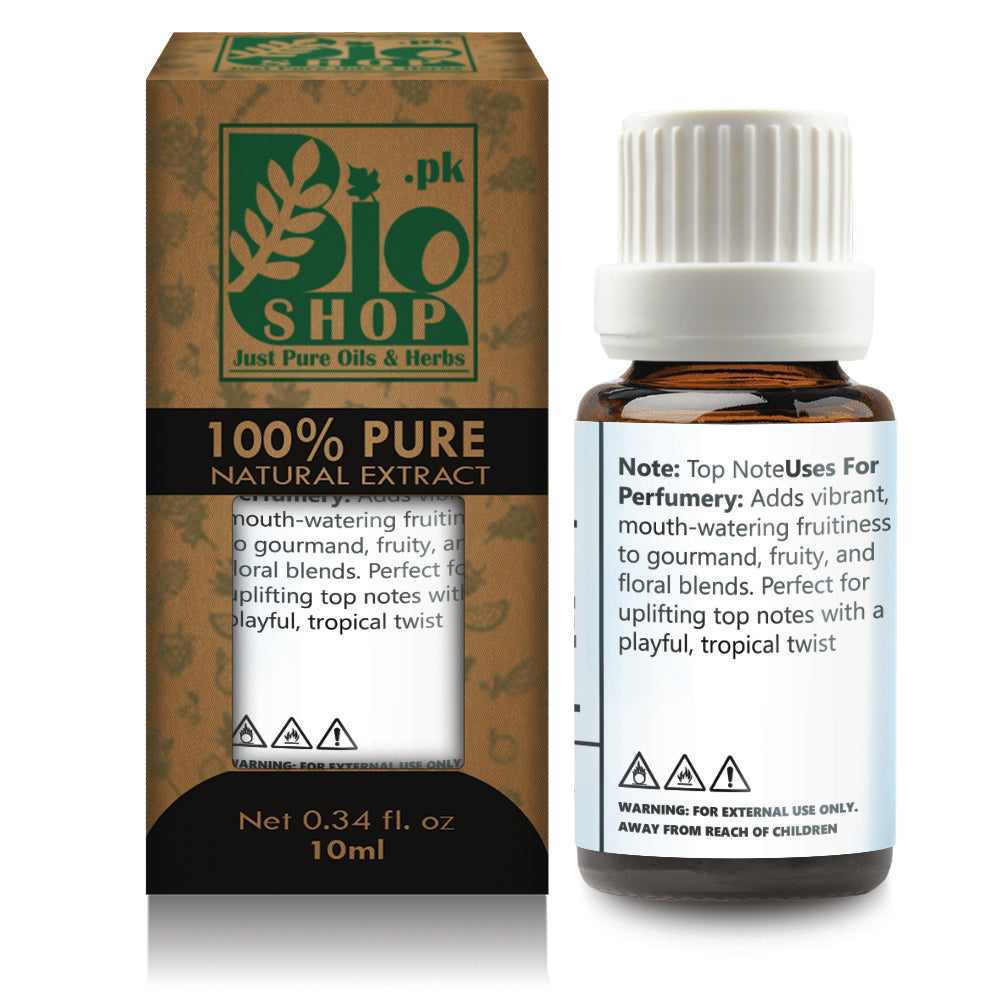
Bio Shop
Ethyl Butyrate (10% in DPG)
Olfactory Notes: Powerful, fruity, "Pineapple/Juice" top note.
Couldn't load pickup availability

Explore
Information About Ethyl Butyrate (10% in DPG)
Key Features
- 10% dilution in DPG for accurate, controlled blending
- Adds fruity juiciness and sparkle to top notes
- Ideal for tropical-themed perfumes, fruity attars, body sprays, and colognes
- Enhances natural fruit accords and gives a youthful opening
- Works in both oil and alcohol-based systems
About Ethyl Butyrate (10% in DPG)
Ethyl Butyrate (10% in DPG) is a pre-diluted version of this highly diffusive fruity ester, famous for its sweet, juicy pineapple, mango, and tropical fruit aroma with a bright and effervescent top note. This powerful ingredient is widely used to lift the opening of perfumes, especially in fruity florals, citrus colognes, tropical body sprays, and playful gourmand compositions.
Diluted in DPG (Dipropylene Glycol), this version is easy to use in oil-based perfumes, body mists, attars, and incense pastes, where it adds brightness, sweetness, and mouthwatering fruity appeal.
Olfactory Profile
SCENT DESCRIPTION : Ethyl Butyrate opens with an intensely juicy, ripe pineapple note that is fresh, tropical, and almost edible in character. There is a soft undercurrent of green banana and fresh mango that gives it natural fruit complexity beyond a single-fruit impression. At moderate concentrations it reads as a clean tropical burst, while at higher doses it can take on a slight solvent edge that lifts and diffuses powerfully. It is bright, cheerful, and immediately recognisable as a fruit accord anchor.
NOTE POSITION : Top Note
FRAGRANCE FAMILY : Fruity · Tropical · Green
FACETS : Pineapple · Tropical · Juicy · Banana · Fresh
TENACITY : Low — 1 to 2 hours on skin, up to 3 hours on paper
SILLAGE : High — projects strongly and immediately on application due to high volatility and excellent diffusion
Technical Specifications
Chemical Name : Ethyl Butanoate (Ethyl n-Butyrate)
CAS Number : 105-54-4
Synonyms : Ethyl n-Butyrate · Butyric Acid Ethyl Ester · Butyric Ether · Ethyl Butanoate
Purity : 99% min
Appearance : Colourless to very pale yellow clear liquid
Odor Threshold : Approximately 0.001 ppm in air — extremely low detection threshold
Solubility : Slightly soluble in water · Fully miscible in ethanol, IPM, and fragrance oils
Specific Gravity : 0.878 – 0.882 at 20°C
Flash Point : 24°C (75°F) — classified as a flammable liquid, Class IB
Type : Synthetic Ester
Applications & Usage Guidelines
Use 0.5–2.5% of this blend to brighten the top notes of fruity florals, tropical colognes, or edible-inspired scents. Ideal in formulations where you want to create a “juicy first impression.”
IFRA & Usage Rate
RECOMMENDED USAGE RATES
EDP (Eau de Parfum) : 0.5 – 1.5%
EDT (Eau de Toilette) : 0.3 – 1.0%
Body Lotion : 0.05 – 0.3%
Shampoo / Body Wash : 0.1 – 0.5%
Candle : 1.0 – 3.0%
Reed Diffuser : 2.0 – 6.0%
Bar Soap : 0.2 – 0.5%
IFRA 51st AMENDMENT STATUS
Ethyl Butyrate (CAS 105-54-4) is not listed as a restricted or prohibited material under the IFRA 51st Amendment. It is not classified as a known skin sensitiser under IFRA guidelines and does not appear on the IFRA Transparency List as a restricted ingredient. Standard industry usage rates and good manufacturing practice apply.
⚠ Flash Point Warning : Flash point is 24°C. This material is a Class IB flammable liquid. Keep away from open flames and heat sources. When blending for candles, always work below the flash point temperature and in a well-ventilated space.
⚠ High Volatility : Due to its extremely low boiling point and high volatility, store sealed in a cool location to prevent evaporative loss and maintain potency.
Blending Guide
METHOD 1 — DIRECT ACCORD BUILDING
Add ethyl butyrate as the first ingredient in your accord build to establish the fruity backbone. Start at 0.5% in your total formula and assess the impact before adjusting. This approach works well when building pineapple, mango, or tropical fruity accords from the ground up. It anchors the fruit theme before you layer in citrus, green, and floral materials.
METHOD 2 — TOP NOTE BRIGHTENER
Use ethyl butyrate at 0.2 to 0.5% as a brightening modifier added to an existing fragrance formula. It can lift a heavy or flat accord by injecting a fresh tropical burst without dramatically changing the core character. This is particularly effective in oriental and gourmand bases that need a lighter, fresher opening.
METHOD 3 — NATURALS EXTENSION
Pair ethyl butyrate with natural citrus or tropical essential oils such as lime or petitgrain to create a more complex and convincing natural fruit top note. The ester bridges the gap between synthetic and natural materials, adding depth and realism to essential oil-based compositions.
BEST PAIRINGS
Linalool → Rounds the fruitiness and adds a soft floral-tropical warmth
Citral / Lemon EO → Brightens and sharpens the citrus-tropical effect
Cis-3-Hexenol → Adds green freshness and natural juiciness to the fruit accord
Methyl Dihydrojasmonate → Creates a fruity-floral bridge with excellent radiance
Iso E Super → Adds woody depth and longevity behind the volatile top note
Vanillin → Creates a fruity-gourmand tropical dessert accord
Ambroxan → Anchors the volatile top note and extends sillage significantly
AVOID
Avoid combining at high concentrations with strong sulphurous or savoury materials such as dimethyl sulphide or fenugreek absolute, as these clash with the clean fruity character and create an unpleasant cooked-fruit or rotten effect.
Perfumer's Note
💡 Want to create a fun, fruity top note? 🍍🍊 Use 0.5–2.5% Ethyl Butyrate (10% in DPG) in tropical, citrus, or playful fruity perfume compositions.
🍓 Blend with other esters like ethyl maltol or benzyl acetate for strawberry, mango, or pineapple smoothie effects.
🌸 Add a touch of freesia or rose to bring balance and lift the fruit with floral freshness.
🧴 Excellent in mists, sprays, and oil roll-ons where diffusion and brightness are needed.
⚠️ Always test in small batches—this ester is powerful and can overpower other notes quickly.
Safety & Storage
Physical State : Clear colourless liquid at room temperature
Skin Safety : Generally considered safe at recommended usage rates — avoid undiluted prolonged skin contact
Eye Contact : Irritant — avoid contact with eyes, flush immediately with water if contact occurs
Ingestion : Not for internal use in cosmetic or fragrance applications — food-grade applications require separate food-safe supply chain
Ventilation : Work in a well-ventilated area due to high volatility and vapour accumulation at room temperature
Storage : Store in tightly sealed container away from heat, direct sunlight, and ignition sources — ideal storage below 20°C
Shelf Life : 24 to 36 months in sealed original container under proper storage conditions
Container : Store in glass or HDPE containers — avoid PET and polystyrene due to potential solvent interaction
Flammability : Highly flammable — Class IB flammable liquid, flash point 24°C — keep away from all open flames and sparks
FAQ
Q1: What does Ethyl Butyrate smell like?
It has a strong, juicy pineapple or tropical fruit scent—sweet, bright, and slightly tangy.
Q2: What is this used for in perfumery?
Mainly for fruity top notes in body sprays, mists, tropical colognes, fruity-floral perfumes, and fun gourmand scents.
Q3: Can it be used in oil perfumes?
Yes! The 10% DPG dilution allows for smooth blending in oil-based perfumes, roll-ons, and mists.
Q4: What does it blend best with?
Great with ethyl maltol, benzyl acetate, freesia, citrus oils, and light white florals.
Q5: Is it natural or synthetic?
It is synthetically produced, although it occurs naturally in some fruits like pineapples and apples.
Where Can You Safely Use Ethyl Butyrate (10% in DPG)?
Discover how Ethyl Butyrate (10% in DPG) performs across different applications—rated for safety, stability, and effectiveness.