Bio Shop
Ethyl Lactate (10% in DPG)
Ethyl Lactate (10% in DPG)
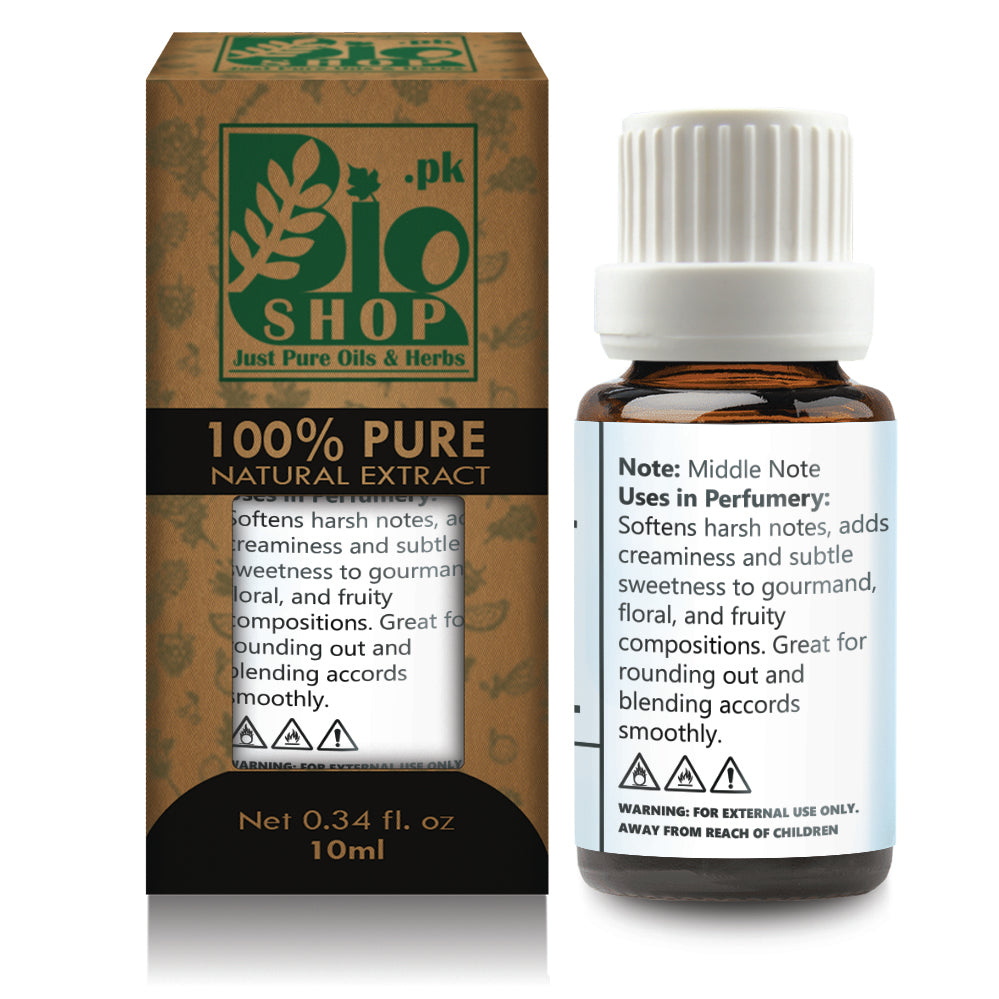
Olfactory Notes: Buttery, fruity, and slightly creamy with a "rum" facet.
Couldn't load pickup availability

Explore
Information About Ethyl Lactate (10% in DPG)
Key Features
✦ Natural biodegradable ester derived from lactic acid and ethanol — green, sustainable ingredient
✦ Delivers a soft, creamy, milky, and fruity character used in gourmand and dairy fragrance accords
✦ Dual-function ingredient — acts as both a fragrance note and a green solvent or carrier
✦ Excellent miscibility with water, ethanol, and most fragrance bases — no compatibility issues
✦ No IFRA 51st Amendment restrictions at standard usage levels — widely safe for most applications
✦ Vegan and cruelty-free — derived via fermentation or synthesis without animal-derived inputs
✦ Used in premium gourmand perfumes, dairy flavor accords, cosmetic emulsions, and hair care products
About Ethyl Lactate (10% in DPG)
Ethyl Lactate is the ethyl ester of lactic acid, first identified and isolated in the 19th century as a byproduct of fermentation chemistry. It occurs naturally in small quantities in fermented foods such as yoghurt, cheese, wine, and beer, giving it a long history of safe human exposure. Commercially, it is produced either through direct esterification of lactic acid with ethanol or via bio-based fermentation routes, making it one of the more sustainable aroma chemicals and solvents available to the modern formulator.
What sets ethyl lactate apart from conventional solvents and aroma chemicals is its rare combination of properties. It is fully water-miscible, biodegrades rapidly under environmental conditions, and carries a mild, pleasant odor rather than the harsh chemical profile of traditional solvents. In perfumery, its creamy lactonic facet bridges the gap between fruity esters and dairy musks, making it an exceptionally versatile modifier for building milky, skin-like, or gourmand bases. It also improves the spreadability and skin feel of cosmetic formulations when used as a carrier.
Bio Shop Pakistan supplies cosmetic-grade Ethyl Lactate suitable for DIY perfumers building gourmand and oriental accords, cosmetic formulators developing lotions and serums, and soap makers looking for stable, skin-compatible fragrance carriers.
Olfactory Profile
SCENT DESCRIPTION : Ethyl Lactate opens with a soft, clean fruitiness reminiscent of fresh cream and ripe apple skin. As it dries down, a warm, milky creaminess emerges — subtle and comforting, like warm yoghurt with a hint of sweet butter. It is never sharp or synthetic in character; instead it floats gently in a blend, lending a rounded, smooth texture to whatever it touches. At high concentrations a faint vinous or white wine nuance can be detected, adding depth to dairy and gourmand compositions.
NOTE POSITION : Top-Mid
FRAGRANCE FAMILY : Gourmand · Fruity · Lactonic
FACETS : Creamy · Milky · Fruity · Buttery · Clean
TENACITY : Low to Medium — 2 to 4 hours on skin, longer in rinse-off and diffuser applications
SILLAGE : Low — intimate and close to skin; functions primarily as a textural modifier rather than a projecting note
Technical Specifications
Chemical Name : Ethyl 2-hydroxypropanoate
CAS Number : 97-64-3
Synonyms : Ethyl L-Lactate, Lactic Acid Ethyl Ester, Ethyl Alpha-Hydroxypropionate, Ethyl DL-Lactate
Purity % : 98% minimum (cosmetic and fragrance grade)
Appearance : Clear, colorless to very pale yellow mobile liquid
Odor Threshold : Approximately 9–12 ppm in air (relatively high threshold — not a potent odorant)
Solubility : Fully miscible with water, ethanol, acetone, and most organic solvents
Specific Gravity : 1.030 – 1.035 g/cm³ at 20°C
Flash Point : 46°C (115°F) — closed cup
Type : Semi-synthetic (bio-based or synthetic esterification of lactic acid with ethanol)
Applications & Usage Guidelines
Fine Fragrance : ★★★★☆
Ethyl Lactate is used in fine fragrance as a creamy-fruity modifier rather than a starring note. It is particularly effective in gourmand, lactonic, and skin musk bases where a smooth, rounded texture is desired. Blenders use it to soften sharp aldehyic or green notes and to add a milky warmth to white floral and oriental compositions.
Attar and Oriental Blending : ★★★☆☆
In attar and oriental blending, Ethyl Lactate contributes a subtle creamy sweetness that complements oud, sandalwood, and musks without overwhelming the resinous core. It helps extend and round the opening of oil-based attars and improves the blendability of heavy base materials in concentrated perfume oil formats.
Functional Fragrance : ★★★★☆
Ethyl Lactate performs well in functional fragrance categories such as shampoos, conditioners, body washes, and fabric softeners. Its water miscibility eliminates solubilisation challenges, and its mild creamy note remains perceptible even after rinsing. It also serves as a green solvent carrier for less soluble fragrance ingredients.
Cosmetics : ★★★★★
In cosmetic formulations, Ethyl Lactate is valued as both a functional solvent and a mild conditioning agent. It is used in serums, lotions, face washes, and hair care products for its skin-compatible profile, gentle exfoliation support (via lactic acid affinity), and excellent spreadability. It poses no discolouration or instability risks in standard cosmetic systems.
Home Fragrance : ★★★☆☆
In candles and reed diffusers, Ethyl Lactate can be used both as a note modifier and as a co-solvent to improve fragrance oil miscibility with carrier oils and waxes. Its low tenacity means its contribution to the final scent character is modest, but it adds a soft creamy top note and helps reduce harshness in sweet gourmand blends.
IFRA & Usage Rate
Usage Rates by Application
EDP (Eau de Parfum) : 0.5 – 3.0% as a note modifier; up to 20% as a co-solvent carrier
EDT (Eau de Toilette) : 0.5 – 2.0% as a note modifier
Body Lotion : 0.2 – 1.5% for fragrance contribution; up to 5% as a functional carrier
Shampoo / Body Wash : 0.1 – 0.5% fragrance use; up to 3% as a solubilising carrier
Candle : 1.0 – 5.0% in fragrance blend
Reed Diffuser : 2.0 – 10.0% in diffuser compound
Soap (Cold Process) : 0.2 – 0.5% fragrance note; up to 2% functional use
IFRA 51st Amendment Status
Ethyl Lactate (CAS 97-64-3) does not appear as a restricted material in the IFRA 51st Amendment standards at typical fragrance and cosmetic usage levels. It is considered a low-hazard material with no mandatory IFRA concentration limits for standard applications.
⚠ Note: At concentrations above 10–15% in leave-on skin applications, mild transient irritation may occur in sensitive individuals. Conduct a patch test before use at elevated concentrations in leave-on products.
⚠ Note: Flash point of 46°C requires standard flammable liquid handling and storage protocols, particularly in candle and diffuser production environments.
Blending Guide
Method 1 — As a Creamy Fruity Modifier
Add Ethyl Lactate at 0.5 to 2% to round off sharp or harsh top notes in fruity, floral, and gourmand blends. It softens the overall texture and introduces a subtle milky warmth without contributing an obvious individual note character. This is the most common perfumery use — as a background smoother rather than a feature ingredient.
Method 2 — As a Green Co-Solvent
Use Ethyl Lactate at 5 to 20% as a partial replacement for isopropyl myristate, dipropylene glycol, or conventional solvents in perfume oil bases and cosmetic formulations. Its water miscibility and biodegradable profile make it suitable for eco-formulated products while maintaining good fragrance diffusion and skin feel.
Method 3 — As a Dairy and Lactonic Accord Builder
Combine Ethyl Lactate with other lactonic materials such as gamma-nonalactone, delta-decalactone, and ethyl vanillin to construct a full dairy or cream accord from the ground up. Ethyl Lactate contributes the bright, airy, fresh-cream opening while the heavier lactones provide the richer middle and base character.
Best Pairings
Gamma-Nonalactone → Deepens the dairy character; builds a coconut-cream bridge
Delta-Decalactone → Adds peach skin warmth; useful in fruity-creamy gourmands
Ethyl Vanillin → Produces a rich cream-and-vanilla dessert accord
Hedione / Methyl Dihydrojasmonate → Lifts and brightens the creamy note with a jasmine-green edge
Ambrette Seed / Habanolide → Adds musk depth to keep the accord from becoming too food-like
Linalool → Creates a soft floral-cream effect for skin and hair care blending
Isoamyl Acetate → Reinforces the fruity facet; useful in banana-cream style accords
Sandalwood (Mysore or synthetic) → Grounds the creaminess and adds longevity to the accord
Avoid
High phenolic materials such as eugenol and isoeugenol in high concentrations — Ethyl Lactate can accentuate sour off-notes when paired with strong phenolics if the overall balance is not managed carefully. Also avoid combining at high concentrations with strongly acidic fragrance compounds in water-based products, as mild ester hydrolysis can occur over extended storage.
Perfumer's Note
Ethyl Lactate is one of those ingredients that experienced perfumers reach for not because it announces itself, but because it quietly improves everything around it. I think of it as a texture ingredient — it doesn't add a note so much as it adds a feeling. When a gourmand accord feels slightly mechanical or a fruity top note feels too sharp and linear, a small dose of Ethyl Lactate at one percent or under invariably rounds things out. Its connection to natural fermentation chemistry gives it an almost biological warmth, a sense that the fragrance has a living, skin-connected quality rather than a purely synthetic one.
ADVANCED TIP: In oil-based attar and concentrated perfume oil formats where water miscibility is irrelevant, try using Ethyl Lactate at 5 to 8% of your total formula as both a diluent and a modifier simultaneously. Because it has a lower viscosity than most carrier oils, it reduces the heaviness of dense oud or resin bases while contributing its creamy character to the overall dry-down. Then add a tiny amount of delta-decalactone at 0.3% to lock the lactonic note in place — the result is a modern milk-and-oud accord that blends both Western gourmand and Eastern Oriental sensibilities with full authenticity.
Safety & Storage
Physical State : Clear colorless flammable liquid at room temperature
Skin Safety : Generally safe at recommended usage levels; mild irritant potential at high undiluted concentrations — dilute before skin contact
Eye Contact : Irritant — avoid direct contact; rinse thoroughly with water for 15 minutes if contact occurs and seek medical advice
Ingestion : Not for internal use in cosmetic or fragrance applications; seek immediate medical attention if swallowed in significant quantity
Ventilation : Use in well-ventilated areas; avoid prolonged inhalation of vapors at elevated temperatures
Storage : Store in a cool, dry, well-ventilated area away from heat sources, open flames, and direct sunlight — ideal storage below 25°C
Shelf Life : 24 months from date of manufacture when stored correctly in sealed containers
Container : Store in original HDPE or glass containers; avoid prolonged contact with reactive metals
Flammability : Flammable liquid — flash point 46°C; keep away from ignition sources; follow standard flammable liquid storage regulations
FAQ
Q: What is Ethyl Lactate used for in perfumery?
A: Ethyl Lactate is used as a creamy-fruity modifier in gourmand and dairy fragrance accords. It smooths harsh notes and adds a milky, rounded texture to blends without dominating the composition.
Q: Can I use Ethyl Lactate as a solvent instead of alcohol or DPG?
A: Yes. Ethyl Lactate is an effective green co-solvent and can partially replace DPG, IPM, or conventional solvents in perfume oils and cosmetic bases. Its water miscibility makes it especially useful in water-based formulations.
Q: Is Ethyl Lactate safe for leave-on cosmetic products like lotions and serums?
A: Yes, it is considered safe at standard cosmetic usage levels (typically below 5% in leave-on products). It has no IFRA restrictions and is widely used in personal care formulations globally.
Q: Does Ethyl Lactate have IFRA restrictions I need to follow?
A: Ethyl Lactate is not listed as a restricted substance under the IFRA 51st Amendment at normal usage levels. Always check the current IFRA guidelines and perform your own stability and safety assessment for your specific product category.
Q: How does Ethyl Lactate compare to ethyl acetate as a solvent and fragrance ingredient?
A: Ethyl Lactate is less volatile and less harsh than ethyl acetate, with a gentler creamy-fruity odor compared to ethyl acetate's sharp, nail-varnish character. Ethyl Lactate is also fully water-miscible, less toxic, and biodegrades more readily, making it the preferred green alternative in both fragrance and cosmetic formulation contexts.
Where Can You Safely Use Ethyl Lactate (10% in DPG)?
Discover how Ethyl Lactate (10% in DPG) performs across different applications—rated for safety, stability, and effectiveness.