Bio Shop
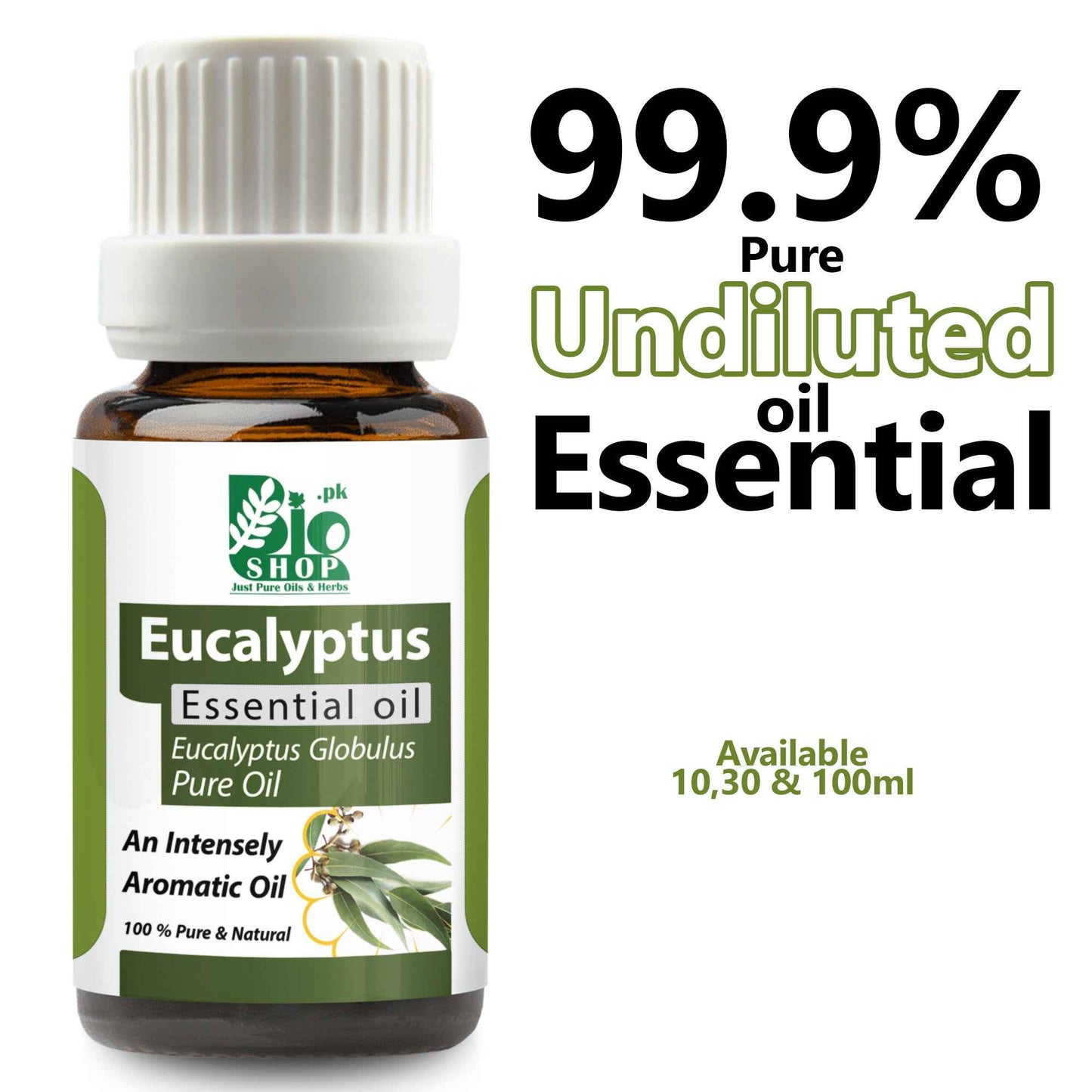
Eucalyptus Essential Oil
Eucalyptus Essential Oil
Olfactory Notes: Camphoraceous, cool, and medicinal, high-impact fresh top note.
Couldn't load pickup availability


Explore
Information About Eucalyptus Essential Oil
Key Features
✦ 100% pure steam-distilled essential oil from Eucalyptus globulus leaves and young branches
✦ Dominant constituent 1,8-cineole (eucalyptol) at 70–85%, delivering a sharp, camphoraceous freshness
✦ Top note with strong diffusive power — a small amount scents a formulation decisively
✦ Highly versatile: used in fine fragrance, aromatherapy, cleaning, personal care, and home fragrance
✦ Natural antimicrobial and cooling properties make it functional beyond scent alone
✦ Vegan and cruelty-free; no animal-derived ingredients or animal testing involved
✦ IFRA-regulated natural complex substance — always apply current amendment limits by product category
About Eucalyptus Essential Oil
Eucalyptus Essential Oil has been commercially produced since the mid-1800s, originating in Australia where Eucalyptus globulus, the Blue Gum tree, grows abundantly. Steam distillation of the fresh leaves and terminal branchlets yields a pale yellow to almost colorless oil with an unmistakable medicinal-fresh character. Its high 1,8-cineole content, which can reach 85% in premium grades, made it an early staple of the pharmaceutical and respiratory health industries, and it later became essential to the fragrance and cleaning product sectors.
What sets eucalyptus oil apart from synthetic eucalyptol is the presence of minor trace constituents — alpha-pinene, limonene, and other terpenes — that give the natural oil a rounder, more complex character than the isolated aroma chemical. This complexity makes it particularly valuable in fine fragrance and natural perfumery where a simple synthetic note would feel flat. Its high volatility also makes it an effective top-note lifter in accord work, brightening heavier base materials and adding immediate impact to a composition.
Bio Shop Pakistan supplies cosmetic-grade Eucalyptus Essential Oil suitable for DIY perfumers, attar blenders, soap and candle makers, personal care formulators, and home fragrance developers across Pakistan.
Olfactory Profile
SCENT DESCRIPTION : Eucalyptus Essential Oil opens with an immediately powerful, sharp, and penetrating camphoraceous freshness. The scent is clean and medicinal with a cooling, almost mentholated quality that is distinctly refreshing without being minty. Beneath the dominant cineole note there is a faint green, slightly woody undertone that gives the oil body. The overall impression is of crisp forest air, clinical cleanliness, and invigorating vitality.
NOTE POSITION : Top to Top-Mid
FRAGRANCE FAMILY : Fresh Aromatic · Fougere · Herbal
FACETS : Camphoraceous · Fresh · Medicinal · Green · Cooling
TENACITY : Medium — 3 to 5 hours on skin; longer on fabric and in wax
SILLAGE : High — projects strongly in the first hour, diffuses quickly and broadly
Technical Specifications
INCI Name: Eucalyptus Globulus Leaf Oil
CAS Number: 8000-48-4
FEMA Number: 2466
Appearance: Clear, colorless to very pale yellow mobile liquid
Odor Description: Fresh, sharp, intensely camphoraceous and clean with cool medicinal, faintly woody, and subtle citrus-like undertones
Solubility: Soluble in alcohol and fixed oils; insoluble in water
Flash Point: Approximately 49–54°C
Specific Gravity: Approximately 0.906–0.920 g/cm³
Refractive Index: Approximately 1.458–1.470
Recommended Usage Level in Fine Fragrance: 0.5% – 5.0%
IFRA Status: Not currently restricted under IFRA guidelines for standard usage categories; always consult the most current IFRA amendments for category-specific confirmation
Note: Technical values are indicative industry reference ranges. Always verify against your specific batch Certificate of Analysis (COA).
Applications & Usage Guidelines
Fine Fragrance : ★★★★☆
Eucalyptus oil is a workhorse top note in aromatic fougeres, fresh colognes, and aquatic accords. Its powerful diffusive opening adds immediate impact and lift to a composition. Use at 0.5–3% to brighten or define the top accord without overwhelming the mid and base structure.
Aromatherapy & Functional Blends : ★★★★★
This is eucalyptus oil's strongest category. It is among the most recognized aromatherapy materials globally, used in respiratory support blends, cooling muscle rubs, and focus-enhancing diffuser compositions. Dilute to 2–3% in a carrier for topical use; use undiluted in diffusers at 5–10 drops per session.
Personal Care & Cosmetics : ★★★★☆
Highly valued in shampoos, scalp treatments, cooling gels, aftershaves, and facial cleansers. The antimicrobial properties of 1,8-cineole add functional benefit. Apply IFRA and cosmetic regulation limits strictly and ensure proper emulsification in aqueous systems.
Home Fragrance & Cleaning : ★★★★★
Eucalyptus oil is a natural fit for household cleaning products, floor cleaners, surface sprays, and disinfectant formulations where its antimicrobial activity is a genuine benefit. In candles and reed diffusers it gives a spa-like, clean-air impression that is consistently popular with Pakistani consumers.
Soap Making : ★★★★☆
Performs well in cold process and melt-and-pour soap at 1–3% of total oil weight. The scent behaves reasonably in soap batter, though acceleration can occur in high-water formulations. A small amount of sodium lactate and a light anchor in the fragrance blend helps retention through cure.
IFRA & Usage Rate
RECOMMENDED USAGE RATES
EDP / Perfume Concentrate : 2.0 – 5.0%
EDT : 1.0 – 3.0%
Body Lotion / Cream : 0.5 – 2.0%
Shampoo / Body Wash : 0.5 – 2.0%
Cold Process Soap : 1.0 – 3.0%
Candle (Soy / Para) : 3.0 – 8.0%
Reed Diffuser : 10.0 – 20.0%
Cleaning Products : 0.5 – 3.0%
Diffuser / Aromatherapy : Undiluted in device; 2–3% in carrier for topical use
IFRA 51ST AMENDMENT LIMITS
(Eucalyptus globulus leaf oil — verify current limits at ifrafragrance.org)
Category 1 (Lip products) : 0.6% — ⚠️ use with caution; verify
Category 2 (Deodorant sprays, body spray EDT) : 2.0%
Category 3 (Eye area, baby products) : 0.6% — ⚠️ avoid near eyes
Category 4 (Fine fragrance leave-on skin) : 2.0%
Category 5 (Body lotion, cream, face leave-on) : 2.0%
Category 7 (Rinse-off body wash, shampoo) : 5.0%
Category 9 (Fabric softener, laundry) : 5.0%
Category 10 (Candles, air fresheners) : No restriction
Category 11 (Non-skin contact, reed diffuser) : No restriction
⚠️ Eucalyptus oil is classified as a natural complex substance under IFRA. Limits are based on the restricted constituent profile including 1,8-cineole and terpene content. Always apply the most current 51st Amendment standards.
⚠️ Not recommended for use around infants under 2 years or near the face of young children due to 1,8-cineole toxicity concerns at high inhalation doses.
⚠️ Confirm all limits at ifrafragrance.org before final formulation.
Blending Guide
METHOD 1 — TOP NOTE ANCHOR IN FINE FRAGRANCE
Add eucalyptus oil at 0.5–2% to the top accord of fresh, aromatic, or fougere compositions. It works as a natural lift agent, making synthetic top notes feel more alive and diffusive. Introduce it after the other top notes are balanced so you can judge its brightness objectively.
METHOD 2 — FUNCTIONAL AROMATHERAPY BLEND
Combine eucalyptus with peppermint, rosemary, and tea tree in a base of fractionated coconut oil at 2–3% total essential oil concentration for a classic respiratory or muscle-relief blend. The synergy between the four oils is well-documented and produces a noticeably more rounded medicinal accord than any single ingredient alone.
METHOD 3 — HOME FRAGRANCE AND CLEANING PRODUCT ACCORD
In reed diffusers, candles, and surface cleaners, use eucalyptus as the dominant note anchored by citrus top notes and a small amount of cedarwood or pine to give depth. A ratio of 60% eucalyptus, 25% lemon or orange, and 15% cedarwood creates a clean, spa-like accord that is extremely popular in the Pakistani home fragrance market.
BEST PAIRINGS
Peppermint → Intensifies the cooling and mentholated freshness; classic medicinal accord
Lavender → Balances the sharpness and adds floral softness; aromatherapy classic
Lemon / Bergamot → Adds citrus brightness and lifts the top note further
Rosemary → Creates a fresh herbal aromatic accord; strong in functional fragrances
Tea Tree → Reinforces antimicrobial positioning; pairs well in cleaning products
Cedarwood → Grounds the volatile top note; adds woody depth and improves tenacity
Pine Needle → Forest, clean-air character; excellent in home fragrance compositions
Frankincense → Unusual but effective pairing; adds resinous depth to medicinal accords
AVOID
Do not blend with heavy musks or rich orientals as the dominant base — eucalyptus will clash and create an unflattering medicinal-sweet dissonance rather than a cohesive accord. Avoid using near vanilla-heavy or gourmand bases unless the brief specifically calls for a medicated character.
Perfumer's Note
Eucalyptus oil is one of those ingredients that perfumers either use with precision or overuse to their regret. At the right dose — typically under 2% in a fine fragrance — it performs like a window opened in a stuffy room: sudden, decisive, and invigorating. It does not blend quietly or passively. It announces itself immediately and pushes everything else to the periphery for the first few minutes of wear. That quality is exactly what makes it so valuable when used intentionally. In the fougere and aromatic family it provides a natural lift that no synthetic aldehyde or citrus top note fully replaces, and in functional formulations its scent doubles as a credibility signal — the consumer immediately believes the product is working.
ADVANCED TIP : Try using eucalyptus oil at a trace level of 0.1–0.3% in oriental or woody base-heavy compositions where you want the top note to feel "clean" without introducing a fresh accord. At this micro-dose the brain registers subliminal freshness without consciously identifying eucalyptus as a note. This technique is common in high-end masculine fragrances to prevent the opening from feeling stale or heavy, and it is particularly effective in attar work where top notes are structurally weak due to the absence of alcohol.
Safety & Storage
Physical State : Clear to pale yellow mobile liquid at room temperature
Skin Safety : Dilute before topical use; max 2% in leave-on products per IFRA guidelines; may cause sensitization in undiluted form
Eye Contact : Avoid direct contact; flush thoroughly with water for 15 minutes if contact occurs and seek medical advice
Ingestion : Not for internal use; if swallowed do not induce vomiting; seek immediate medical attention
Ventilation : Use in a well-ventilated area; avoid prolonged inhalation of concentrated vapors
Inhalation Risk : High concentration vapor may cause headache or dizziness in sensitive individuals; not for use near infants
Storage : Store in a cool, dark location between 10–25°C; keep away from direct sunlight and heat sources
Shelf Life : 12–24 months from manufacture date if stored correctly; terpene oxidation will degrade quality over time
Container : Keep in original amber or dark glass bottle; ensure cap is tightly sealed after each use
Flammability : Combustible liquid — flash point approximately 49°C; keep away from open flames and ignition sources
FAQ
Q: Can I use Eucalyptus Essential Oil directly on my skin without diluting it?
A: No. Always dilute eucalyptus oil in a carrier oil before skin application. For leave-on products the safe maximum is 2%. Undiluted application can cause irritation, sensitization, or chemical burns, especially on sensitive skin.
Q: What is the difference between Eucalyptus globulus and Eucalyptus radiata oils?
A: E. globulus is sharper, more camphoraceous, and higher in 1,8-cineole at 70–85%. E. radiata is softer, slightly more floral, and gentler — often preferred for children's formulations and sensitive respiratory blends. Bio Shop stocks E. globulus, which is the standard cosmetic and fragrance trade grade.
Q: Is eucalyptus oil safe to use in candles and reed diffusers?
A: Yes. IFRA places no restriction on eucalyptus oil in non-skin-contact applications such as candles and reed diffusers. Use 3–8% in candle wax and 10–20% in reed diffuser base for effective scent throw.
Q: Can eucalyptus oil be used around children and babies?
A: Not near infants under 2 years or directly on or near the face of young children. The high 1,8-cineole content can cause breathing difficulties in very young children at high inhalation doses. In diffusers used in rooms with children, use minimal quantities and ensure good ventilation.
Q: How does Eucalyptus Essential Oil compare to synthetic Eucalyptol (1,8-Cineole)?
A: Synthetic eucalyptol is a single aroma chemical that delivers a pure, predictable cineole note. The natural essential oil contains 70–85% eucalyptol plus alpha-pinene, limonene, and other terpenes that give it a rounder, more complex character. For IFRA compliance and batch consistency, synthetic eucalyptol is easier to work with; for natural perfumery and aromatherapy claims, the full essential oil is preferred.
Where Can You Safely Use Eucalyptus Essential Oil?
Discover how Eucalyptus Essential Oil performs across different applications—rated for safety, stability, and effectiveness.
Medicinal and herbaceous aroma which on dilution with DPG becomes little sweet too, although solution becomes cloudy but settled after a month
found it very effective and useful