Bio Shop
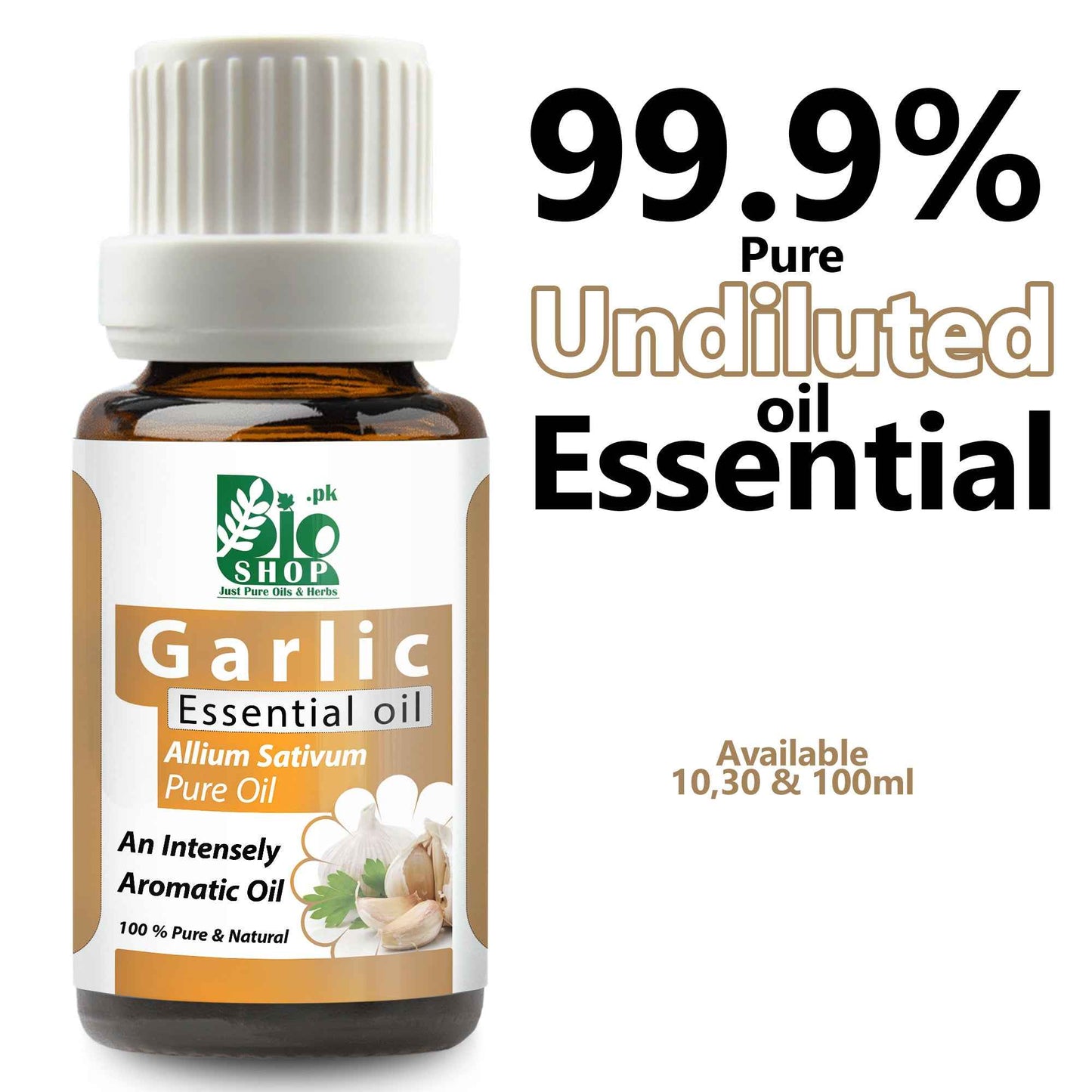
Garlic Essential Oil
Garlic Essential Oil
Olfactory Notes: Extremely pungent; used in trace amounts for savory/experimental notes
Couldn't load pickup availability


Explore
Information About Garlic Essential Oil
Key Features
✦ Steam-distilled from Allium sativum bulbs — 100% pure, undiluted cosmetic-grade essential oil with no additives or carriers
✦ Exceptionally rich in diallyl disulfide and allicin — among the most potent natural antimicrobial and antifungal actives in aromatherapy
✦ Clinically studied for scalp circulation stimulation, hair growth promotion, and antifungal activity against Candida species and dermatophytes
✦ Active at concentrations as low as 0.1% — highly cost-effective per batch in therapeutic hair and skin formulations
✦ Core ingredient in anti-hair fall oils, anti-dandruff shampoos, scalp serums, antifungal balms, and Ayurvedic taila preparations
✦ 100% natural, vegan, and cruelty-free — no synthetic additives, preservatives, or dilution agents
✦ Handles dual duty as both a functional active and traditional Ayurvedic ingredient — bridges herbal and evidence-based cosmetic formulation
About Garlic Essential Oil
Garlic Essential Oil is obtained by steam distillation of the dried or fresh bulbs of Allium sativum, a plant cultivated throughout South Asia, the Middle East, Europe, and Central Asia for thousands of years. Long before modern cosmetic science, Ayurvedic physicians and folk herbalists across the Indo-Pakistani subcontinent incorporated garlic into medicated oils, balms, and tonics for its renowned antimicrobial, antifungal, and circulatory-stimulating properties. The essential oil concentrates the volatile sulfur compounds responsible for garlic's characteristic pungency, producing an active ingredient of extraordinary functional depth that has since been investigated in published dermatological and trichological research.
What distinguishes Garlic Essential Oil from other natural actives is the sheer potency and breadth of its bioactive profile. Organosulfur compounds — primarily diallyl disulfide, diallyl trisulfide, and allyl propyl disulfide — deliver documented antimicrobial activity against a wide spectrum of bacteria, and antifungal action against the Malassezia species responsible for dandruff and seborrheic dermatitis. Research has also explored its role in improving scalp microcirculation and stimulating follicular activity, positioning it as a functionally grounded active for hair growth formulations. Unlike many plant actives requiring high loading rates, garlic oil is physiologically effective at 0.1–0.5%, making each millilitre highly productive in batch production.
Bio Shop Pakistan supplies cosmetic-grade Garlic Essential Oil suitable for DIY hair care formulators, herbalists, Ayurvedic product developers, soap makers, and professional cosmetic chemists seeking a potent, research-backed, traditionally grounded active ingredient for functional personal care and therapeutic formulations.
Olfactory Profile
SCENT DESCRIPTION : Garlic Essential Oil delivers an intensely sharp, sulfurous, and unmistakably pungent aroma — raw, penetrating, and deeply earthy with a warm acrid undertone that lingers long after application. The scent carries a primitive, almost underground character: sulfurous on the opening, rooty and medicinal at the heart, settling into a persistent base note with a savoury, almost broth-like warmth. At sub-threshold concentrations in complex blends, it contributes an unusual animal-adjacent depth that some experimental perfumers have employed in tobacco and leather accords. In the vast majority of applications, however, it is used for its functional properties rather than its fragrance character.
NOTE POSITION : Base
FRAGRANCE FAMILY : Herbaceous / Medicinal / Savory
FACETS : Sulfurous · Pungent · Earthy · Sharp · Rooty
TENACITY : Very High — 8 to 12+ hours; sulfur compounds are extremely persistent on skin and fabric
SILLAGE : Very High — detectable at significant distance; extremely low odor threshold means careful dosage management is essential in any formulation
Technical Specifications
CHEMICAL NAME : Allium sativum (Garlic) Bulb Oil
CAS NUMBER : 8000-78-0
SYNONYMS : Garlic Oil, Allium sativum Oil, Garlic Bulb Essential Oil, Garlic Steam Distillate
PURITY : 100% neat essential oil, undiluted
APPEARANCE : Pale yellow to amber liquid; mobile
ODOR THRESHOLD : Extremely low — approximately 0.001 to 0.008 ppm
SOLUBILITY : Slightly soluble in water; soluble in ethanol, fixed oils, and carrier oils
SPECIFIC GRAVITY : 1.050 – 1.095 at 20°C (verify against supplier CoA)
FLASH POINT : Approximately 79°C / 174°F (verify against supplier CoA)
TYPE : Natural — steam-distilled essential oil from Allium sativum bulbs
Applications & Usage Guidelines
Hair Care Formulations — ★★★★★
Garlic Essential Oil is most widely deployed in scalp and hair care — anti-hair fall oils, anti-dandruff shampoos, scalp serums, and intensive pre-wash treatments. It stimulates blood microcirculation in the scalp, strengthens follicles, and its antifungal action directly addresses Malassezia-driven dandruff and seborrheic conditions. Usage rates of 0.2–0.5% in hair oils and 0.1–0.3% in rinse-off shampoos are standard starting points.
Antifungal and Antimicrobial Topical Products — ★★★★★
Among all natural essential oil actives, garlic oil ranks at the top tier for antifungal potency, with documented efficacy against Candida species and dermatophytes. It is incorporated into foot care creams, antifungal balms, therapeutic body oils, and skin infection preparations at 0.1–0.3% in leave-on products. Dosage must remain conservative — activity is achieved at very low rates and exceeding safe limits increases sensitization risk.
Herbal and Ayurvedic Formulations — ★★★★☆
Garlic oil has been central to Ayurvedic medicated oil preparations (taila) for millennia, used in joint care balms, therapeutic massage oils, and respiratory rubs. It works synergistically with sesame oil, camphor, eucalyptus, and clove in traditional Ayurvedic frameworks. Usage rates in medicated oils can extend to 0.5–2.0% depending on the application and therapeutic intent.
Therapeutic Soap and Rinse-Off Products — ★★★☆☆
In cold-process and hot-process soap, garlic oil contributes antimicrobial benefit to therapeutic cleansing bars at 0.1–0.3%. Odor management is critical — it should be paired with dominant aromatic oils such as tea tree, peppermint, or eucalyptus to mask its pungent character. The rinse-off format significantly reduces residual odor on skin, making soap a more forgiving application category than leave-on products.
Aromatherapy and Respiratory Wellness Blends — ★★☆☆☆
Garlic oil has traditional use in chest rubs, inhalation blends, and therapeutic massage preparations for immune and respiratory support. It is not suitable for personal diffusion in living spaces due to its overwhelming scent character. In carrier blends for chest application, usage rates of 0.05–0.2% are appropriate, always combined with more pleasant aromatic partners.
IFRA & Usage Rate
RECOMMENDED USAGE RATES
EDP (Eau de Parfum) : Not recommended — overwhelming sulfurous odor makes fragrance use impractical
EDT (Eau de Toilette) : Not recommended
Body Lotion : 0.05 – 0.1% (therapeutic use only; patch test essential)
Shampoo / Body Wash : 0.1 – 0.3% (mask with complementary actives; rinse-off format reduces irritation risk)
Candle : Not recommended — unpleasant combustion character; sulfur compounds release off-notes when burned
Reed Diffuser : Not recommended — unsuitable for ambient diffusion
Soap (Cold Process) : 0.1 – 0.3% (therapeutic antimicrobial bar soap only)
Hair Oil (Leave-On) : 0.2 – 0.5%
Scalp Serum : 0.1 – 0.3%
Antifungal Cream : 0.1 – 0.3%
Chest Rub / Massage Oil : 0.05 – 0.2%
IFRA 51ST AMENDMENT LIMITS
Garlic Essential Oil (CAS 8000-78-0) is included in the IFRA restricted ingredients list due to the sensitization potential of its organosulfur compounds, particularly diallyl disulfide. IFRA limits apply across all product categories and are very low, especially for leave-on skin contact applications.
⚠️ Always consult the current IFRA 51st Amendment standard at ifrafragrance.org for precise category-by-category limits before formulating any leave-on or rinse-off consumer product.
⚠️ Garlic Essential Oil is a documented skin sensitizer when used above IFRA-recommended concentrations. Patch testing is mandatory for all leave-on applications.
⚠️ Not suitable for lip products, eye-area products, or application to broken, inflamed, or compromised skin under any circumstances.
⚠️ If skin redness, stinging, or sensitization occurs, discontinue use immediately and wash area thoroughly with soap and water.
Blending Guide
METHOD 1 — CARRIER OIL PRE-DILUTION (For Scalp and Hair Applications)
Always pre-dilute garlic essential oil in a neutral carrier — coconut, sesame, jojoba, or castor oil — at a 1–2% concentration before incorporating into your final formula. Pre-dilution prevents localized hot spots, ensures even distribution throughout the base, and reduces the risk of scalp irritation from undiluted contact. Incorporate into the oil phase of emulsion formulations, ensuring thorough mixing before proceeding.
METHOD 2 — ODOR MASKING STRATEGY (For Leave-On and Functional Products)
Garlic oil requires deliberate odor management in any consumer-facing formulation. Pair it with strong therapeutic essential oils that complement its medicinal profile — rosemary, tea tree, peppermint, and eucalyptus are the most effective masking partners. Use the masking oils at 3 to 5 times the garlic concentration to achieve odor neutralization without suppressing the therapeutic character of the blend. This approach creates a cohesive medicinal scent profile rather than an unmanageable sulfurous one.
METHOD 3 — COOL-PHASE ADDITION (For Rinse-Off and Emulsion Formulations)
In shampoos, conditioners, and emulsion-based products, add garlic oil during the cool phase of manufacturing — below 40°C — to preserve its volatile active compounds. For aqueous formulations, pre-solubilize using Polysorbate 80 or a compatible hydrotrope before blending into the water phase. Begin at the lower end of the recommended usage rate and conduct stability and odor acceptance testing before increasing concentration.
BEST PAIRINGS
Rosemary Essential Oil → Synergistic scalp stimulation and hair growth support; partially masks garlic odor; extends the herbal therapeutic profile
Tea Tree Essential Oil → Antifungal synergy; excellent for anti-dandruff and scalp infection formulations; contributes strong odor masking
Peppermint Essential Oil → Cooling scalp sensation; effective odor masking; improves freshness perception in hair products
Eucalyptus Essential Oil → Antimicrobial support; naturalizes garlic's medicinal character; contributes respiratory benefit in chest rubs
Sesame Oil (carrier) → Traditional Ayurvedic base; harmonizes with garlic in taila preparations; adds nourishing lipid support
Onion Seed Oil (carrier) → Powerful synergy for hair fall reduction and follicle strengthening; traditional pairing in South Asian hair care
Castor Oil (carrier) → Dense carrier ideal for intensive scalp treatments; complements garlic's penetrating circulatory action
AVOID
✦ Avoid combining garlic essential oil with delicate floral, citrus, or fresh fragrance materials — it will overpower and permanently contaminate the blend
✦ Avoid use in facial products unless specifically formulated as an acne or antifungal therapeutic preparation under professional guidance
✦ Avoid application near the eye area, on mucous membranes, lips, or any broken and inflamed skin
✦ Avoid exceeding IFRA-recommended limits in leave-on skin contact formulations — sensitization risk increases significantly above threshold concentrations
Perfumer's Note
Garlic Essential Oil is not an ingredient I reach for in conventional fragrance work — it belongs to an entirely different world of formulation. What genuinely fascinates me about it is where it sits at the intersection of food, medicine, and raw nature. At concentrations well below 0.05% in a complex blend, something unexpected happens: the sulfurous edge rounds and softens, contributing an unusual savoury, almost animal-like base note depth that very few other materials can replicate. A handful of experimental perfumers working in leather and tobacco territories have quietly used it for exactly this effect. But the true domain of garlic oil is functional formulation — and here, quite simply, it has no equal among natural steam-distilled essentials. No other single oil delivers this breadth of antifungal, antimicrobial, and scalp circulatory activity at sub-1% usage rates, with the full endorsement of both Ayurvedic tradition and modern dermatological research behind it.
ADVANCED TIP: For a highly effective anti-hair fall scalp oil, combine 0.3% Garlic Essential Oil with 0.5% Rosemary Essential Oil and 0.3% Peppermint Essential Oil in a carrier blend of 40% Castor Oil, 40% Sesame Oil, and 20% Jojoba Oil. The rosemary and peppermint provide both odor masking and complementary circulatory stimulation, while the three-oil carrier addresses follicle lubrication, penetration, and scalp environment. Apply directly to the scalp 30–60 minutes before washing and massage in thoroughly. This combination targets the three key mechanisms implicated in androgenetic hair thinning — poor microcirculation, fungal microbiome imbalance, and follicular sensitivity — making it one of the most functionally complete scalp treatments achievable entirely within a DIY natural formulation
Safety & Storage
PHYSICAL STATE : Liquid — pale yellow to amber, mobile essential oil
SKIN SAFETY : Always dilute before use; documented skin sensitizer at elevated concentrations; patch test mandatory for all leave-on applications; avoid undiluted skin contact
EYE CONTACT : Avoid completely; if contact occurs, flush immediately with large amounts of clean water for a minimum of 15 minutes and seek medical attention
INGESTION : Not for internal use in any cosmetic context; keep away from children at all times
VENTILATION : Work in a well-ventilated area; highly volatile sulfurous vapour can cause eye irritation, nasal discomfort, and respiratory sensitivity on prolonged exposure
STORAGE : Store in a cool, dark location away from heat, humidity, and direct sunlight; refrigeration recommended to extend shelf life and preserve sulfur compound stability
SHELF LIFE : 12 to 18 months from date of opening when stored correctly; organosulfur compounds are susceptible to oxidation and may alter in character over time
CONTAINER : Store in the original dark glass or food-grade stainless steel container; avoid prolonged contact with reactive metals; keep tightly sealed at all times to prevent vapour loss and cross-contamination
FLAMMABILITY : Combustible liquid; flash point approximately 79°C / 174°F; keep away from open flame, heat sources, and ignition sources during handling and storage
FAQ
Q: What is Garlic Essential Oil primarily used for in cosmetics?
A: It is used mainly in scalp and hair care — promoting hair growth, reducing hair fall, and treating fungal dandruff. At low concentrations it also serves as a potent antimicrobial and antifungal active in therapeutic skin and foot care preparations.
Q: How do I manage the strong smell when formulating with it?
A: Pair it with strong therapeutic essential oils — tea tree, rosemary, peppermint, or eucalyptus — at three to five times the garlic concentration. These mask the sulfurous odor while complementing its therapeutic profile. Rinse-off formats like shampoos are considerably easier to manage than leave-on products.
Q: What concentration should I use in a DIY hair oil?
A: Start at 0.2% to 0.3% in your carrier oil blend. This is sufficient to deliver meaningful therapeutic benefit without triggering scalp irritation. Pre-dilute in a carrier before incorporating into your final formula — never apply garlic essential oil neat directly to the scalp or skin.
Q: Is Garlic Essential Oil safe for sensitive skin types?
A: No — it is a known skin sensitizer and must always be diluted to safe working concentrations. Those with sensitive skin, eczema, psoriasis, or broken skin should avoid it entirely. Always conduct a patch test on the inner forearm before first use in any leave-on preparation, and adhere strictly to IFRA limits.
Q: How does Garlic Essential Oil compare to Onion Seed Oil for hair growth?
A: They are complementary rather than interchangeable. Garlic essential oil provides stronger antifungal and antimicrobial activity and more pronounced circulatory stimulation at the scalp level. Onion seed oil (Nigella sativa) delivers broader nutritional support and DHT-reducing activity through its thymoquinone content. For maximum anti-hair fall benefit, many experienced formulators use both together in a single scalp treatment — combining garlic's antimicrobial depth with onion seed's follicle-nourishing profile.
Where Can You Safely Use Garlic Essential Oil?
Discover how Garlic Essential Oil performs across different applications—rated for safety, stability, and effectiveness.