


Bio Shop
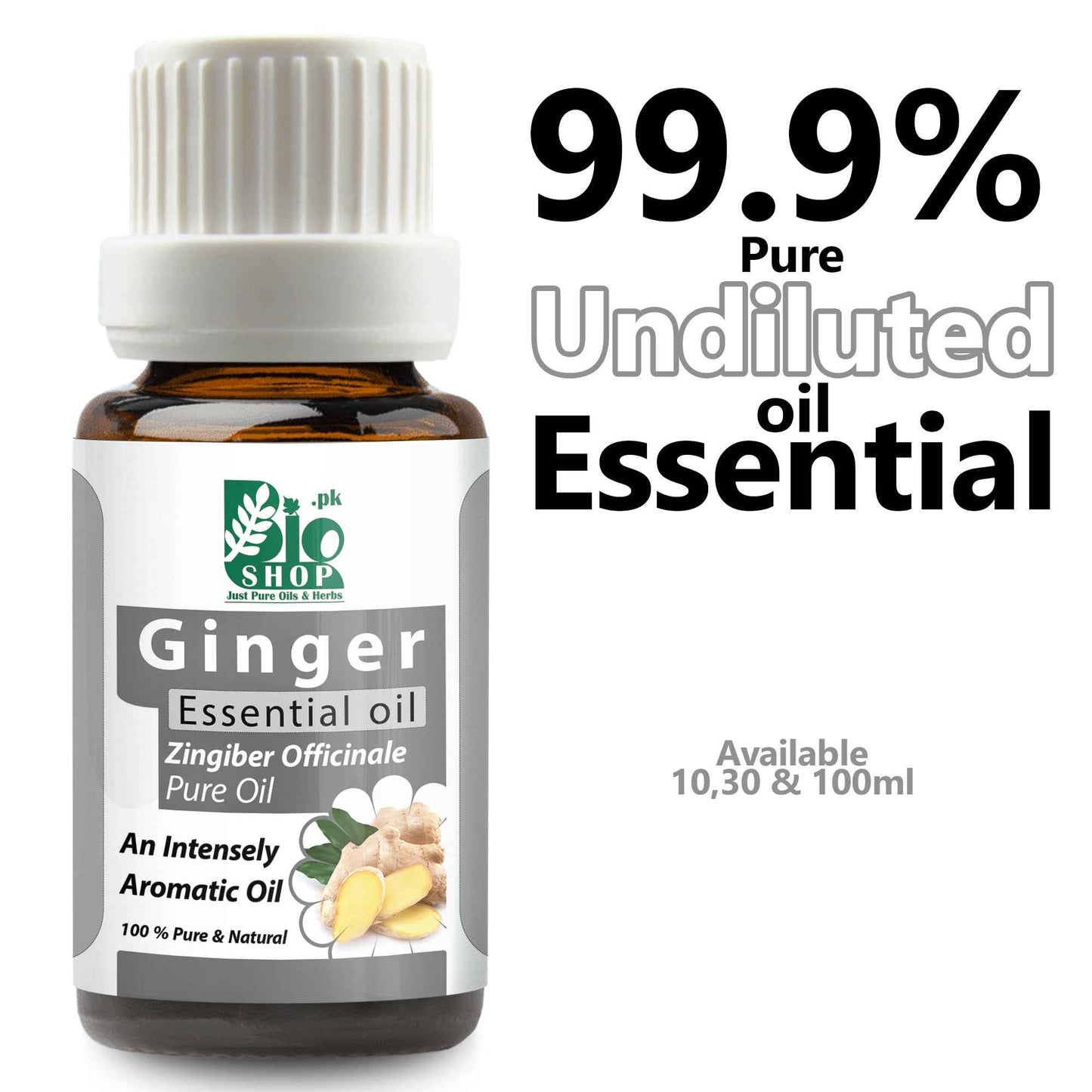
Ginger Essential Oil
Ginger Essential Oil
Olfactory Notes: Sharp, spicy, and woody-warm; adds "zing" to top and heart notes.
Couldn't load pickup availability


Explore
Information About Ginger Essential Oil
Key Features
✦ 100% pure steam-distilled essential oil from Zingiber officinale dried rhizomes
✦ Warm, dry, spicy-woody scent with faint citrus and earthy undertones
✦ Rich in zingiberene and sesquiterpenes — a naturalistic spice ingredient for oriental and wellness blends
✦ Used in ouds, attars, spice accords, incense, warming massage oils, and hair care
✦ Blends exceptionally well with sandalwood, patchouli, cardamom, vetiver, and oud
✦ Vegan and cruelty-free — plant-derived with no animal-based processing
✦ Cosmetic-grade purity suitable for leave-on and rinse-off formulations at recommended usage levels
About Ginger Essential Oil
Ginger Essential Oil is obtained by steam distillation of the dried and ground rhizomes of Zingiber officinale Roscoe, a plant with thousands of years of documented use across South and Southeast Asia, the Middle East, and East Africa. As a fragrance ingredient, ginger oil has been prized since ancient times in Ayurvedic, Unani, and Arab perfumery traditions for its warming, invigorating, and aphrodisiac character. It is referenced historically in Arabic attar-making, Mughal court perfumery, and early European spice trade records. Modern perfumery continues to rely on it as a natural spice note of authentic character and complexity.
What distinguishes ginger essential oil from synthetic ginger reconstructions is the richness and naturalness of its sesquiterpene-heavy profile. The oil's dominant constituent, zingiberene, delivers a dry, earthy, woody-spice quality that is difficult to replicate with single aroma chemicals. The supporting compounds — beta-sesquiphellandrene, ar-curcumene, and camphene — add woody brightness, subtle camphoraceous lift, and diffusive warmth. This complexity makes ginger essential oil a preferred natural modifier in oriental bases, oud accords, and warming wellness blends where synthetic spice notes often fall short.
Bio Shop Pakistan supplies cosmetic-grade Ginger Essential Oil suitable for DIY perfumers, attar blenders, candle and incense makers, massage oil formulators, shampoo developers, and general cosmetic product crafters seeking authentic natural warmth and spice character in their work.
Olfactory Profile
SCENT DESCRIPTION : Ginger Essential Oil opens with a sharp, dry spiciness that is simultaneously woody and faintly citrusy — not sweet, not syrupy, but clean and penetrating. As it develops, a warm earthy-resinous character emerges, grounded by woody sesquiterpene depth that keeps the scent from reading as purely culinary. It has a naturally diffusive quality in the opening that settles into a quiet, warm, dry-spice drydown. Unlike steam-distilled ginger CO2 which retains more green and fresh facets, steam-distilled oil reads warmer, drier, and more traditionally perfumistic.
NOTE POSITION : Top-Mid
FRAGRANCE FAMILY : Spicy, Oriental, Woody
FACETS : Warm · Dry Spice · Earthy · Woody · Faintly Citrus
TENACITY : Medium — perceptible for 3 to 5 hours in formulation; stronger in heavier bases
SILLAGE : Medium — projects confidently on application but does not overwhelm; closer-skin presence in drydown
Technical Specifications
CHEMICAL NAME : Zingiber officinale Root Oil
CAS NUMBER : 8007-08-7
SYNONYMS : Ginger Oil, Zingiber Oil, Oil of Ginger, Adrak Oil
PURITY : 100% pure essential oil (no diluents or additives)
APPEARANCE : Pale yellow to light amber mobile liquid
ODOR THRESHOLD : Approximately 10–40 ppb in air (highly perceptible at low concentrations)
SOLUBILITY : Soluble in ethanol and fixed oils; insoluble in water
SPECIFIC GRAVITY : 0.871 – 0.882 at 20°C (verify with supplier CoA)
FLASH POINT : Approximately 55°C – 65°C (verify with supplier CoA)
TYPE : Natural — steam-distilled from plant rhizomes
Applications & Usage Guidelines
Fine Fragrance : ★★★★☆
Ginger essential oil functions as a natural spice modifier and top-to-mid note in eau de parfum and eau de toilette. It adds authentic warmth and oriental sharpness to oud accords, woody orientals, and spicy florals. Best used at 1 to 4% in the fragrance concentrate alongside resinous and earthy base notes.
Attar and Oriental Blending : ★★★★★
This is where ginger essential oil truly excels. Pakistani and Gulf-style attars benefit enormously from its dry, warm spice character, which harmonises naturally with sandalwood, oud, ambergris bases, and rose. It reads as authentic and non-synthetic — critical for traditional attar audiences who recognise and value natural spice notes.
Functional Fragrance : ★★★★☆
In shampoos, body washes, and massage oils, ginger essential oil contributes a warming, invigorating aroma that communicates freshness and therapeutic intent. It is especially effective in scalp care and warming massage products where both scent and perceived functional benefit align with consumer expectation.
Cosmetics and Body Care : ★★★☆☆
Usable in lotions, creams, and serums at carefully controlled levels. Sensitisation risk increases at higher concentrations, so adherence to IFRA and patch-testing protocols is essential. Adds warmth and naturalness to body care ranges positioned around Ayurvedic or wellness themes.
Home Fragrance : ★★★★★
Ginger essential oil performs outstandingly in candles, reed diffusers, and incense. Its warm-spice character fills rooms with an inviting, slightly exotic atmosphere. In incense formulations it pairs beautifully with frankincense, benzoin, and woods. In candles and diffusers it blends well with citrus, cinnamon, and sandalwood.
IFRA & Usage Rate
RECOMMENDED USAGE RATES
EDP (Eau de Parfum) : 1.0% – 4.0%
EDT (Eau de Toilette) : 0.5% – 2.5%
Body Lotion / Cream : 0.2% – 0.8%
Shampoo / Body Wash : 0.3% – 1.0%
Massage Oil : 0.5% – 2.0%
Candle (fragrance load) : 3.0% – 6.0%
Reed Diffuser : 10.0% – 20.0%
Bar Soap : 0.5% – 1.5%
Incense : 5.0% – 15.0%
IFRA 51ST AMENDMENT LIMITS
Ginger Essential Oil (Zingiber officinale Root Oil) is listed under IFRA guidelines due to skin sensitisation potential from certain constituents.
IFRA Category 4 (Body lotion, cream — leave-on skin) : ~1.0% (verify at ifrafragrance.org)
IFRA Category 5A (Fine fragrance — leave-on) : ~2.5% (verify at ifrafragrance.org)
IFRA Category 9 (Rinse-off products — shampoo, soap) : ~3.5% (verify at ifrafragrance.org)
IFRA Category 11B (Non-skin contact — candle, diffuser) : Not restricted
⚠️ Ginger Essential Oil is a known skin sensitiser at elevated concentrations. Always observe IFRA 51st Amendment limits for skin-contact products. Patch testing is strongly recommended before use in leave-on formulations. Consult current IFRA guidelines at ifrafragrance.org and cross-reference with your supplier's Safety Data Sheet for the specific batch.
Blending Guide
METHOD 1 — SPICE MODIFIER IN ORIENTAL AND OUD BASES
Use ginger essential oil at 0.5 to 2% as a top-to-mid modifier in oud, amber, and resinous oriental bases. Its dry sesquiterpene warmth lifts heavy bases without adding sweetness, creating the kind of sharp-warm spice opening found in traditional Arabian and Pakistani attars. Introduce it last when building your base to assess its influence before committing to the concentration.
METHOD 2 — WELLNESS AND FUNCTIONAL FRAGRANCE ANCHOR
In shampoos, body scrubs, and warming massage oils, ginger essential oil reads as both aromatic and therapeutically credible. Blend it with eucalyptus or peppermint for a stimulating scalp oil, or pair it with black pepper and frankincense for a warming body massage blend. Keep total concentration within safe skin limits.
METHOD 3 — HOME FRAGRANCE AND INCENSE CONSTRUCTION
In candles, reed diffusers, and loose incense, ginger has excellent throw and stability. Use it as the warm-spice backbone of seasonal or oriental home fragrance blends. Pair it with cinnamon bark, cardamom, clove, benzoin, and citrus to create complex spice accords that smell warm and inviting without being harsh.
BEST PAIRINGS
Sandalwood → Deepens and rounds the spice into a classic warm-wood oriental
Oud → Elevates oud's animalic depth with dry natural spice
Cardamom EO → Creates a sophisticated chai-style spice accord
Frankincense → Adds sacred resinous depth, excellent for incense
Patchouli → Earthy-spice combination with strong oriental character
Bergamot → Brightens ginger's warmth with citrus freshness
Vetiver → Grounding, smoky, dry-spice combination for masculine orientals
Rose Absolute → Romantic spice-floral pairing traditional in Eastern perfumery
Black Pepper EO → Amplifies dry, pungent spice intensity
AVOID
Do not use ginger essential oil in formulations where sensitisation history is a concern without full patch testing. Avoid pairing in excessive concentrations with other known sensitisers such as cinnamon bark or clove in leave-on skin products — cumulative sensitisation risk increases with multiple spice oils in the same formula.
Perfumer's Note
Ginger is one of those essential oils I reach for when a formula needs warmth that does not read as synthetic. The sesquiterpene-heavy profile — dominated by zingiberene — gives it a dry, almost dusty spice quality that anchors oriental and oud blends far better than the sharper, more shrill quality of synthetic ginger reconstructions. It behaves differently than its culinary reputation suggests; in a fragrance context it reads as deep, woody, and quietly exotic rather than fresh or edible. In Pakistani attar culture, ginger finds natural resonance with local sensibilities around warm, resinous, and spice-forward compositions, and I find it especially useful as a bridge between the sharp opening of citrus-spice accords and the heavier resinous base.
ADVANCED TIP : To maximise ginger's diffusive spice presence while controlling sensitisation risk in leave-on skin products, try splitting your natural spice budget between ginger essential oil and a complementary synthetic spice material such as Methyl Dihydrojasmonate or Iso E Super rather than stacking multiple high-risk naturals. Ginger handles the authentic warmth while the synthetic provides lift and tenacity — resulting in a safer, longer-lasting spice accord than high-percentage natural spice alone.
Safety & Storage
PHYSICAL STATE : Mobile liquid
SKIN SAFETY : Potential sensitiser — use within IFRA limits; patch test before leave-on use; avoid use on broken or sensitive skin
EYE CONTACT : Avoid — rinse immediately with clean water if contact occurs; seek medical advice if irritation persists
INGESTION : Not for internal use — keep away from children; seek medical advice if ingested
VENTILATION : Work in well-ventilated areas; prolonged inhalation of concentrated vapour may cause headache or nausea
STORAGE : Store in a cool, dark location (15°C–25°C) away from direct sunlight, heat sources, and open flame
SHELF LIFE : 2 to 3 years from production date when stored correctly; oxidised oil increases sensitisation risk — check aroma regularly
CONTAINER : Store in amber glass or dark HDPE; avoid prolonged exposure to air — reseal tightly after use
FLAMMABILITY : Combustible liquid — flash point approximately 55°C–65°C; keep away from open flames and ignition sources
FAQ
Q: What does ginger essential oil smell like — does it smell like cooking ginger?
A: It shares the spicy warmth of cooking ginger but reads drier, woodier, and less sharp in a fragrance context. It is not sweet or syrupy — think warm dry spice rather than fresh ginger root.
Q: Can I use ginger essential oil directly on my skin?
A: No — always dilute before skin contact. It is a known sensitiser at higher concentrations. Keep to recommended IFRA limits for your product category and patch test before leave-on use.
Q: What is the best way to use ginger essential oil in an attar blend?
A: Use it at 1 to 3% in your attar concentrate as a spice modifier alongside oud, sandalwood, or rose base. Introduce it early in your trial phase so its warming character integrates properly into the composition.
Q: Is ginger essential oil safe for candles and home fragrance?
A: Yes — ginger essential oil performs very well in candles, diffusers, and incense with no significant restrictions for non-skin-contact applications. It blends beautifully with warm, spicy, and resinous home fragrance accords.
Q: How does steam-distilled ginger essential oil compare to ginger CO2 extract?
A: Steam-distilled ginger oil is warmer, drier, and more traditionally perfumistic — ideal for oriental and attar work. CO2 extract retains more fresh, green, and citrusy facets closer to the raw rhizome. For classical fragrance applications and incense, distilled oil is the standard choice. CO2 is preferred when a fresher, more culinary-authentic ginger note is required.
Where Can You Safely Use Ginger Essential Oil?
Discover how Ginger Essential Oil performs across different applications—rated for safety, stability, and effectiveness.


