Bio Shop
Heliotropin (10% in DPG)
Heliotropin (10% in DPG)
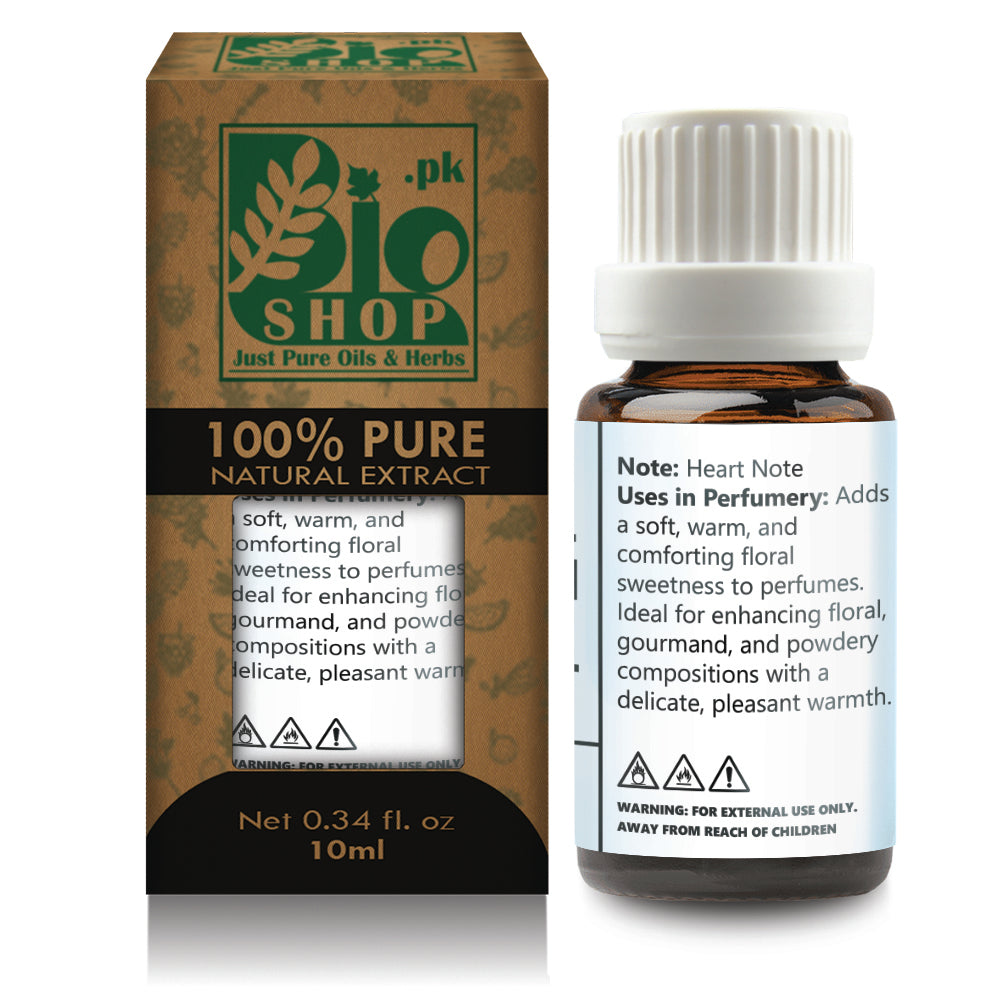
Olfactory Notes: Powdery, sweet "Cherry Pie" or marzipan-floral note.
Couldn't load pickup availability

Explore
Information About Heliotropin (10% in DPG)
Key Features
- 10% pre-diluted in DPG for effortless blending
- Ideal for floral-gourmand, soft powdery, and warm feminine compositions
- Adds elegance, sweetness, and softness to heart and base notes
- Used in attars, body lotions, solid perfumes, incense, and sprays
- Evokes heliotrope, almond, cherry blossom, and powdery accords
About Heliotropin (10% in DPG)
Heliotropin (10% in DPG) – also known as Piperonal – is a sweet, soft floral aroma chemical with distinct notes of almond, vanilla, cherry, and powdery heliotrope flowers. This 10% dilution in DPG (Dipropylene Glycol) makes it incredibly easy to use in attars, solid perfumes, body mists, incense blends, and gourmand or powdery floral fragrances.
Heliotropin is especially useful in cosmetic-style florals, soft musks, and vanilla-tonka-amber blends. It’s a classic choice for mimicking the scent of heliotrope, almond blossom, cherry desserts, or even vintage makeup powder. Blend it with Coumarin, Ethyl Vanillin, and Musk Ketone for soft, elegant dry-downs.
Olfactory Profile
SCENT DESCRIPTION : Heliotropin opens with a delicate, powdery sweetness that evokes the soft petals of heliotrope flowers mingled with warm almond and a faint suggestion of cherry. As it dries down, it takes on a creamy, skin-like depth — almost talcum-soft — with subtle floral and slightly spicy undertones. It is never harsh or strident; instead, it wraps a composition in a quiet, rounded warmth. On skin, it blends seamlessly with natural body chemistry, creating an intimate, signature softness.
NOTE POSITION : Mid to Base
FRAGRANCE FAMILY : Floral · Powdery · Oriental
FACETS : Sweet · Powdery · Almond · Floral · Warm
TENACITY : Medium — 6 to 10 hours on skin, longer on fabric
SILLAGE : Low to Medium — a close, intimate projection that stays near the skin rather than projecting boldly; ideal for skin scents and intimate wear
Technical Specifications
Chemical Name : Piperonal (3,4-Methylenedioxybenzaldehyde)
CAS Number : 120-57-0
Synonyms : Piperonal · Piperonyl Aldehyde · 3,4-Methylenedioxybenzaldehyde · Heliotrope Aldehyde
Purity : 99% minimum
Appearance : White to off-white crystalline solid; melts to clear liquid above 37°C
Odor Threshold : Approximately 1–4 ppb in air (extremely low — very detectable at trace levels)
Solubility : Slightly soluble in water; freely soluble in ethanol, diethyl ether, and most fragrance carriers; soluble in DPG and IPM when warmed
Specific Gravity : Approximately 1.337 at 25°C (verify with supplier lot certificate)
Flash Point : Approximately 116°C (241°F)
Type : Synthetic (also occurs naturally in heliotrope flowers and sassafras oil at trace levels)
Applications & Usage Guidelines
Use 1–3% of this blend to bring powdery sweetness to your floral or dessert-style perfumes. Combine with Coumarin for warm elegance, Ethyl Vanillin for sweet richness, and Musk Ketone to soften the base.
IFRA & Usage Rate
Recommended Usage Rates
EDP : 0.5 – 2.5% in finished fragrance concentrate
EDT : 0.3 – 1.5%
Body Lotion : 0.05 – 0.2% in finished product (leave-on limit applies)
Shampoo/Body Wash : 0.1 – 0.5% in finished product (rinse-off)
Candle : 2 – 6% in finished candle
Reed Diffuser : 2 – 8% in diffuser blend
Soap (Bar) : 0.3 – 1.0% in finished soap
IFRA 51st Amendment Limits (Piperonal / CAS 120-57-0)
Category 1 (Lip products) : 0.01% in finished product
Category 4 (Fine fragrance) : Approximately 1.4% in finished product
Category 5A (Body lotion, leave-on) : Approximately 0.2% in finished product
Category 9 (Rinse-off body/hair) : Approximately 0.5% in finished product
Category 11A (Candle) : Not restricted under IFRA (verify current amendment)
⚠️ Heliotropin is a known skin sensitizer. Always calculate final product concentration — not just the fragrance oil concentration — against the applicable IFRA category limit.
⚠️ IFRA limits apply to the finished product, not the fragrance compound. Adjust usage rates in your formulation accordingly.
⚠️ Always verify the most current IFRA limits at ifrafragrance.org before production.
Blending Guide
Method 1 — Dissolving for Alcohol Perfume
Heliotropin is a crystalline solid. Gently warm your carrier alcohol or DPG to 40–50°C, add heliotropin crystals, and stir until fully dissolved before adding other materials. Do not introduce it cold into finished blends — undissolved crystals will cloud your perfume.
Method 2 — Pre-blending in DPG
For soap and cosmetic applications, pre-dissolve heliotropin in dipropylene glycol (DPG) at a 1:4 ratio (warmed). This creates a pourable stock solution that disperses evenly into water-based and oil-based formulas without clumping or recrystallization.
Method 3 — Layered Base Building
Use heliotropin as a mid-to-base note anchor. Build it as part of a powdery base alongside coumarin and a musk, then layer floral and top notes over this foundation. This technique produces a well-rounded, cohesive composition with excellent longevity.
BEST PAIRINGS
Vanillin → Deepens sweetness and creates a classic gourmand-oriental base
Coumarin → Produces a timeless powdery-sweet accord, perfect for oriental florals
Benzyl Acetate → Adds a fresh jasmine-fruity lift that brightens the powdery character
Iso E Super → Adds woody depth and amplifies diffusion and skin-blending
Ethyl Linalool → Creates a soft floral-powdery accord with added freshness
Ambrette Seed → Builds a skin musk-powdery combination with excellent tenacity
Rose Oxide → Contrast — sharpens the accord and adds rose-metallic edge
Sandalwood EO → Anchors the base and adds creamy wood depth to the sweet accord
Musk Ketone/Exaltone → Classic powdery musk accord — vintage perfumery staple
AVOID
Do not combine heliotropin at high concentrations with strong aldehydes (C-11, C-12) in the same base without careful testing — the combination can turn soapy and sharp. Also avoid introducing into very alkaline soap batter above pH 10 without testing, as higher pH may cause slight discoloration or stability issues over time.
Perfumer's Note
💡 To create a powdery-sweet floral base 🧁🌸, use 1–3% Heliotropin (10% in DPG) in your oil perfumes or solid fragrance blends.
🌼 Blend with Coumarin for warm almond-tonka softness, or add Ethyl Vanillin for creamy richness in floral-gourmand perfumes.
🧴 Add Musk Ketone to give it a fluffy, musky cushion that lingers beautifully on the skin.
🔄 Mix well before adding to alcohol or oil bases for full diffusion.
⚠️ Patch testing is recommended for leave-on applications such as creams or mists.
Safety & Storage
Physical State : White crystalline solid at room temperature; melts above 37°C
Skin Safety : Known sensitizer — follow IFRA limits strictly; patch test on sensitive individuals; avoid undiluted skin contact
Eye Contact : Avoid direct contact; rinse thoroughly with water for 15 minutes if contact occurs; seek medical advice if irritation persists
Ingestion : Not for consumption; if ingested, seek immediate medical attention
Ventilation : Use in a well-ventilated workspace; avoid prolonged inhalation of melted material or vapors
Storage : Store in a cool, dry place away from light and heat; ideal storage below 25°C in a sealed container
Shelf Life : 2 to 3 years when stored correctly in original sealed packaging; check for yellowing or odor change before use
Container : Store in glass, HDPE, or aluminum; avoid PVC or reactive metals
Flammability : Flash point approximately 116°C — not considered flammable under normal handling conditions; keep away from open flames when melted
FAQ
Q1: What does Heliotropin smell like?
It smells soft, sweet, and powdery—like a mix of cherry-almond, vanilla, and vintage floral powder.
Q2: Is Heliotropin a natural or synthetic ingredient?
It is synthetically derived, though piperonal occurs naturally in vanilla beans and some plants.
Q3: Can I use this in skin-safe products like body sprays or creams?
Yes, the DPG dilution makes it suitable for such applications, but always use within a low dosage and perform a patch test.
Q4: What type of perfumes is it best in?
Ideal for gourmand, vintage floral, cherry-almond, powdery musk, and tonka-vanilla bases.
Q5: What materials pair well with it?
Heliotropin pairs beautifully with Coumarin, Ethyl Vanillin, Musk Ketone, and floral absolutes like rose and orange blossom.
Where Can You Safely Use Heliotropin (10% in DPG)?
Discover how Heliotropin (10% in DPG) performs across different applications—rated for safety, stability, and effectiveness.