Skip to product information
1 of 3

Bio Shop

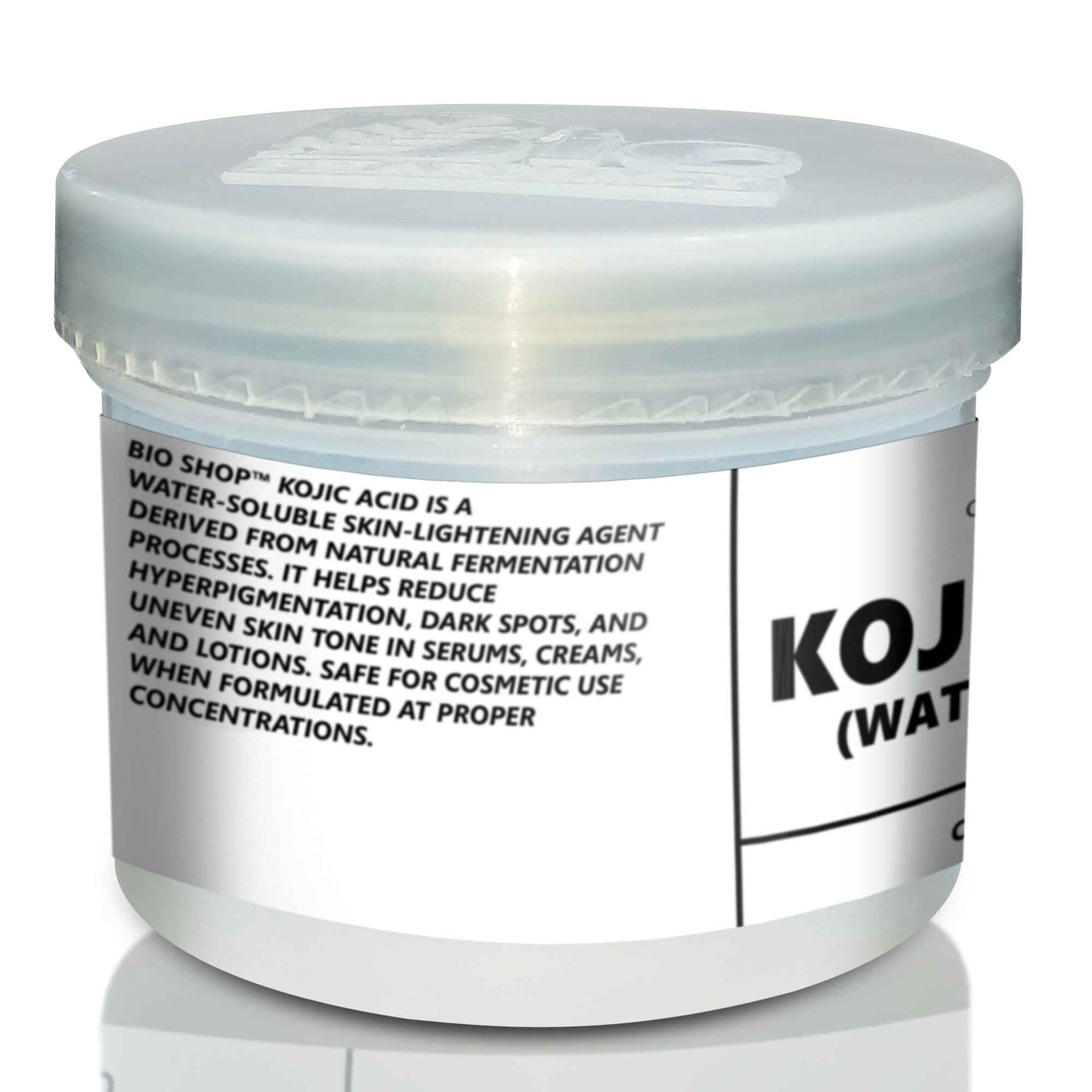
Kojic Acid Powder - Water Soluble

Kojic Acid Powder - Water Soluble

Regular price Rs.300.00
Regular price Sale price Rs.300.00
Sale Sold out
Shipping calculated at checkout.

Key Functions: Inhibits tyrosinase, brightens skin tone, fades dark spots, antioxidant support.

Weight
Quantity
🚚 Estimated delivery time:
Learn More About This Ingredient View full details

Explore

Information About Kojic Acid Powder - Water Soluble

✅ Key Features

✦ Potent tyrosinase inhibitor that visibly reduces hyperpigmentation and dark spots over consistent use
✦ Water soluble form dissolves easily into aqueous-phase formulations including serums, toners, and essences
✦ Derived from natural fungal fermentation of Aspergillus oryzae, a process rooted in Japanese biotechnology
✦ Effective at low concentrations between 1% and 4%, making it economical for both small batch and production scale
✦ Provides mild antioxidant activity that helps protect skin from oxidative stress and environmental damage
✦ Compatible with other brightening actives such as Alpha Arbutin, Niacinamide, and Vitamin C for enhanced results
✦ Suitable for use in face serums, creams, lotions, cleansers, and targeted spot treatment formulations

🔬 Description

Kojic Acid is a naturally occurring organic compound produced through the fermentation of carbohydrates by the fungus Aspergillus oryzae. First discovered in Japan in 1907 as a byproduct of sake and soy sauce production, it entered the cosmetics industry in the 1980s and quickly became one of the most widely used skin brightening agents in East Asian and global skincare. The water soluble form allows direct incorporation into aqueous formulations without the need for additional solubilizers.

What makes Kojic Acid particularly effective is its ability to chelate copper ions at the active site of the tyrosinase enzyme, thereby blocking the conversion of tyrosine to melanin. This mechanism targets pigmentation at its source rather than simply exfoliating surface discoloration. Unlike some chemical lightening agents, Kojic Acid achieves visible brightening without disrupting the overall structure of melanocyte cells, making it a preferred choice for formulators seeking efficacy with a favorable safety profile.

Bio Shop Pakistan supplies cosmetic-grade Kojic Acid water soluble suitable for DIY beauty formulators, independent skincare brands, soap makers, and professional cosmetic chemists.

📊 Technical Data

INCI Name : Kojic Acid
Chemical Name : 5-Hydroxy-2-(hydroxymethyl)-4H-pyran-4-one
CAS Number : 501-30-4
Molecular Formula : C6H6O4
Appearance : Fine white to off-white crystalline powder
Odor : Odorless to faint characteristic
pH (1% solution) : 3.0 to 4.0
Solubility : Soluble in water, ethanol, and acetone
Specific Gravity : Not Applicable (solid powder)
Flash Point : Not Applicable
HLB Value : Not Applicable
Recommended Use Level : 1% to 4% in finished formulations
Type : Skin Brightening Active / Tyrosinase Inhibitor
Shelf Life : 24 months when stored properly in sealed, light-protected container

🧪 Recommended Usage

Skincare (Creams, Serums, Lotions)
★★★★★
Kojic Acid is most effective in leave-on skincare where it maintains prolonged contact with skin for maximum tyrosinase inhibition. Use at 1% to 2% in serums and up to 4% in targeted spot treatments, dissolving fully in the water phase before combining.

Haircare (Scalp Treatments, Brightening Rinses)
★★☆☆☆
Limited relevance in mainstream haircare, though it can be explored in scalp brightening treatments for post-inflammatory hyperpigmentation on the scalp. Keep concentrations at 1% or below and rinse thoroughly.

Soap Making (Cold Process, Melt and Pour)
★★★☆☆
Kojic Acid is popular in brightening soap bars, especially melt and pour bases where pH and temperature are easier to control. In cold process soap, the high alkalinity degrades Kojic Acid significantly, so melt and pour is the preferred method at 1% to 2%.

Body Care (Lotions, Underarm Creams, Body Serums)
★★★★☆
Excellent in body lotions and targeted creams for areas prone to darkening such as underarms, knees, and elbows. Incorporate at 1% to 3% in the water phase and pair with Niacinamide for enhanced even-toning across larger skin areas.

Targeted Treatments (Spot Correctors, Peels, Masks)
★★★★★
Performs exceptionally in concentrated spot treatments and wash-off masks where higher percentages up to 4% can be used for intensive brightening. Combine with AHAs like Glycolic Acid in chemical peel formulations for synergistic exfoliation and depigmentation.

💡 Pro Tip

I always dissolve Kojic Acid in the water phase at temperatures below 40°C to preserve its activity, and I never introduce it into formulations with a pH above 5.5. One of the biggest mistakes I see is formulators adding Kojic Acid to hot oil-in-water emulsions during the heating phase, which accelerates oxidation and turns the product yellow within weeks. The key to a stable Kojic Acid product is pH control, antioxidant protection, and light-proof packaging every single time.

ADVANCED TIP: Prepare a 4% Kojic Acid stock solution in distilled water at room temperature, then add 0.1% Sodium Metabisulfite as an antioxidant stabilizer before incorporating into your final formulation at the cool-down phase below 40°C. Adjust final pH to 3.5 to 4.5 using Citric Acid, and always package in opaque airless pump bottles to prevent oxidative browning.

👩‍🔬 Skin Type Suitability

Normal Skin : ★★★★★ — Delivers visible brightening and even tone without irritation at standard use levels.
Dry Skin : ★★★★☆ — Effective for brightening but the low working pH may feel slightly drying without adequate humectants.
Oily Skin : ★★★★★ — Lightweight water soluble format absorbs well without adding greasiness or clogging pores.
Combination : ★★★★☆ — Works well across both oily and dry zones when formulated in a balanced serum or lotion base.
Sensitive Skin : ★★★☆☆ — May cause mild irritation or redness at concentrations above 2%, so patch testing and gradual introduction are essential.
Mature Skin : ★★★★★ — Addresses age spots and cumulative sun damage effectively when used consistently over 8 to 12 weeks.
Acne-Prone : ★★★★☆ — Helps fade post-inflammatory hyperpigmentation from acne scars without aggravating active breakouts.

🧴 Formulation Ideas

CONCEPT 1: Luminous Glow Brightening Serum
Usage Level : 2%
Key Ingredients: Hyaluronic Acid, Alpha Arbutin, Niacinamide, Panthenol
Result : A lightweight water-based serum that targets dark spots and uneven tone while keeping skin deeply hydrated and calm.

CONCEPT 2: Dark Spot Corrector Night Cream
Usage Level : 3%
Key Ingredients: Shea Butter, Cetearyl Alcohol, Licorice Root Extract, Tocopheryl Acetate
Result : A rich overnight treatment cream that delivers intensive depigmentation while the skin barrier is repaired during sleep.

CONCEPT 3: Even Tone Brightening Soap Bar (Melt and Pour)
Usage Level : 1.5%
Key Ingredients: Goat Milk Melt and Pour Base, Glycerin, Turmeric Extract, Vitamin E
Result : A gentle daily cleansing bar that gradually brightens skin tone with each wash while maintaining moisture balance.

💧 Safety and Regulatory:

INCI Declared : Yes — required on all cosmetic product labels
EU Cosmetics Reg : Permitted — no specific Annex restriction, but subject to general safety assessment under Article 10
Rinse-Off Limit : Up to 4% — based on common industry practice and safety assessments
Leave-On Limit : 1% to 2% recommended — higher concentrations may cause irritation in sensitive individuals
Allergen Alert : Yes — contact sensitization reported in some individuals at higher concentrations
Skin Safety : Safe at recommended levels, patch test advised especially for sensitive skin
Eye Area Use : Use with caution — avoid direct contact with eyes due to low pH
Ingestion : Not for internal use
Pregnancy Use : Consult physician — limited data on systemic absorption during pregnancy
Child Safety : Avoid use on children under 12 without dermatologist guidance
Ventilation : Not required
Storage : Cool dry place, away from direct light and heat, tightly sealed
Container : HDPE or opaque glass preferred — avoid transparent containers and reactive metals

⚠️ Kojic Acid may cause contact sensitization in some individuals, particularly at concentrations above 2%. It is prone to oxidative discoloration when exposed to air, light, or high pH. Always conduct a patch test before first use and formulate with antioxidant protection.

Stability and Compatibility

Working pH Range : 3.0 to 5.5 (optimal efficacy at 3.5 to 4.5)
Heat Stability : Add below 40°C — degrades and discolors at elevated temperatures
Freeze-Thaw Stable : Yes — reconstitutes without loss of activity
Emulsion Type : O/W preferred — water soluble, incorporates into the aqueous phase
Emulsification Phase: Cool-down phase — never add during hot emulsification
Compatible With : Niacinamide, Alpha Arbutin, Hyaluronic Acid, Glycerin, AHA exfoliants
Incompatible With : Strong oxidizers, high pH systems above 6.0, iron and copper ions which accelerate discoloration
Oxidation Risk : High — add 0.05% to 0.1% Sodium Metabisulfite or BHT as antioxidant
Discoloration Risk : Possible — turns yellow to brown when exposed to air, light, metal ions, or alkaline conditions
Formulation Notes : Always dissolve in cool water phase and add antioxidant before incorporating into the final emulsion. Package in opaque airless containers to maximize shelf stability.

❓ FAQs

Q: What concentration of Kojic Acid should I use in a face serum?
A: For a daily-use face serum, 1% to 2% is effective and well tolerated by most skin types. For a targeted spot treatment, you can go up to 4%, but always patch test first and monitor for any irritation.

Q: Why does my Kojic Acid product turn yellow or brown over time?
A: Kojic Acid is highly sensitive to oxidation caused by exposure to air, light, and metal ions. To prevent discoloration, add an antioxidant like Sodium Metabisulfite at 0.05% to 0.1%, maintain a pH below 5.0, and use opaque airless packaging.

Q: Can I use Kojic Acid with Vitamin C in the same formulation?
A: Yes, but it requires careful formulation since both actives prefer a low pH and are oxidation-prone. Use a stable Vitamin C derivative like Sodium Ascorbyl Phosphate rather than L-Ascorbic Acid, and include robust antioxidant protection to prevent mutual degradation.

Q: Can I add Kojic Acid to cold process soap?
A: Cold process soap has a very high pH during saponification which rapidly degrades Kojic Acid and renders it ineffective. Melt and pour soap bases are the better option because they allow you to add Kojic Acid at a controlled temperature and at a more compatible pH range.

Q: How does Kojic Acid compare to Kojic Acid Dipalmitate?
A: Kojic Acid is water soluble with faster visible results but is less stable and more prone to oxidation and discoloration. Kojic Acid Dipalmitate is oil soluble, far more stable, and resistant to discoloration, but it works more gradually. Formulators often choose Dipalmitate for oil-phase products and standard Kojic Acid for water-based serums and toners.

Where Can You Safely Use Kojic Acid Powder - Water Soluble

Discover how Kojic Acid Powder - Water Soluble performs across different products — rated for safety, stability, and effectiveness.

Skincare
Serums
9
Very Good
Creams & Lotions
8
Good
Eye Creams
5
Mediocre
Face Masks
8
Good
Cleansers
6
Fair
Toners
9
Very Good
Lip Balms
2
Stability Issues
Ointments
4
Slight Issues
Body & Hair Care
Body Butters
5
Mediocre
Shampoos
3
Discoloration
Conditioners
2
Stability Issues
Hair Masks
3
Discoloration
Soap & Specialty
Soaps
6
Fair
Deodorants
4
Slight Issues