


Bio Shop
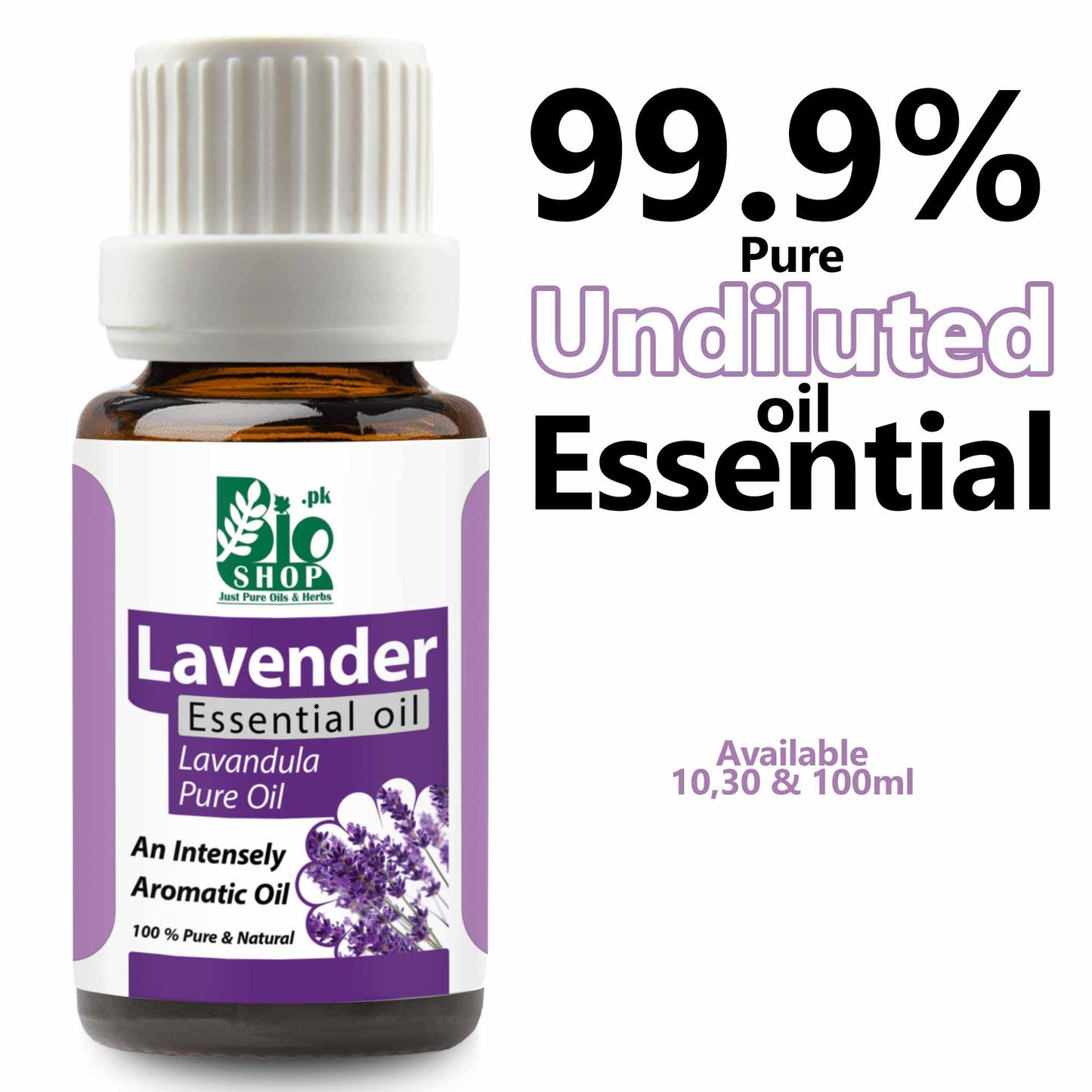
Lavender Essential Oil
Lavender Essential Oil
Olfactory Notes: The quintessential floral-herbal bridge. It is fresh, calming, and sweet with a slightly balsamic-woody undertone.
Couldn't load pickup availability


Explore
Information About Lavender Essential Oil
Key Features
✦ 100% natural steam-distilled essential oil from Lavandula angustifolia flowers and flowering tops
✦ Balanced linalool and linalyl acetate profile delivers authentic floral-herbaceous lavender character
✦ Widely studied for its calming, skin-soothing, and sleep-supporting aromatherapy properties
✦ Versatile across fine fragrance, skincare, hair care, soap, candles, and household products
✦ Key ingredient in classics like Drakkar Noir, Jicky, L'Occitane En Provence, and Pour Un Homme de Caron
✦ Vegan, cruelty-free, and free from synthetic adulteration
✦ IFRA-compliant cosmetic-grade material suitable for a wide range of leave-on and rinse-off applications
About Lavender Essential Oil
Lavender Essential Oil has been cultivated and distilled for over a thousand years, with its use tracing back to ancient Roman bath rituals and medieval herbal medicine. The word lavender itself is derived from the Latin lavare, meaning to wash, reflecting its historical association with cleansing and purification. True lavender, Lavandula angustifolia, is native to the Mediterranean highlands and produces an oil that is considered the gold standard among lavender varieties — prized above lavandin and spike lavender for its gentler, more nuanced scent profile and superior cosmetic compatibility.
What sets genuine Lavandula angustifolia oil apart is its chemical composition. A well-balanced ratio of linalool — a naturally calming terpene alcohol — and linalyl acetate — a floral ester that contributes sweetness and smoothness — gives true lavender its characteristic soft, powdery-floral quality that lavandin cannot replicate. The relatively low camphor content compared to spike lavender or lavandin makes it appropriate for sensitive skin and face formulations. Its versatility is unmatched in natural perfumery: it bridges herbal, floral, and fougère families and works harmoniously with a vast palette of materials.
Bio Shop Pakistan supplies cosmetic-grade Lavender Essential Oil suitable for DIY perfumers, soap and candle makers, skincare formulators, and aromatherapy practitioners who require a reliable, true-type lavender for professional-quality results.
Olfactory Profile
SCENT DESCRIPTION : Lavender Essential Oil opens with a clean, crisp herbaceous freshness that quickly gives way to a soft, sweet floral heart — powdery, green, and lightly balsamic. The natural linalyl acetate lends a subtle fruity smoothness that keeps the profile from turning sharp or medicinal. On dry-down it settles into a warm, slightly woody-herbal base with gentle earthy nuance. The overall impression is of a sun-warmed Provençal lavender field — familiar, calming, and deeply pleasant.
NOTE POSITION : Top to Mid
FRAGRANCE FAMILY : Floral / Herbal / Fougère
FACETS : Floral · Herbal · Powdery · Green · Balsamic
TENACITY : Medium — 4 to 6 hours on skin, longer in waxy or fatty bases
SILLAGE : Medium — close to medium projection, intimate and comforting rather than loud
Technical Specifications
Chemical Name : Lavandula angustifolia (Mill.) flower oil
CAS Number : 8000-28-0
Synonyms : Lavender oil, True lavender oil, Fine lavender oil, Lavandula officinalis oil
Purity : 100% pure essential oil, cosmetic grade
Appearance : Clear, pale yellow to colourless mobile liquid
Odour Threshold : Approximately 0.3 ppm (linalool component)
Solubility : Soluble in ethanol and fixed oils; insoluble in water
Specific Gravity : 0.876 – 0.892 at 20°C (verify with supplier CoA)
Flash Point : Approximately 65°C (149°F) (verify with supplier CoA)
Type : Natural — steam distilled from flowers and flowering tops
Applications & Usage Guidelines
Fine Fragrance : ★★★★★
Lavender is a foundational pillar of Western perfumery and the defining accord in the fougère family. It functions as a top-to-mid note in EDPs and EDTs, contributing freshness and legibility. Used solo as a soliflore or as part of classic fougère, aromatic, and fresh chypre compositions.
Attar and Oriental Blending : ★★★★☆
In attar tradition, lavender bridges floral and woody-resinous accords beautifully. Blended into sandalwood or oud bases it adds a cooling, herbaceous counterpoint that prevents heaviness. Works well in floral attars where a clean, medicinal-green top note is desired.
Aromatherapy and Wellness : ★★★★★
One of the most trusted essential oils in clinical and home aromatherapy. Diffused at 3 to 5 drops it creates a calming, sleep-supportive environment. Inhalation and topical application in appropriate dilution are among the most documented uses of any essential oil globally.
Cosmetics and Skincare : ★★★★★
Incorporated into face creams, serums, body lotions, bath salts, lip balms, and hair care at 0.5 to 2%. Provides both fragrance and functional benefit. Compatible with most cosmetic bases and emulsifiers with good stability.
Home Fragrance : ★★★★☆
Performs reliably in reed diffusers, room sprays, potpourri, and candles. Throw is clean and recognisable. Lavender-mint and lavender-eucalyptus are popular functional home fragrance combinations that perform consistently in wax and diffuser bases.
IFRA & Usage Rate
RECOMMENDED USAGE RATES
EDP (Eau de Parfum) : 5 – 15%
EDT (Eau de Toilette) : 3 – 10%
Body Lotion / Cream : 0.5 – 2%
Shampoo / Body Wash : 0.5 – 1.5%
Candle (Soy or Paraffin) : 3 – 6%
Reed Diffuser : 10 – 25%
Soap (Cold Process / Melt & Pour): 1 – 3%
IFRA 51ST AMENDMENT LIMITS
(Lavandula angustifolia flower oil — verify current limits at ifrafragrance.org)
Category 3 (Lip products) : 0.5%
Category 4 (Fine fragrance — spray) : 13%
Category 5A (Body lotion, leave-on body care) : 9%
Category 5B (Face moisturiser, leave-on) : 3.5%
Category 6 (Mouth rinse — not recommended) : 0.2%
Category 7A (Rinse-off hair products) : 14%
Category 8A (Rinse-off body wash, shower gel) : 14%
Category 9 (Bar soap) : 3.5%
Category 11A (Candles) : No restriction
Category 12 (Air fresheners, reed diffusers) : No restriction
⚠️ Lavender Essential Oil contains naturally occurring linalool and linalyl acetate — both listed EU cosmetic allergens. Products sold in the EU containing these above threshold concentrations (0.001% leave-on / 0.01% rinse-off for linalool) must declare them on labels.
⚠️ Always dilute before skin application. Do not use undiluted on sensitive skin or near eyes.
⚠️ Keep away from children unless properly diluted in a finished formulation.
Blending Guide
METHOD 1 — ACCORD BUILDING
Build a classic fougère accord by combining lavender with coumarin and oakmoss absolute or a mossy base material. Add geranium for a rosy-green bridge and a woody-ambery base (sandalwood, cedarwood, ISO E Super). This three-way interaction is the foundation of perfumery's most recognisable male fragrance family.
METHOD 2 — FUNCTIONAL FRAGRANCE BLENDING
For soap, lotion, and shampoo bases, blend lavender with tea tree, peppermint, or eucalyptus for a clean functional fresh effect. Add a touch of ylang ylang or rose geranium to soften the medicinal edge. This style of blend remains one of the top-selling natural fragrance profiles in cosmetics.
METHOD 3 — AROMATHERAPY SYNERGY
For diffuser or inhaler blends, combine lavender with bergamot at a 3:2 ratio for anxiety relief, or with cedarwood and vetiver for a deeply grounding sleep blend. Frankincense pairs beautifully with lavender in meditative and spiritual blending contexts.
BEST PAIRINGS
Bergamot → Lifts lavender into a fresh, uplifting citrus-floral
Coumarin → Classic fougère pairing, adds sweet hay-tobacco warmth
Geranium → Rosy-green bridge, adds complexity to floral accords
Cedarwood → Grounds lavender into a dry, woody base
Sandalwood → Softens and adds creamy depth to the herbaceous note
Patchouli → Earthy counterpoint — used in oriental-fresh constructions
Vetiver → Smoky, rooty contrast that gives lavender staying power
Linalool → Reinforces the floral character and boosts freshness
Iso E Super → Adds diffusive woody radiance and extends projection
Rose Absolute → Creates a luxurious floral bouquet with feminine elegance
Eucalyptus → Clean medicinal-fresh pairing for spa and functional blends
Frankincense → Spiritual, resinous warmth — used in meditative blends
AVOID
Combining lavender with very heavy animalic bases (castoreum, civet) in high concentration as it creates an incoherent clinical-barnyard clash. Also avoid excessive camphoraceous materials (spike lavender, rosemary) at high doses alongside true lavender as the character becomes medicinal and unpleasant.
Perfumer's Note
Of all the materials in my palette, lavender is the one I reach for when I want honesty in a formula. It is not showy. It does not dominate. But it carries things together with a quiet authority that synthetic alternatives rarely match — that slight waxy-green edge in the heart, the way the linalyl acetate adds a milky softness without sweetness, the brief camphoraceous lift on the very top that you hardly notice until it is gone. A well-sourced Lavandula angustifolia is a living material, variable enough between harvests that you learn to appreciate its character rather than just its function. Pakistani formulators working in attar and oriental traditions often underestimate it — but try it once at 3 to 5% in a pure sandalwood base and it will change how you think about freshness in heavy compositions.
ADVANCED TIP : Build a lavender soliflore accord that outperforms the raw oil alone by combining Lavender Essential Oil at 40% with linalool at 20%, linalyl acetate at 15%, and then filling the remaining 25% with a split of coumarin, beta-ocimene, and a trace of methyl anthranilate (under 0.5%). The result is a lavender that is simultaneously truer and richer than the oil itself — rounder in the heart, with a faintly fruity-floral complexity that reads as natural but projects further. This is a useful technique when cost or batch consistency is a concern on larger runs.
Safety & Storage
Physical State : Clear mobile liquid at room temperature
Skin Safety : Dilute to recommended usage rates before skin contact. Patch test advised for sensitive skin. Do not apply undiluted.
Eye Contact : Avoid contact with eyes. Rinse thoroughly with clean water if contact occurs.
Ingestion : Not for internal use. Keep away from children and pets.
Ventilation : Use in well-ventilated spaces. Avoid prolonged direct inhalation of undiluted vapours.
Storage : Store in a cool, dark place away from heat and direct sunlight. Refrigeration extends shelf life.
Shelf Life : 2 to 3 years from date of manufacture when stored correctly. Oxidised oil may cause skin sensitisation.
Container : Store in original amber glass or dark PET container. Avoid contact with reactive metals.
Flammability : Combustible liquid. Flash point approximately 65°C. Keep away from open flame and ignition sources.
⚠️ Oxidised lavender oil has increased sensitisation potential. Do not use oil that has changed colour significantly or smells sharply medicinal or turpentine-like. Antioxidant addition (0.1% BHT or vitamin E) extends stability.
FAQ
Q: What is the difference between true lavender oil and lavandin oil?
A: True lavender (Lavandula angustifolia) has lower camphor content, a softer floral profile, and is more suitable for sensitive skin. Lavandin is a hybrid with a sharper, more camphorous scent — cheaper but less refined.
Q: Can I use Lavender Essential Oil directly on my skin?
A: No. Always dilute in a carrier oil, lotion base, or finished formulation. Typical safe dilution for leave-on use is 0.5 to 2% depending on the product type and IFRA category.
Q: Does lavender oil work well in cold process soap?
A: Yes, but use it at 1 to 3% of total batch weight. Lavender does not accelerate trace and performs reasonably well through saponification, though the scent fades somewhat compared to synthetic lavender fragrance oils.
Q: Is lavender oil stable in candles?
A: It performs moderately in candles. Use at 3 to 6% fragrance load. Expect a clean cold throw — hot throw can be lighter than synthetic lavender due to the volatility of natural linalool at high temperatures.
Q: How does Lavender Essential Oil compare to synthetic linalool or a lavender fragrance oil?
A: The essential oil has natural complexity, variation between batches, and active botanical compounds that synthetics cannot replicate. Synthetic lavender fragrance oils have stronger, more consistent throw and lower cost. For therapeutic or natural-label products, the essential oil is preferred. For cost-sensitive functional fragrancing, a synthetic lavender accord may be more practical.
Where Can You Safely Use Lavender Essential Oil?
Discover how Lavender Essential Oil performs across different applications—rated for safety, stability, and effectiveness.
Best quality organic products with best packing
It was good
Very good product. Highly recommended.
Good oil
The quality of their product are excellent


