


Bio Shop
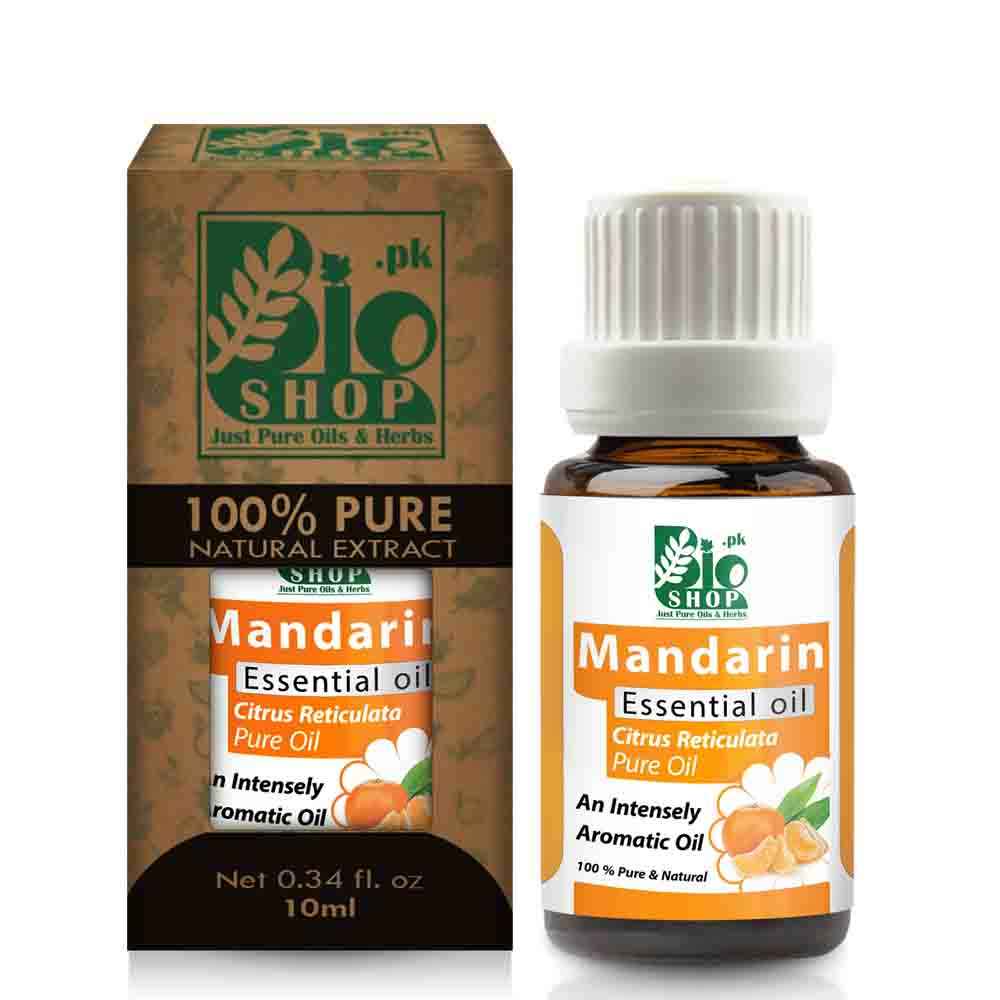
Mandarin Essential oil
Mandarin Essential oil
Olfactory Notes: Citrus · Fresh · Green · Luminous · Fruity
Couldn't load pickup availability
Explore
Information About Mandarin Essential oil
Key Features
✦ 100% natural cold-pressed essential oil from Citrus reticulata peel — unrefined and unadulterated
✦ Bright, sweet, tangy citrus scent with a delicate floral-green drydown — gentler than orange or lemon
✦ Dominant top note widely used in fresh, citrus, chypre, and oriental fragrance compositions
✦ Key ingredient in luxury perfumes, colognes, baby care products, and aromatherapy blends
✦ Subject to IFRA phototoxicity restrictions in leave-on skin applications — always check category limits
✦ Mixes seamlessly with florals, woods, musks, spices, and other citrus oils
✦ Vegan, plant-derived, and cruelty-free — no animal-derived components
About Mandarin Essential oil
Mandarin Essential Oil is obtained by cold-pressing the outer peel of the mandarin orange, Citrus reticulata, a fruit native to China and now cultivated extensively across Sicily, Spain, Morocco, and South America. The oil has been used for centuries in Chinese traditional medicine and European perfumery alike. Unlike many essential oils that require steam distillation, the best mandarin oil is cold-expressed directly from fresh peel, preserving its natural brightness and full aromatic complexity. Sicilian mandarin in particular is regarded as the gold standard for perfumery applications.
What sets mandarin apart from other citrus oils is its remarkably soft and sweet character. Where lemon is sharp and bergamot is bitter-floral, mandarin sits in a uniquely gentle register — sweet without being cloying, citrusy without harshness. Its scent profile shifts over time on the skin, opening with a bright tangy burst and slowly settling into a warm, almost peachy drydown. This makes it unusually versatile — equally at home in delicate baby colognes, fresh summer eau de toilettes, and complex oriental attar blends where it lifts the opening accord.
Bio Shop Pakistan supplies cosmetic-grade Mandarin Essential Oil suitable for fine fragrance compounding, attar and oriental blending, soap and candle making, skincare formulations, and home fragrance applications.
Olfactory Profile
SCENT DESCRIPTION : Mandarin opens with an immediate burst of sweet, juicy citrus — brighter than orange and less tart than lemon. There is a faint green, almost floral facet that appears in the heart, lending the oil a softness that distinguishes it from coarser citrus materials. As the top note fades, a warm, slightly honeyed, peachy undertone lingers, making the drydown unexpectedly rich for a citrus oil. Overall the impression is cheerful, clean, and luminous.
NOTE POSITION : Top Note (with a brief mid-note trail)
FRAGRANCE FAMILY : Citrus · Fresh · Fruity
FACETS : Sweet · Tangy · Peachy · Green · Luminous
TENACITY : Low — 1 to 2 hours, typical of expressed citrus oils; fixation recommended in long-wear formulas
SILLAGE : Medium — projects well in the first hour before softening; pairs with base notes to extend presence
Technical Specifications
CHEMICAL NAME : Citrus reticulata peel oil, expressed
CAS NUMBER : 8008-31-9
SYNONYMS : Mandarin orange peel oil, Mandarine oil, Citrus reticulata oil, Tangerine oil (approximate)
PURITY : 100% pure essential oil, no added solvents or diluents
APPEARANCE : Yellow to orange-green mobile liquid
ODOR THRESHOLD : Extremely low — detectable at trace concentrations
SOLUBILITY : Freely soluble in 95% ethanol and fixed oils; practically insoluble in water
SPECIFIC GRAVITY : 0.844 – 0.852 at 20°C (verify with supplier CoA)
FLASH POINT : Approximately 46°C – 50°C (verify with supplier CoA)
TYPE : Natural — cold-pressed from citrus peel
Note: Cold-pressed mandarin contains trace furanocoumarins. Some suppliers also offer furanocoumarin-free (FCF) mandarin for leave-on skin applications. Confirm with your supplier which grade you are receiving.
Applications & Usage Guidelines
FINE FRAGRANCE : ★★★★★
Mandarin is a staple of the perfumer's citrus palette. It functions beautifully in fresh fougères, citrus colognes, chypres, and as a sweetening modifier in oriental compositions. Its naturally sweet character distinguishes it from lemon or bergamot and it blends forward without competing with heart or base notes.
ATTAR & ORIENTAL BLENDING : ★★★★☆
In attar and oudy compositions, mandarin provides a bright, accessible opening that counterbalances dense resins, musks, and oud notes. Pakistani and Gulf-style Oriental blends often use citrus oils at the opening accord stage. Mandarin is preferred over bitter orange here for its softness and warmth.
FUNCTIONAL FRAGRANCE & HOME CARE : ★★★★★
Mandarin performs exceptionally in reed diffusers, room sprays, scented candles, and linen sprays. It evaporates readily and delivers immediate olfactory impact. In detergents and fabric softeners, it is a widely used natural freshener with strong consumer recognition.
COSMETICS & SKINCARE : ★★★☆☆
Usable in rinse-off products such as shower gels, shampoos, and soaps at moderate levels. In leave-on products such as body lotions and creams, IFRA phototoxicity limits apply and must be respected. Furanocoumarin-free mandarin is available and preferred for high-load leave-on formulations.
SOAP & CANDLE MAKING : ★★★★☆
In cold-process soap, mandarin oil performs better than many citrus oils in terms of scent retention when combined with fixatives. In soy and paraffin candles, it gives a cheerful, fresh throw. Blend with cedarwood or vanilla to prevent the citrus from disappearing too quickly in high-heat applications.
IFRA & Usage Rate
RECOMMENDED USAGE RATES
APPLICATION : SUGGESTED RATE
EDP (Eau de Parfum) : 3.0% – 6.0%
EDT (Eau de Toilette) : 2.0% – 4.0%
Body Lotion (leave-on) : Up to IFRA limit — see below
Shampoo / Body Wash : 0.5% – 1.0%
Candle : 6.0% – 10.0%
Reed Diffuser : 15.0% – 25.0%
Bar Soap : 1.0% – 2.0%
IFRA 51ST AMENDMENT LIMITS — COLD-PRESSED MANDARIN OIL
⚠️ Cold-pressed mandarin oil is restricted under IFRA due to phototoxicity potential from furanocoumarins. The limits below are approximate; always verify current limits at ifrafragrance.org and against your specific supplier's CoA.
IFRA CATEGORY : MAXIMUM LEVEL
Category 1 (Lip products) : 0.01%
Category 2 (Deodorant, armpit) : 0.03%
Category 3 (Eye-area products) : 0.1%
Category 4 (Body lotion, hand cream — rinse-off) : 0.17%
Category 5A (Body lotion, leave-on) : 0.17%
Category 6 (Mouthwash — not recommended) : Refer IFRA
Category 9 (Rinse-off hair, shower) : 0.3%
Category 11A (Candles, diffusers) : No restriction
Category 12 (Non-skin contact, potpourri) : No restriction
⚠️ For leave-on skin formulations, consider using furanocoumarin-free (FCF) mandarin oil to allow higher usage rates and full compliance. Confirm FCF status with your supplier before formulating.
Blending Guide
USAGE METHOD 1 — TOP NOTE ANCHOR IN FRAGRANCE
Use mandarin as the citrus opening in eau de toilette and EDP compositions. Introduce it at 3–6% of the total formula in combination with a fixative carrier such as a small percentage of linalool or hedione to extend its presence into the heart transition. Avoid overdosing — mandarin is potent and sweet excess can tip a fresh composition into confectionery territory.
USAGE METHOD 2 — CITRUS MODIFIER IN ATTAR BLENDING
In oil-based attar and concentrated perfume oil, blend mandarin at 2–4% into the opening accord before adding heavier base materials such as oud, sandalwood, or amber. The citrus note anchors an accessible, approachable opening that makes dense oriental bases more wearable. Add mandarin after the base blend has been thoroughly mixed and allowed to mature for 24 hours.
USAGE METHOD 3 — FUNCTIONAL FRAGRANCE BOOSTER
In candles, diffusers, and home care products, mandarin can be used generously. Combine with complementary citrus materials or spice notes to build a full, layered home fragrance. In reed diffusers, blend mandarin with cedarwood and clove bud for a warm, energising room scent that performs across seasons.
BEST PAIRINGS
Bergamot → Adds complexity and bitterness, lifts the overall citrus accord
Neroli → Creates a classic cologne-style top note combination
Linalool → Extends longevity and introduces a soft floral bridge
Cedarwood → Grounds the citrus opening with warm woody depth
Clove Bud EO → Adds spice and warmth — excellent in oriental and home fragrance
Jasmine Absolute → Sweet floral mid-note pairing for feminine compositions
Ylang Ylang → Rich floral contrast — use sparingly for tropical character
Petitgrain → Adds green, slightly bitter facets for greater sophistication
Vanilla / Benzoin → Sweet base that harmonises with mandarin's peachy drydown
Vetiver → Earthy grounding note that gives mandarin compositions gravity
AVOID
Pairing at full rate with other high-limonene oils like lemon or orange simultaneously unless antioxidants are incorporated — limonene oxidises over time and can cause skin sensitisation and rancidity in finished products. Always add BHT or Vitamin E (at 0.05–0.1%) to mandarin-heavy formulas in fatty carrier bases.
Perfumer's Note
Working with mandarin is one of the most deceptively simple pleasures in natural perfumery. The oil appears effortless — bright, sweet, immediately beautiful — and this accessibility is exactly why it deserves serious attention. Mandarin is frequently underestimated as a simple top note that just disappears, but the quality of its brief appearance sets the entire emotional tone of a fragrance. A composition that opens with real cold-pressed Sicilian mandarin carries a kind of natural warmth and optimism that synthetic citrus materials rarely replicate convincingly. I use mandarin not only as an opening note but also as a blending bridge — a small percentage dropped into a heavily resinous oriental base can lift the entire accord and make it breathe. It is quietly one of the hardest-working naturals in my palette.
ADVANCED TIP : To dramatically extend the presence of mandarin in an oil-based or alcohol-based formula, create a pre-blend of mandarin essential oil with an equal weight of Hedione (methyl dihydrojasmonate) and allow it to sit for 48 hours before incorporating into your composition. The Hedione acts as a diffusion amplifier and bridges the citrus-to-floral transition naturally, extending the mandarin's perceptible life on skin by an additional 1–2 hours while adding a subtle transparent floral quality. This pre-blending technique is widely used in commercial fine fragrance development and translates cleanly into DIY formulation.
Safety & Storage
PHYSICAL STATE : Mobile liquid at room temperature — pours freely
SKIN SAFETY : Dilute before skin application — do not apply neat; IFRA phototoxicity limits apply for leave-on products; avoid sun exposure after leave-on application
EYE CONTACT : Avoid direct contact — rinse immediately with clean water if contact occurs; seek medical attention if irritation persists
INGESTION : Not for internal use — keep away from children; accidental ingestion requires immediate medical consultation
VENTILATION : Use in a well-ventilated workspace — prolonged inhalation of concentrated vapour is not recommended
STORAGE : Store in a cool, dark location away from heat and direct sunlight; refrigeration recommended for extended shelf life
SHELF LIFE : 12–18 months from opening when stored correctly; limonene oxidises over time — discard if rancid or if scent profile changes
CONTAINER : Store in amber glass or aluminium — avoid plastic containers which can absorb or leach into the oil
FLAMMABILITY : Flammable liquid — flash point approximately 46–50°C; keep away from open flame and heat sources
FAQ
Q: What is Mandarin Essential Oil used for in DIY perfumery?
A: Mandarin is used as a bright, sweet citrus top note in colognes, EDPs, attars, and oriental blends. It lifts heavy base notes and creates approachable, cheerful openings. It also works well in home fragrance and personal care products.
Q: Is Mandarin Essential Oil safe to use in body lotions and creams?
A: Cold-pressed mandarin has IFRA phototoxicity restrictions for leave-on skin products due to trace furanocoumarins. Usage must stay within IFRA 51st Amendment limits. For unrestricted leave-on use, opt for furanocoumarin-free (FCF) mandarin — confirm this with your supplier.
Q: How do I stop mandarin from fading too quickly in my perfume?
A: Add a fixative such as Hedione or a small amount of linalool to bridge the top note into the heart. Pre-blending mandarin with Hedione for 48 hours before use significantly extends its perceptible presence on skin and fabric.
Q: Can I use Mandarin Essential Oil in cold-process soap?
A: Yes, but pure citrus oils fade faster in soap than synthetic fragrance oils. Anchor mandarin with a fixative or use it alongside a complementary fragrance oil to improve longevity. Usage rate of 1–2% is typical for soap applications.
Q: How does Mandarin Essential Oil compare to Orange or Tangerine Essential Oil?
A: Mandarin is sweeter, softer, and more refined than sweet orange oil, with a slightly floral-peachy character in the drydown. Tangerine is essentially the same species as mandarin and the oils are often used interchangeably, though tangerine can carry a slightly sharper, more candy-like quality. For fine fragrance, mandarin — especially Sicilian cold-pressed — is considered the more elegant and compositionally versatile of the three.
Where Can You Safely Use Mandarin Essential oil?
Discover how Mandarin Essential oil performs across different applications—rated for safety, stability, and effectiveness.
Exactly same
Nothing is perfect. There is always room for improvement
good 👍 pure oil


