


Bio Shop
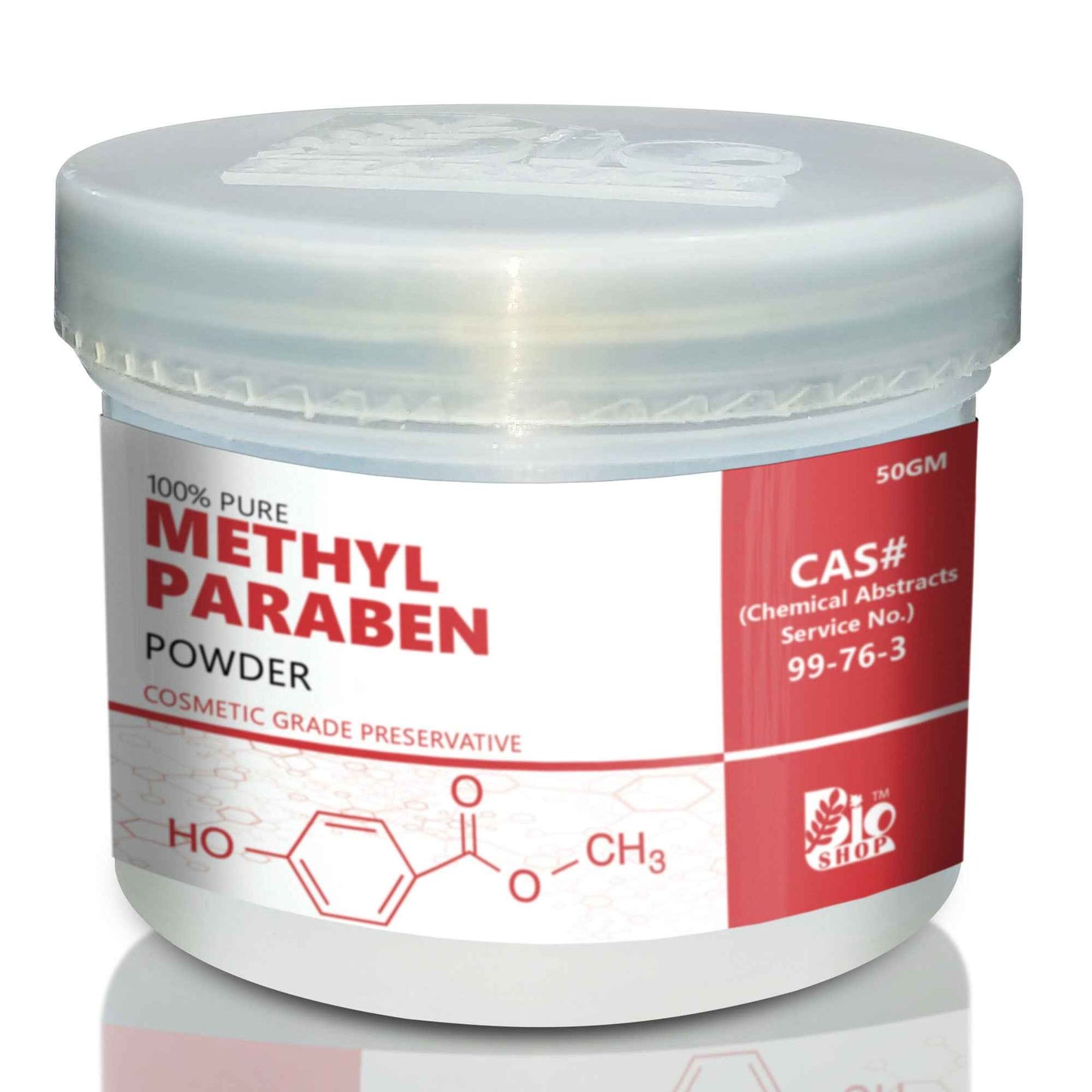
Methyl Paraben Powder
Methyl Paraben Powder
Key Functions: Preserves formula, inhibits bacteria, prevents mold, and extends shelf life.
Couldn't load pickup availability
Explore
Information About Methyl Paraben Powder
✅ Key Features
✦ Broad-spectrum preservative effective against bacteria, yeast, mold, and fungi in aqueous cosmetic systems
✦ Extends cosmetic product shelf life by up to 2–3 years when used at correct concentration and pH
✦ EU Annex V approved preservative permitted at up to 0.4% as a single ester in both leave-on and rinse-off products
✦ Effective across a wide working pH range of 4.0 to 8.0 making it compatible with most cosmetic formula types
✦ Suitable for skincare, haircare, body care, and functional cosmetics wherever water activity is present
✦ Synthetically derived from para-hydroxybenzoic acid — vegan status confirmed and cruelty-free
✦ White crystalline powder with low odor that dissolves readily in the hot water phase or propylene glycol
🔬 Description
Methylparaben is a synthetic ester of para-hydroxybenzoic acid and one of the oldest and most extensively studied preservatives used in cosmetics, pharmaceuticals, and food systems. First introduced into commercial preservation in the early 20th century, it belongs to the paraben family of antimicrobial agents and presents as a fine white crystalline powder or granule with a faint characteristic odor. Its long history of application across regulated industries has resulted in a substantial body of safety and efficacy data that few alternative preservatives can match.
What distinguishes methylparaben is its combination of reliability, broad-spectrum activity, and formulation flexibility. It disrupts microbial cell membrane integrity and inhibits enzymatic function in bacteria and fungi, providing effective protection at concentrations as low as 0.1% in formulas with a pH between 4.0 and 6.0. It remains heat stable through typical emulsification temperatures, pairs effectively with chelating agents such as EDTA and with complementary preservatives such as phenoxyethanol or ethylparaben, and does not interfere with the performance of most cosmetic actives, emulsifiers, or conditioning agents.
Bio Shop Pakistan supplies cosmetic-grade methylparaben powder suitable for DIY beauty formulators, independent cosmetic brands, professional soap makers, and manufacturers requiring a well-documented, cost-effective broad-spectrum preservative.
📊 Technical Data
INCI Name : Methylparaben
Chemical Name : Methyl 4-hydroxybenzoate
CAS Number : 99-76-3
Molecular Formula : C8H8O3
Appearance : White crystalline powder or fine granules
Odor : Slight characteristic odor
pH (1% solution) : 4.0–6.0
Solubility : Slightly soluble in water (approx. 0.25 g per 100 mL at 25°C); freely soluble in ethanol, propylene glycol, and glycerin
Specific Gravity : 1.352 g/cm³ at 20°C
Flash Point : Greater than 112°C (234°F)
HLB Value : Not Applicable
Recommended Use Level : 0.1–0.4% in leave-on and rinse-off products
Type : Synthetic Ester Preservative (Paraben Class)
Shelf Life : 2–3 years in sealed container under correct storage conditions
🧪 Recommended Usage
Skincare (Creams, Serums, Lotions) : ★★★★★
Methylparaben is a primary preservation choice for all aqueous skincare products due to its proven stability and broad antimicrobial activity. Add to the hot water phase at 0.15–0.25% and adjust final formula pH to 5.0–6.0 for optimal efficacy.
Haircare (Shampoo, Conditioner, Masks) : ★★★★★
Highly suitable for all aqueous haircare formulations where long-term microbial stability is critical. Use at 0.1–0.3% in the water phase and pair with EDTA at 0.1% to extend gram-negative bacterial protection.
Soap Making (Cold Process, Melt and Pour) : ★★☆☆☆
Cold process soap operates at pH 9–10 which is well outside methylparaben's effective working range and significantly reduces its antimicrobial activity. Restrict use to melt and pour bases or syndet bars where formula pH remains below 8.0.
Body Care (Scrubs, Butters, Balms) : ★★★☆☆
Effective in aqueous body emulsions and water-containing scrubs but not required in anhydrous systems such as pure body butters and balms. Use at 0.15–0.3% in emulsion-type body care products only.
Functional Cosmetics (Deodorants, Sunscreen, Baby Care) : ★★★★☆
Well-suited for aqueous deodorant formulas and sunscreen emulsions requiring long-term microbial stability. For baby care products, keep concentration below 0.3% and avoid use in leave-on nappy-area products for children under 3 years in accordance with EU SCCS guidance.
💡 Pro Tip
In my professional practice, methylparaben functions as the foundation of a preservation system rather than a complete standalone solution. I treat it as the antifungal and gram-positive backbone and always build around it. For standard water-based emulsions I add EDTA at 0.1% to chelate trace metal ions that can otherwise feed microbial growth, then close the gram-negative gap with phenoxyethanol at 0.5% or ethylparaben at 0.1%. My base working formula targets a final pH of 5.0 to 5.5 where methylparaben's activity is at its peak. This combination consistently passes challenge testing at lower individual preservative concentrations than any single agent achieves alone.
ADVANCED TIP: Pre-dissolve methylparaben powder in an equal weight of propylene glycol at 60–70°C until the solution is fully clear before adding to the water phase. A 50% methylparaben in 50% propylene glycol concentrate by weight creates a pourable, reusable stock solution that eliminates undissolved particulates in the finished product. This pre-solution also improves distribution uniformity in large-batch manufacturing where direct powder addition risks hot-spot preservative concentration.
👩🔬 Skin Type Suitability
Normal Skin : ★★★★★ — Well tolerated at all recommended levels with no reported irritation in non-sensitized healthy skin.
Dry Skin : ★★★★☆ — The preservative benefits of formula stability outweigh any minimal sensitization risk in most dry skin users.
Oily Skin : ★★★★☆ — Suitable for lightweight aqueous gels and oil-control emulsions commonly formulated for oily skin types.
Combination : ★★★★☆ — Compatible with the lightweight serums and balanced pH emulsions most effective for combination skin concerns.
Sensitive Skin : ★★★☆☆ — Patch testing is strongly advised as a small percentage of sensitive skin individuals may develop contact sensitization with repeated exposure.
Mature Skin : ★★★★★ — Preserves the integrity of active-rich anti-aging formulas without interfering with retinoids, peptides, or antioxidants.
Acne-Prone : ★★★☆☆ — Non-comedogenic at standard use levels but occasional sensitivity reactions are reported; consider switching to phenoxyethanol if breakout response is suspected.
🧴 Formulation Ideas
CONCEPT 1: Lightweight Hydrating Face Serum
Usage Level : 0.2%
Key Ingredients: Sodium Hyaluronate (1%), Niacinamide (5%), Allantoin (0.5%), EDTA (0.1%)
Result : A water-clear, fast-absorbing serum with complete microbial preservation and long-term stability suitable for daily use across all skin types.
CONCEPT 2: Daily Moisturizing Body Lotion
Usage Level : 0.25%
Key Ingredients: Cetearyl Alcohol (4%), Caprylic/Capric Triglyceride (8%), Glycerin (5%), Emulsifying Wax NF (3%)
Result : A stable oil-in-water lotion with light skin feel, preserved against bacterial and fungal contamination for up to 24 months at room temperature.
CONCEPT 3: Conditioning Shampoo Base
Usage Level : 0.2%
Key Ingredients: Sodium Laureth Sulfate (12%), Cocamidopropyl Betaine (4%), Panthenol (1%), Citric Acid (to pH 5.5)
Result : A mild, pH-adjusted conditioning shampoo with robust microbiological stability and a clean rinse profile suitable for daily use.
💧 Safety and Regulatory:
INCI Declared : Yes — required on all EU-marketed cosmetic product labels
EU Cosmetics Reg : Permitted — Annex V Entry 12; maximum 0.4% as single ester, 0.8% as mixture of esters
Rinse-Off Limit : 0.4% as a single ester
Leave-On Limit : 0.4% as a single ester
Allergen Alert : No — not classified as a fragrance allergen; rare contact sensitization reported at high or prolonged exposure concentrations
Skin Safety : Safe at recommended levels of 0.1–0.4%
Eye Area Use : Use with caution — keep within recommended concentration
Ingestion : Not for internal use
Pregnancy Use : Consult physician — weak estrogenic activity has been identified in in vitro studies; safety in pregnancy not fully established
Child Safety : Avoid in leave-on nappy-area products for children under 3 years per EU SCCS 2014 guidance
Ventilation : Not required under normal weighing and handling conditions
Storage : Store in a cool dry place away from heat, moisture, and direct light; reseal tightly after each use
Container : HDPE or amber glass — avoid reactive metals and moisture-permeable packaging
⚠️ Methylparaben has demonstrated weak estrogenic activity in in vitro studies. The EU SCCS has confirmed safety at current authorized use levels for adults; however, exercise additional caution in intimate care formulas, products for infants, and nappy-area leave-on products. Some consumers actively seek paraben-free formulas — ensure methylparaben is declared clearly on finished product labels. A small number of individuals may develop contact sensitization on repeated exposure; patch testing is recommended for sensitive skin formulations.
Stability and Compatibility
Working pH Range : 4.0–8.0 (optimal activity between 4.0 and 6.0)
Heat Stability : Stable up to 120°C; compatible with standard hot emulsification processing
Freeze-Thaw Stable : Yes
Emulsion Type : Both O/W and W/O systems
Emulsification Phase: Hot water phase preferred; can be pre-dissolved in propylene glycol and added at cool-down stage
Compatible With : Glycerin, propylene glycol, EDTA, ethylparaben, phenoxyethanol, most emulsifiers, humectants, and cosmetic actives
Incompatible With : High concentrations of non-ionic surfactants which bind methylparaben and reduce free preservative activity; polyamide polymers; bentonite clay at elevated levels
Oxidation Risk : Low — no antioxidant supplementation required
Discoloration Risk : Possible — slight yellowing may occur under prolonged heat above 100°C or in alkaline pH environments above 8.0
Formulation Notes : Pre-dissolve in propylene glycol or glycerin before water phase addition to ensure full dissolution and even distribution. In formulas containing high non-ionic surfactant content, increase methylparaben concentration toward 0.4% or add a surfactant-compatible booster such as caprylyl glycol to maintain effective free preservative levels.
❓ FAQs
Q: What is methylparaben and why is it used in cosmetics?
A: Methylparaben is a synthetic ester preservative derived from para-hydroxybenzoic acid used to prevent microbial contamination in water-containing cosmetic products. It inhibits the growth of bacteria, yeast, and mold and has been used safely in cosmetics for over 70 years. It is one of the most well-documented cosmetic preservatives available.
Q: What is the correct usage level for methylparaben in cosmetic formulas?
A: The standard working range is 0.1–0.4% in both leave-on and rinse-off products. Most formulators use 0.15–0.25% as a practical concentration that provides effective protection while remaining well within EU regulatory limits. For combination preservative systems, reduce to 0.1–0.2% and supplement with a booster or second preservative.
Q: How do I dissolve methylparaben powder properly in my formula?
A: Pre-dissolve the powder in propylene glycol or glycerin at 60–70°C until fully clear, then add the solution to your water phase. You can also add it directly to the water phase above 70°C with adequate mixing. Do not add the undissolved powder to cold water as it will not fully incorporate and creates uneven preservative distribution.
Q: Can methylparaben alone protect my formula against all microbial contamination?
A: Methylparaben provides strong protection against gram-positive bacteria, yeast, and mold but has limited efficacy against gram-negative bacteria such as Pseudomonas aeruginosa. A complete preservation system should pair methylparaben with EDTA at 0.1% and either phenoxyethanol or ethylparaben to achieve full-spectrum coverage across all microbial classes.
Q: How does methylparaben compare to phenoxyethanol as a preservative?
A: Methylparaben excels against fungi and gram-positive bacteria while phenoxyethanol provides stronger coverage against gram-negative bacteria including Pseudomonas. Phenoxyethanol is increasingly marketed as a cleaner or more consumer-friendly option but carries its own regulatory limits and restrictions in baby products. The most effective and cost-efficient approach is to combine both at half their individual maximum concentrations, giving complete broad-spectrum protection with reduced risk of sensitivity from either agent.
Where Can You Safely Use Methyl Paraben Powder
Discover how Methyl Paraben Powder performs across different products — rated for safety, stability, and effectiveness.


