


Bio Shop
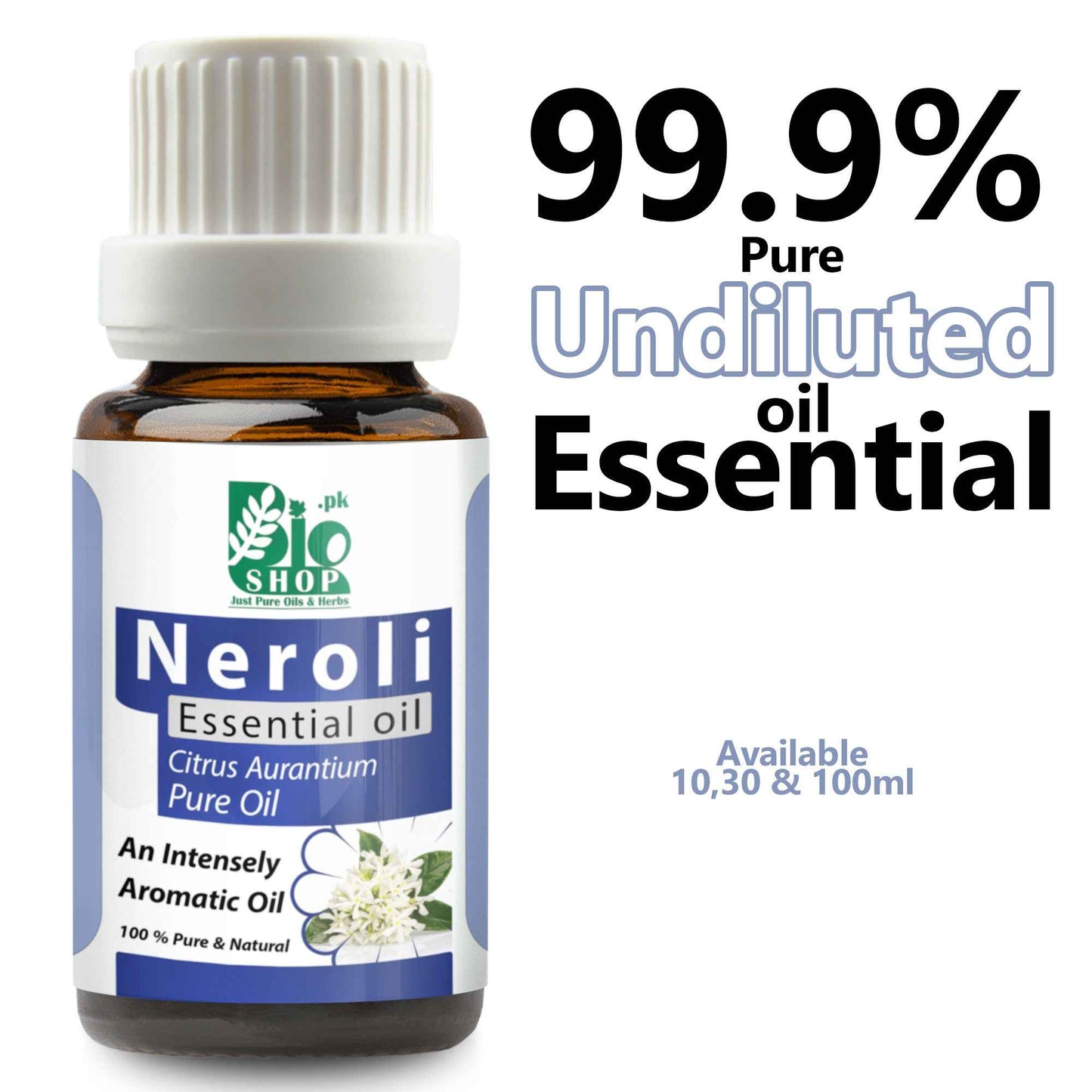
Neroli Essential oil
Neroli Essential oil
Olfactory Notes: Floral Citrus · White Floral · Chypre · Green
Couldn't load pickup availability


Explore
Information About Neroli Essential oil
Key Features
✦ Steam-distilled from fresh Citrus aurantium amara blossoms — one of the most prized floral materials in classical and niche perfumery
✦ Rich in linalool, linalyl acetate, and nerolidol — delivers a naturally complex floral-citrus-honeyed character with green and powdery facets
✦ Dual-function note: contributes fresh brightness at the top while adding floral heart depth as it dries down
✦ Widely used in Eau de Cologne, chypre, oriental, and white floral fragrance families — foundational to classic Cologne compositions
✦ Valued in aromatherapy and luxury skincare for its calming, skin-toning, and regenerative properties
✦ Natural, vegan, and cruelty-free — no animal-derived ingredients, no synthetic adulteration at cosmetic grade
✦ Contains naturally occurring EU-listed allergens including linalool, limonene, geraniol, and farnesol — labeling required above threshold concentrations
About Neroli Essential oil
Neroli essential oil takes its name from Anne Marie Orsini, Princess of Nerola, who famously used bitter orange blossom extract to perfume her gloves and bath in 17th-century Italy. The oil is obtained by steam distillation of the freshly harvested flowers of Citrus aurantium var. amara, the bitter orange tree cultivated primarily in Tunisia, Morocco, Egypt, and southern France. Its extraction is labor-intensive — requiring thousands of handpicked blossoms to yield even a small quantity of oil — which accounts for its premium standing in the fragrance industry. Neroli has been a defining material in classical European perfumery for over three centuries, appearing in some of the most iconic colognes and florals ever created.
What distinguishes neroli from other floral essentials is its remarkable aromatic complexity. Unlike single-molecule synthetics or simpler florals, neroli delivers simultaneously fresh citrus brightness, soft green-honeyed warmth, and a slightly powdery, waxy base note that evolves beautifully on skin over time. Its key constituents — linalool, linalyl acetate, geraniol, nerolidol, and farnesol — interact to produce a profile that is simultaneously light and lasting, making it functional across multiple fragrance families. In attar blending, it pairs naturally with sandalwood, rose, and oud to create deeply nuanced oriental florals. In functional fragrance, it remains one of the most trusted natural materials for premium body care and luxury home fragrance.
Bio Shop Pakistan supplies cosmetic-grade neroli essential oil suitable for fine fragrance formulation, attar and oriental blending, luxury personal care products, aromatherapy applications, and home fragrance crafting.
Olfactory Profile
SCENT DESCRIPTION : Neroli opens with a burst of fresh, slightly metallic citrus brightness edged with clean green undertones. As it evolves, a soft honeyed floral heart emerges — delicate, airy, and luminous — with a waxy, powdery warmth reminiscent of white flowers in bloom. At the base, faint earthy and woody nuances from nerolidol and farnesol lend quiet depth and tenacity. It is at once radiant and intimate, joyful and contemplative — a scent that captures the feeling of sunlit orange blossom gardens in full bloom.
NOTE POSITION : Top to Mid
FRAGRANCE FAMILY : Floral Citrus · White Floral · Chypre
FACETS : Honeyed · Green · Citrus · Powdery · Waxy
TENACITY : Medium — 4 to 6 hours on skin, longer on fabric and in blends fixed with base note materials
SILLAGE : Medium — intimate and close-to-skin in lighter applications, projecting moderately in higher concentrations or when blended with musks and woods
Technical Specifications
CHEMICAL NAME : Citrus aurantium amara (Bitter Orange) Flower Oil
CAS NUMBER : 8016-38-4
SYNONYMS : Neroli Oil, Orange Blossom Essential Oil, Citrus Bigarade Flower Oil, Neroli Bigarade
PURITY : 100% pure essential oil, cosmetic grade
APPEARANCE : Pale yellow to light amber mobile liquid
ODOR THRESHOLD : Approximately 0.001 ppm — highly diffusive and detectable at very low concentrations
SOLUBILITY : Fully soluble in alcohol and fixed oils; practically insoluble in water
SPECIFIC GRAVITY : 0.862 – 0.882 g/cm³ at 20°C (verify with supplier certificate of analysis)
FLASH POINT : Approximately 73 – 78°C (163 – 172°F) (verify with supplier certificate of analysis)
TYPE : Natural — 100% steam-distilled essential oil
Applications & Usage Guidelines
Fine Fragrance : ★★★★★
Neroli is an absolute cornerstone of fine fragrance composition, particularly in Eau de Cologne, soliflore florals, chypres, and fresh oriental structures. It contributes both an airy top note presence and a soft floral heart as it dries down. Used in some of the most iconic and enduring fragrances in history, it remains irreplaceable as a natural material in prestige perfumery.
Attar & Oriental Blending : ★★★★★
In traditional attar and oriental perfume construction, neroli is one of the most prized natural florals available. It lifts heavy base materials like oud and sandalwood while adding a fresh honeyed character that prevents compositions from becoming excessively dense or syrupy. Pakistani and Middle Eastern perfumers routinely use it to brighten rose-oud attars and give floral mukhallats an uplifting freshness.
Aromatherapy & Functional Fragrance : ★★★★☆
Neroli is extensively used in aromatherapy for its calming, mood-lifting, and stress-relieving properties. It performs beautifully in body care fragrancing — particularly in luxury body lotions, bath oils, and shower gels — where its skin-compatible constituents and pleasant scent provide both aromatic and perceived therapeutic value. Usage must respect IFRA leave-on limits due to naturally occurring sensitizers.
Skincare & Cosmetics : ★★★★☆
Beyond fragrance, neroli essential oil is valued in high-end skincare for its reported skin-regenerating and toning properties, attributed partly to its naturally occurring linalool and geraniol content. It is used in facial serums, toners, and luxury creams at low concentrations. Formulate carefully at or below IFRA limits, and conduct patch testing protocols in finished leave-on products.
Home Fragrance : ★★★★★
In reed diffusers, room sprays, and candles, neroli delivers premium performance — its clean, uplifting floral-citrus character is consistently well-received and perceived as a marker of quality in home fragrance. It blends elegantly with woody, green, and aquatic materials to build sophisticated interior scents. Flash point should be verified before candle application to ensure safe wick performance.
IFRA & Usage Rate
RECOMMENDED USAGE RATES
EDP (Eau de Parfum) : 3.0 – 8.0%
EDT (Eau de Toilette) : 1.5 – 5.0%
Body Lotion / Cream : 0.5 – 2.0%
Shampoo / Body Wash : 0.5 – 1.5%
Cold Process Soap : 1.0 – 3.0%
Reed Diffuser : 10.0 – 25.0%
Candle : 3.0 – 8.0% (verify flash point with supplier)
IFRA 51ST AMENDMENT LIMITS
(Based on Citrus aurantium amara flower oil — verify current limits at ifrafragrance.org)
Category 1 (Lip products) : 0.30%
Category 2 (Deodorant, underarm) : 1.20%
Category 3 (Eye area products) : 0.30%
Category 4 (Fine fragrance, leave-on skin) : 4.00%
Category 5A (Face lotion, leave-on) : 2.40%
Category 5B (Hand cream, leave-on) : 2.40%
Category 5C (Baby lotion, leave-on) : 0.60%
Category 5D (Body lotion, leave-on) : 2.40%
Category 6 (Mouthwash / oral) : Not recommended
Category 7A (Rinse-off hair products) : 9.20%
Category 7B (Rinse-off body products) : 9.20%
Category 8 (Products not applied to skin) : No restriction
Category 9 (Candles, air care) : No restriction
Category 10 (Detergents, hard surface) : No restriction
Category 11 (Non-contact / fabric) : No restriction
⚠️ Neroli essential oil contains naturally occurring EU Cosmetics Regulation listed allergens including linalool, limonene, geraniol, farnesol, and benzyl benzoate. These must be declared on finished product labels when present above 0.001% in leave-on products and 0.01% in rinse-off products.
⚠️ Always perform patch testing protocols in finished leave-on formulations. Sensitization risk is real with repeated exposure above safe thresholds.
⚠️ IFRA limits stated are for guidance. Always verify the current 51st Amendment standard at ifrafragrance.org before commercial production.
Blending Guide
METHOD 1 — COLOGNE & FRESH FRAGRANCE ANCHOR
Use neroli as the top-to-mid anchor in Eau de Cologne and fresh citrus structures. Combine with bergamot, petitgrain, and lemon at the top, and ground with vetiver, cedarwood, or musk at the base. Neroli bridges the citrus top and the woody base naturally — reducing the sharpness of the citrus opening while preventing the base from feeling disconnected. Typical usage in a cologne structure: 3 to 6%.
METHOD 2 — ATTAR & ORIENTAL FLORAL BASE
In attar blending, dissolve neroli into a sandalwood or liquid paraffin carrier alongside rose absolute, white musk, and a small proportion of oud. Neroli acts as a natural lifter and brightener — preventing the composition from reading as too dense or animalic. Add it at 5 to 15% of the fragrance concentrate depending on the desired floral intensity.
METHOD 3 — LUXURY HOME FRAGRANCE BLEND
For reed diffusers and room sprays, blend neroli with ylang ylang, jasmine sambac, cedarwood, and vetiver for a sophisticated white floral oriental. Neroli's natural diffusivity ensures the blend opens cleanly and projects well before the richer base materials become prominent. Use at 10 to 20% of the home fragrance concentrate.
BEST PAIRINGS
Bergamot → Brightens the citrus opening, adds Italian cologne character
Petitgrain → Green, woody freshness — the classic cologne trio with neroli
Sandalwood → Creamy, warm base that extends neroli's floral heart beautifully
Rose Absolute → Classic white floral pairing — elegant, timeless, and harmonious
Jasmine Sambac → Rich, indolic floral depth — pushes neroli from fresh to opulent
Ylang Ylang → Tropical, slightly narcotic floral — use sparingly to avoid dominance
Vetiver → Earthy, smoky grounding note — adds gravitas to lighter neroli blends
Cedarwood → Clean, dry woody base — balances neroli without competing
Musk (any) → Amplifies tenacity and diffusion — essential in wearable skin scents
Oud → Bold oriental character — neroli softens oud's intensity considerably
Linalool → Reinforces the floral softness and extends perceived longevity
Coumarin → Adds a warm, slightly sweet tonka-like background that complements honey facets
AVOID : Very high concentrations of green galbanum or harsh camphoraceous materials (eucalyptus, tea tree) — these clash with neroli's delicate honeyed floral character and distort the top note opening.
Perfumer's Note
Neroli is one of those rare natural materials that refuses to behave like a single note. When you first encounter it on a mouillette, it announces itself with that unmistakable fresh, slightly metallic citrus burst — bright, luminous, almost electric. But give it ten minutes, and the composition shifts entirely. The honeyed heart arrives quietly, bringing warmth and softness that feels almost alive on skin. That transition is what makes neroli irreplaceable. Synthetics can replicate components of it — linalool covers the floral softness, linalyl acetate gives freshness — but no combination of aroma chemicals yet fully captures the living complexity of the whole oil as it evolves. For attar work especially, neroli connects the brightness of the opening with the gravity of heavy base materials in a way that few other naturals can manage. It is, in my experience, one of the most compositionally intelligent natural materials available.
ADVANCED TIP : When working neroli into an oud-based attar or oriental, avoid adding it directly to the full compound. Instead, pre-blend neroli with a small portion of linalool (20% of the neroli weight) and maceratein your sandalwood base for 24 to 48 hours before incorporating the full compound. This allows the lighter volatiles in neroli to partially anchor into the sandalwood matrix, which dramatically extends the perceived longevity of the fresh floral character on skin — transforming what would normally be a fleeting top note into a genuinely traceable heart note that lasts well into the dry-down.
Safety & Storage
PHYSICAL STATE : Mobile pale yellow to amber liquid at room temperature
SKIN SAFETY : Use within IFRA 51st Amendment limits by product category. Contains natural sensitizers — patch test finished formulations. Not for undiluted skin application.
EYE CONTACT : Irritant — avoid contact. If contact occurs, flush immediately with clean water for 15 minutes and seek medical attention if irritation persists.
INGESTION : Not for internal use. Keep away from children. If accidentally ingested, do not induce vomiting — contact a poison control center or medical professional immediately.
VENTILATION : Use in a ventilated workspace. Prolonged inhalation of concentrated vapors may cause headache or dizziness in sensitive individuals.
STORAGE : Store in a tightly sealed amber glass or dark container. Keep away from light, heat, and air to prevent oxidation and component degradation.
SHELF LIFE : 12 to 24 months from date of opening when stored correctly. Limonene-containing oils are prone to oxidation — discard if the scent turns sharp, sour, or citrus character is significantly diminished.
CONTAINER : Amber glass strongly preferred. Avoid PET plastic for long-term storage as terpene-rich oils can permeate or leach packaging over time.
FLAMMABILITY : Combustible. Flash point approximately 73 – 78°C. Keep away from open flames and heat sources.
⚠️ As a natural complex substance, neroli essential oil composition can vary between batches and origins. Always review the certificate of analysis from your supplier for batch-specific physical and chemical parameters before formulating commercially.
FAQ
Q: What is neroli essential oil and how is it different from orange blossom absolute?
A: Neroli essential oil is obtained by steam distillation of fresh bitter orange blossoms. Orange blossom absolute is solvent-extracted from the same flowers. Neroli is lighter, fresher, and more citrusy. The absolute is richer, heavier, and more wax-like — suited to different fragrance applications.
Q: Can I use neroli essential oil directly on my skin without diluting it?
A: No. Neroli must always be diluted in a carrier oil, lotion base, or alcohol before skin application. It contains naturally occurring sensitizers including linalool and limonene. Undiluted use risks sensitization reactions with repeated exposure.
Q: What is the best way to use neroli in cold process soap?
A: Use neroli at 1 to 3% of total oil weight. Pre-blending with a small amount of linalool or a neutral fixative base helps reduce top note loss during saponification. Expect some scent evolution — neroli in finished cold process soap typically presents as softer and less bright than in the raw fragrance.
Q: Does neroli essential oil discolor products?
A: Neroli can impart a faint pale yellow to light amber tint in high concentrations, particularly in clear formulations. At typical usage levels in lotions, gels, and clear perfumes, discoloration is generally minimal. Test in your specific base before committing to commercial production.
Q: How does neroli essential oil compare to synthetic neroli accords or linalool-based reconstructions?
A: Natural neroli offers a living, evolving complexity that no synthetic reconstruction fully matches. Linalool-based accords capture the floral softness, but miss the green metallic top, the honeyed mid transition, and the earthy nerolidol base. For budget-sensitive applications, a skilled blend of linalool, linalyl acetate, nerol, and geraniol can approximate neroli — but in prestige perfumery, attar work, and any product where natural provenance matters, the real oil remains the superior choice.
Where Can You Safely Use Neroli Essential oil?
Discover how Neroli Essential oil performs across different applications—rated for safety, stability, and effectiveness.
citrusy leafy aroma pleasant blended with top citrusy sweet orange good for summer body sprays giving fresh feeling
Neroli aur rose mila ke ek premium roll-on attar banaya Eid gifts ke liye. Jo bhi mila sab ne iska zikar kiya. Yeh combination timeless aur sophisticated hai. Bio Shop oils ki quality se yeh possible hua.
Price thoda zyada lagta hai pehle but jab smell aur quality dekhi toh samajh aaya ke kyun. Yeh oil genuinely special hai. Ekdum pure aur authentic bitter orange blossom smell. Bio Shop pe bharosa hai.
Bergamot neroli aur cedarwood se ek stunning unisex cologne banaya. Neroli ne poore blend ko ek sophisticated floral depth di. Bio Shop Premix mein dilute kiya - result professional quality tha.
Panic attacks ki problem thi. Neroli diffuse karna shuru kiya - genuinely calming effect hai. Research mein bhi neroli ko anxiety ke liye best oils mein se ek bataya gaya hai. Oil ekdum pure aur authentic.
Shukriya Nadia! Neroli is clinically studied for its anxiolytic properties. Just a few drops in a diffuser can make a real difference. We are glad it is helping!


