Bio Shop
Neryl Acetate
Neryl Acetate
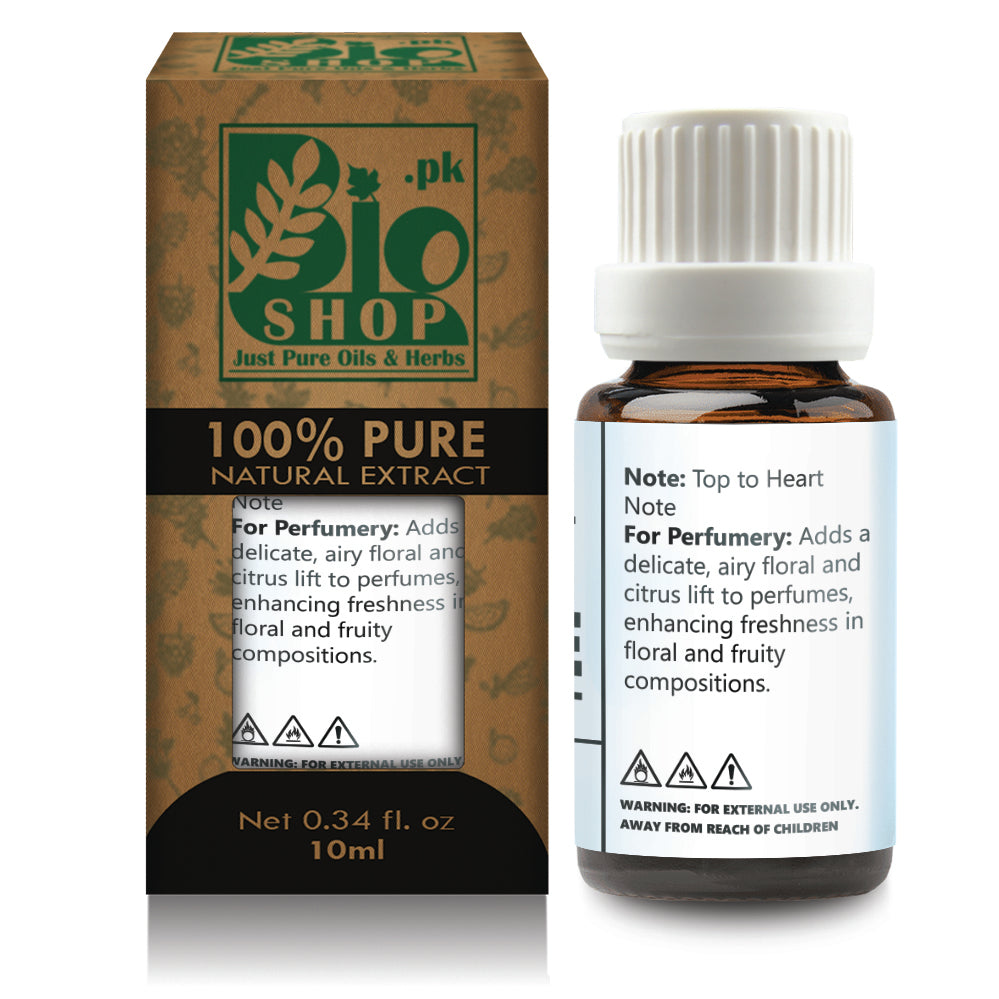
Olfactory Notes: Floral · Fruity · Sweet · Fresh · Slightly Citrusy · Soft
Couldn't load pickup availability

Explore
Information About Neryl Acetate
Key Features
✦ Naturally derived aroma chemical — the cis isomer of Geranyl Acetate, found in neroli, bergamot, and lavender oils
✦ Fresh rosy-citrus scent with soft fruity and green facets — adds diffusive lift to floral and oriental compositions
✦ Excellent skin safety profile — widely used in leave-on cosmetics, body lotions, and hair care at approved levels
✦ Versatile carrier compatibility — soluble in DPG, IPM, ethanol, and most fragrance bases; low odor threshold means efficient use
✦ Key note in neroli, rose, and citrus cologne accords — essential for transparent floral and hesperidic fine fragrance work
✦ Vegan and cruelty-free synthetic equivalent — lab-produced to match the natural terpene ester without extraction from botanicals
✦ Performs well in functional fragrance including shampoos, conditioners, body wash, and fabric care applications
About Neryl Acetate
Neryl Acetate is a naturally occurring terpene acetate ester belonging to the monoterpenoid family. It is the cis geometrical isomer of Geranyl Acetate and shares the same molecular formula but differs in the spatial arrangement around its double bond. Found abundantly in neroli absolute, bergamot oil, lavender oil, and certain citrus peel oils, Neryl Acetate has been a recognized fragrance ingredient since the early twentieth century and remains a fundamental building block in classical perfumery.
What sets Neryl Acetate apart from its trans counterpart, Geranyl Acetate, is its softness and diffusivity. Where Geranyl Acetate leans fruity and waxy with a sharper lift, Neryl Acetate presents a rounder, more transparent floral-citrus character with a gentler tenacity. This makes it especially valuable for neroli reconstructions, delicate rose accords, and hesperidic colognes where a natural, airy quality is desired. Its low odor threshold means it contributes meaningfully even at low usage levels.
Bio Shop Pakistan supplies cosmetic-grade Neryl Acetate suitable for fine fragrance, attar blending, functional cosmetics, and home fragrance applications. It is appropriate for both beginner formulators building floral bases and professional perfumers requiring precise terpene ester materials.
Olfactory Profile
SCENT DESCRIPTION : Neryl Acetate opens with a fresh, rosy-citrus burst that is lighter and more transparent than Geranyl Acetate. The heart reveals soft floral character reminiscent of neroli blossom and petitgrain, with subtle green and slightly fruity facets that keep it from becoming overly sweet. On dry-down it leaves a clean, delicate warmth with faint powdery undertones. It is a polished, natural-smelling ingredient that integrates effortlessly rather than announcing itself.
NOTE POSITION : Top to Mid
FRAGRANCE FAMILY : Floral · Citrus · Green
FACETS : Fresh · Rosy · Citrusy · Soft · Airy
TENACITY : Medium — perceptible for 3 to 5 hours in fragrance blends; stronger in oil-based systems
SILLAGE : Medium — diffuses well in the opening but settles close to skin on dry-down; elegant rather than loud
Technical Specifications
Chemical Name : (Z)-3,7-Dimethylocta-2,6-dien-1-yl acetate
CAS Number : 141-12-8
Synonyms : cis-Geranyl Acetate · Nerol Acetate · cis-3,7-Dimethyl-2,6-octadienyl Acetate
Purity : 95% minimum (verify with supplier certificate of analysis)
Appearance : Colorless to pale yellow clear liquid
Odor Threshold : Approximately 0.04 to 0.10 ppm (very low — highly efficient at trace levels)
Solubility : Insoluble in water · Freely soluble in ethanol, DPG, IPM, and most fragrance oils
Specific Gravity : 0.905 to 0.915 at 20°C
Flash Point : Approximately 72°C to 78°C (verify with SDS from supplier)
Type : Synthetic terpene ester (nature-identical)
Applications & Usage Guidelines
Fine Fragrance : ★★★★★
Neryl Acetate is a classical fine fragrance material most at home in neroli, citrus, and transparent floral compositions. It contributes the fresh, natural lift that keeps light perfumes from smelling synthetic. Essential for EDTs and colognes targeting a natural, breezy character.
Attar and Oriental Blending : ★★★★☆
It integrates well into oil-based attar formats, softening heavier base materials like oud, vetiver, and musk with a natural floral bridge. Its terpenic character connects earthy oriental notes to lighter floral elements. Particularly effective in rose-oud and neroli-amber attars.
Functional Fragrance : ★★★★☆
Neryl Acetate is suitable for use in rinse-off and leave-on functional products including shampoos, conditioners, and body lotions. It survives moderate processing and contributes a clean, fresh scent impression in personal care formulations. Works well alongside citrus, herbal, and light floral fragrance profiles.
Cosmetics : ★★★☆☆
Usable in skin-safe concentrations in creams, serums, and body butters where a soft floral scent is desired. Stability in high water content formulations should be assessed — partial hydrolysis can occur under acidic or alkaline conditions over time. Patch testing is recommended for sensitive skin applications.
Home Fragrance : ★★★★☆
Performs well in reed diffusers and room sprays where its diffusive top character is an asset. In candles its moderate flash point requires attention to safe handling and wicking parameters. Adds a fresh, clean floral register that works in spring and citrus home fragrance blends.
IFRA & Usage Rate
RECOMMENDED USAGE RATES
Application : Suggested Usage Rate
EDP (Eau de Parfum) : 2.0% to 8.0%
EDT (Eau de Toilette) : 1.0% to 5.0%
Body Lotion / Cream : 0.2% to 1.0%
Shampoo / Body Wash : 0.1% to 0.5%
Candle : 3.0% to 8.0%
Reed Diffuser : 5.0% to 15.0%
Bar Soap : 0.5% to 1.5%
IFRA 51ST AMENDMENT STATUS
Neryl Acetate (CAS 141-12-8) is not individually listed as a restricted or prohibited substance in the IFRA 51st Amendment standards. It is considered a generally safe fragrance ingredient at industry-standard usage levels.
⚠️ Note: Although Neryl Acetate itself is not restricted, it is a constituent of several natural essential oils (such as neroli, bergamot, and lavender) that carry their own IFRA usage limits. When using natural oils containing Neryl Acetate, apply the limits for the whole oil as specified in IFRA 51st Amendment Category guidelines.
⚠️ Note: In high-pH soap bases, Neryl Acetate may undergo partial saponification or hydrolysis, releasing nerol and acetic acid. This can affect scent character on dry soap bars. Testing in final matrix is always recommended.
⚠️ Confirm current IFRA status and usage limits with your ingredient supplier's documentation before commercial use.
Blending Guide
METHOD 1 — DIRECT ADDITION TO ALCOHOL BASE
Dissolve Neryl Acetate directly into perfumer's alcohol (ethanol 95%) at 1% to 8% depending on desired intensity. It disperses immediately without any cloudiness. This is the simplest and most effective delivery method for fine fragrance work.
METHOD 2 — DPG OR IPM DILUTION FOR FUNCTIONAL USE
For body care and functional fragrance applications, pre-dilute Neryl Acetate in Dipropylene Glycol or Isopropyl Myristate at a 10% to 50% dilution before incorporating into the formula. This improves blending accuracy at low usage rates and reduces the risk of uneven distribution in emulsions.
METHOD 3 — TERPENE ACCORD BUILDING
Combine Neryl Acetate with Linalool, Linalyl Acetate, and a trace of Citronellol to construct a natural neroli or lavender-type accord from the ground up. This technique allows precise control over the character and longevity of the accord in ways that using a whole essential oil does not.
BEST PAIRINGS
Linalool → Enhances the floral-fresh dimension, creates a natural lavender-neroli accord
Linalyl Acetate → Adds lift and herbal sweetness, deepens the terpene ester character
Geraniol → Brings rosy warmth that complements the cis floral softness
Citronellol → Adds a dewy rose quality with improved tenacity on skin
Hedione → Lifts radiance and adds a jasmine-like diffusion to floral blends
Bergamot EO → Natural hesperidic pairing — the two share terpene chemistry for seamless blending
Ambroxan → Grounds the light top note and extends longevity dramatically in fine fragrance
Cedarwood IFF → Provides a dry woody base that balances the soft freshness of Neryl Acetate
AVOID
Avoid combining with strongly alkaline raw materials in the final formula as hydrolysis may degrade the acetate ester and alter scent character. Do not overheat above 80°C during processing as thermal degradation can occur in candle or soap applications.
Perfumer's Note
Neryl Acetate is one of those ingredients I return to again and again whenever a composition needs to feel effortlessly natural rather than constructed. There is something about its cis geometry that gives it a rounded, almost shy quality — it does not push forward like Geranyl Acetate but instead diffuses gently and integrates with everything around it. In a neroli reconstruction it is indispensable. In a rose attar it acts as a bridge between the heavier alcohols and the dry woody base. In a citrus cologne it adds a fleeting floralcy that prevents the brief top note from reading as merely functional. It is a supporting actor that quietly elevates the entire cast.
ADVANCED TIP : Try using Neryl Acetate at 0.5% to 1% in a finished musk-floral accord as a final adjustment tool. At this level it will not register as a distinct note but will add a slight natural transparency that makes synthetic musks and lactones smell less synthetic and more skin-like. Compare the accord with and without it at this dosage and the difference in quality will be immediately apparent — particularly noticeable in leave-on skin products where the musk's interaction with body chemistry needs to feel natural.
Safety & Storage
Physical State : Clear colorless to pale yellow liquid at room temperature
Skin Safety : Generally safe at IFRA-compliant usage levels · patch test recommended for leave-on products · avoid use near eyes
Eye Contact : Irritant — flush immediately with clean water for 15 minutes and seek medical attention if irritation persists
Ingestion : Not for consumption · if swallowed do not induce vomiting · seek immediate medical attention
Ventilation : Work in a well-ventilated area · avoid prolonged inhalation of concentrated vapour
Storage : Store in a cool, dark place between 10°C and 25°C · keep away from heat sources and direct sunlight
Shelf Life : 24 to 36 months when stored correctly in sealed container · oxidation may alter scent character over time
Container : Store in original HDPE or amber glass container with lid tightly closed · avoid prolonged contact with reactive metals
Flammability : Combustible liquid · flash point approximately 72°C to 78°C · keep away from open flame during candle work
FAQ
Q: What does Neryl Acetate smell like?
A: It has a fresh, rosy-citrus character with soft floral and slightly green facets. It is lighter and more transparent than Geranyl Acetate and smells close to neroli blossom.
Q: Can I use Neryl Acetate in soap?
A: Yes, at 0.5% to 1.5% in bar soap. Be aware that the high pH of cold process soap can cause partial hydrolysis of the acetate group over time, which may subtly shift the scent on the cured bar.
Q: How is Neryl Acetate different from Geranyl Acetate?
A: They are geometrical isomers — Neryl Acetate is the cis form and Geranyl Acetate is the trans form. Neryl Acetate is softer, rounder, and more diffusive. Geranyl Acetate is fruitier, sharper, and slightly stronger in character.
Q: Is Neryl Acetate restricted by IFRA?
A: Neryl Acetate is not individually listed as a restricted substance in the IFRA 51st Amendment. Always verify the current status with your supplier documentation before commercial production.
Q: How does synthetic Neryl Acetate compare to the version found in natural neroli oil?
A: They are chemically identical — synthetic Neryl Acetate is nature-identical and smells the same. The advantage of the isolated synthetic is consistency, purity, and cost efficiency compared to full neroli absolute, which contains many other constituents that can add complexity but reduce formulation control.
Where Can You Safely Use Neryl Acetate?
Discover how Neryl Acetate performs across different applications—rated for safety, stability, and effectiveness.