Bio Shop
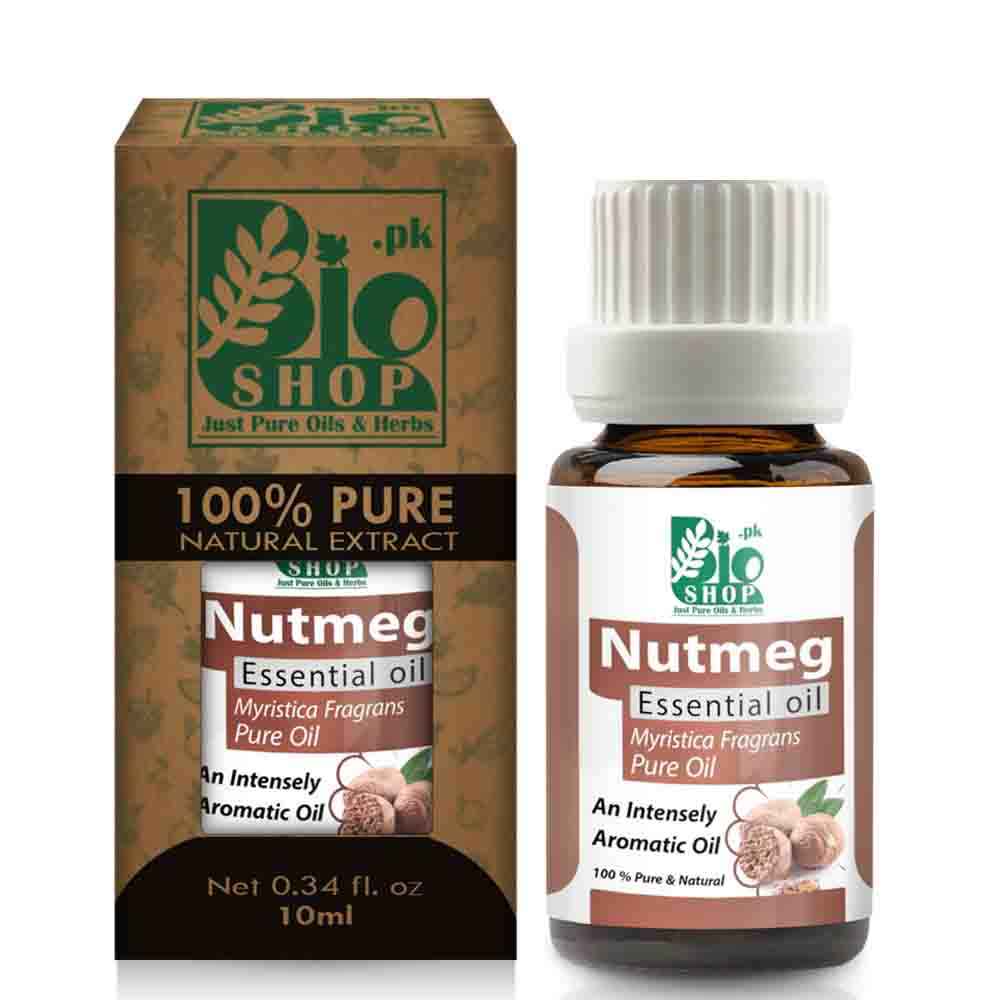
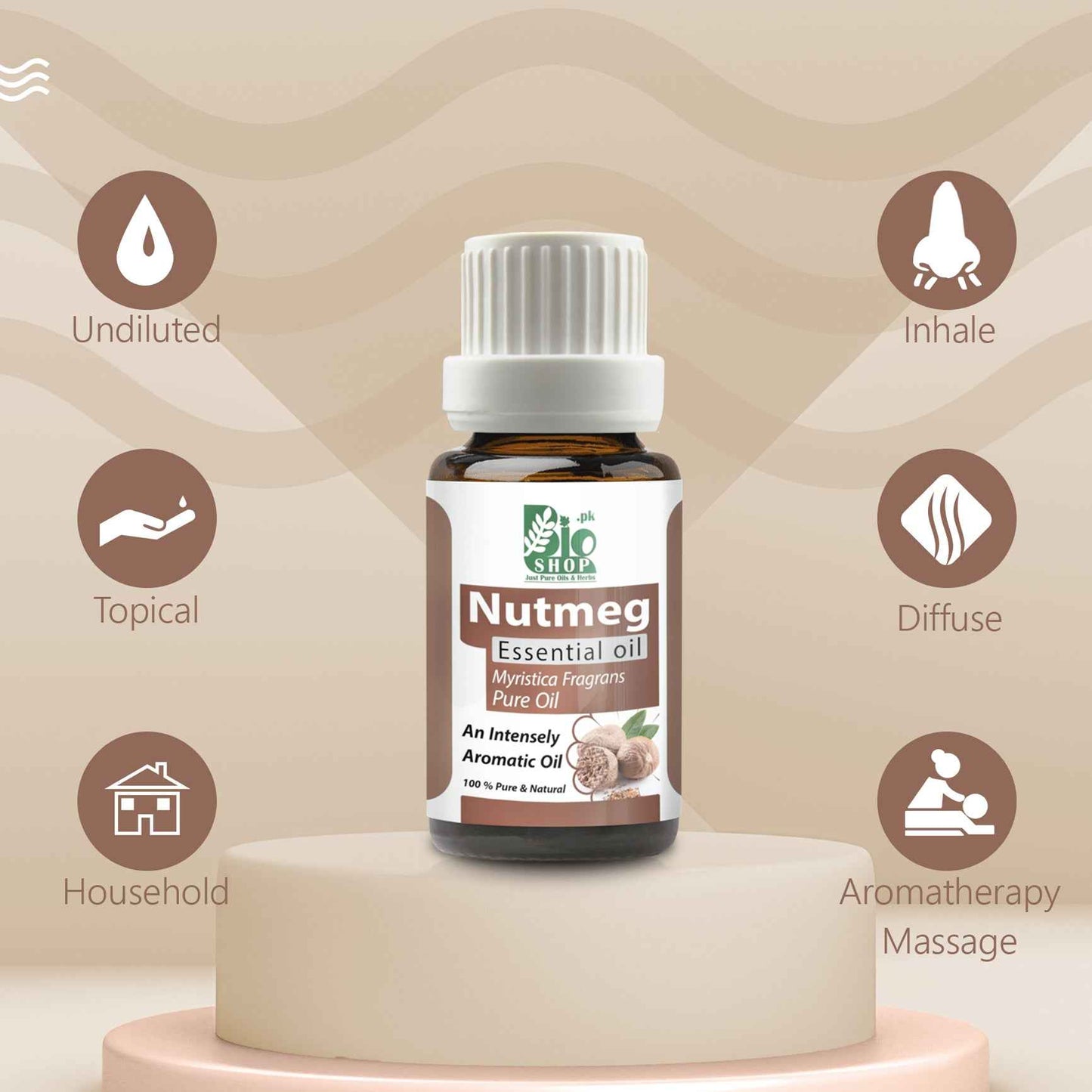
Nutmeg Essential oil
Nutmeg Essential oil
Olfactory Notes: Spicy · Woody · Camphorous · Warm · Earthy-Sweet
Couldn't load pickup availability
Explore
Information About Nutmeg Essential oil
Key Features
✦ Steam-distilled from dried Myristica fragrans seeds — 100% pure, undiluted essential oil with no carrier additions
✦ Signature warm, spicy, woody scent with camphorous and slightly sweet facets — a classic oriental fragrance base note
✦ Rich in sabinene, alpha-pinene, myristicin, and terpinen-4-ol — a complex natural terpene profile
✦ Widely used in oriental attars, masculine fougères, chypres, and spice-forward perfume compositions
✦ Functional applications in hair care, massage formulations, and aromatherapy blends for its reputed warming properties
✦ Excellent performance in candles, reed diffusers, and incense where its tenacious spicy warmth reads clearly
✦ Vegan, cruelty-free, and naturally sourced — use within IFRA 51st Amendment limits for skin-contact applications
About Nutmeg Essential oil
Nutmeg Essential Oil is extracted by steam distillation from the dried, shelled seeds of Myristica fragrans Houtt., an evergreen tree indigenous to the Banda Islands of Eastern Indonesia. The same tree also yields mace, which comes from the bright red aril surrounding the seed, producing a slightly different essential oil with shared but distinct aromatic character. Nutmeg has been one of the most coveted spices in human history — it was the subject of colonial wars in the seventeenth century, and its medicinal and aromatic uses trace back to ancient Sanskrit texts and Arabic medicinal encyclopedias. Today it is commercially produced primarily in Indonesia, Grenada, and India.
What makes nutmeg essential oil distinctive is its layered chemical complexity. It is dominated by monoterpene hydrocarbons — sabinene typically constitutes 20 to 50 percent of the oil — alongside alpha-pinene, beta-pinene, myristicin, and terpinen-4-ol. This combination creates a scent that reads simultaneously as dry and spicy, camphorous and green, woody and faintly sweet. Myristicin, while present in small quantities, contributes both the characteristic spice nuance and the regulatory considerations that require responsible use in skin-contact applications. The oil interacts beautifully with other spice, wood, and resinous materials, making it an exceptionally versatile ingredient for both natural and hybrid fragrance systems.
Bio Shop Pakistan supplies cosmetic-grade Nutmeg Essential Oil suitable for perfumery, attar blending, soap making, candle crafting, functional cosmetics, and home fragrance applications.
Olfactory Profile
SCENT DESCRIPTION : Nutmeg Essential Oil opens with a sharp, dry, camphorous spiciness that quickly softens into a warm, woody, and faintly sweet heart. There is a natural greenish and slightly earthy quality running beneath the spice — a rawness that signals its plant origin and differentiates it from synthetic spice materials. As it develops on a strip or in a blend, a subtle balsamic and resinous warmth emerges in the dry-down, anchoring the overall composition. The overall impression is of a freshly grated spice — aromatic, clean-edged, and naturalistically complex.
NOTE POSITION : Top-Mid
FRAGRANCE FAMILY : Oriental Spicy · Woody Aromatic · Fougère
FACETS : Spicy · Woody · Camphorous · Warm · Earthy-Sweet
TENACITY : Medium — approximately 4 to 6 hours on a scent strip; longer in high-concentration or anhydrous applications
SILLAGE : Medium — projects noticeably at normal use rates without overwhelming; gains presence in warm or diffused formats
Technical Specifications
CHEMICAL NAME : Myristica fragrans seed essential oil
CAS NUMBER : 8008-45-5
SYNONYMS : Nutmeg Oil, East Indian Nutmeg Oil, Myristica Oil, Oil of Nutmeg
PURITY : 100% pure steam-distilled essential oil — no diluents or additives
APPEARANCE : Pale yellow to colourless mobile liquid
ODOR THRESHOLD : Approximately 1–5 ppm (highly perceptible at trace concentrations)
SOLUBILITY : Insoluble in water · Soluble in alcohol, fixed oils, and most carrier solvents
SPECIFIC GRAVITY : 0.880 – 0.925 at 20°C (verify against certificate of analysis)
FLASH POINT : Approximately 47°C / 117°F (verify with supplier CoA)
TYPE : Natural — steam distilled from Myristica fragrans seeds
Applications & Usage Guidelines
Fine Fragrance : ★★★★☆
Nutmeg Essential Oil is a classic spice modifier in oriental, fougère, and masculine aromatic compositions. It adds natural depth and raw warmth at low inclusion rates and layers beautifully with woods, resins, and musks. Keep within IFRA Category 4 limits for leave-on alcohol-based applications.
Attar & Oriental Blending : ★★★★★
One of the most traditional spice materials in attar and mukhallat construction, nutmeg pairs seamlessly with sandalwood, oud, rose, and amber bases. It bridges dry spice and warm wood accords naturally and is a staple in classic South Asian and Middle Eastern fragrance traditions.
Home Fragrance (Candles & Diffusers) : ★★★★★
Nutmeg performs exceptionally in candles and reed diffusers where IFRA skin-contact limits do not apply. Its spicy warmth diffuses well through heat and evaporation, making it ideal for autumn and winter home fragrance collections. Blend with clove, cinnamon, cedarwood, and vanilla for classic warmth.
Hair & Scalp Care : ★★★☆☆
Used in low concentrations in shampoos and scalp serums for its aromatic contribution and reputed warming and stimulating properties. Stay within IFRA-guided limits for rinse-off and leave-on hair products. Dilute properly in a carrier before incorporating into water-based formulations.
Functional Cosmetics & Massage : ★★★☆☆
Employed in massage oils, warming balms, and body care formulations for its reputed circulatory and stimulating properties. Skin sensitization risk exists at elevated concentrations — always dilute in a carrier oil at 0.5 to 1% maximum and patch test before use. Not recommended near eyes, lips, or broken skin.
IFRA & Usage Rate
RECOMMENDED USAGE RATES
EDP / Eau de Parfum : 0.5 – 1.5% (within IFRA Cat 4 limit)
EDT / Eau de Toilette : 0.5 – 1.5%
Body Lotion / Cream : 0.3 – 0.6% (leave-on — follow IFRA Cat 5 limits)
Shampoo / Body Wash : 0.5 – 1.5% (rinse-off — higher tolerance)
Bar Soap : 0.5 – 2.0% (rinse-off)
Candle : 3 – 8% in wax (non-skin-contact)
Reed Diffuser : 5 – 15% in diffuser base (non-skin-contact)
Massage / Carrier Blend : 0.5 – 1.0% in fixed oil (skin-contact, leave-on)
IFRA 51ST AMENDMENT LIMITS (East Indian Nutmeg Oil — Myristica fragrans)
⚠️ Nutmeg Essential Oil is IFRA-restricted due to myristicin and elemicin content. Limits below are based on the 51st Amendment standard. Always verify against the current IFRA database at ifrafragrance.org and your supplier's conformity certificate.
IFRA Category 1 (Lip products) : 0.01%
IFRA Category 2 (Axilla / deodorant) : 0.11%
IFRA Category 3 (Eye area products) : 0.17%
IFRA Category 4 (Fine fragrance / EDC/EDT/EDP) : 0.55%
IFRA Category 5a/b/c (Body/face/hand lotion) : 0.55%
IFRA Category 5d (Baby lotion) : 0.02%
IFRA Category 7a (Rinse-off hair products) : 0.55%
IFRA Category 7b (Leave-on hair products) : 0.55%
IFRA Category 9 (Rinse-off body/bath products) : 2.24%
IFRA Category 11a (Products on clothed skin) : 2.24%
IFRA Categories 10a/10b/11b/12 (Household, fabric, non-skin) : Not restricted
⚠️ Figures above are approximate guidance only. Confirm exact limits against your batch CoA and the current IFRA 51st Amendment standard. Formulas that exceed IFRA limits must not be used in skin-contact finished products.
Blending Guide
USAGE METHOD 1 — DIRECT ADDITION TO ALCOHOL BASE
Add nutmeg essential oil directly to perfumer's alcohol (IPM or ethanol 96%) at the recommended concentration. Allow the maceration period of 48 to 72 hours before evaluating. The top-mid note character integrates quickly with other spice and wood materials. Ideal for oriental EDPs and masculine fougères.
USAGE METHOD 2 — PRE-DILUTION IN CARRIER OIL FOR COSMETICS
For leave-on skin formulations, pre-dilute nutmeg essential oil in a light carrier such as fractionated coconut oil or jojoba at a 10% concentrate. This pre-dilution makes it easier to dose precisely at the low percentages required by IFRA guidelines and improves even dispersion throughout your base.
USAGE METHOD 3 — SPICE ACCORD BLENDING FOR HOME FRAGRANCE
In candles and reed diffusers, combine nutmeg with clove bud, cinnamon bark or leaf, sweet orange, and benzoin as part of a spice accord. Build the accord as a pre-blend at 5 to 10 times the final use concentration, then dilute into your fragrance base. This ensures even distribution and balanced spice character.
BEST PAIRINGS
Sandalwood (Mysore / synthetic) → Anchors the spice onto a creamy warm wood base — classic attar pairing
Cedarwood (Atlas / Virginia) → Adds dry, pencil-shaving dryness that contrasts beautifully with the round spice
Clove Bud Essential Oil → Amplifies the spice family; use carefully to avoid an overpowering medicinal note
Rose Absolute or Rose Otto → Softens and feminises the nutmeg spice — used in classic oriental florals
Oud Oil / Agarwood → The gold standard pairing for South Asian and Gulf-style mukhallat composition
Benzoin Resinoid → Adds sweet, vanilla-like resinous warmth to the dry-down
Labdanum Absolute → Creates a deep, animalic, ambery base that grounds the spice beautifully
Black Pepper Essential Oil → Shared dry spiciness creates a focused, sharply aromatic spice chord
Patchouli → Earthy-sweet contrast that enriches oriental and chypre-style compositions
Vanilla / Ethyl Vanillin → Sweetens and softens the spice — accessible, crowd-pleasing effect
AVOID
Do not blend at high concentrations alongside other myristicin-containing oils (such as parsley seed or dill) in skin-contact formulations without recalculating your cumulative IFRA exposure. Avoid direct use on sensitive skin, broken skin, or near eyes without appropriate dilution.
Perfumer's Note
Nutmeg is one of those ingredients that punches far above its inclusion rate. Even at 0.2 or 0.3 percent in a fine fragrance concentrate, it asserts itself — dry, warm, and unmistakably spiced without reading as food or as synthetic. It has a natural rawness that no aromatic chemical has fully replicated, which is why it remains irreplaceable in authentic attar and mukhallat work. I find it most powerful not as a solo spice statement but as a spice modifier — the material that makes a woody oriental smell like it was built from real ingredients and not assembled from molecules alone. The green-camphorous edge is what I value most: it keeps the composition breathing and prevents the spice from turning flat or cloying.
ADVANCED TIP : Try using nutmeg essential oil in a very low-concentration aromatic bridge role — around 0.1 to 0.2% in your finished EDP concentrate — to connect a dry woody base (cedarwood, vetiver) with a floral or resinous heart (rose, benzoin). At this concentration it is not consciously perceived as spice, but it imparts a cohesion and a sense of naturalness to the overall blend that is hard to achieve with synthetics alone. This technique is particularly effective in masculine and unisex oriental formulations where the goal is seamless, naturalistically warm composition rather than obvious spice presence.
Safety & Storage
PHYSICAL STATE : Clear pale yellow to colourless mobile liquid
SKIN SAFETY : Must be diluted before skin contact. Undiluted application causes irritation and sensitization. Follow IFRA limits strictly. Patch test all skin-contact formulations.
EYE CONTACT : Avoid all contact with eyes. If contact occurs, flush immediately with clean water for 15 minutes and seek medical attention.
INGESTION : Not for consumption. Keep out of reach of children. If swallowed, do not induce vomiting — seek medical attention immediately.
VENTILATION : Use in well-ventilated areas. Avoid prolonged inhalation of concentrated vapour during formulation.
STORAGE : Store in a cool, dark place away from heat and direct sunlight. Keep container tightly sealed to prevent oxidation and evaporation of volatile fractions.
SHELF LIFE : 1 to 2 years from date of manufacture when stored correctly. Oxidised oil should not be used in skin-contact applications.
CONTAINER : Store in original amber glass or aluminium packaging. Avoid plastic containers for long-term storage.
FLAMMABILITY : Flammable liquid. Keep away from open flames and high heat sources. Flash point approximately 47°C — observe standard flammable liquid handling practices.
FAQ
Q: What is Nutmeg Essential Oil used for in DIY perfumery?
A: It is used as a warm, spicy heart note in oriental, fougère, and masculine aromatic compositions. It blends well with woods, resins, and florals to add natural depth and complexity.
Q: Is Nutmeg Essential Oil safe to use directly on skin?
A: No. It must always be diluted before skin application. Undiluted nutmeg oil is a skin irritant and sensitizer. Use within IFRA 51st Amendment limits and always patch test your finished formula.
Q: What is the maximum safe usage level in a body lotion or leave-on cream?
A: Under IFRA 51st Amendment Category 5, the limit for East Indian nutmeg oil is approximately 0.55% in the finished product. Always verify with your current IFRA conformity certificate and supplier CoA.
Q: Can I use Nutmeg Essential Oil in candles and reed diffusers without IFRA restrictions?
A: Yes. IFRA limits apply to skin-contact applications only. In candles, reed diffusers, and room sprays, you are free to use higher concentrations — typically 3 to 8% in candle wax and 5 to 15% in diffuser bases.
Q: How does Nutmeg Essential Oil compare to synthetic spice aroma chemicals like Iso-Eugenol or Methyl Eugenol?
A: Nutmeg essential oil offers a fuller, more complex and naturalistically dry spice character that synthetic spice molecules cannot fully replicate. Synthetics provide greater regulatory flexibility and consistency, but nutmeg's camphorous-green facets and terpene complexity make it uniquely valuable in natural and authentic-style formulations.
Where Can You Safely Use Nutmeg Essential oil?
Discover how Nutmeg Essential oil performs across different applications—rated for safety, stability, and effectiveness.