Skip to product information
1 of 2

Bio Shop

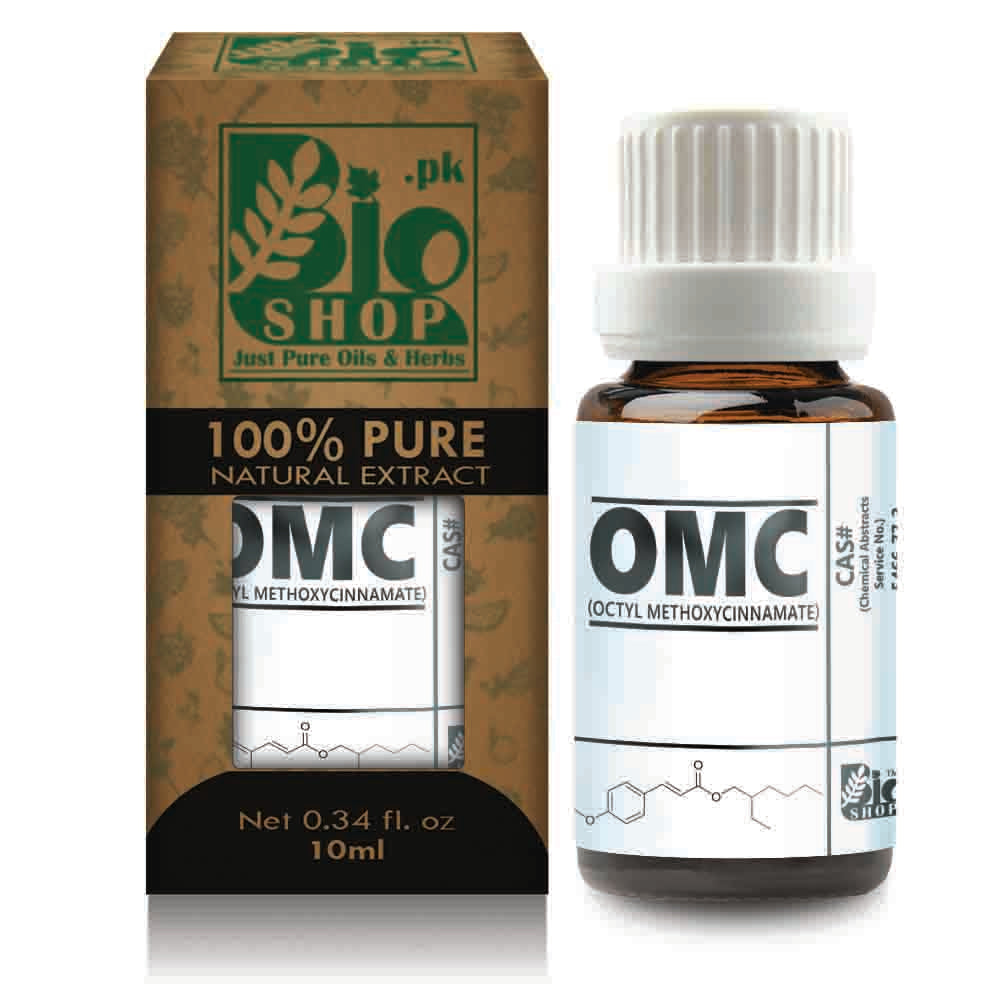
Octyl Methoxycinnamate

Octyl Methoxycinnamate

Regular price Rs.500.00
Regular price Sale price Rs.500.00
Sale Sold out
Shipping calculated at checkout.

Key Functions: Absorbs UVB rays, boosts SPF value, protects against photoaging, and enhances sunscreen stability.

Weight
Quantity
🚚 Estimated delivery time:
Learn More About This Ingredient View full details

Explore

Information About Octyl Methoxycinnamate

✅ Key Features

✦ One of the most effective and widely used organic UVB filters available for cosmetic sunscreen formulation
✦ Oil-soluble liquid that integrates seamlessly into emulsions, oils, and anhydrous sun care products
✦ Absorbs UVB radiation in the 280 to 320 nm range, directly reducing sunburn risk
✦ Lightweight and non-greasy feel on skin, improving sunscreen wearability and consumer acceptance
✦ Synergizes with UVA filters like Avobenzone to deliver broad-spectrum sun protection
✦ Permitted in sunscreen formulations worldwide with a well-established safety and regulatory profile
✦ Suitable for face creams, body lotions, lip balms, hair sprays, and any product requiring SPF protection

🔬 Description

Octyl Methoxycinnamate, commercially known as Octinoxate, is an organic UVB-absorbing compound that has been a cornerstone of sunscreen chemistry since the 1980s. Derived from cinnamic acid, it belongs to the cinnamate family of UV filters and is one of the most extensively studied and widely approved sun protection agents in global cosmetic regulation. Its liquid form and oil-soluble nature made it an early favorite among formulators seeking efficient UVB protection without the heavy white cast of mineral sunscreens.

What makes Octyl Methoxycinnamate particularly valuable is its high molar extinction coefficient in the UVB range, meaning even moderate concentrations deliver meaningful SPF contribution. It dissolves readily in common cosmetic emollients and can be incorporated during the oil phase of emulsions without specialized equipment. When paired with photostabilizers or UVA-absorbing filters, it forms the backbone of many broad-spectrum sunscreen systems that feel elegant on skin.

Bio Shop Pakistan supplies cosmetic-grade Octyl Methoxycinnamate suitable for DIY sunscreen formulators, professional cosmetic chemists, skincare entrepreneurs, and SPF product developers.

📊 Technical Data

INCI Name : Ethylhexyl Methoxycinnamate
Chemical Name : 2-Ethylhexyl 4-methoxycinnamate
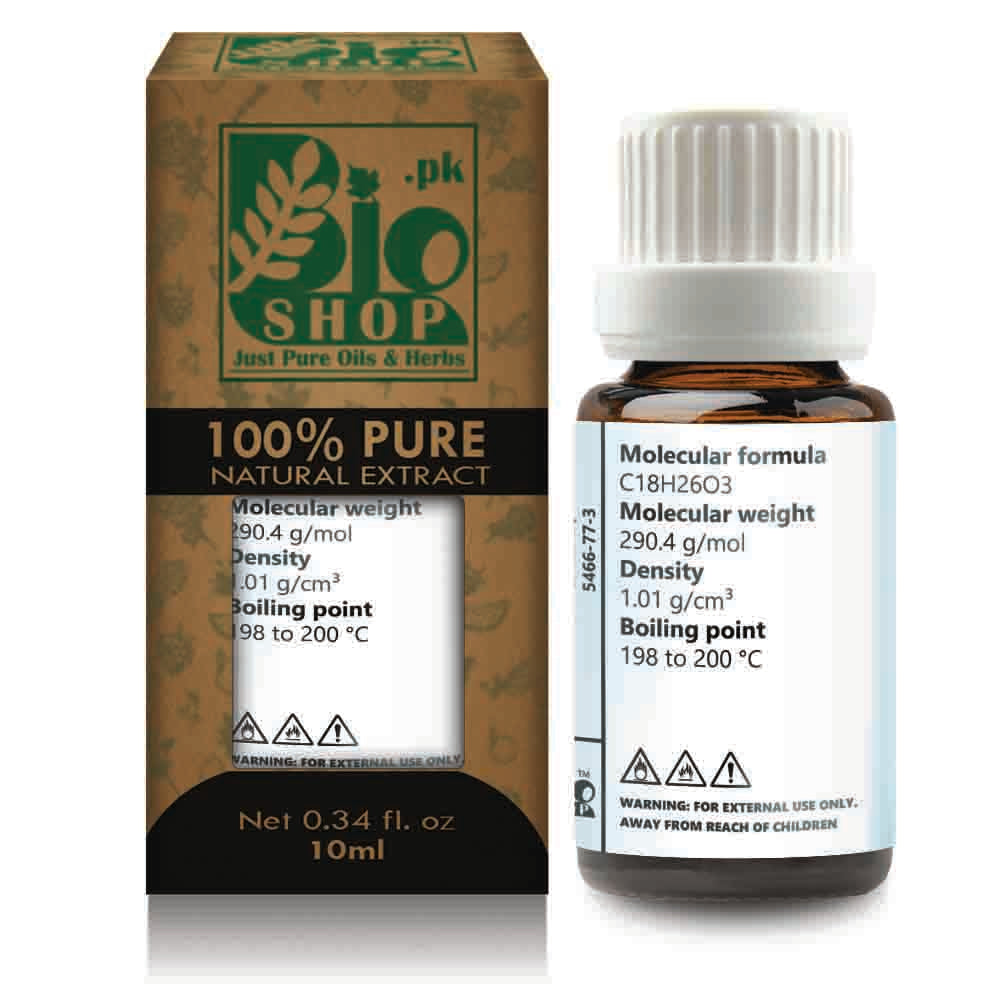
CAS Number : 5466-77-3
Molecular Formula : C18H26O3
Appearance : Clear to slightly yellow liquid
Odor : Faint, characteristic
pH (1% solution) : Not Applicable (oil-soluble, non-ionic)
Solubility : Soluble in oils, esters, and alcohols; insoluble in water
Specific Gravity : 1.007 to 1.012 at 25°C
Flash Point : >100°C
HLB Value : Not Applicable
Recommended Use Level : 2% to 10%
Type : Organic UVB Filter (Cinnamate)
Shelf Life : 24 months when stored properly

🧪 Recommended Usage

Sunscreen Formulations (Lotions, Sprays, Sticks)
★★★★★
Octyl Methoxycinnamate is the primary UVB filter in most commercial sunscreens worldwide. Use at 5% to 10% in the oil phase and always combine with a UVA filter for broad-spectrum claims.

Skincare (Day Creams, BB Creams, Tinted Moisturizers)
★★★★★
Ideal for any daytime skincare product requiring built-in sun protection. Add at 3% to 7.5% to deliver meaningful SPF without compromising texture or layering with makeup.

Lip Care (SPF Lip Balms, Lip Glosses)
★★★★☆
Works well in anhydrous lip formulations where UVB protection is needed. Use at 5% to 7.5% and pair with a wax base for even film formation on lips.

Haircare (UV-Protective Sprays, Leave-In Conditioners)
★★★☆☆
Provides moderate UVB protection for hair and scalp when used in leave-on sprays. Effective at 2% to 5% in alcohol or silicone-based hair mist formulations.

Body Care (Protective Body Lotions, After-Sun Products)
★★★★☆
Easily incorporated into body lotions and milks for daily UV defense. Use at 5% to 10% and ensure even distribution through proper emulsification for consistent coverage.

💡 Pro Tip

In my formulation work, I have found that Octyl Methoxycinnamate is one of the easiest UV filters to work with because of its liquid form and broad oil compatibility. However, the most common mistake I see is relying on it alone for sun protection. On its own, it only covers UVB. You must always pair it with a UVA filter, and more importantly, you need to address its tendency to degrade Avobenzone over time if no photostabilizer is present. Getting that three-part system right is what separates amateur SPF products from professional ones.

ADVANCED TIP: When combining Octyl Methoxycinnamate at 7.5% with Avobenzone at 3%, always include Octocrylene at 2% to 5% as a photostabilizer. Add all three UV filters into the oil phase at 75°C to 80°C and stir until fully dissolved before emulsification. This prevents Avobenzone photodegradation and maintains broad-spectrum efficacy through the product shelf life.

👩‍🔬 Skin Type Suitability

Normal Skin : ★★★★★ — Excellent compatibility with no issues at recommended concentrations
Dry Skin : ★★★★☆ — Well tolerated and can be paired with rich emollients in moisturizing sunscreens
Oily Skin : ★★★★☆ — Lightweight liquid form does not add greasiness when formulated in light emulsions
Combination : ★★★★☆ — Performs well across different facial zones without causing congestion
Sensitive Skin : ★★★☆☆ — Generally safe but may cause mild irritation in highly reactive skin at higher concentrations
Mature Skin : ★★★★★ — Essential for photoaging prevention and pairs well with anti-aging actives
Acne-Prone : ★★★☆☆ — Non-comedogenic at standard levels but patch testing is advised for breakout-prone users

🧴 Formulation Ideas

CONCEPT 1: Broad-Spectrum Daily Defense Lotion SPF 30
Usage Level : 7.5%
Key Ingredients: Avobenzone 3%, Octocrylene 4%, Cetearyl Alcohol, Glycerin
Result : A lightweight, non-greasy daily sunscreen lotion offering balanced UVA and UVB protection with a smooth, moisturized finish.

CONCEPT 2: SPF Lip Balm Stick
Usage Level : 5%
Key Ingredients: Beeswax, Shea Butter, Coconut Oil, Vitamin E
Result : A nourishing lip balm stick with built-in UVB protection that glides on smoothly and keeps lips conditioned in sun-exposed conditions.

CONCEPT 3: UV-Protective Hair Mist
Usage Level : 3%
Key Ingredients: Cyclomethicone, Dimethicone, Panthenol, Ethanol
Result : A fine-mist hair spray that shields hair from UVB-induced color fading and protein damage while adding a lightweight silicone shine.

💧 Safety and Regulatory:

INCI Declared : Yes — mandatory declaration in all sunscreen products
EU Cosmetics Reg : Permitted — Annex VI Entry 12, maximum 10% in finished product
Rinse-Off Limit : 10%
Leave-On Limit : 10%
Allergen Alert : No — not classified as a fragrance allergen
Skin Safety : Safe at recommended levels; patch test advised for sensitive individuals
Eye Area Use : Use with caution — avoid direct contact with eyes
Ingestion : Not for internal use
Pregnancy Use : Consult physician — some regulatory bodies advise caution due to endocrine discussion
Child Safety : Safe for children above 6 months at standard sunscreen concentrations
Ventilation : Not required under normal formulation conditions
Storage : Cool dry place, away from direct sunlight and heat sources
Container : HDPE or PET; dark or opaque containers preferred to limit UV exposure of bulk material

⚠️ Octyl Methoxycinnamate has been subject to ongoing regulatory review in some regions regarding potential endocrine activity. Hawaii and certain Pacific jurisdictions have restricted its use in reef-safe sunscreen products. Always verify current local regulations before formulating products for export.

Stability and Compatibility

Working pH Range : 4.0 to 8.0 (stable across typical cosmetic pH)
Heat Stability : Stable up to 80°C; add during hot oil phase processing
Freeze-Thaw Stable : Yes
Emulsion Type : O/W or W/O — remains in oil phase in both systems
Emulsification Phase: Hot phase (oil side)
Compatible With : Cosmetic esters, silicones, mineral oils, waxes, most emulsifiers
Incompatible With : Strong oxidizers; known to accelerate Avobenzone degradation without photostabilizer
Oxidation Risk : Low — chemically stable under normal storage
Discoloration Risk : Possible — slight yellowing over time in clear formulations exposed to light
Formulation Notes : Always dissolve fully in the oil phase before emulsification. When using with Avobenzone, include Octocrylene or Ethylhexyl Methoxycrylene as a photostabilizer to prevent loss of UVA protection over time.

❓ FAQs

Q: What type of UV protection does Octyl Methoxycinnamate provide?
A: It is a UVB filter that absorbs radiation in the 280 to 320 nm wavelength range. It does not protect against UVA rays, so it must be combined with a UVA filter like Avobenzone or Tinosorb S for broad-spectrum coverage.

Q: Can I use Octyl Methoxycinnamate as the only sunscreen active in my product?
A: You can use it as the sole active, but the product will only have UVB protection and cannot claim broad-spectrum status. For proper sun defense, always pair it with at least one UVA-absorbing filter.

Q: At what phase should I add Octyl Methoxycinnamate during formulation?
A: Add it to the oil phase during the heating stage, typically at 75°C to 80°C. Stir until completely dissolved before combining with the water phase during emulsification.

Q: Is Octyl Methoxycinnamate safe to use in products for children?
A: It is generally considered safe for children above 6 months at approved concentrations up to 10%. However, some parents prefer mineral-only sunscreens for young children, so consider your target market when formulating.

Q: How does Octyl Methoxycinnamate compare to Homosalate as a UVB filter?
A: Both are oil-soluble UVB absorbers, but Octyl Methoxycinnamate has a higher extinction coefficient, meaning it delivers more SPF per percentage used. Homosalate is often used at higher concentrations as a solvent-booster for other UV filters. Octyl Methoxycinnamate is more versatile as a standalone UVB contributor.

Where Can You Safely Use Octyl Methoxycinnamate

Discover how Octyl Methoxycinnamate performs across different products — rated for safety, stability, and effectiveness.

Skincare
Serums
4
Slight Issues
Creams & Lotions
9
Very Good
Eye Creams
4
Slight Issues
Face Masks
4
Slight Issues
Cleansers
0
Not Recommended
Toners
0
Not Recommended
Lip Balms
8
Good
Ointments
5
Mediocre
Body & Hair Care
Body Butters
8
Good
Shampoos
2
Stability Issues
Conditioners
5
Mediocre
Hair Masks
5
Mediocre
Soap & Specialty
Soaps
0
Not Recommended
Deodorants
2
Stability Issues