Bio Shop
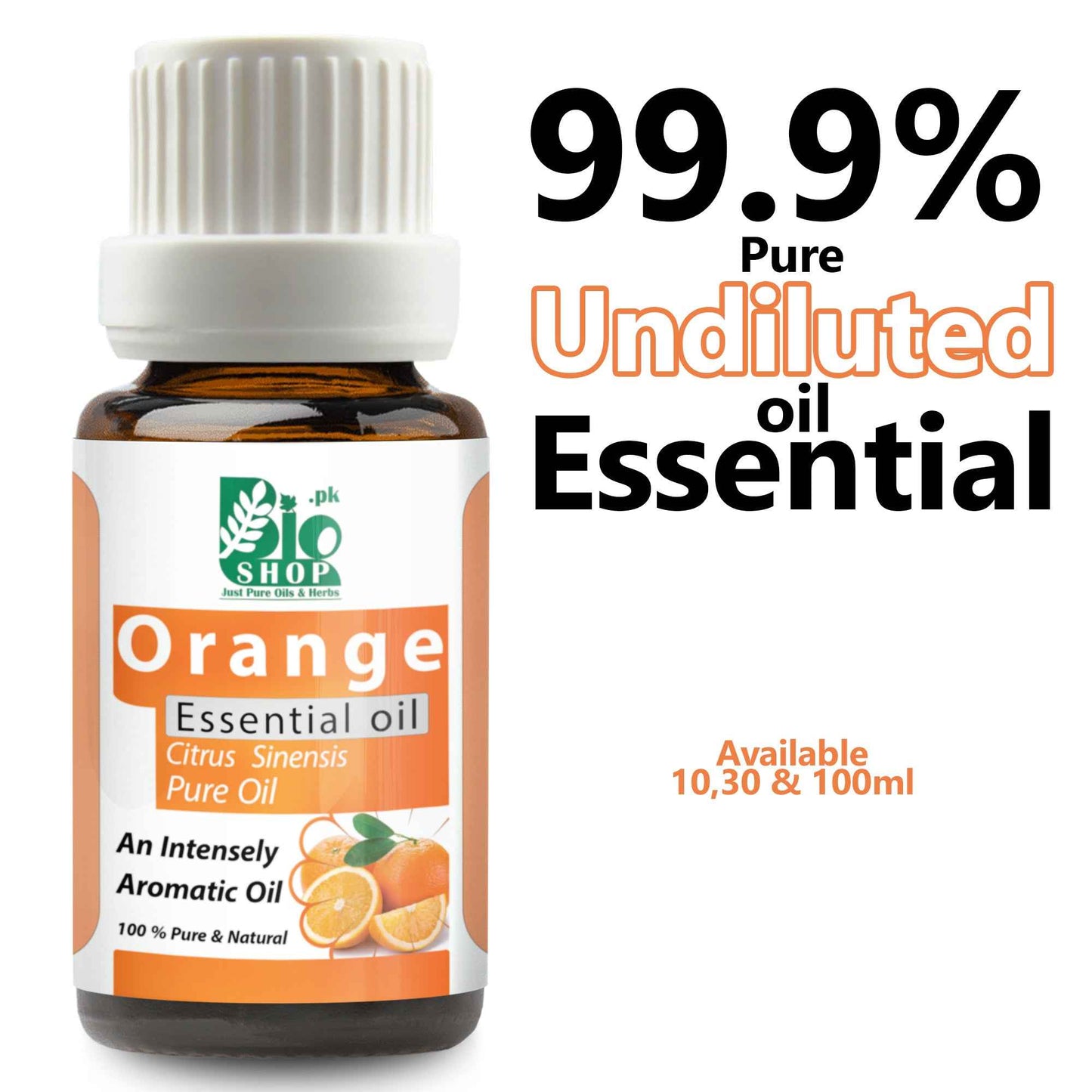
Orange Essential Oil
Orange Essential Oil
Olfactory Notes: Sweet · Juicy · Citrus · Fresh · Zesty · Bright
Couldn't load pickup availability


Explore
Information About Orange Essential Oil
Key Features
✦ Cold-pressed from fresh Citrus sinensis peel — no solvents, no distillation heat damage
✦ Dominated by d-Limonene (85–95%), delivering a clean, bright, and universally appealing citrus freshness
✦ Functions as a high-impact opening top note in perfumes, EDPs, EDTs, attars, and functional fragrances
✦ Versatile across candles, soaps, body care, home fragrance, and cleaning product formulations
✦ Known to promote mood uplift and reduce stress — widely used in aromatherapy blends
✦ 100% natural, vegan, and cruelty-free — suitable for clean beauty and natural fragrance lines
✦ Phototoxicity risk is low for sweet orange (Citrus sinensis) compared to other citrus oils, but IFRA limits apply for leave-on products — always observe recommended usage rates
About Orange Essential Oil
Orange essential oil has been extracted from the peel of Citrus sinensis for centuries, with commercial production dating back to the 15th century in the Mediterranean and later expanding to Brazil, the United States, and Spain. Today, Brazil is the largest producer, yielding the oil as a byproduct of the global orange juice industry. Unlike bergamot or lemon, sweet orange oil is cold expressed — meaning the peels are mechanically pressed rather than steam distilled — preserving the full aromatic complexity of the fresh fruit rind. The oil has been used historically in eau de colognes, fougères, and oriental accords, and it remains one of the highest-volume natural fragrance raw materials traded globally.
What makes orange essential oil particularly compelling for formulators is its accessibility paired with its performance. The high d-Limonene content gives it immediate lift and radiance at the opening of a fragrance, creating instant consumer appeal. Its scent is universally recognized and broadly loved across demographics, making it a reliable choice for functional fragrances, personal care products, and household cleaners where consumer preference is the primary driver. Despite its apparent simplicity, a quality cold-pressed orange oil carries subtle secondary notes of waxy aldehydic citrus peel, light floral undertones, and a faint woody drydown that skilled perfumers can coax out through careful blending.
Bio Shop Pakistan supplies cosmetic-grade cold-pressed orange essential oil suitable for fine fragrance development, attar blending, natural perfumery, soap and candle making, skincare formulation, and aromatherapy applications across Pakistan.
Olfactory Profile
SCENT DESCRIPTION : Orange essential oil opens with an immediate burst of bright, juicy citrus — the scent of freshly peeled navel orange skin, slightly waxy and sweet with a clean, almost sparkling radiance. The heart reveals a soft, rounded sweetness that is less sharp than lemon and more full-bodied than grapefruit. In the dry phase, faint green and floral undertones emerge before the scent fades cleanly away. It is one of the most cheerful and universally appealing naturals available to the perfumer.
NOTE POSITION : Top (occasionally Top-Mid when anchored with fixatives)
FRAGRANCE FAMILY : Citrus · Fruity · Aromatic
FACETS : Bright · Sweet · Juicy · Waxy · Zesty
TENACITY : Low — 1 to 2 hours in isolation; 3 to 4 hours when blended with fixatives or in heavier bases
SILLAGE : Medium — projects well in opening; performance is diffusive and radiant but short-lived without anchoring
Technical Specifications
CHEMICAL NAME : Citrus sinensis peel oil expressed (Sweet Orange Oil)
CAS NUMBER : 8028-48-6
SYNONYMS : Sweet Orange Oil · Orange Sweet Essential Oil · Citrus aurantium var. sinensis peel oil · Cold-Pressed Orange Oil
PURITY : 100% pure, unadulterated (verify with supplier CoA)
APPEARANCE : Clear to pale yellow or orange-tinted mobile liquid
ODOR THRESHOLD : Approximately 9–14 ppm (d-Limonene dominant)
SOLUBILITY : Soluble in ethanol and fixed oils; practically insoluble in water
SPECIFIC GRAVITY : 0.842 – 0.848 at 20°C (verify with supplier CoA)
FLASH POINT : Approximately 46–49°C (verify with supplier CoA)
TYPE : Natural — cold pressed from fruit peel
Applications & Usage Guidelines
FINE FRAGRANCE : ★★★★★
Orange essential oil is a cornerstone top note in classical perfumery and modern compositions alike. It is indispensable in eau de cologne structures, fougères, citrus-aromatic blends, and as a brightness enhancer in florals and orientals. Its volatility means it sets the first impression powerfully, though it requires anchoring with terpene-retaining fixatives or synthetic citrus boosters like Citral or orange terpene replacers for longevity in EDPs.
ATTAR & ORIENTAL BLENDING : ★★★★☆
In traditional attar formulation, orange peel oil adds an initial freshness that lifts heavy oud, sandalwood, and musky bases, creating a more approachable opening. It pairs naturally with neroli, rose, and spice elements in classic oriental constructions. Pakistani and Gulf-style attars benefit from the contrast between its clean citrus opening and the deep animalic or woody base.
FUNCTIONAL FRAGRANCE : ★★★★★
Orange oil is among the most widely used naturals in household cleaners, dishwashing liquids, surface sprays, laundry detergents, and air fresheners. Its high limonene content delivers genuine degreasing benefit in cleaning formulations beyond mere fragrance. In fabric care products and functional home sprays, it combines olfactory appeal with a perception of cleanliness and hygiene.
COSMETICS & SKINCARE : ★★★★☆
Used as a natural fragrance ingredient in face creams, body lotions, serums, and scrubs. Cold-pressed orange oil is considered to have lower phototoxic risk than bergamot or lime but leave-on applications should still observe IFRA usage limits. In anhydrous preparations and rinse-off products, usage flexibility is higher. It is also used in aromatherapy massage oils for its mood-lifting properties.
HOME FRAGRANCE : ★★★★★
Reed diffusers, wax melts, soy candles, room sprays, and pot pourri are natural applications for orange essential oil. Its bright opening creates immediate scent impact, making it a top-seller for home fragrance blending. In candles, flash point must be observed — blending with a carrier or complementary aroma chemicals is recommended for performance consistency at high fragrance loads.
IFRA & Usage Rate
RECOMMENDED USAGE RATES
EDP (Eau de Parfum) : 3.0 – 8.0%
EDT (Eau de Toilette) : 5.0 – 12.0%
Body Lotion / Cream : 0.5 – 2.0% (observe IFRA leave-on limits)
Shampoo / Body Wash : 0.5 – 2.0%
Bar Soap : 1.0 – 3.0%
Candle : 6.0 – 10.0% (test for scent throw and flash point compliance)
Reed Diffuser : 15.0 – 30.0% in dipropylene glycol or isopropyl myristate base
IFRA 51ST AMENDMENT LIMITS (Citrus sinensis peel oil expressed — Sweet Orange)
⚠️ Note: Sweet orange cold-pressed oil contains low levels of furocoumarins. IFRA limits apply for leave-on skin-contact applications. Always verify the current IFRA standard at ifrafragrance.org before formulating.
IFRA Category 1 (lip products) : 0.03% (verify)
IFRA Category 4 (fine fragrance) : Use at standard perfumery rates with skin safety assessment
IFRA Category 5A–B (body lotion/face) : Up to 5.0% — consult current IFRA amendment
IFRA Category 6 (rinse-off face/body) : Higher limits apply — verify
IFRA Category 9 (candle/air freshener) : No restriction — non-skin-contact application
⚠️ Always check the current IFRA 51st Amendment standard at ifrafragrance.org. Limits above are indicative — confirm with your supplier CoA and IFRA documentation before commercial production.
Blending Guide
USAGE METHOD 1 — TOP NOTE OPENER
Use orange essential oil as the opening burst of a citrus or fresh fragrance. Combine at 5–10% in your total formula, added last to your blend to minimize evaporation during mixing. Because it is so volatile, pair it with a synthetic citrus anchor such as Limonene (synthetic), Citral, or a citrus micro-encapsulate to prolong perception in the top note phase.
USAGE METHOD 2 — CITRUS BRIDGE
Use orange oil as a bridging element between a heavy oriental base and a floral or aromatic heart. At 2–4%, it lifts the entire composition and prevents the base from reading as too dense or medicinal. This technique is common in classic fougères, amber-citrus masculines, and modern oud-fresh hybrid attars.
USAGE METHOD 3 — FUNCTIONAL FRAGRANCE CORE
In household or industrial fragrance applications, use orange oil at 15–30% as a dominant note in cleaning product fragrances. Its d-Limonene content provides both scent and functional degreasing action. Blend with pine, eucalyptus, or lemon for a clean/hygienic character, or with lavender and rosemary for a fresh-herbal household profile.
BEST PAIRINGS
Neroli → Creates a classic eau de cologne bridge — bright, floral, and timeless
Bergamot → Layered citrus complexity with a refined, tea-like quality
Lemon Essential Oil → Amplifies sharpness and adds sparkling zesty lift
Lavender → Classic fougère opening — clean, fresh, and broadly appealing
Cedarwood Atlas → Citrus-woody transition that anchors the top note effectively
Patchouli → Contrasting earthy warmth beneath the citrus creates depth and intrigue
Jasmine Sambac → Floral-citrus pairing with natural sweetness and beauty
Cinnamon / Clove Bud → Spicy-citrus accord used in oriental and seasonal compositions
Frankincense → Resinous-citrus combination — excellent for premium attar bases
Vetiver → Smoked citrus effect — avant-garde and memorable in niche fragrance
AVOID
Blending orange essential oil with strong phenolic materials (eugenol, thymol) at high concentrations without testing — discoloration is possible. Avoid formulating at high percentages in products with alkaline pH (above pH 9) as d-Limonene can degrade. Do not use in rinse-off hair color products without stability testing.
Perfumer's Note
Of all the naturals I work with, orange essential oil is the one that consistently surprises new formulators who underestimate it. There is a tendency to treat it as filler — a generic citrus opener that simply does what it says on the label and disappears. But a high-quality cold-pressed sweet orange from a premium season has layers: the initial burst of juicy freshness gives way to a quieter, almost waxy and slightly floral character in the mid phase that very few synthetic citrus materials can replicate. When I smell a fine cologne and detect that brief transition from sharp zest to a rounder, honeyed citrus murmur before the heart appears, that is orange oil doing something that Limonene alone simply cannot do. The naturalness is palpable.
ADVANCED TIP: To extend the longevity of orange essential oil in an EDP without sacrificing its natural character, try this technique — blend your orange oil with a small percentage of Linalyl Acetate (3–5% of the total citrus accord). Linalyl Acetate slows the perceived evaporation of the citrus top without adding its own lavender character at low doses, and it gently bridges the orange into any floral or woody mid notes you have constructed. Alternatively, encapsulate the orange component using a cyclodextrin-based fixative if formulating for a long-wear body spray — this creates a slow-release effect on skin friction, which gives your formula a delayed citrus pop well into the wear cycle.
Safety & Storage
PHYSICAL STATE : Clear to pale yellow mobile liquid at room temperature
SKIN SAFETY : Generally well tolerated in rinse-off and diluted leave-on applications. Observe IFRA limits for leave-on skin products. Avoid undiluted application to skin. Phototoxicity risk is low for sweet orange cold-pressed but caution is still advised in high-concentration leave-on sun-exposed applications.
EYE CONTACT : Keep away from eyes. In case of contact, flush immediately with clean water for 15 minutes and seek medical attention.
INGESTION : Not for internal use. Cosmetic and fragrance grade only. Keep out of reach of children.
VENTILATION : Use in a well-ventilated area. Avoid prolonged inhalation of undiluted vapors, particularly in enclosed candle production environments.
STORAGE : Store in a tightly sealed dark glass or aluminum container, away from direct sunlight, heat, and moisture. Keep in a cool, dark location below 25°C.
SHELF LIFE : 12 to 18 months from production date when stored correctly. d-Limonene is prone to oxidation — oxidized oil can become a skin sensitizer. Discard if the scent turns sharp, turpentine-like, or medicinal.
CONTAINER : Amber glass or aluminum — avoid contact with PET plastic for extended storage
FLAMMABILITY : Flammable liquid. Flash point approximately 46–49°C. Keep away from open flame, sparks, and ignition sources during production.
FAQ
Q: Is this orange essential oil safe to use directly on skin?
A: No. Always dilute in a carrier oil, lotion base, or formulation before skin contact. Undiluted application can cause irritation. For leave-on products, observe IFRA usage limits.
Q: Why does my candle lose the orange scent after burning for a while?
A: Orange essential oil is highly volatile due to its dominant d-Limonene content. In candles, the top note burns off quickly. Blend with a fixative aroma chemical or use a citrus-anchoring synthetic alongside your orange oil to improve scent longevity and hot-throw consistency.
Q: Can I use orange essential oil in a water-based spray without an emulsifier?
A: No. Essential oils are not water-soluble. You need a solubilizer such as Polysorbate 20 at a ratio of roughly 2:1 (solubilizer to oil) to create a clear, stable water-based spray. Without it, the oil will float on the surface and the product will separate.
Q: Does orange essential oil cause phototoxicity like bergamot?
A: Sweet orange cold-pressed (Citrus sinensis) has significantly lower phototoxic risk than bergamot, lime, or lemon. However, it does contain trace furocoumarins and IFRA limits still apply for leave-on, sun-exposed skin applications. Rinse-off products are generally not a concern. When in doubt, follow the current IFRA 51st Amendment guidance.
Q: How does orange essential oil compare to synthetic Limonene or orange fragrance oils?
A: Cold-pressed orange essential oil has natural complexity beyond just d-Limonene — it contains minor constituents including myrcene, alpha-pinene, linalool, and trace aldehydes that give it a more rounded, authentic citrus character. Pure synthetic d-Limonene is sharper and more linear. Synthetic orange fragrance oils are formulated to mimic the effect but lack the naturalness and complexity of true cold-pressed oil. For clean beauty, natural perfumery, and premium attar work, the essential oil is always the preferred choice.
Where Can You Safely Use Orange Essential Oil?
Discover how Orange Essential Oil performs across different applications—rated for safety, stability, and effectiveness.
Amazing
for supplying good quality oil
It is very fruity and calming citrus fragrance even for people who don't like fragrances .
Orange clove aur cinnamon diffuse kiye saath mein. Ghar mein ek warm cozy festive mahaul ban gaya. Teeno oils Bio Shop se li - quality pe full marks. Yeh blend ab hamare ghar ki pehchaan ban gaya hai.
Bilkul asli narangi jaisi smell. Koi artificial note nahi. Fast delivery.